
Review
Landscape with Invisible Hand. Intimite, Unknown SF
Landscape with Invisible Hand is a film with a multilayered structure, one that invites at least several viewings, each time revealing a different meaning

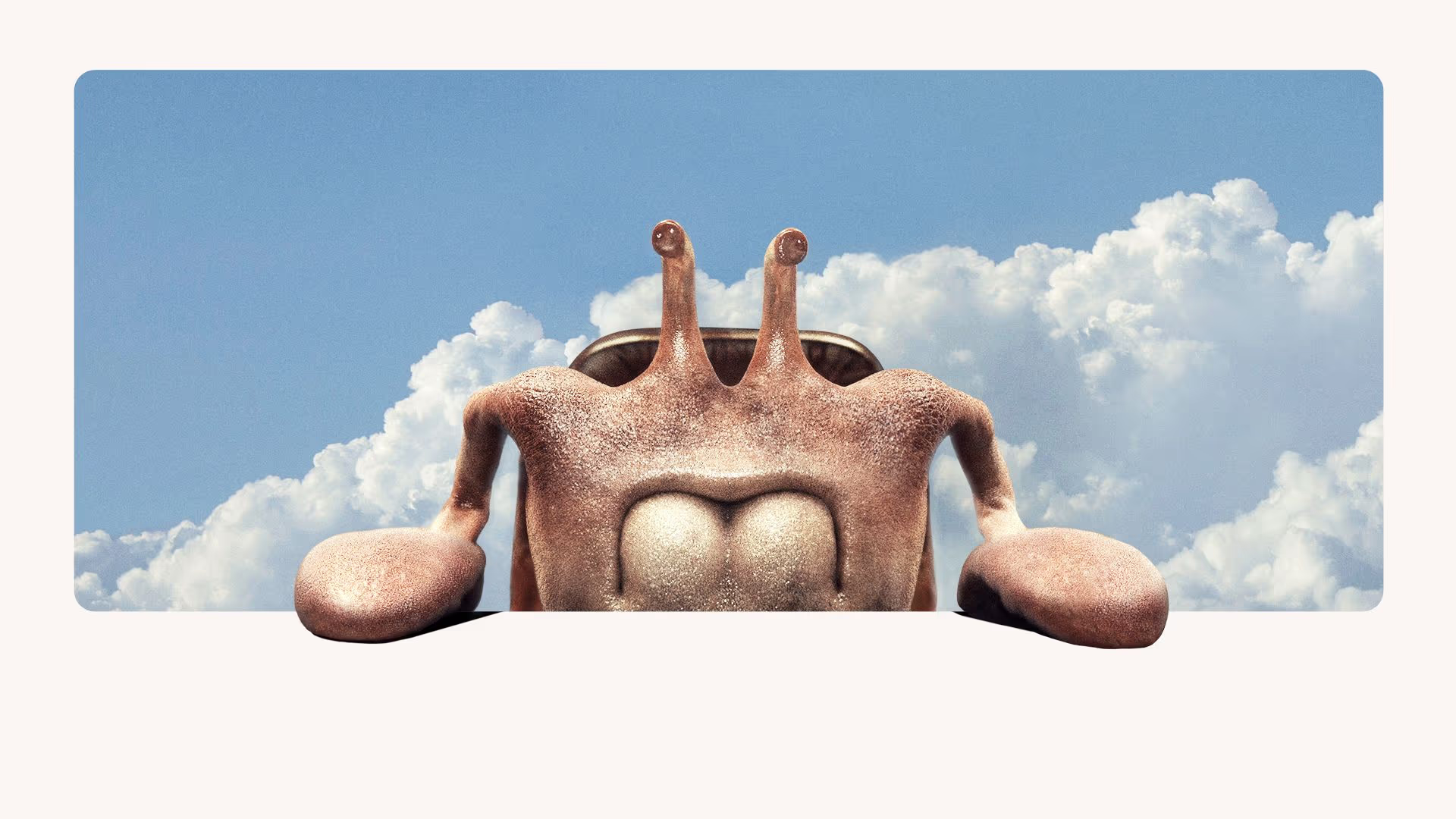
Landscape with Invisible Hand is an intimate, low-budget, virtually unknown science-fiction film—never advertised or recommended anywhere. Currently available on Amazon Prime, it is almost certainly doomed to be forgotten by audiences and critics alike, perhaps because it is not a colorful, fireworks-filled spectacle or a lofty, slogan-driven vision of an aggressive technocratic alien invasion of our green planet. And yet it is a production with an outstanding script and exceptional execution. This is science fiction that reaches as deeply into the human psyche as possible, depicting a highly aggressive and effective conquest of our species without spilling even a single drop of human blood.
The film was directed by Cory Finley—a filmmaker who should be known at least for Bad Education (2019) and Thoroughbreds (2017).
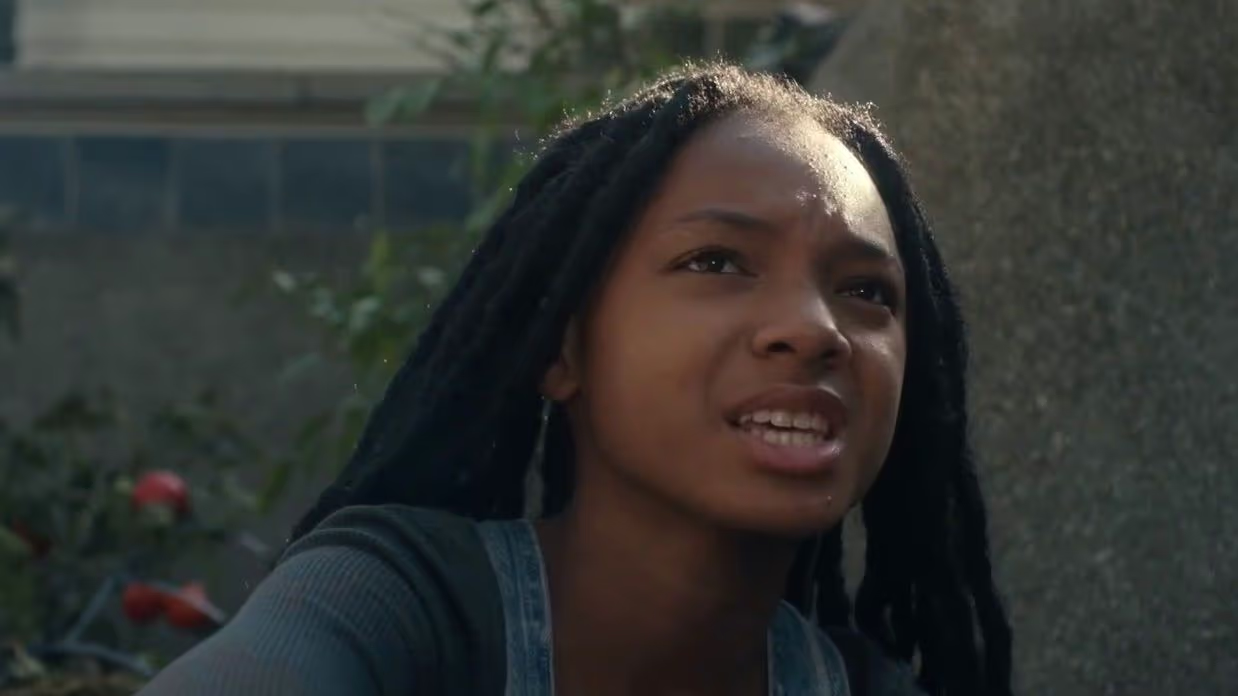
In science-fiction cinema, we have grown accustomed to aliens attempting to conquer our planet in the most violent ways imaginable, subjecting humanity to spectacular extermination or even mutation. This approach certainly looks impressive on screen. You show an invasion with lots of special effects and don’t really have to strain conceptually—human history alone provides ample inspiration for how a species from space might try to take control of us. Sometimes, however, this has little to do with science fiction and is closer to pure fantasy. In the case of Landscape with Invisible Hand, we are dealing with genuine science fiction that employs unconventional metaphors and draws on psychological drama and social realism.
Now imagine an advanced alien species arriving on Earth and proposing an economic partnership. They convince us that we are yet another chosen race in the universe—one in need of a rationalized approach to planetary management—and that, to this end, we will be given a set of modern tools ushering in an era of extraordinary prosperity. The reality, however, is quite different. The aliens do give us everything we need, but at the same time they disrupt the global economy and social roles so profoundly that people with advanced skills—specialists, doctors, engineers, and the like—become redundant.
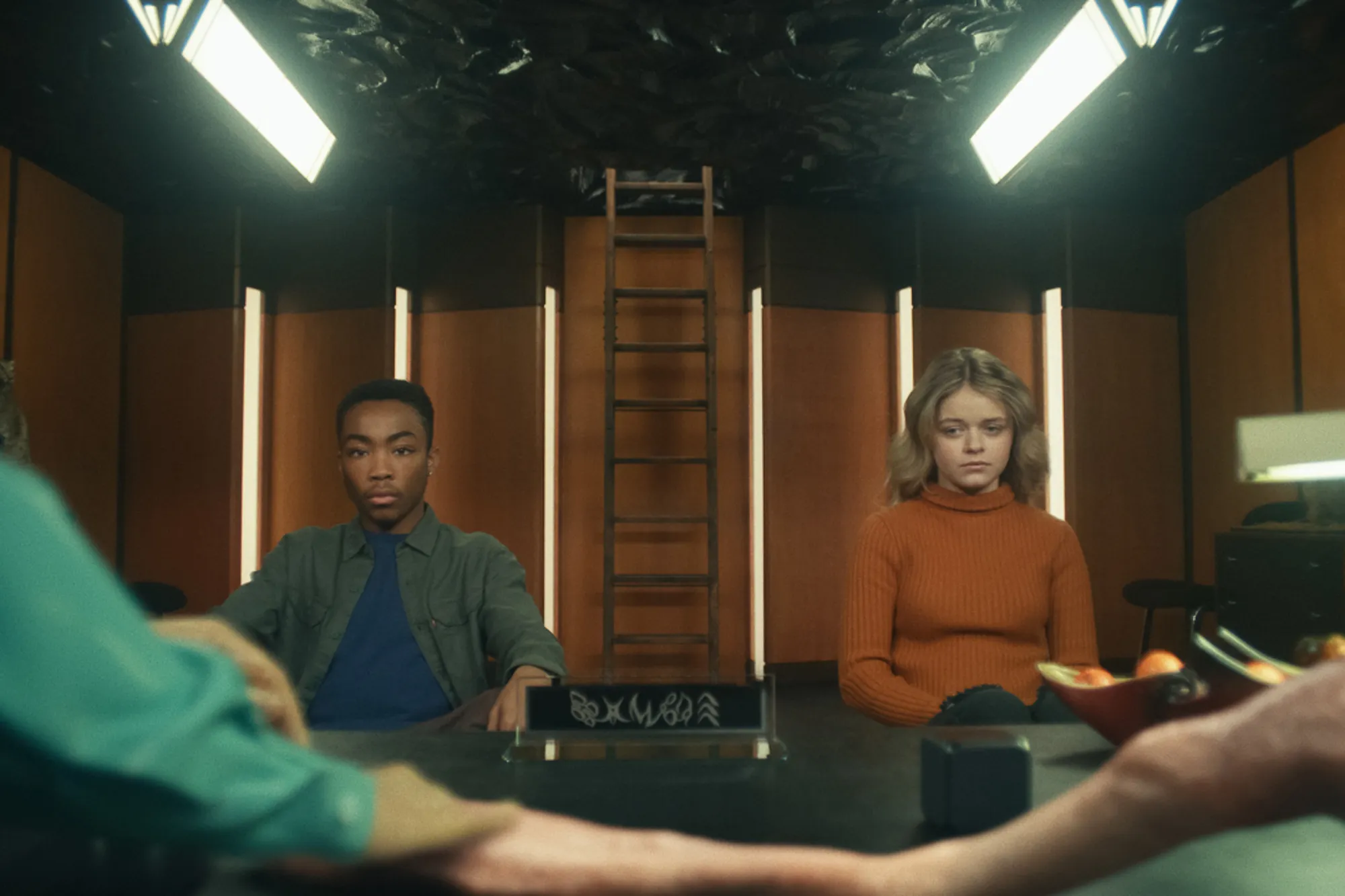
And this is only the beginning of an economic and social domino effect that, even if carried out by the aliens in good faith, proves destructive for us at our current stage of development. Only a few will survive; the rest will fall into debt, become isolated, and ultimately, living on the margins of society, turn against their own species. The way our exit from the stage of planet Earth is portrayed in the film is astonishing.
The entire narrative is built on a framework of images and drawings created in various techniques by the main character, Adam (Asante Blackk), who is trying to survive in the new reality and become someone more important than he is. Through his reflections and reactions, viewers learn who the aliens are, how cooperation with them works, and what role one must play in dealing with them in order to get a chance to earn money—and not just small sums. What is best about this film is that the so-called aliens serve merely as a pretext for bitter conclusions about the human condition in contemporary society.

Social media, family relationships, a school system that does not focus on developing skills but instead wants, at all costs, to carry out a soulless curriculum; love that often isn’t love at all but a performative emotion because something can be gained from it; finally, the role of women in the family and patriarchy—all of this is present in the film. In the background are the aliens from space, who are not truly alien at all but an allegory of our idols—culture, ideology—to which we trust blindly, follow their plans, and then realize it is too late, because we have stopped developing our individuality, constantly compromising ourselves while others have already mapped out who we are supposed to be.
Landscape with Invisible Hand is a film with a multilayered structure, one that invites at least several viewings, each time revealing a different meaning behind its ingenious metaphors. The excellent performances deserve attention, as does the innovative—rarely seen in cinema—approach to alien communication (insects served as an inspiration), and a story development that cannot be predicted. This is a rarity in science fiction, where we usually can guess not only the ending but also the key components of the screenplay. There are also moments that affect the viewer’s psyche on an almost primal level.
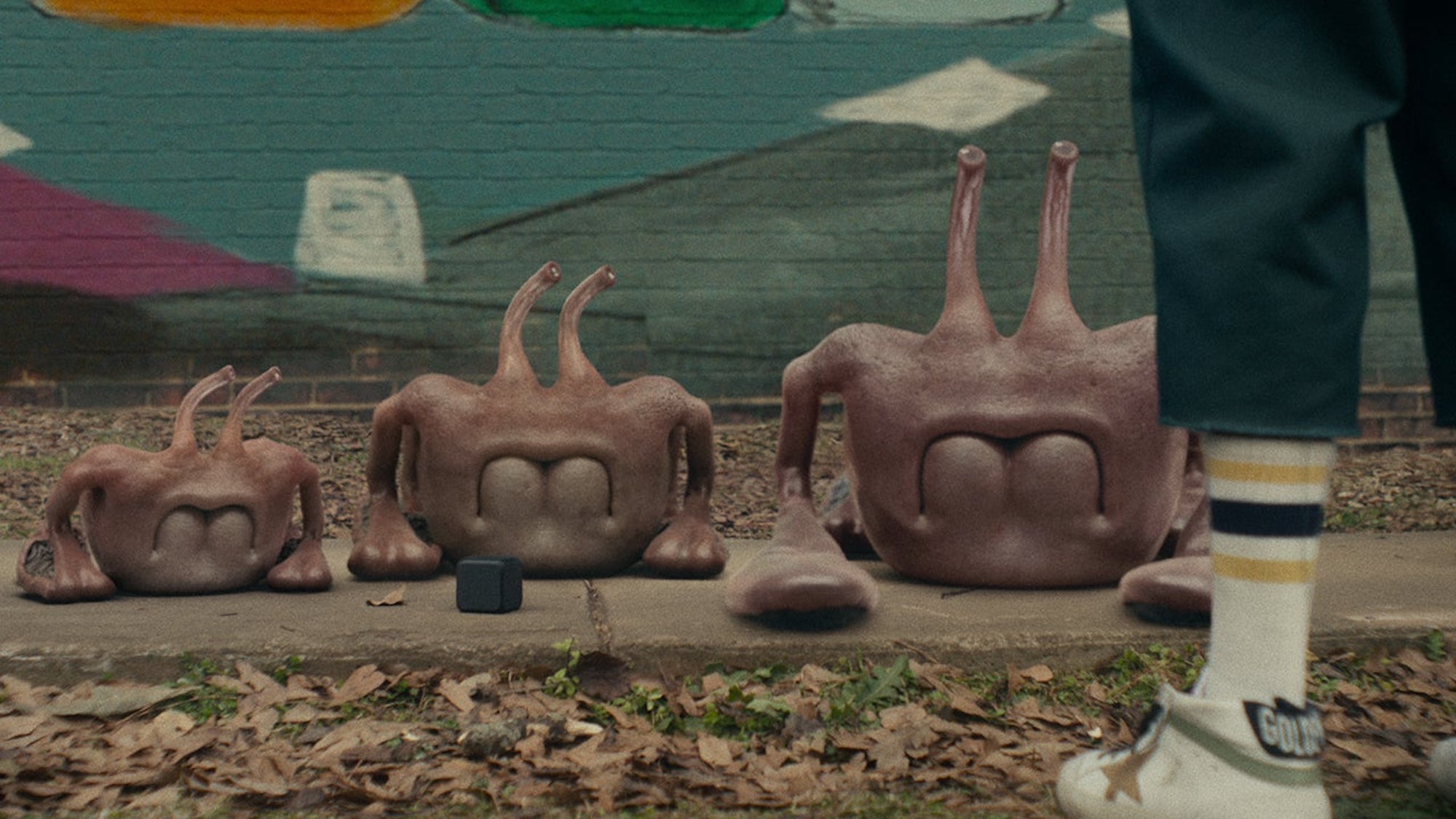
Without spoiling anything, I’ll hint that this occurs at the point in the film when one representative of the Vuvv decides to play at having a family and step into the role of a father to human children. This cross-species relationship can evoke fear—and that is exactly what the director intended: to keep the viewer in a constant state of uncertainty and readiness, sensing that something is about to happen. It does happen, but often not in the way we expect, as we repeatedly catch ourselves realizing that although we are watching science fiction, it unfolds calmly, sometimes even emotionally unbearable, like a pure psychological drama.
Is there a way out of this situation? In science fiction, good usually wins—it must, because an anthropocentric vision of culture rarely allows for any other outcome. Here, however, the story is not really about winning or losing by driving the aliens off Earth. The situation remains ambiguous until the very end, because we continue to hope that the aliens might possess morality as we understand it, even though they reproduce by budding. Can beings that replicate in this way be any kind of partner for humans in discussions, for example, about statutory law? An example of this can also be found in Landscape with Invisible Hand, along with a non-trivial reflection on the boundaries of our “barbarism,” which—so the film suggests—only art can truly tame.

