
Review
HILLBILLY ELEGY. Failed Oscar Bait [REVIEW]
This deliberately cynical opening sets the perspective from which Hillbilly Elegy entered the home-cinema landscape.


A bestselling book as the narrative foundation. Music co-composed by Hans Zimmer. A strong social and political dimension carried over from the source material. A star-studded cast led by Glenn Close and Amy Adams, both widely tipped as Oscar contenders. Roles requiring physical transformation and emotional extremes. On top of that, a seasoned and respected director at the helm. What could possibly go wrong? This deliberately cynical opening sets the perspective from which Hillbilly Elegy entered the home-cinema landscape.
The scent of classic Oscar bait surrounded the film long before its release. During production, voices were already predicting that Glenn Close—still smarting from her surprise loss to Olivia Colman—and Amy Adams would finally claim their long-awaited statuettes. Expectations were high, a fact seemingly confirmed when the streaming platform’s decision-makers scheduled the premiere squarely within awards season. Did the strategy pay off? Did the creators ultimately receive the honors they were aiming for? I won’t keep you in suspense: I sincerely doubt it.

That doubt is hard to avoid when watching a film steeped in the worst traditions of old Hollywood—one that cynically sanitizes or outright removes elements that might be deemed controversial. Ron Howard is a master of what might be called “zero-style” cinema, and here he indulges his instinct to smooth everything over. As a result, the social and political meanings present in the book nearly evaporate in the adaptation, replaced by a conventional melodrama.
The problems of the working class are reduced to brief shots of shuttered factories and a few jabs at the protagonist for having made it to Yale. The issue of the American right-wing electorate—arguably one of the key reasons the book became a bestseller—goes entirely unaddressed. Politics are simply off the table. Sensitive topics that would have felt especially urgent in light of U.S. presidential elections, and which might now invite some form of reckoning in hindsight, are excised from the narrative altogether. The characters’ views can only be guessed at.

The term “hillbilly” in the title refers to people from rural, mountainous regions. Interestingly, it is now widely considered derogatory, which clashes with the film’s portrayal, where Glenn Close’s Mamaw at one point proudly declares that they are hillbillies. The stereotypical depiction of these communities goes far beyond nomenclature. The film centers on J.D. Vance (played by Owen Asztalos and Gabriel Basso), the author of the autobiography, a law student from southern Ohio striving to secure a job at a prestigious law firm.
His ambitions are interrupted by a sudden phone call from his sister: their mother, Bev (Amy Adams), has been hospitalized following a drug overdose. J.D. returns to his hometown to help her get back on her feet, while memories of his childhood—and the traumatic events that shaped it—begin to surface.
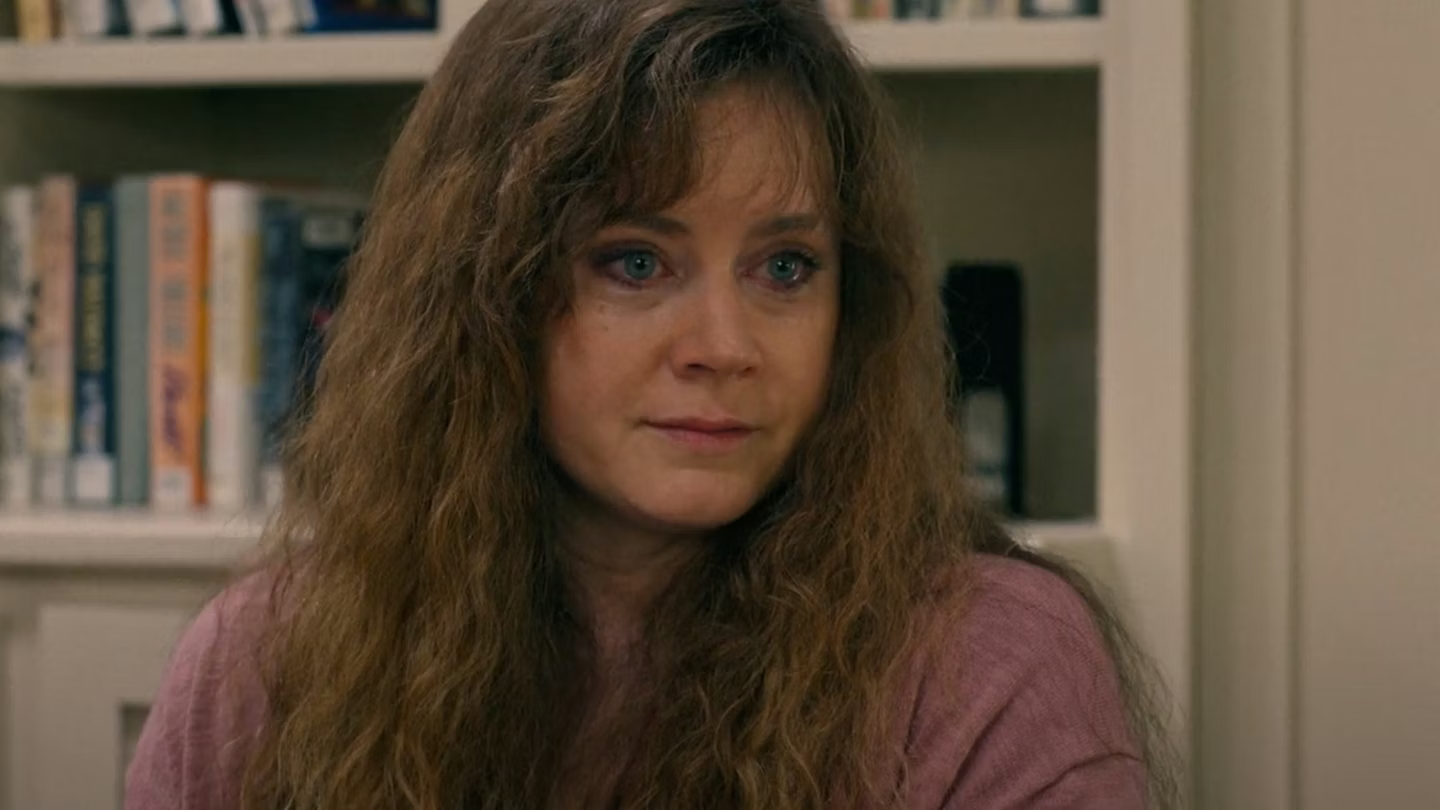
And that childhood was far from happy, to put it mildly. A drug-addicted mother prone to violent outbursts, often taking her rage out on her youngest child, becomes the primary source of J.D.’s trauma and the reason he ultimately forms a stronger bond with his grandmother, Mamaw. By intercutting past and present, the film attempts to explore the effects of growing up in an environment of violence—but it does so in an extremely superficial way.
Scenes that should carry genuine emotional weight—such as Bev chasing her son to a neighbor’s house while threatening to kill him—are inexplicably undercut by comedic beats (“My dogs bite!”). The grotesque tone feels wildly out of place when the rest of the film is relentlessly sentimental and solemn. Howard’s transparent visual style only reinforces this, with gentle sepia tones applied to flashbacks to ensure we are never confused about the timeline. And if you’re looking for raw, naturalistic depictions of drug use—this is not the film for you.
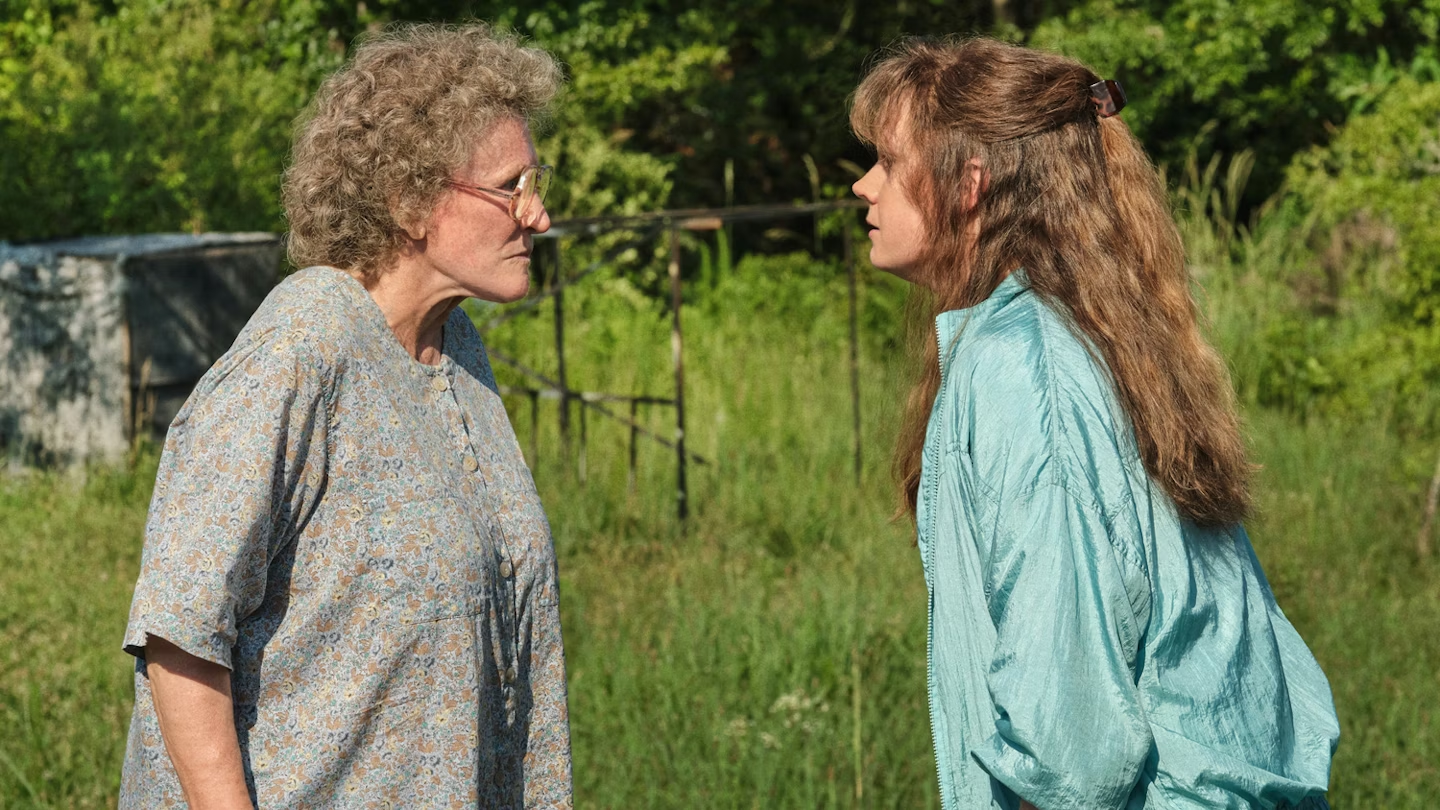
What is surprising, given the film’s overall conservatism, is its willingness to present distinctly un-Hollywood imagery: sagging, imperfect female bodies. Both Adams and Close underwent fundamental physical transformations for their roles, though at times these verge on caricature. This is compounded by performances pitched at maximum intensity, bordering on overacting. In contrast, the most natural and restrained presence belongs to Freida Pinto—ironically, a character who spends much of the film communicating with the protagonist over the phone.
Don’t get me wrong—Hillbilly Elegy is not a bad film. It is, however, so bland and disappointing that frustration seeps through every paragraph of this review. That said, the film may still resonate emotionally with some viewers. Whatever else can be said about Ron Howard, he knows his craft. He is a competent technician who delivers a formally correct film, focusing on the relationship between son, mother, and grandmother, and sealing it all with the illustrative score by David Fleming and Hans Zimmer.
It is hard not to regret that an adaptation with the potential to become a genuine social and political voice of America ultimately turns into a mawkish melodrama. There were promises—and they led to nothing. Just like in politics.

