
Review
TAMARA DREWE. That Small Sense of Satisfaction
That small sense of satisfaction is about the only thing I took away from watching Tamara Drewe.


Philosophy teaches us to endure our neighbors’ failures with dignity. Still, there is a certain pleasure in realizing that unfunny comedies are not exclusively our national specialty, and that even the best occasionally stumble. This time, it was Stephen Frears. That small sense of satisfaction is about the only thing I took away from watching Tamara Drewe.
Tamara (Gemma Arterton), a famous journalist, returns to her hometown to move into her late mother’s house. Her arrival turns the life of this sleepy little village upside down. After all, Tamara is not only successful and wealthy—she also sports a surgically improved nose and, as a result, looks genuinely attractive. Three men enter into competition for her newly upgraded charms. As always, someone has to lose for someone else to win.
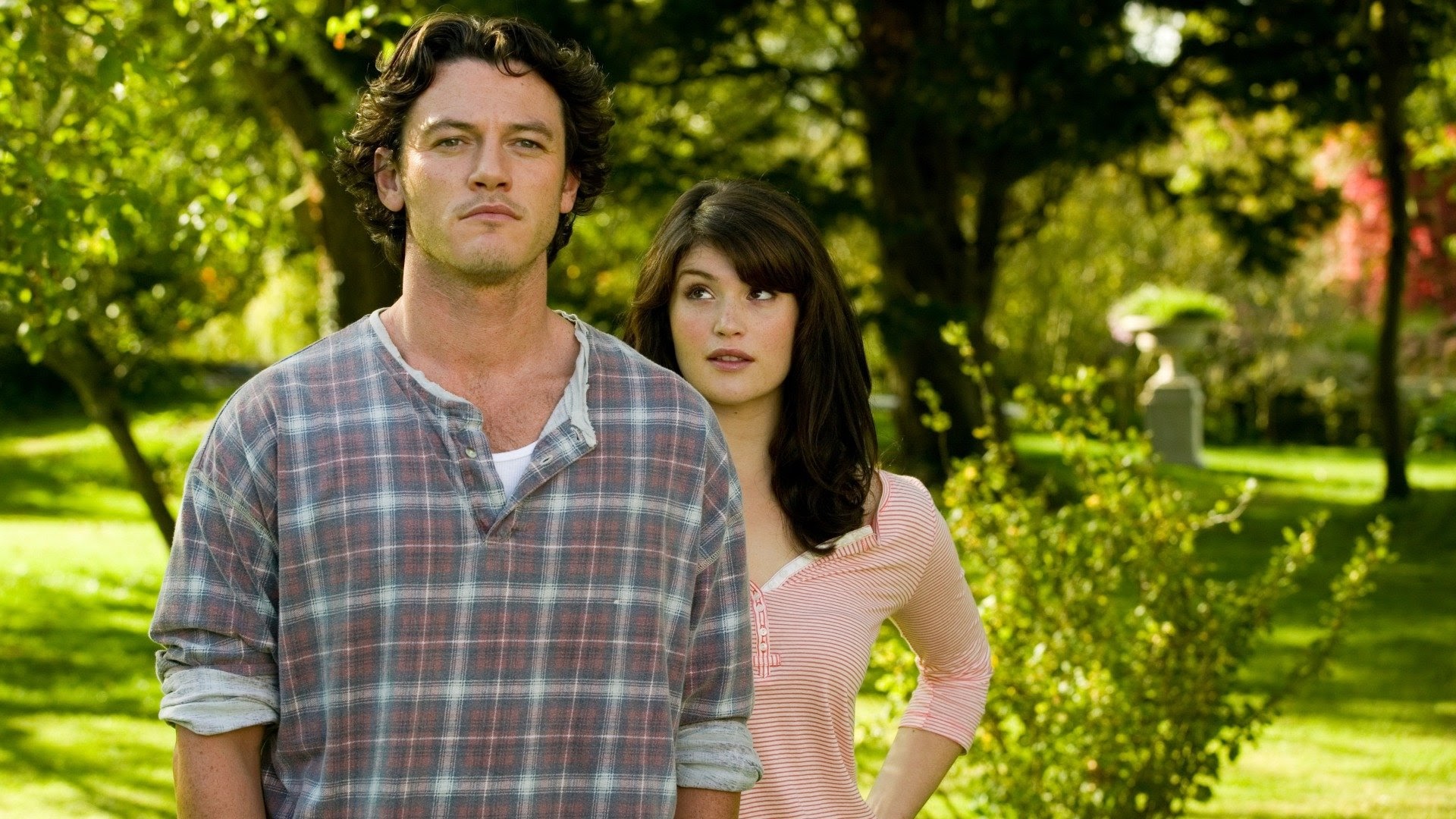
For the sake of completeness, it should be noted that the film is an adaptation of Posy Simmonds’ comic Tamara Drew, itself inspired by Thomas Hardy’s Far from the Madding Crowd. I cannot speak for either the comic or the novel, but Frears’ film radiates boredom.
She, the three of them…
And that is particularly disappointing given Frears’ reputation as a specialist in portraying male–female relationships, with a fondness for intrigue and deception. His crowning achievement remains Dangerous Liaisons, where all such schemes converged and found perfect expression in the outstanding performances of Glenn Close and John Malkovich. Much of Frears’ later work has consisted of variations on similar themes. This film is no exception. Anyone hoping for a return to Dangerous Liaisons, however, will be sorely disappointed.

The film is as predictable as statements by Polish politicians and as simple as a flail. Everything becomes obvious the moment Tamara sees her beloved—and he sees her. That happens around the twentieth minute. After that, all that remains is to admire the charms of rural life and wonder why one must wait another ninety minutes for the inevitable happy ending.
Much of the blame lies with the characters, who are depressingly one-dimensional. Tamara is the Liberated Woman; Andy is the Man of Principles; Ben is the Troubled Boy; and Nicholas is relegated to the role of the Aging Erotomaniac. In addition, there is a henpecked husband, a domestic goddess, and two spoiled teenage girls—the prime movers behind all the film’s intrigues. These schemes are as naive as the girls themselves, and it takes at least a glass of wine to swallow the creators’ increasingly absurd ideas. One example will suffice: the girls break into Tamara’s house (keys, as everyone knows, are always hidden under the flowerpot), then hack into her email account (the password must have been written into the script), and send highly suggestive messages that thoroughly complicate the heroine’s life.

Despite this being a village, no one manages to identify the culprits—not that anyone seems particularly interested. The truth is that Tamara’s dilemmas fail to engage the viewer at all. The banal characters are not enlivened by the thoroughly average performances of Gemma Arterton, Luke Evans, or Dominic Cooper. Roger Allam fares best as Nicholas, but even that is nowhere near enough.
…and the village
Of course, there is also the village itself—peaceful and, at least in theory, cheerful. Everyone tries very hard to amuse the audience. Summers are beautiful there, winters quietly give way to spring. The lady of the house (a.k.a. the domestic hen) treats everyone to her baked goods; chickens cluck, geese honk, cows moo—unless they are running wildly across the fields. Mad cows may trigger some amusing associations for British viewers, but if so, it must be a very insular, local sense of humor, entirely opaque to outsiders.

This same village is home to a writers’ retreat, where authors work on their books in idyllic surroundings. Truth be told, this has little to do with the plot, so perhaps it is an autobiographical touch. If so, it may be high time for the Far from the Madding Crowd writers’ retreat to relocate somewhere more inspiring.

