Horror Movies
RAWHEAD REX: Solidly Made B-movie Horror
Rawhead Rex is very solidly made B-movie cinema. Not some horror bacchanalia, but a pleasant fair. I recommend this more to forgiving connoisseurs of the genre.

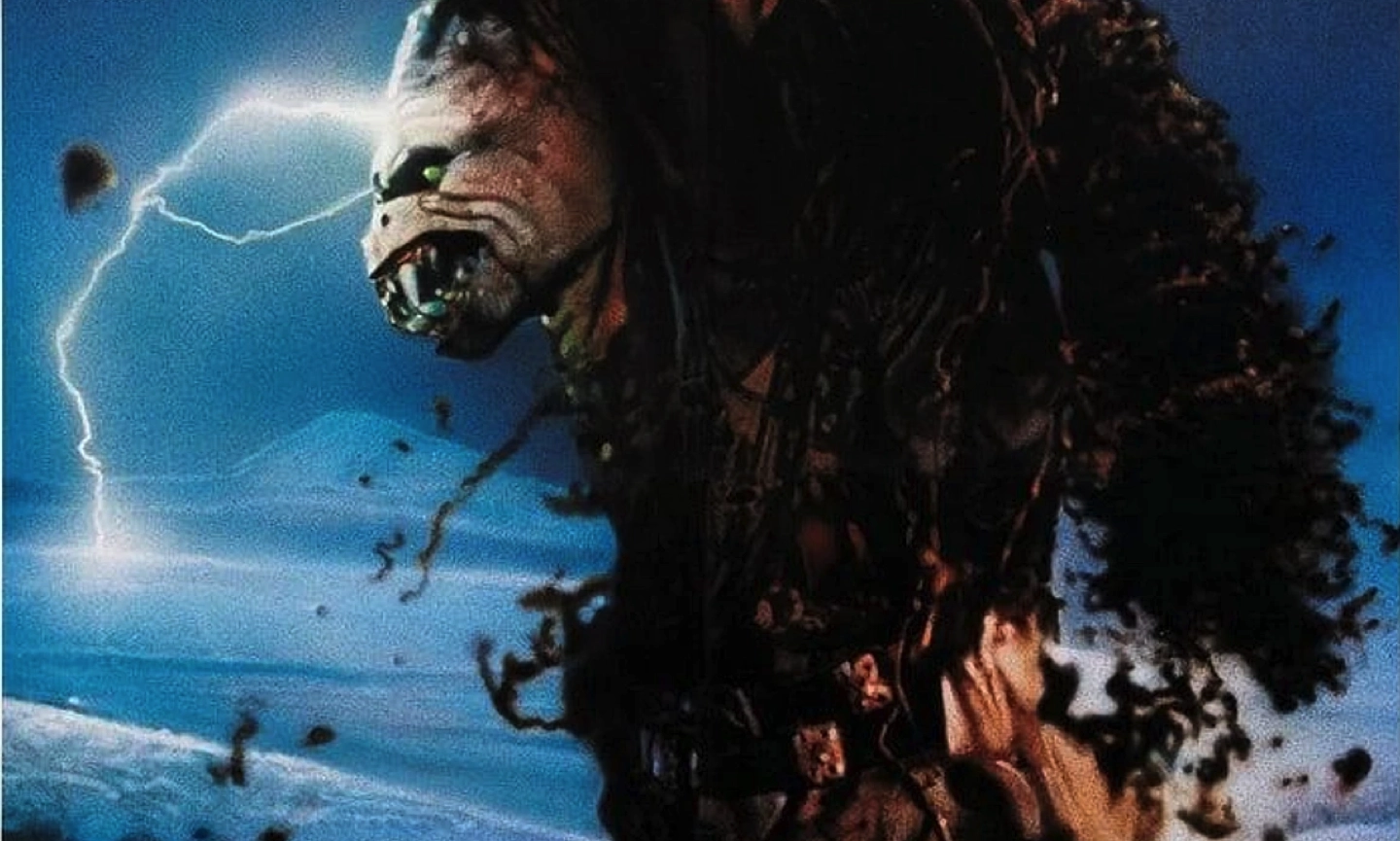
Clive Barker, whose short story served as the basis for this film, stated that the titular monster looks like a penis with teeth. That sight convinced him to bring the next film based on his prose – Hellraiser – to the screen himself. The Briton’s career is marked by films and books of varying quality, but one could never deny him ambition and audacious imagination. Barker wanted to terrify, shock, and knock people out of their slippers, mixing artistic value, perversion, and macabre. Rawhead Rex.
Rawhead Rex – an Irish-American horror from 1986 – does not have a shred of transgressive dimension. What is more, it may appear as mere cannon fodder of the genre – regressive both aesthetically and narratively. By any criteria, this is no top of the top. But show it a bit of heart, and you will notice a truly likeable frightener.

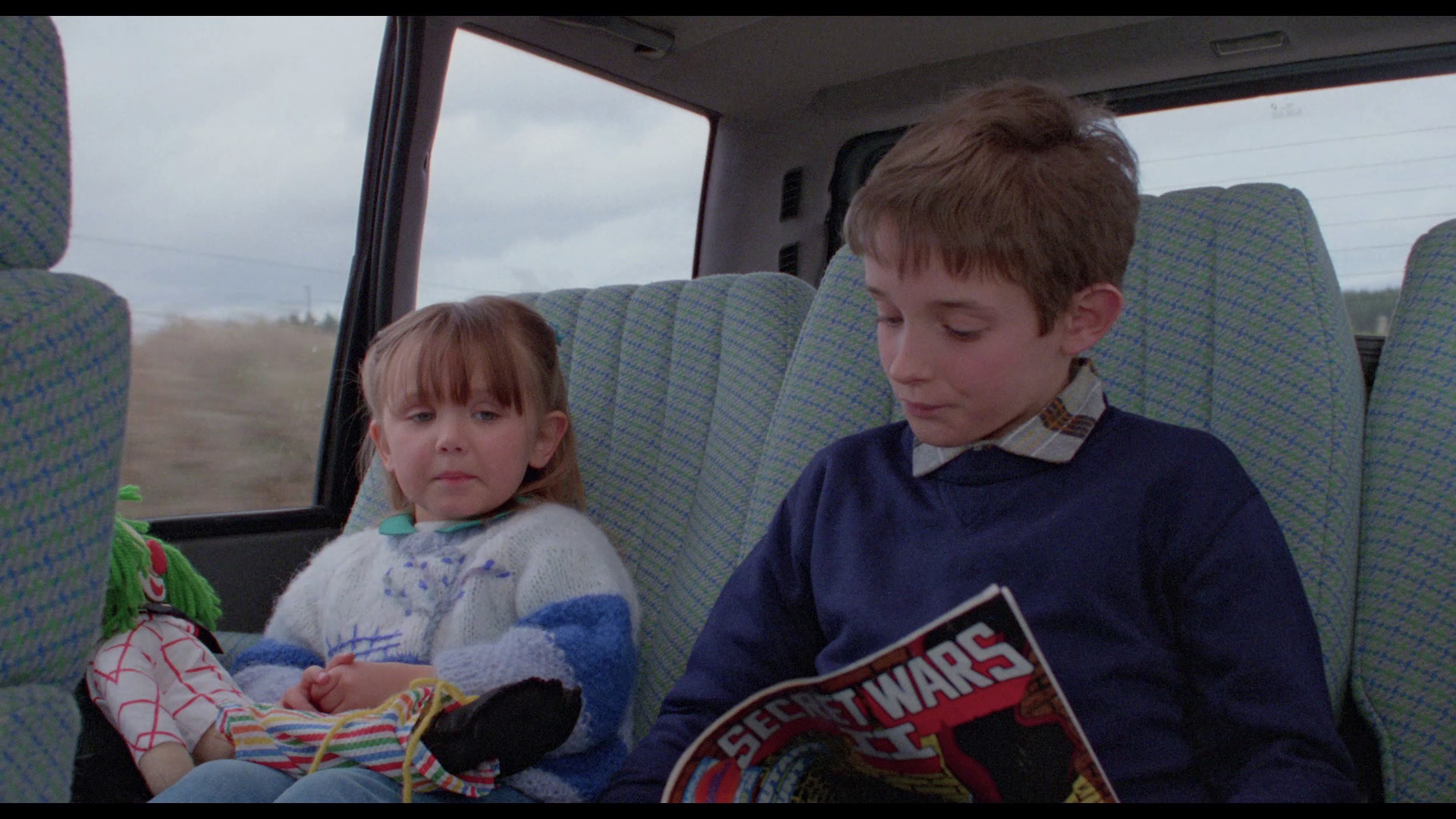
Howard – a writer interested in ancient cults – takes his family to the Irish countryside. He photographs a church in a small town, and meanwhile, in a nearby field, a monster imprisoned in the earth for centuries emerges from beneath a stone. It feeds on human flesh, and the nearby locality will be like an open refrigerator for it.
Let us begin with the main course, that is, the ancient beast. The man portraying it, Heinrich von Schellendorf, had no experience with cinema, but he was a sufficiently well-built twenty-year-old that the producers chose him for the role, although they had previously also considered the actor who had played Chewbacca. Schellendorf recalls that the exercises imposed by the producer before shooting began took place in a gym with the band U2, and that the costume was so expensive that whenever he wore it, he was constantly accompanied by a man assigned to guard its condition.
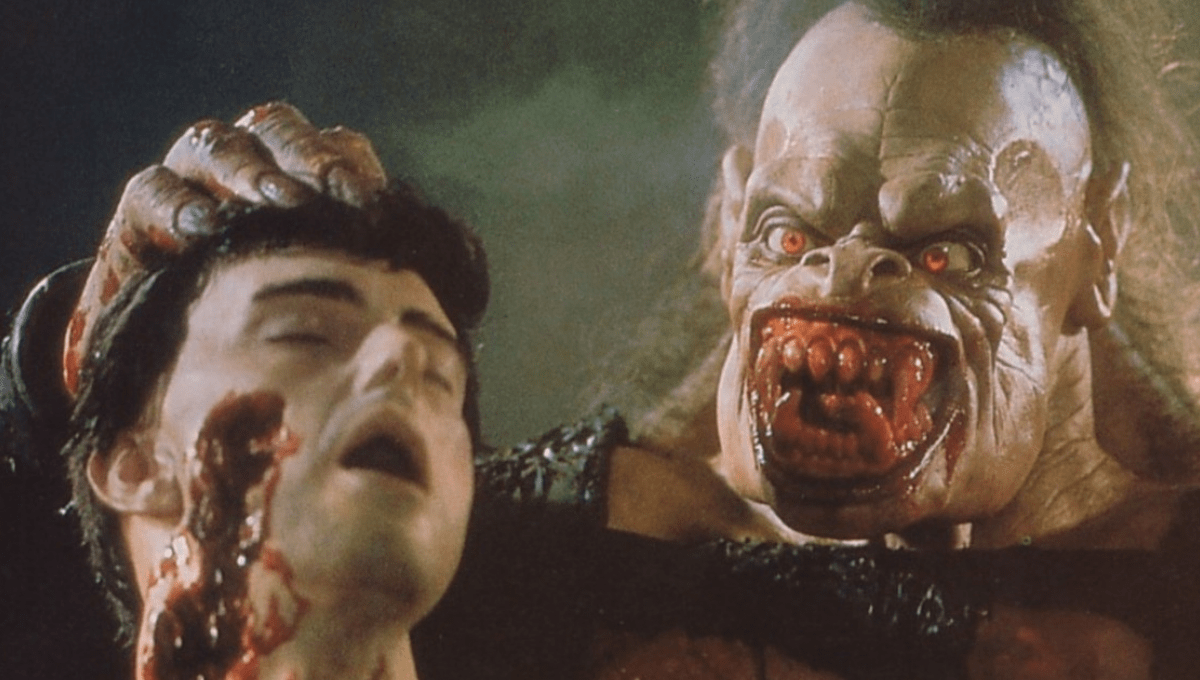
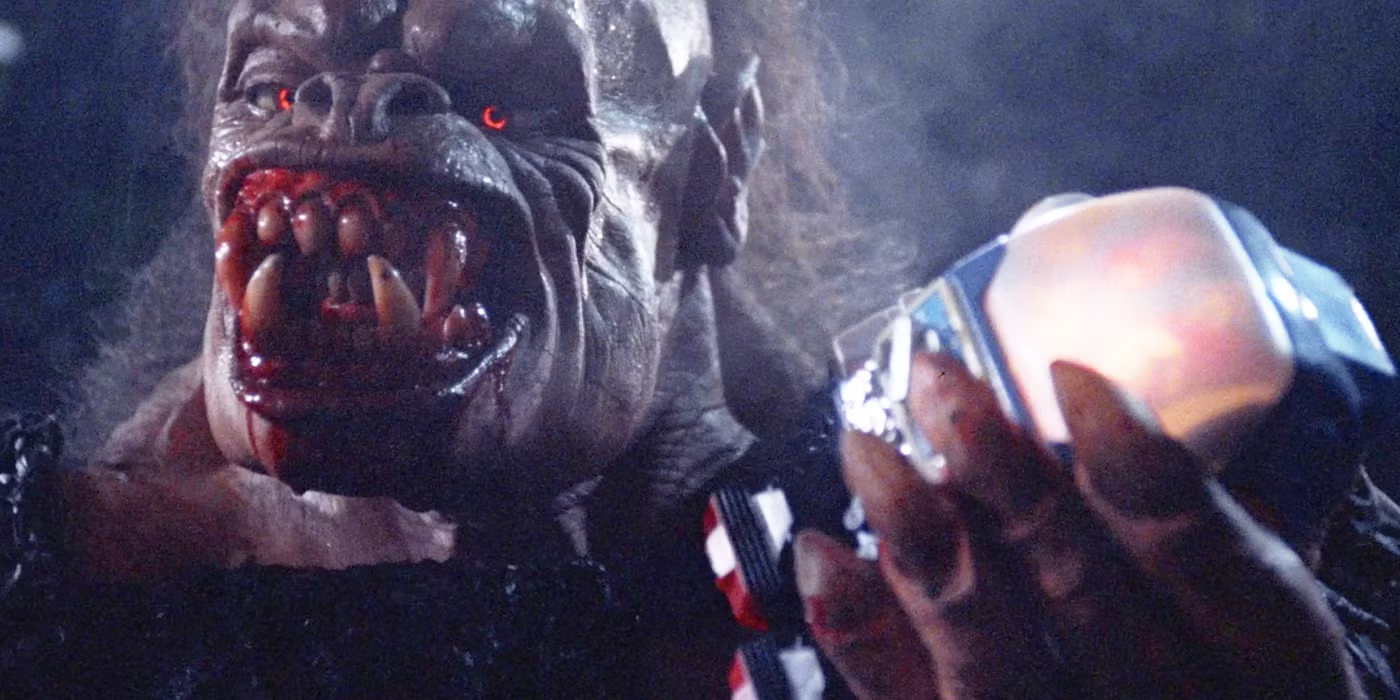
The beast looks like the Hulk possessed by Satan, and its outfit may evoke an incomplete suit of knight’s armor or the aesthetics of industrial bands. In some shots, the silhouette of the monster somewhat resembles Predator. It is also adorned with a powerful complex of muscles. Essentially, the king is simply a titan for whom tearing people into pieces poses no problem. Does that sound frightening? Not necessarily, because its mouth filled with large teeth is rubber, and its eyes are red light bulbs. Additionally, the creature’s emergence onto the surface of the earth takes place to the accompaniment of cheap computer-generated electrical discharges.
In this way, the creature begins to evoke amusement, and a viewer seeking deep experiences of horror has every right to sigh in disappointment. If, however, this creation – roughly hewn, grotesque, and incapable of causing nightmares in anyone – were replaced with something more inventive, the film could evoke fear and maintain tension. As it happens, its remaining components are practically flawless. Above all, we have an excellent atmosphere, largely based on very well-chosen locations. It is insular, very insular, which can be felt in practically every frame.
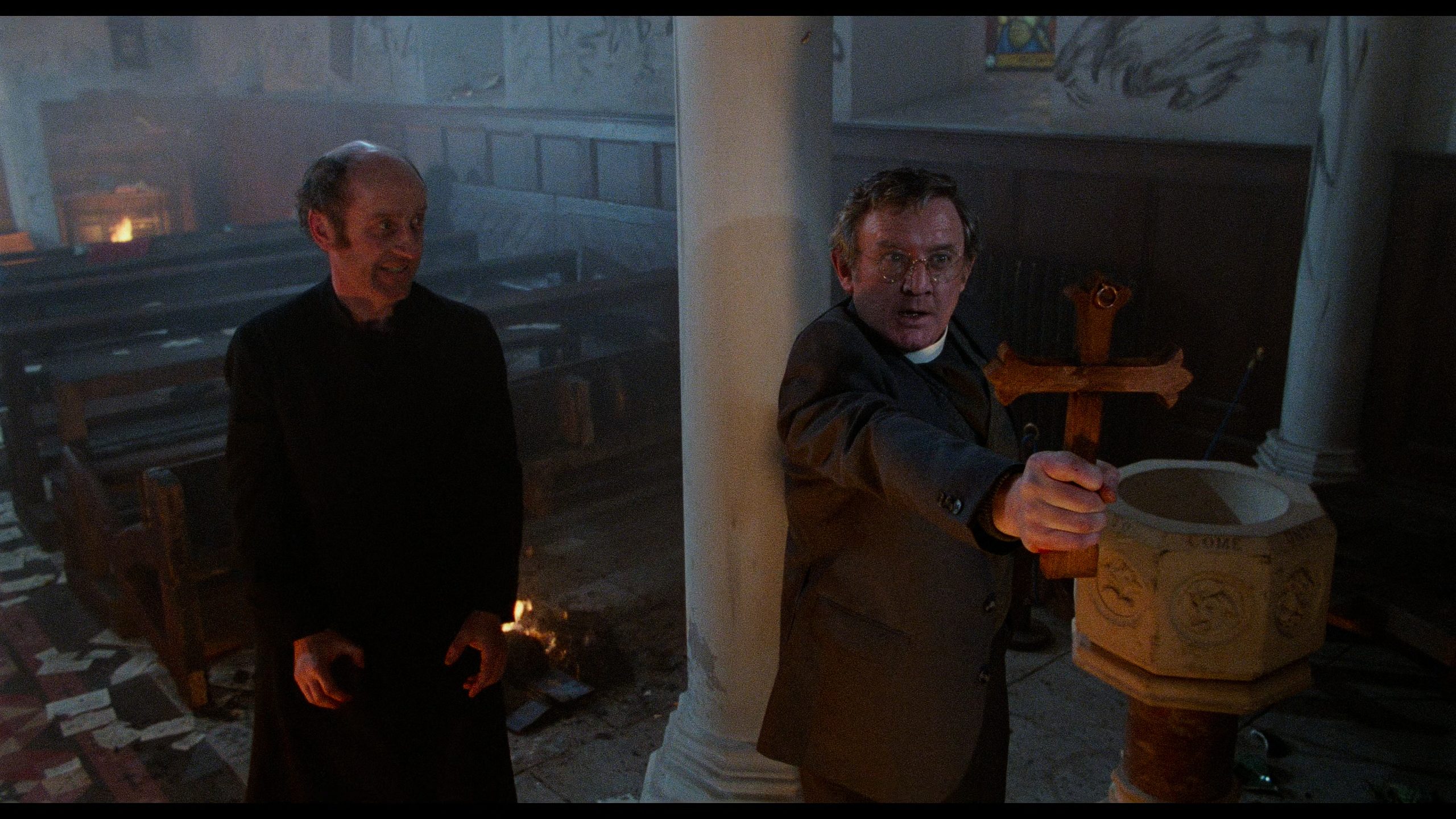
Director George Pavlou gives us a taste of the Irish countryside. It is autumnal, rheumatic, and gloomy. We watch dark forests, rural yards, farmsteads, and muddy fields. A world somewhat outside of time, as if hidden from modernity. A place important to the plot turns out to be a church with unsettling stained-glass windows. In general, Christian and pagan motifs intertwine well throughout the film, creating a slightly blasphemous mood, which, however, never reaches the intensity present in Barker’s short story. The actors also do excellent work in Rawhead Rex. There are no stars here – Pavlou cast the film with lesser-known faces.
But what faces! The actors look, walk, and speak like provincials, not like people pretending to be them. The main character is an ordinary man, devoid of a heroic aura, at times simply panicked – because who would not be in his place? Ronan Wilmot goes over the top (but in a successful way appropriate to the character he portrays) in the role of a priest who has come to love the demon.
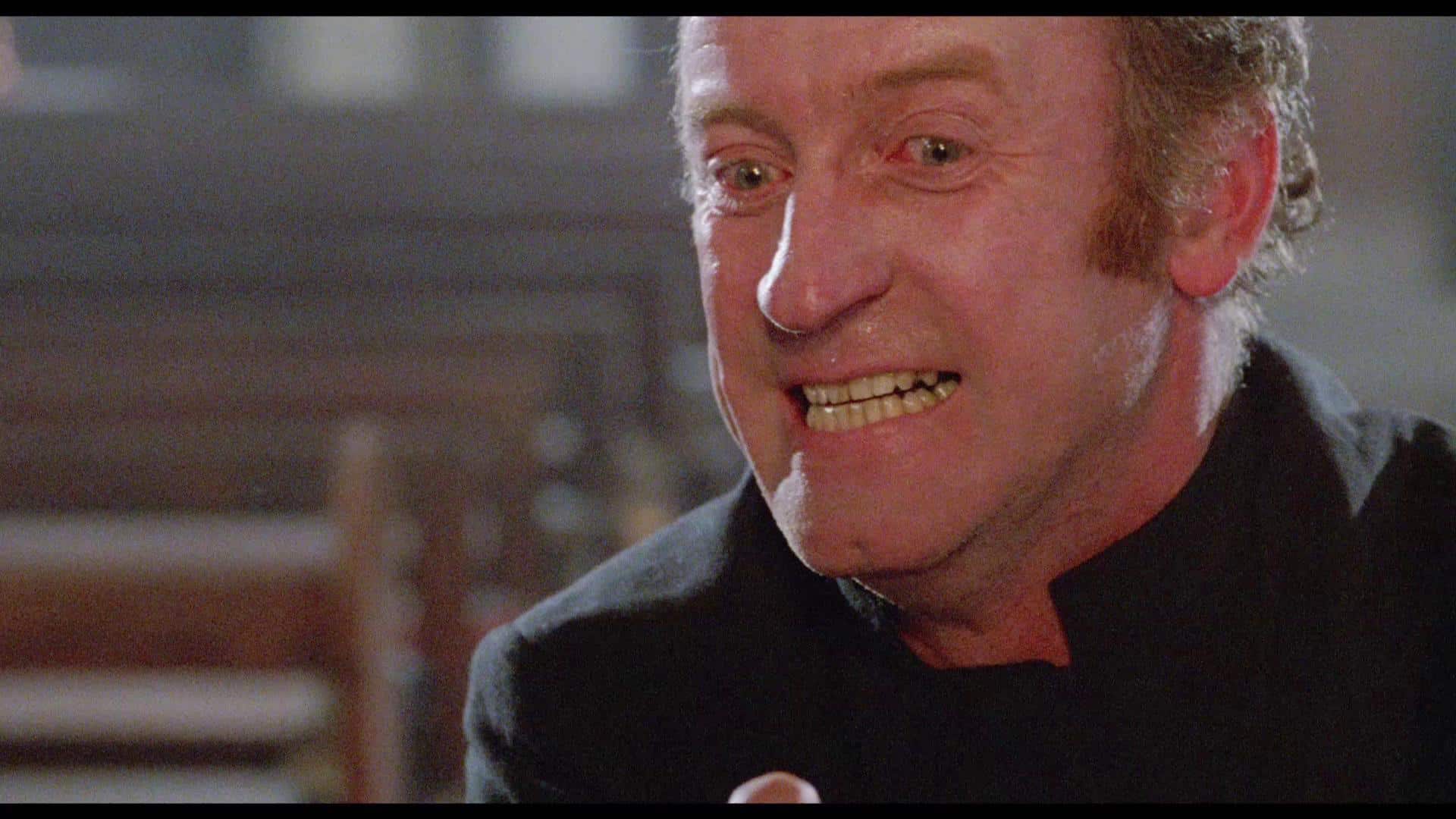
The lack of Hollywood mannerisms in their acting makes the viewing more enjoyable. It may not be such a casting masterpiece as in the legendary The Wicker Man, but it is well thought out and makes it easier to immerse oneself in the story. The cinematography intensifies the depressive atmosphere of the tale, while the music at times bursts into cacophony. The whole has a fast pace and decent dramaturgy, which stems from the fact that the characters behave like ordinary people in the face of unknown forces.
The film somewhat resembles a slasher. The monster attacks the locals under the cover of night, people who have no idea what they are dealing with. There is no shortage of corpses, and blood splashes quite abundantly. The king will also commit several acts that will remind us that he originated in Barker’s imagination, eager to break taboos.
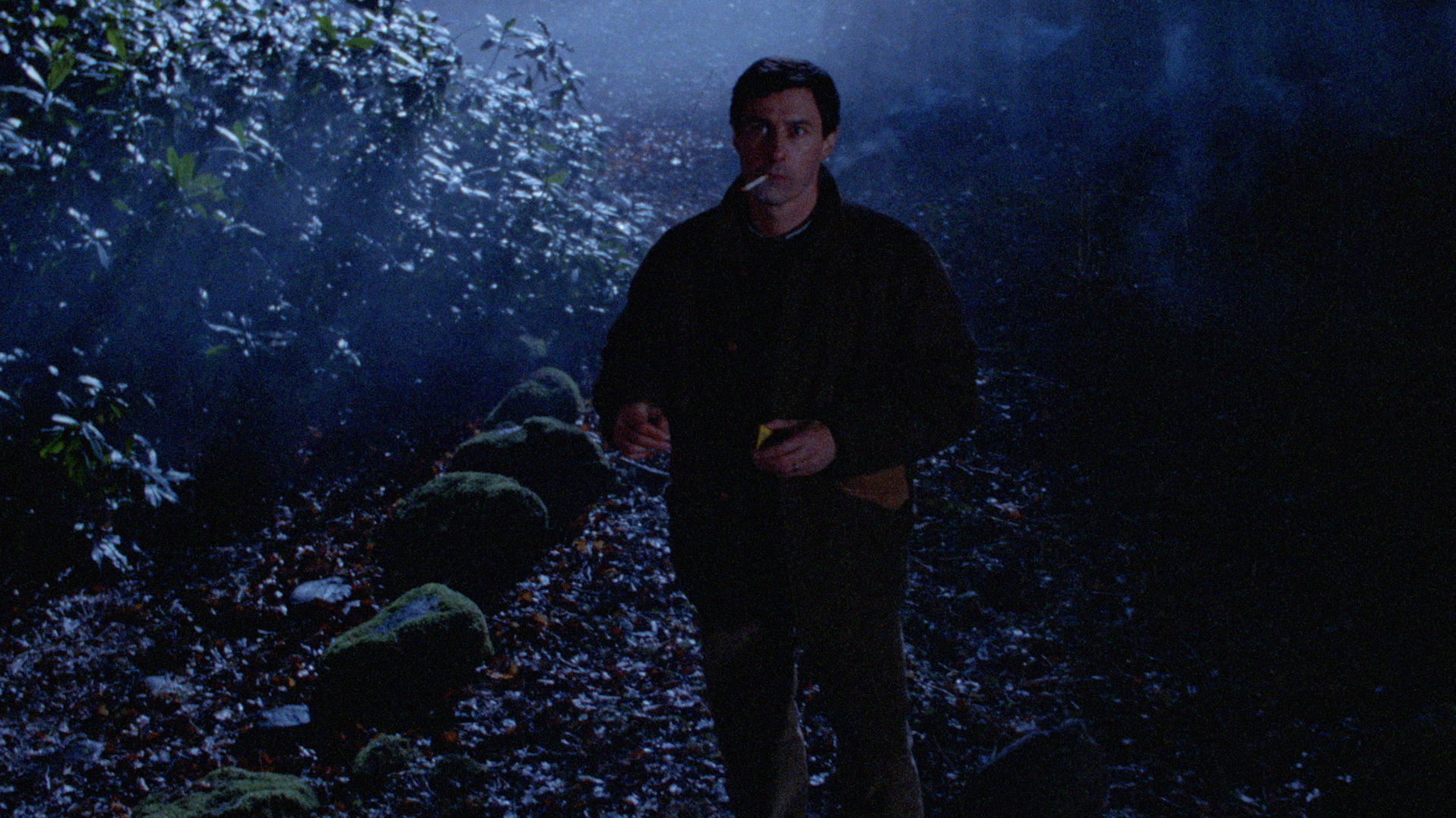
This is very s. Not some horror bacchanalia, but a pleasant fair. The advantage of this production is the fact that farmers, policemen, and priests look like their real-life counterparts. The same goes for the interiors of houses, the police station, or the church. Remember, however, that over all the film’s advantages looms the shadow of the king’s rubber mouth and his entire heavy-metal, punk-like silhouette. The creature, instead of generating horror, nullifies it. The ending also does not fare well, overloaded with cheap computer flashes.
I recommend this more to forgiving connoisseurs of the genre, not necessarily looking for groundbreaking works or a highly refined artistic level. I had quite a lot of fun with the film. I also like the king’s physique – crafted with a heavy hand. I am not surprised, however, by Barker, who, having written the screenplay for the production, felt disappointed with the final result, especially the appearance of the monster itself.
Some time ago, the creator announced a new version of Rawhead Rex of his own authorship. I doubt the project will come to fruition, but if it does, the director will certainly do much to ensure that the beast evokes fear, disgust, and fascination, rather than laughter. The king… in a more serious and ambitious approach would still have much to show and profane.