Horror Movies
LUZ: Absolutely Unique and Intriguing German Horror
Rarely does any work, whether a horror film or not, produce a special kind of excitement, reserved for something new and unique. Luz is such a film.


Personally, I believe that time is the best verifier of a film’s quality; I prefer to keep a distance of at least a few years from a given work’s premiere in order to assess it reliably and place it in a broader context, although there are also entries motivated by the moment, by a sudden impulse. This one – Luz, however, is different. I immediately recognized Tilman Singer’s debut as one of the most interesting and innovative achievements in horror cinema of recent times.
The plot can be outlined in a few sentences – the titular Luz (also a debut performance by Luana Velis) is a young taxi driver who, on a rainy night, ends up at a police station. Her somewhat bruised face suggests that the girl may have had an accident; she also says very little, and when she does speak, it is in Spanish. The confused officers, wanting to learn the details preceding her visit, call a doctor who is to put Luz into a state of hypnosis and then reconstruct the events of that evening.

After such a description, the story’s starting point seems obvious, but the greatest strength of Singer’s debut lies not in what it tells, but in how. This is not a film for those who demand a clear picture of the situation, immediate answers, and a simple narrative. In Luz it is marked by surprising freedom, though at the same time characterized by a certain austerity – the scenes themselves are often a puzzle for the viewer, and when placed next to one another they raise additional questions.
How does the protagonist’s arrival at the station, her question to a policeman about how he wants to live his life, and a blasphemous parody of prayer relate to the conversation taking place at the same time (initially suggesting flirtation and then something more sinister) in a bar between two strangers?

The opening moments with Luz make only minimal use of dialogue, whereas the scene of the seemingly accidental meeting between the seductive Nora (Julia Riedler) and the initially reluctant Dr. Rossini (the best performance in the cast, Jan Bluthardt) is based almost entirely on words and explains in detail who the titular character is and what her story is, even clarifying the injuries on her face.
Yet it is the staging and the composition of the frames – more than the strange conversation – that strike with their sense of otherness and emphasize the ambiguous nature of the meeting, especially the lurking danger. With this feeling we move deeper into the story, which increasingly reveals its horror affinity – before we realize it, Luz becomes a film about possession, and the police investigation using hypnosis takes us beyond the boundaries of human consciousness.
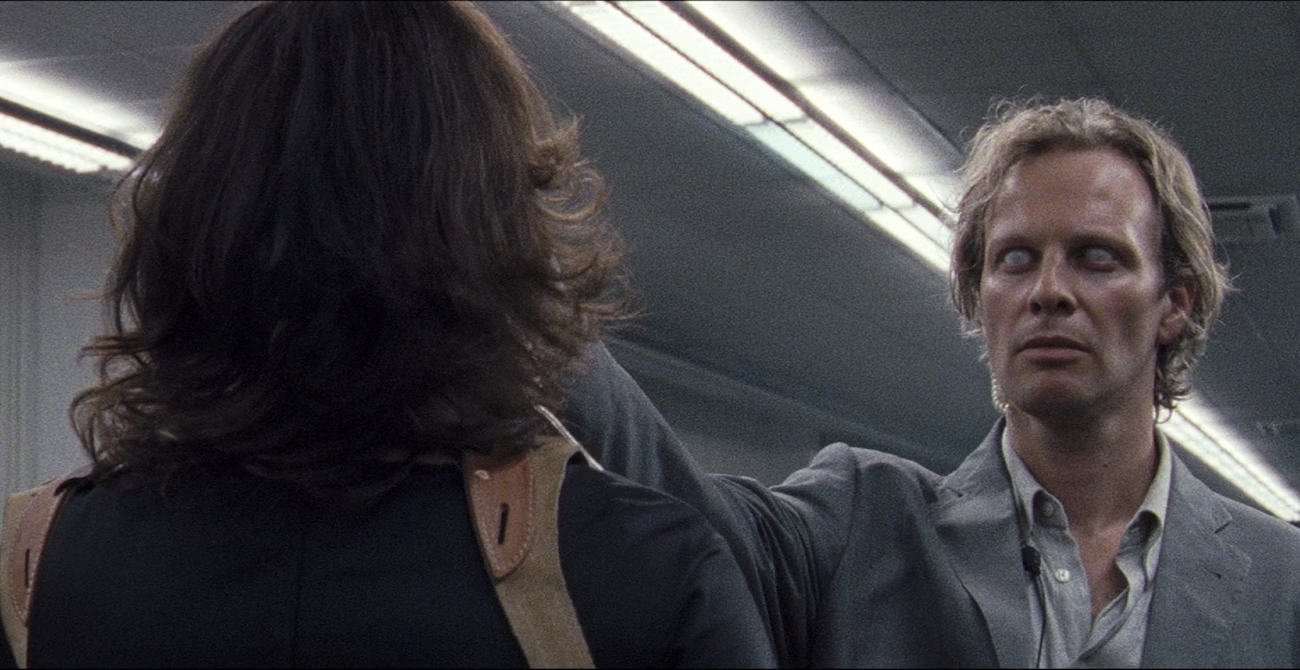
I do not want to reveal more of the plot, as much of the satisfaction comes from discovering its successive elements like pieces of a puzzle that only after some time begins to make sense, although in this case I am not sure if that is the right word. Singer clearly wants us to fall into a certain kind of trance ourselves – after the screening one remembers specific scenes, images, sounds, but not necessarily the essence of the story.
That essence becomes increasingly blurred the deeper Luz enters her memory. Perhaps this is intentional (hypnosis here is an uncertain means of cognition, clearly serving manipulation), perhaps the whole is a record of submission to a single mind and the renunciation of one’s own. If so, not only the titular heroine becomes its victim, but the viewer as well.
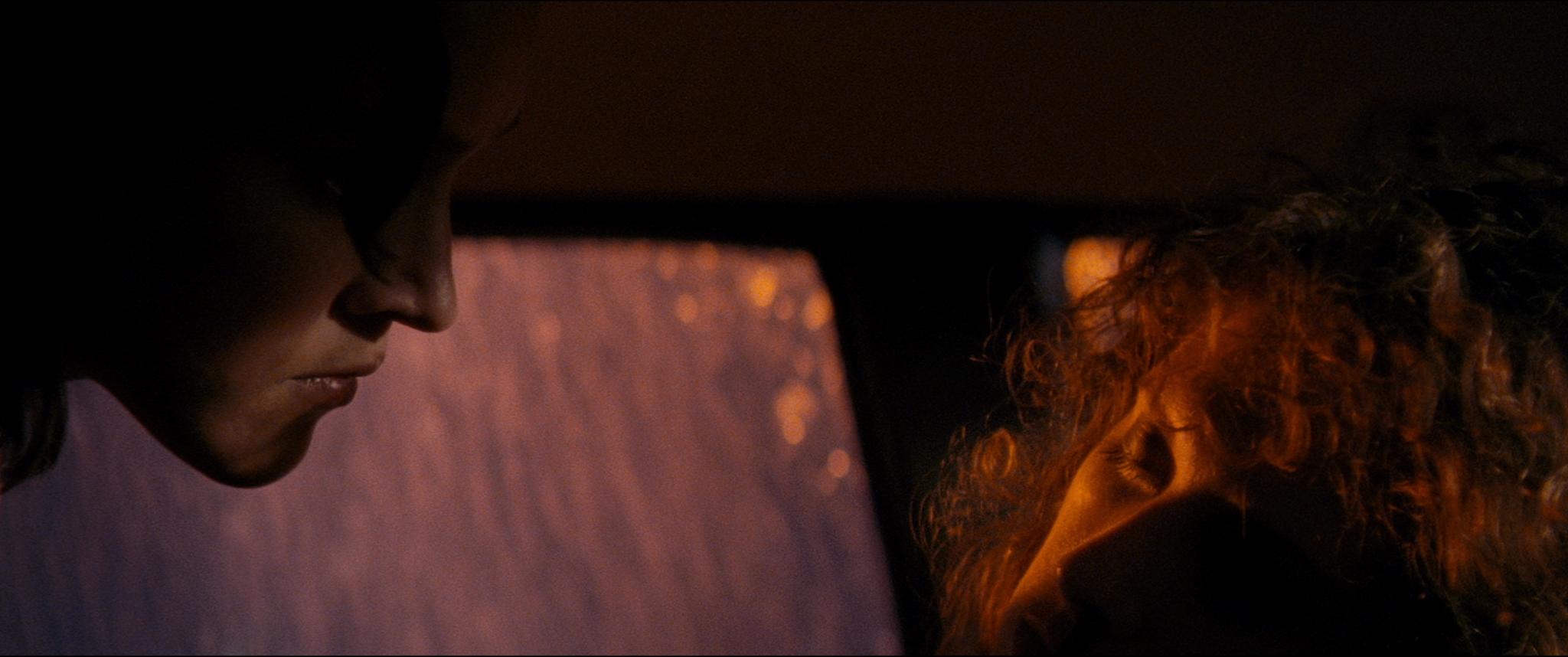
It is impossible not to treat Luz as a brilliant playfulness, not only for connoisseurs of horror cinema. One can feel the consistency and precision in the creation of its reality, as if timeless, which is probably the result of the film’s distinctive appearance.
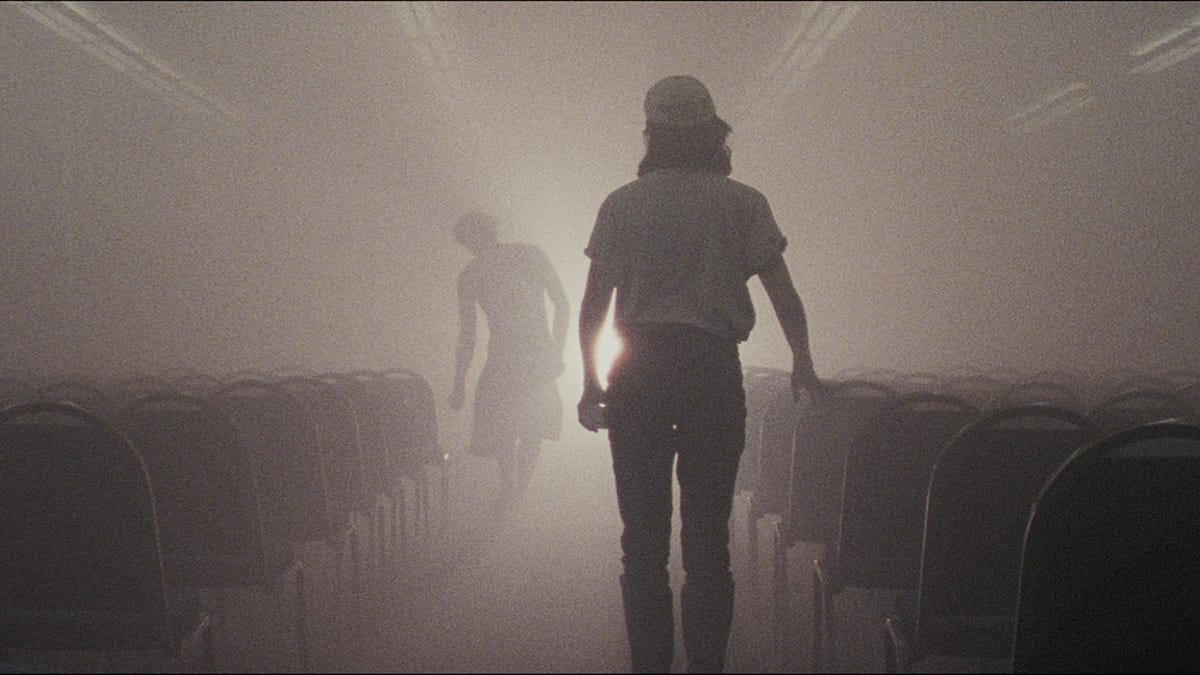
From the rough, heavily grainy texture of Paul Faltz’s cinematography (the entire film was shot on 16 mm), through long takes, often in wide shots, to Simon Waskow’s music, which from its first pulsating sounds emphasizes the bleak character of the story, one has the impression of encountering cinema of the past, a product of imagination and style typical of the early eighties.
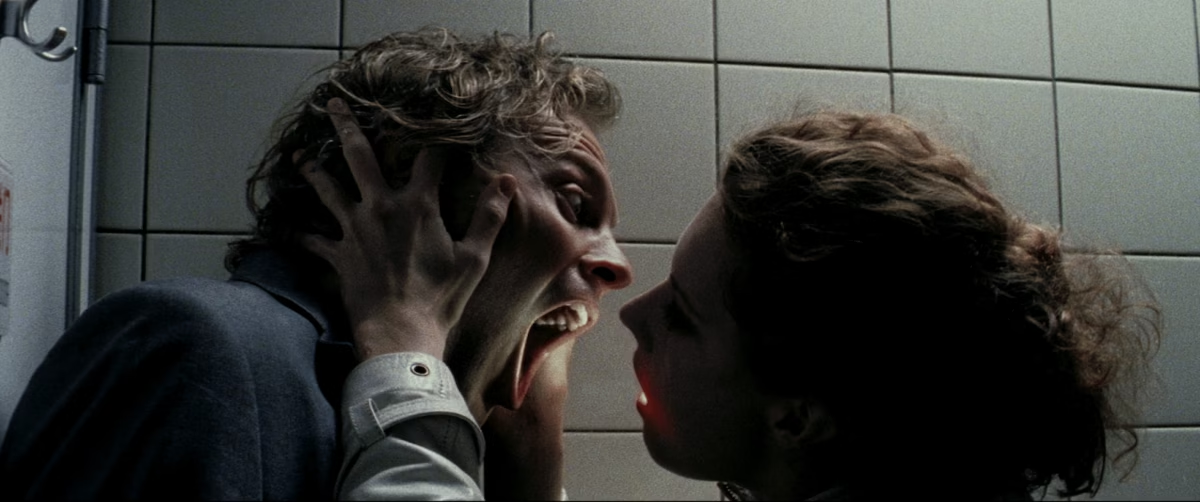
At the same time, it is difficult to resist the impression that this is a completely unknown world, enclosed within a few ugly, old rooms, striking with their emptiness. When Luz recreates the events preceding her visit to the station, even then we do not see the surroundings, any exteriors – the past unfolds only on the sound level, while the girl sitting on a chair imitates her movements as if she were driving a taxi.
This minimalism is not dictated by the film’s low budget, but is a manifestation of Singer’s remarkable imagination, capable of creating a fascinating whole out of seemingly unattractive elements. Associations with other creators of screen horror, if anyone has them, which is not difficult, do not harm Luz at all – the German work stands firmly on its own.
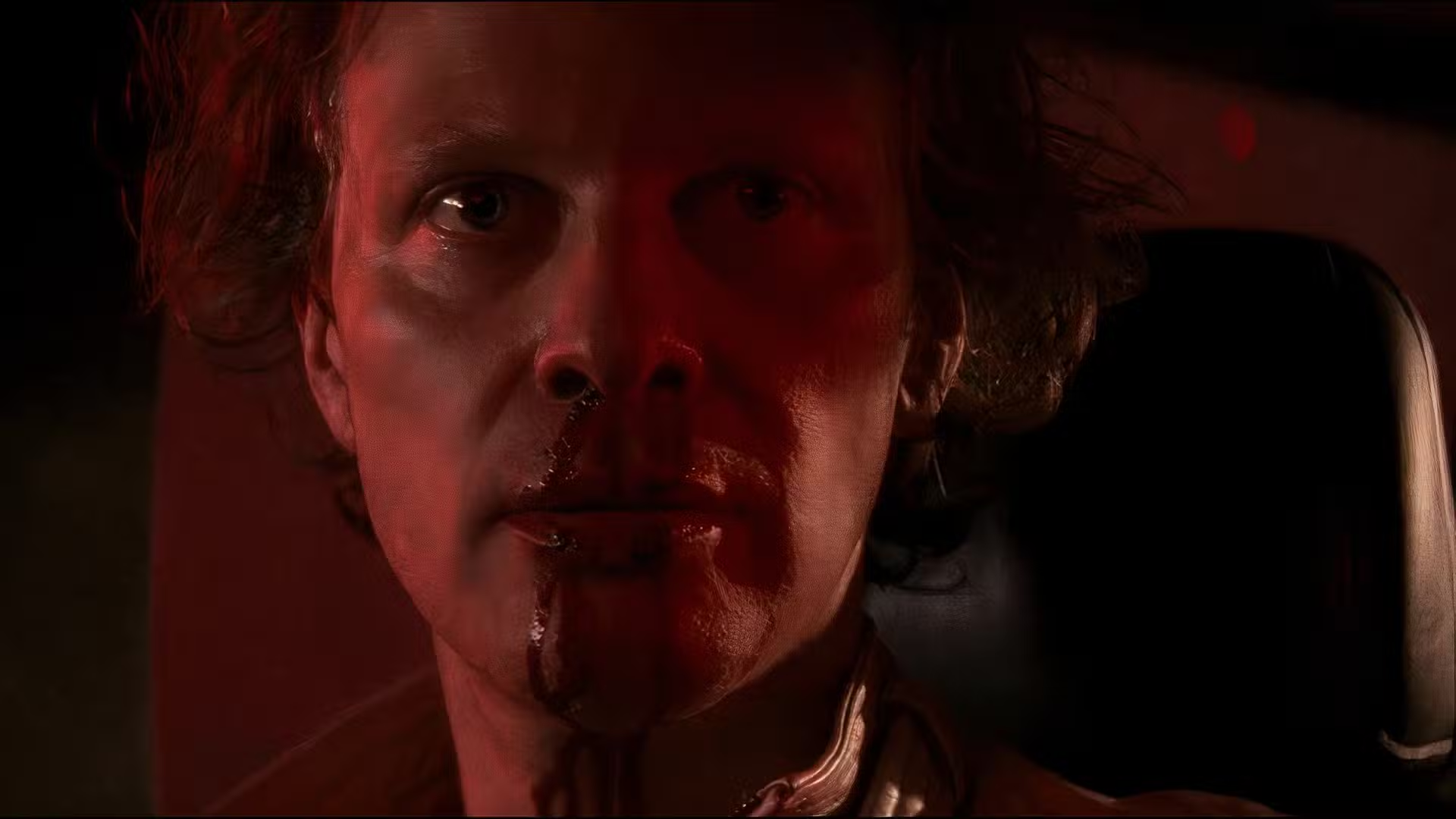
On the one hand, this is ambitious, demanding cinema, forcing the viewer to fully submit to the director’s vision; on the other, it is not devoid of ominous energy and wildness, or of ingenuity in reworking B-movie patterns. The screening lasts only 70 minutes, yet shortly after the film ended I felt like watching it again, not only to reinforce my own interpretation of the story.
Rarely does any work, whether a horror film or not, produce a special kind of excitement, reserved for something new and unique. Tilman Singer’s Luz is such a film. I suspect that in a few years we will speak of it as a cult title. A stunning debut.