
Review
THE BIGGEST QUARREL. Not a Good Choice For Children
The Biggest Quarrel is one of the fourteen tales in the animated cycle 14 Tales from the Kingdom of Lailonia by Leszek Kołakowski.

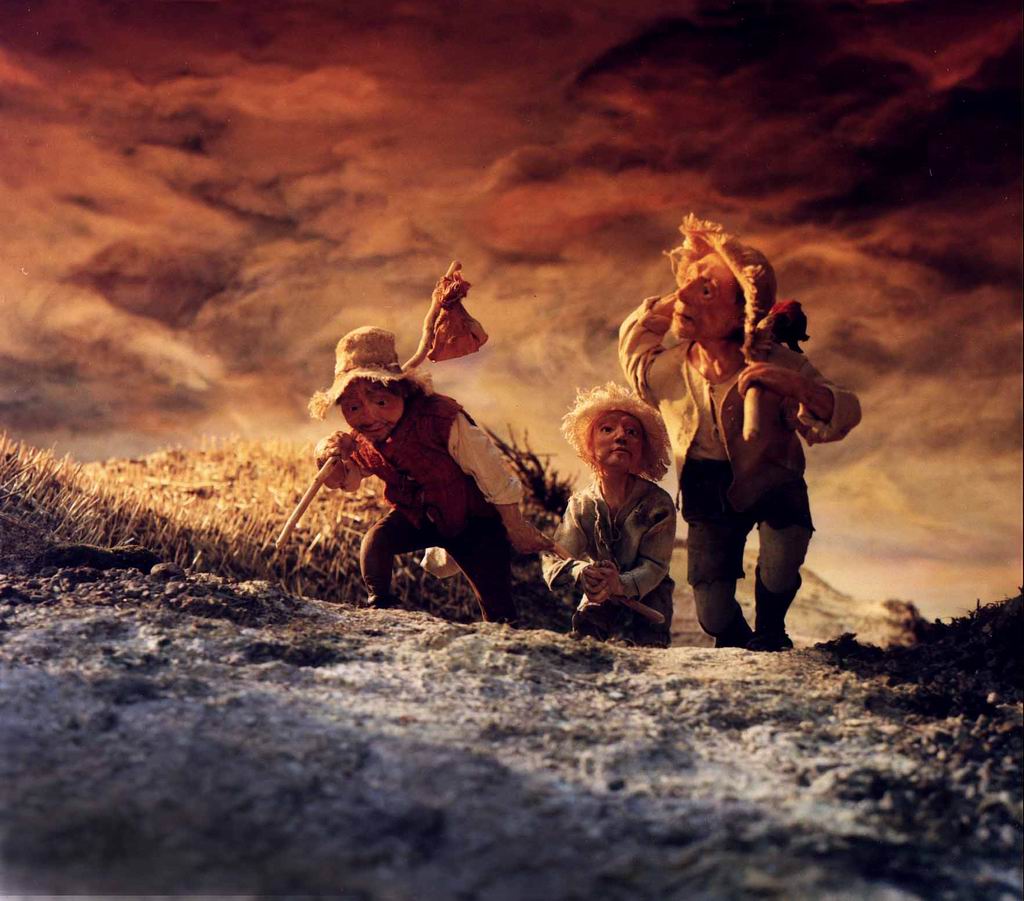
Lailonia is a fairy-tale land created by the Polish philosopher Leszek Kołakowski for the purposes of his short stories collected in 13 Tales from the Kingdom of Lailonia. By writing these tales, the author gave readers a unique opportunity to encounter philosophy and opened up unlimited possibilities of interpretation. In 1999, Zbigniew Kotecki undertook a screen adaptation of one of these tales. The Biggest Quarrel, as it was titled, for reasons unknown was included in the album Anthology of Polish Animation for Children, alongside Pyza, Reksio, and Smok Barnaba.
My surprise stems from the fact that although it is hard to fault Kotecki’s animation in any way, I would never call The Biggest Quarrel a good choice for children—especially as a bedtime story. While the tale offers adult viewers engaging visual and intellectual entertainment and in many respects resembles a classic fairy tale, it gradually contradicts everything that is fairy-tale-like about it.

The first such contradiction can already be found in the visual layer of the film. The stunning stop-motion animation, breathtaking in its attention to detail, would likely provoke anxiety in many young viewers. The world presented by Kotecki resembles the austere realities of the medieval Netherlands. What stands out most, however, are the decidedly unsubtle character designs. All the figures, including the three brothers Eino, Aho, and Laje, are depicted as exceptionally ugly and unattractive. Their unsightly, unaesthetic features are emphasized: the faces of the three protagonists are furrowed with lines and wrinkles, and sharp-ended hairs grow on their chins.
One is tempted to say that the puppets created for the animation look almost too realistic. What is more, the filmmakers repeatedly wink at viewers familiar with painting. On screen one can spot literal references to works by Pieter Bruegel the Elder, such as The Peasant Dance and The Blind Leading the Blind.
On the narrative level, however, the creators leave more room for intellectual and philosophical reflection. The Biggest Quarrel tells the story of three brothers: the sensible Eino, the stubborn Aho, and the indecisive Laje. The men live off the cultivation of their family land, which one day they lose as a result of fraud. This forces them to wander in search of a better place to live. Their journey becomes complicated when they come upon a fork in the road, and each brother insists on going in a different direction. After a long and stubborn argument, at the urging of the eldest, they decide to go left.
Kotecki’s tale offers the viewer no answers, leaving behind only questions. All the ingredients of a fairy tale seem to be in the right place: three brothers, the eldest the most reasonable and the youngest the least self-confident; fantastical elements such as conversations with animals; a city with a golden castle and a queen behind its golden gates. And even if the queen turns out to be a cruel ruler who starves her subjects and compels the protagonists to perform inhumanly hard labor, there still seems to be room for a moral and a happy ending.
Not in this case. The tale does not answer the most important questions. Which road at the fork was the best one? And is it worth taking risks to find out? Perhaps the right path was to the right, straight ahead—or perhaps to the left, at the end of which the brothers carried stones from dawn to dusk, yet still received a warm meal. Even the principle whereby the youngest brother finds the path to happiness and wisdom (as in the Brothers Grimm’s The Water of Life) is painfully called into question here. The story reaches its finale in the viewer’s conjectures.
Leszek Kołakowski in the book, and later Zbigniew Kotecki on screen, beautifully captured the ambiguous concept of human fate. Beneath the fairy-tale guise, the director concealed issues that deprive more than one adult of sleep. Is this tale, after all, an attractive proposition for a child? I find that hard to believe. It is certainly a pleasant opportunity for philosophical reflection.
The Biggest Quarrel is one of the fourteen tales in the animated cycle 14 Tales from the Kingdom of Lailonia by Leszek Kołakowski.

