
Horror Movies
CRIMSON PEAK Revisited: Stunningly Beautiful Gothic Horror
Del Toro loves visuals, giving them an unreal, almost dreamlike status, aided by superb set design and picturesque cinematography.

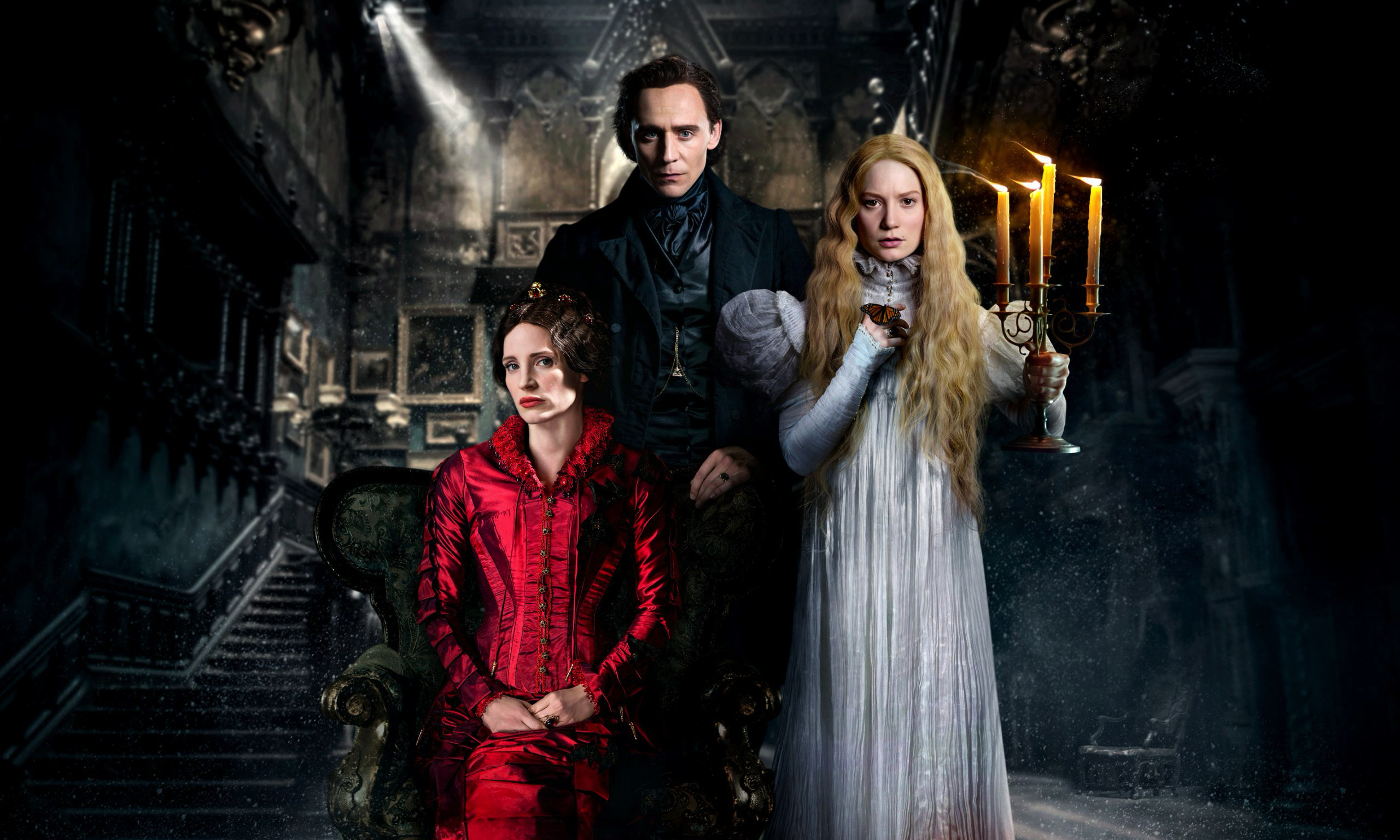
The Allerdale Hall estate, to which the protagonist of Crimson Peak arrives, is an exceptionally peculiar creation. The building, constructed on deposits of liquid clay, has very unstable foundations, and the roof requires a major repair – a hole in the attic causes everything to fall into the middle of the hall, whether snow or rain. The clay soils the white snow to the point that it turns a blood-like red, surrounding the entire estate in winter.
The house has its years, which makes practically everything creak and squeak, from the doors and the large elevator to the floor, through which something muddy seeps. One might get the impression that this building is not so much alive as dying. It is surprising that anyone lives here.
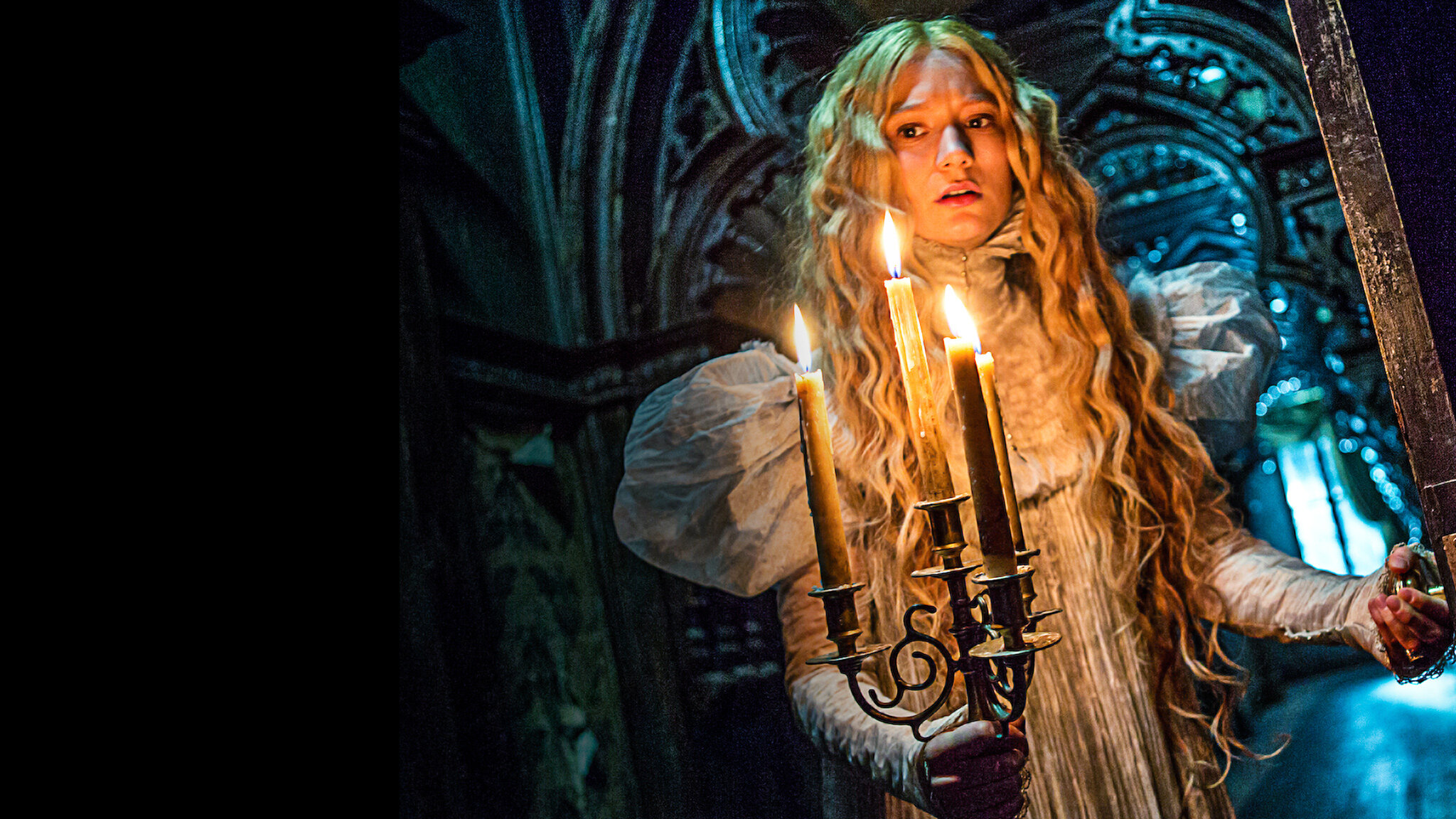
Our guide through the mysteries of this English residence becomes Edith Cushing (Mia Wasikowska), a young American with literary ambitions. Instead of writing romances in the style of Jane Austen, she prefers ghost stories, modeling herself on Mary Shelley. Naturally, such a story becomes her fate when she meets Sir Thomas Sharpe (Tom Hiddleston), a young baronet and inventor seeking financial support for the construction of a machine of his own design. They quickly fall in love and, despite Edith’s father’s objections, get married.
Yet, upon arriving at Allerdale Hall, the young woman becomes a witness to strange occurrences. The house gives a disturbing impression, Thomas’s sister, Lady Lucille (Jessica Chastain), clearly distances herself from her sister-in-law, and at night Edith is haunted by ghosts.

Crimson Peak is more of a gothic romance than a horror, relying on a dark atmosphere rather than genuinely frightening scenes. Director Guillermo del Toro knows how to scare, as he has proven multiple times, for instance with The Devil’s Backbone and Pan’s Labyrinth, often working equally with suggestive cinematography and music as with more explicit effects. Here too, he does not shy away from particularly drastic scenes, which, together with a very classical narrative and exquisite visuals, evoke the horror films from Hammer studios.
The color palette refers us to Italian masters of fright – such saturated colors have probably not been seen in horror since Dario Argento’s Suspiria. However, del Toro has more in common with Mario Bava. Similar visual sensitivity, dressing horror in costume, and a taste for the macabre are identical to the Italian cinema of the 1960s.

Ultimately, these references make the Mexican director’s film merely a tribute to classic horror rather than a new and original proposition in the genre. Crimson Peak is full of quotations, manifesting not only in form but also in its commentary.
The mention of colorblind people’s inability to see red and green is amusing in the context that these very colors (perhaps with the addition of yellow) dominate many scenes. The name Cushing is familiar to fans of British horror cinema, and a book by Arthur Conan Doyle found in Dr. McMichael’s library signals the detective inclinations of the character, which will be reflected in the film.
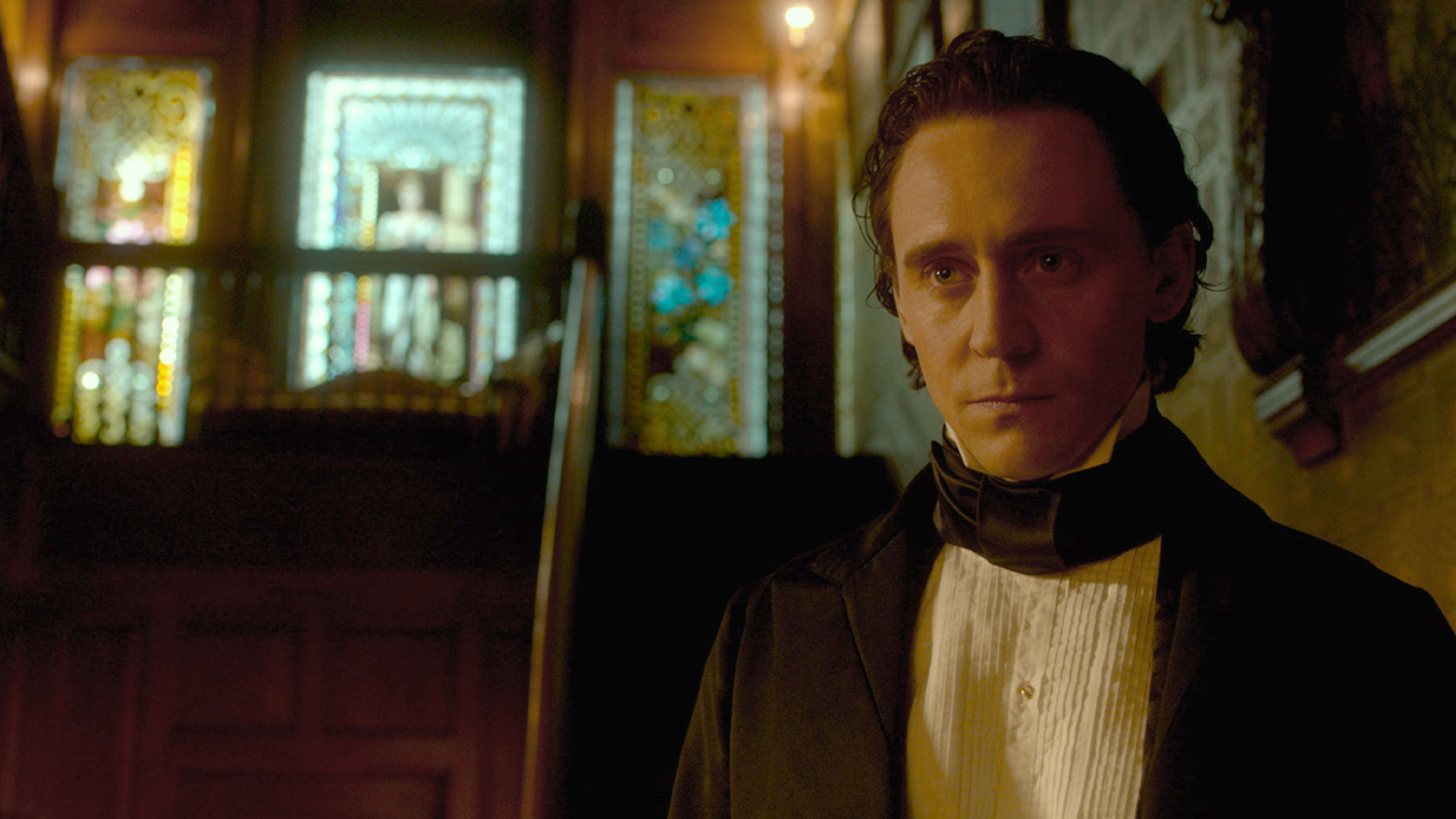
Perhaps only to me, Thomas Sharpe’s hairstyle recalls Edgar Allan Poe, but the relationships between Edith and Lucille will seem familiar to anyone who has seen Alfred Hitchcock’s Rebecca.
In this way, the director reveals his cards too quickly. He leaves the greatest surprises for the end, yet an observant viewer will already realize, within twenty minutes, where the plot is heading and what resolution awaits in the finale.

Despite this, the story of the Pacific Rim creator has much old-fashioned charm and typically del Toro thinking. It is, like Edith’s book, less a ghost story than a story with a spirit serving both as a manifestation of emotions and as a warning against real danger. The director once again stands on the side of fantastic beings, giving them a voice, though this time significantly shortening their screen time.
The true conflict unfolds between the three main characters – the good Edith, the tormented Thomas, and the cold Lucille. Wasikowska previously starred in Jane Eyre, so the gothic atmosphere is familiar to her, and once again she proves that she feels at ease in costume. Chastain performs even better, though her role is more showy, suppressing a fire that eventually must erupt.

Most interesting, however, is Hiddleston, perhaps because his character is the only one undergoing constant change. Already in the first part of the film, he appears only seemingly open and friendly, though this evolution later is almost too subtle, barely noticeable. His actions must therefore suffice to confirm the metamorphosis Thomas undergoes before our eyes.
It is unfortunate that del Toro so easily fell into the trap of quotation. A gothic romance should brim with emotion and passion, yet this is lacking in Crimson Peak – perhaps because the tropes are recognized too quickly, and the director emphasizes form over the relationships between the characters.
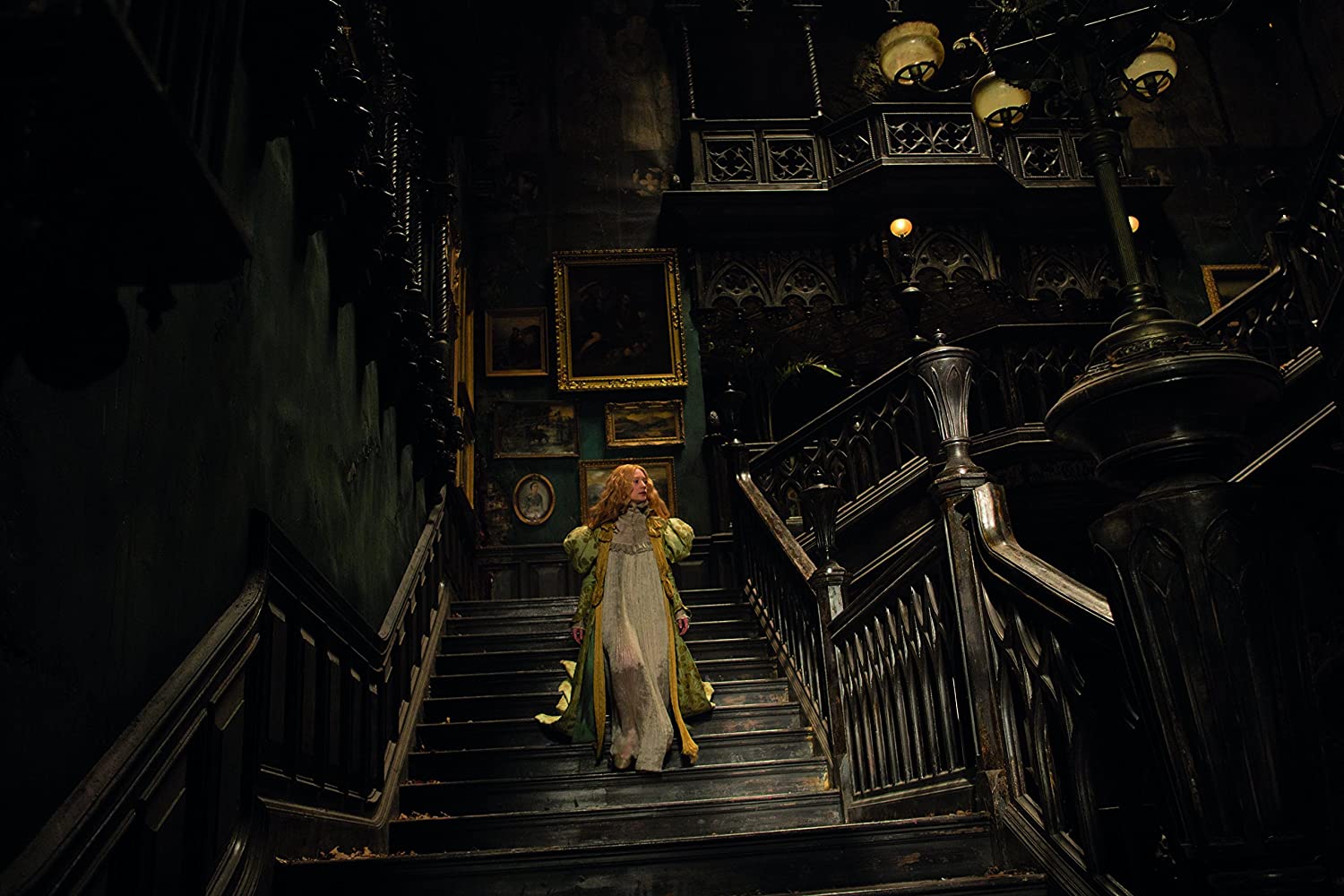
Del Toro loves visuals, giving them an unreal, almost dreamlike status, aided by superb set design and picturesque cinematography, but even the film’s appearance seems familiar. Everything is beautiful, tangible, and yet unreal, created by someone aiming to make a work worthy of his inspirations. Sometimes, however, love for cinema can be detrimental to a film.

