
Features
SEX AND THE CITY: The Consequences of a Certain Phenomenon
Today, when television shatters new taboos, Sex and the City would hardly be shocking, but in 1998 it was so controversial that the network feared to produce it


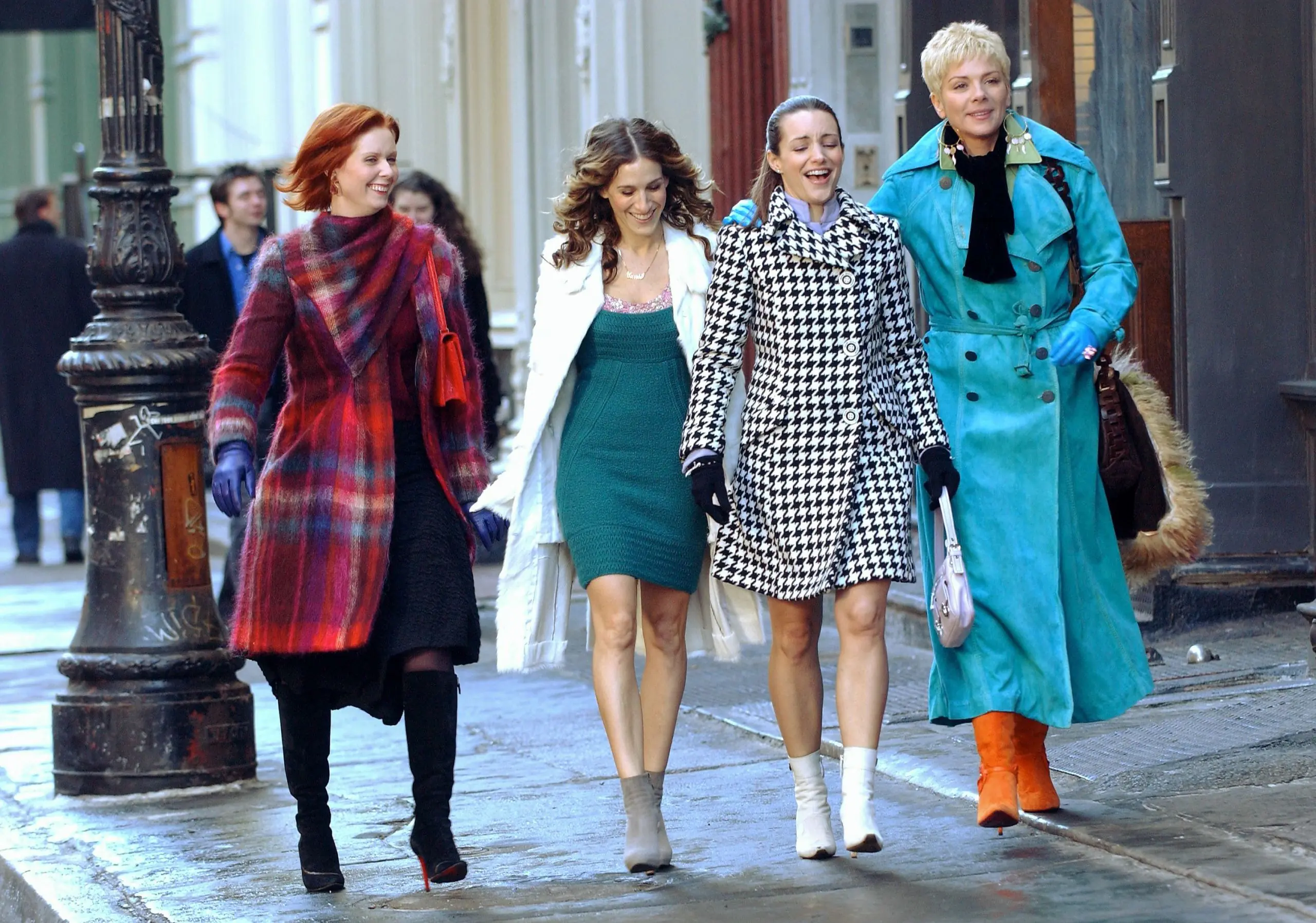
6 June 1998 saw the broadcast of the first episode of the cult classic Sex and the City (SATC). The adventures of four friends living in New York—Miranda, Samantha, Charlotte, and of course Carrie, who emerges as the central figure—were full of romantic dilemmas as well as an extensively depicted sexual life of the protagonists. The series ran for six seasons, continued with two feature films, and spawned an awkward television prequel (The Carrie Diaries).
Agnieszka Stasiowska and Filip Pezinski recall Sex and the City and examine the factors that made it a cultural phenomenon.
Social Revolution
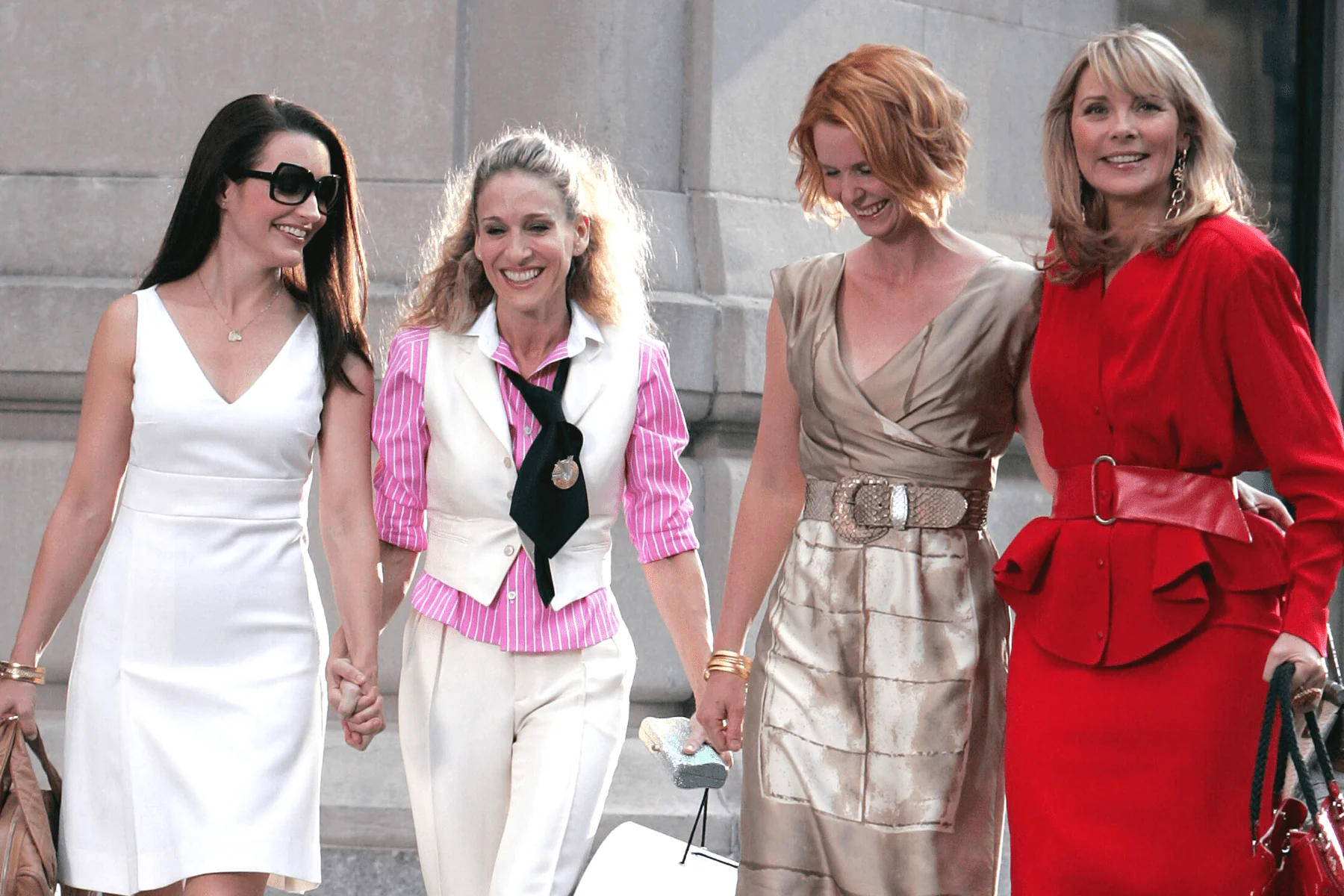
Today, when television shatters new taboos, Sex and the City would hardly be a shocking series, but in 1998, when HBO was still in its infancy, the adaptation of Candace Bushnell’s books was a format so controversial that the network seriously feared to produce it. It is hardly surprising. At that time, film and television were even more dominated by men than they are now, and it was their sexual exploits that served as attractive content. The series, starring Sarah Jessica Parker, focused on women and their emotional and physical experiences.
It was a show from which the then much more puritanical America could learn everything about female orgasms, vibrators, pubic hair dyeing, the taste of semen, anal fingering, and sexual drive after menopause. Crucially, these revelations came from the mouths of four dynamic single women who, although seeking love, did not make a dramatic issue of their marital status. It was also a series that successfully introduced positive homo-, bi-, and transgender characters into social consciousness and television mainstream.
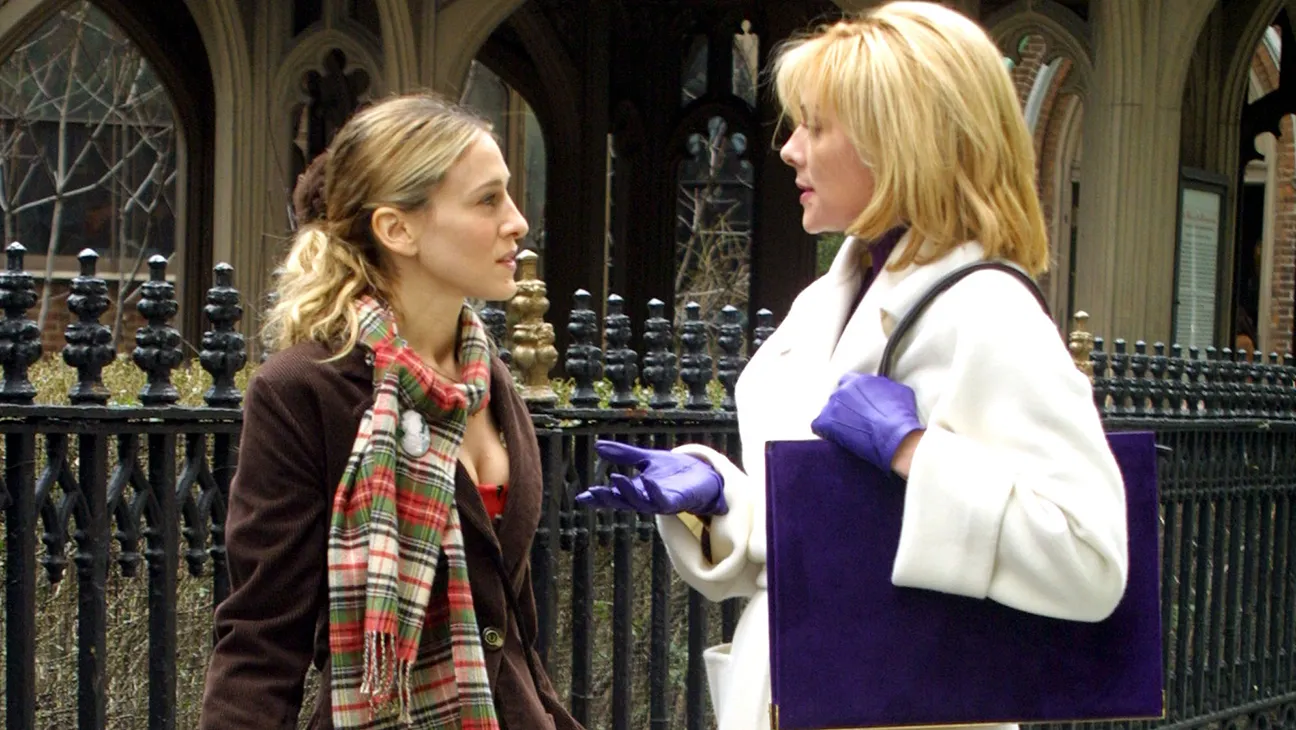
I write of puritanical America, but it is easy to imagine that the series, which was gaining popularity, also reached much more conservative markets. Sex and the City circulated across both Americas, Australia, Asia, Africa, and Europe. Seeing women on screen having sex for pleasure, undergoing legal abortions, and—let us not forget—pursuing successful professional careers, could accomplish more than the feminist movements of that era [Filip Pezinski].
Sex and the City and Other Women’s Series
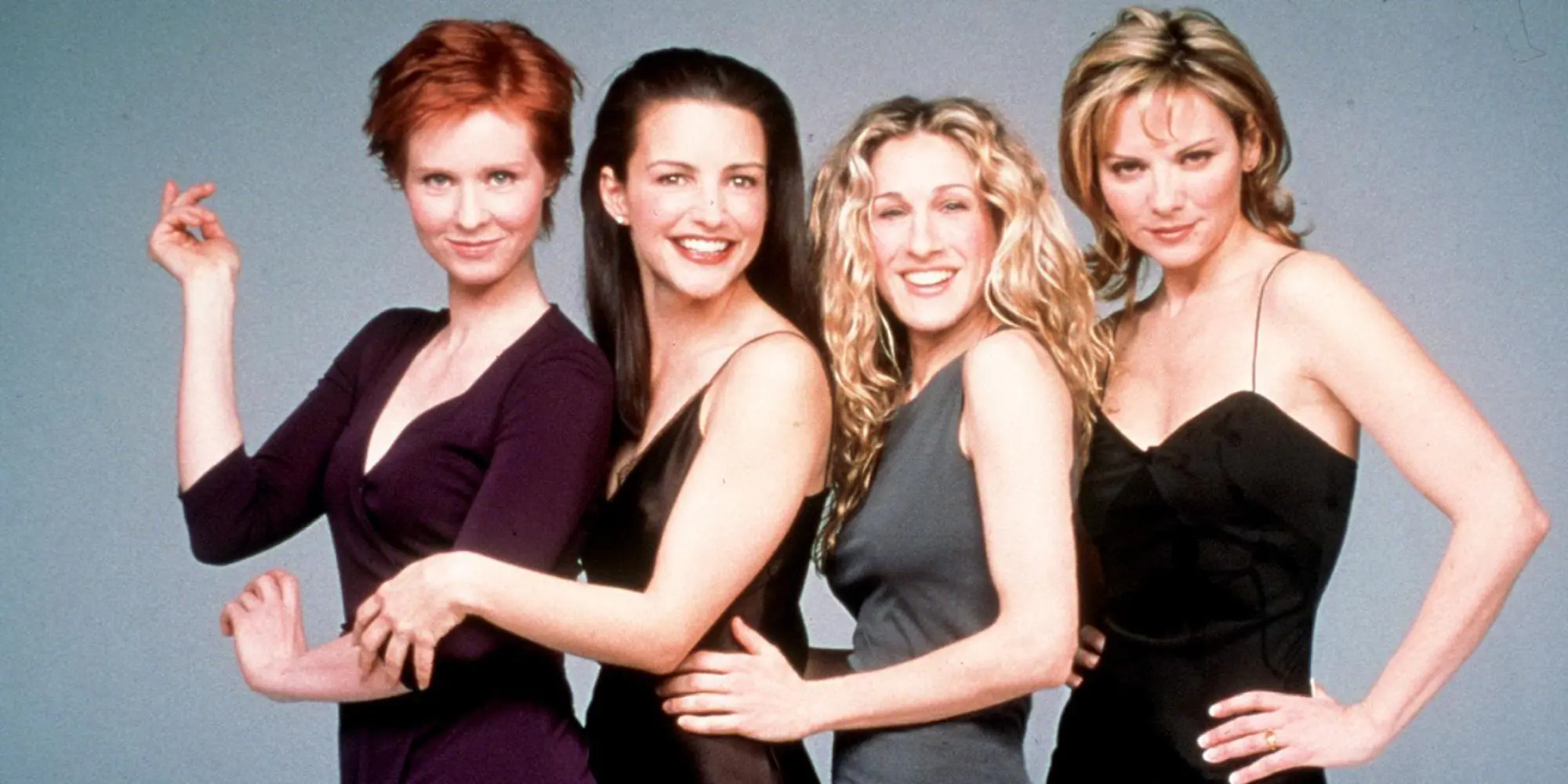
Sex and the City was certainly a surprise for women of that era. What, after all, did they have to choose from at that time? Having barely recovered from Dynasty, where women served only as luxurious ornaments and Alexis, the only one who decisively took matters into her own hands, was portrayed as evil incarnate, they fell straight into the arms of charming sitcoms like Roseanne or Married… with Children, in which they were depicted as components—positive or negative, but never standalone—of the family hearth.
The precursor of the strong woman was undoubtedly Murphy Brown, but her independence manifested primarily through a successful professional career. Women’s sexuality was either the butt of crude (usually male) jokes or completely absent.
Shows like Ally McBeal, which approached those things a bit more boldly, were only crawling. For a long time, one of the few women on the small screen who defined herself was Xena: Warrior Princess.
It was hard to expect any woman in her thirties to identify with her. Thus, SATC filled an enormous gap. At a time when marriage as an institution and the notion of a woman solely as wife and mother were being increasingly contested, Sex and the City was a natural response to the growing needs of the female audience. Granted, the response was sometimes excessive and even aggressive, but it hit the mark. [Agnieszka Stasiowska]

The Series versus the Feature Films
The phenomenal success of the series meant—as was to be expected—that upon its conclusion the idea of a feature-length film emerged.
This is the traditional practice of milking the cash cow, which very rarely succeeds. Typically, fans want to see their favorite characters in new installments but, at the same time, fear the obvious challenges that come with a change of format. The 2008 Sex and the City film focused on what fascinated Carrie Bradshaw’s fans most: her wedding to John Preston, that is Mr. Big. The question of how the style icon’s gown would look on that big day kept them awake at night.
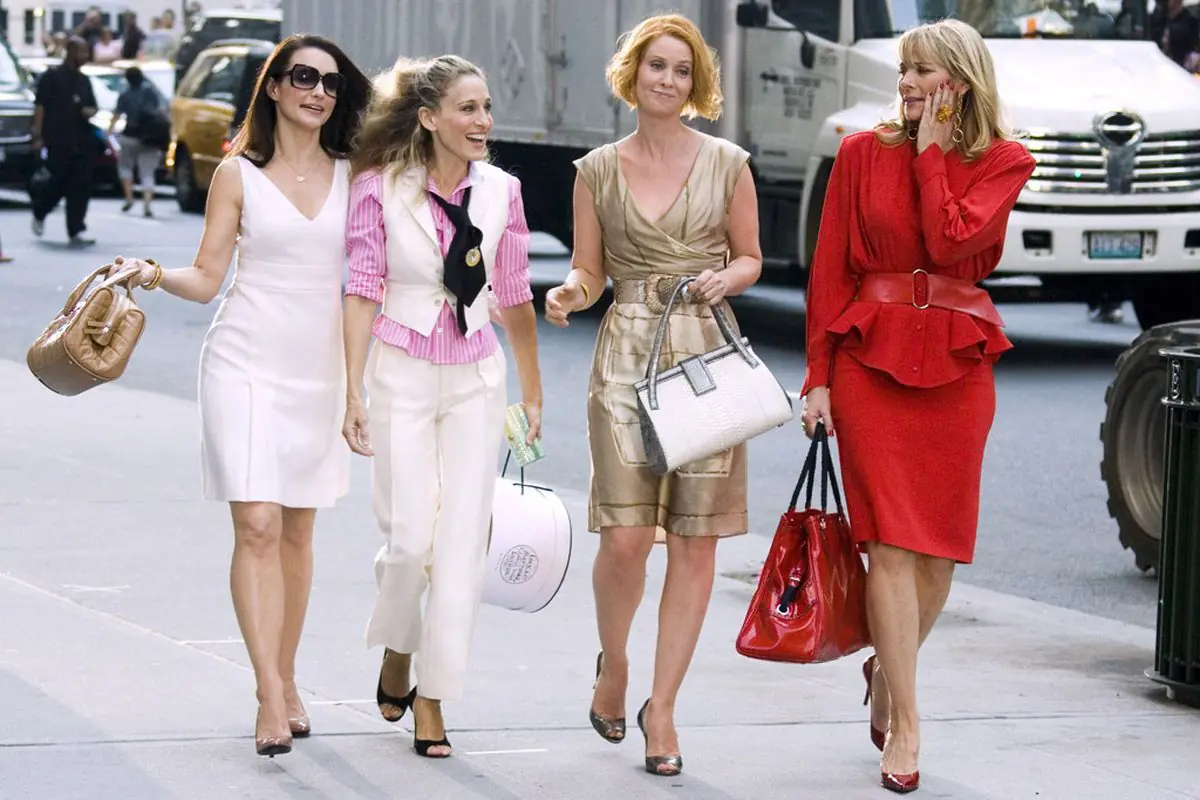
They received little more.
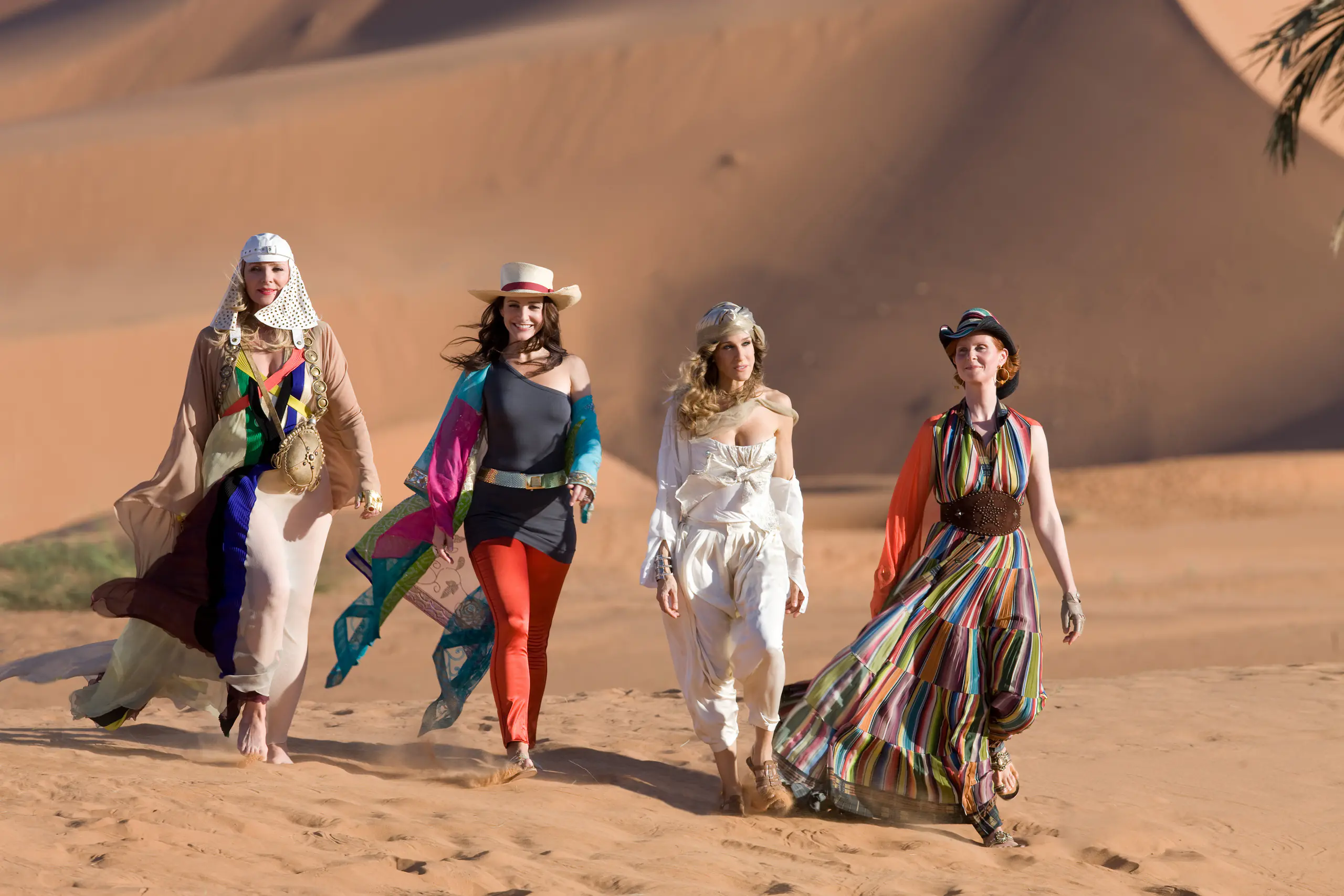
The film was criticized as shallow and dull, having lost the wit and lightness so characteristic of the series. Unfortunately, what works perfectly in twenty-minute episodes can disappoint in two and a half hours. The same applied to the second production—Sex and the City 2, filmed in 2010 with its action set in the United Arab Emirates. The soundtrack was undoubtedly a strength of that installment. Shifting the weight of the action away from the Carrie–Big duo and returning to the tried-and-true team of four friends served the film well. My favorite scene is in the club, when the women sing karaoke. It is a beautiful celebration of womanhood itself, and even more, when irrepressible Samantha sings I am a woman, I’m on that table! it never fails to make me laugh.
The SATC films are clearly intended primarily for fans of the series and although they surely have staunch opponents among them, they must be credited with providing pleasant entertainment. [Agnieszka Stasiowska]
Sex and the City After Years
I vividly remember the start of my adventure with Sex and the City. I was in high school and my desk mate harbored true hatred for the series to which his partner forced him to watch.
Four ugly broads talking about fuck****, I heard. Some time later I caught the beginning of the first season on Comedy Central and, then still with some embarrassment, I quickly became hooked. Above all, I did not understand why I should call Kristin Davis (the television Charlotte) ugly; secondly, describing the series as talking about fuck**** seemed to me a gross oversimplification. For me, a child of what may have been the first Internet generation, the topics addressed by the protagonists were not taboo, and I found their experiences, relationships, and life changes far more attractive. When I had to say farewell to Carrie, Miranda, Samantha, and Charlotte at the end of the sixth season, I felt as though I were saying goodbye to real friends.
The films only spoiled the perfect conclusion of the television format. I do not recommend them. [Filip Pezinski]
Sex and the City came into my life quite late. I knew the series, the main character, and the buzz was such that I always considered it rather primitive entertainment for which I had absolutely no inclination. When I finally—out of boredom—picked up this title as a woman over thirty, I was greatly surprised. Not by the fact that the main character’s story, that of Carrie focused on the mysterious Mr.
Big, did not interest me (ignoring the series’ main plot is, for me, a recurrent affliction), but by the fact that, watching episode after episode, I paid the least attention to the sexual aspects. It was the emotional and professional adventures of the protagonists that interested me most; my favorite became the introverted Miranda (Cynthia Nixon). If I had to choose my favorite episodes, at the top would be One (season 6, episode 12), in which Miranda confesses her love for her son’s father at his birthday party. The moment is moving in itself, considering how truly lost that woman had been in her life—and the power of that emotion is strengthened by Charlotte’s arrival at the party, having recently suffered a miscarriage.
In second place would be Coulda Woulda Shoulda (season 4, episode 11), in which the entire story begins—Miranda realizes she is pregnant and contemplates abortion, while Charlotte, who learns her chances of becoming pregnant are slim, shows no understanding for her friend’s dilemma for the first time. However, that situation is not the reason for the high position of this episode in my ranking, but rather what, among other things, makes SATC so popular—a wonderful balance introduced by the invaluable Samantha and her love of the Birkin bag. And Lucy Liu, as always, impeccable. In third place on the podium would be A Woman’s Right to Shoes (season 6, episode 9), because, above all, a woman has the right to hundreds of pairs of shoes and the right to love them passionately.
Thus, the series, as can be seen, provided me with many moving experiences, and the films were its pleasant—perhaps unnecessary, but still pleasant—continuation. [Agnieszka Stasiowska]

