
Review
GIRLS WILL BE GIRLS. Two Women, One Reflection [REVIEW]
Girls Will Be Girls is a beautifully honest film. It walks us through the rocky path of adolescence, pointing out the mistakes passed down through generations.


Girls Will Be Girls – the feature debut of Indian director and screenwriter Shuchi Talati is an intriguing, simple story of a teenage girl becoming a woman—and her relationship with her mother.
One might think that the subject of growing up, the transformation from girl to woman, and the discovery of one’s own sexuality has been exhausted on screen. Yet Talati has achieved something remarkable—she revisits this topic without losing any of its freshness or significance.
Mira, a 16-year-old student at an elite school in India, becomes the first girl in the school’s history to be elected as its head prefect.
It’s a subtle sign of change in a place where it’s still vitally important that girls wear skirts of the appropriate length and socks pulled up high. Mira takes her new responsibilities very seriously—her parents constantly emphasize how important education is in her life. But things start to shift when a new student, Sri, enters the picture…

Shuchi Talati builds Mira’s character (played by Preeti Panigrahi) across several layers. The first and most important is the internal transformation she undergoes. The prestige of her new role at school and the attention from an older boy give her a new sense of confidence, which naturally leads to rebellion against societal norms. The second theme is her relationship with her mother, which becomes increasingly complicated as Mira changes. The third layer is her relationship with Sri, which brings a wide range of emotions and experiences. The fourth—though by no means least—is Mira’s existence within the school environment.
Preeti Panigrahi, the 22-year-old actress who earned third prize for Girls Will Be Girls, proves with every gesture that she fully deserved the award. Her portrayal of Mira is as unpredictable as spring weather—one moment she’s shyly flirting with Sri, the next, she sharply declares that she can’t stand her mother. In this absurd, toxic triangle, she is often the one setting the tone.

Kani Kusruti, playing Mira’s mother, is just as captivating. She transitions effortlessly from maternal tenderness to fierce rivalry. Talati’s script allows her to portray a rarely discussed aspect of the mother-daughter dynamic: the natural jealousy of a woman who’s past her prime for her younger, vibrant counterpart. The evil stepmother (who, in the original fairy tale, was really the mother!) doesn’t envy Snow White’s beauty—she envies her youth and everything still ahead of her.
For me—as a woman, daughter, and mother—the most moving scene is the one where Mira dances to her favorite song in front of the mirror. Her mother walks into the room, turns up the volume, and starts dancing with her. At first, Mira joins in the fun, but then, for the first time, she sees not her mother, but a woman—with fuller breasts and hips, more sensual movements. Her joy vanishes; she withdraws and stops. Anila, rejected and confused, turns off the music. From that moment on, nothing between them will ever be the same.
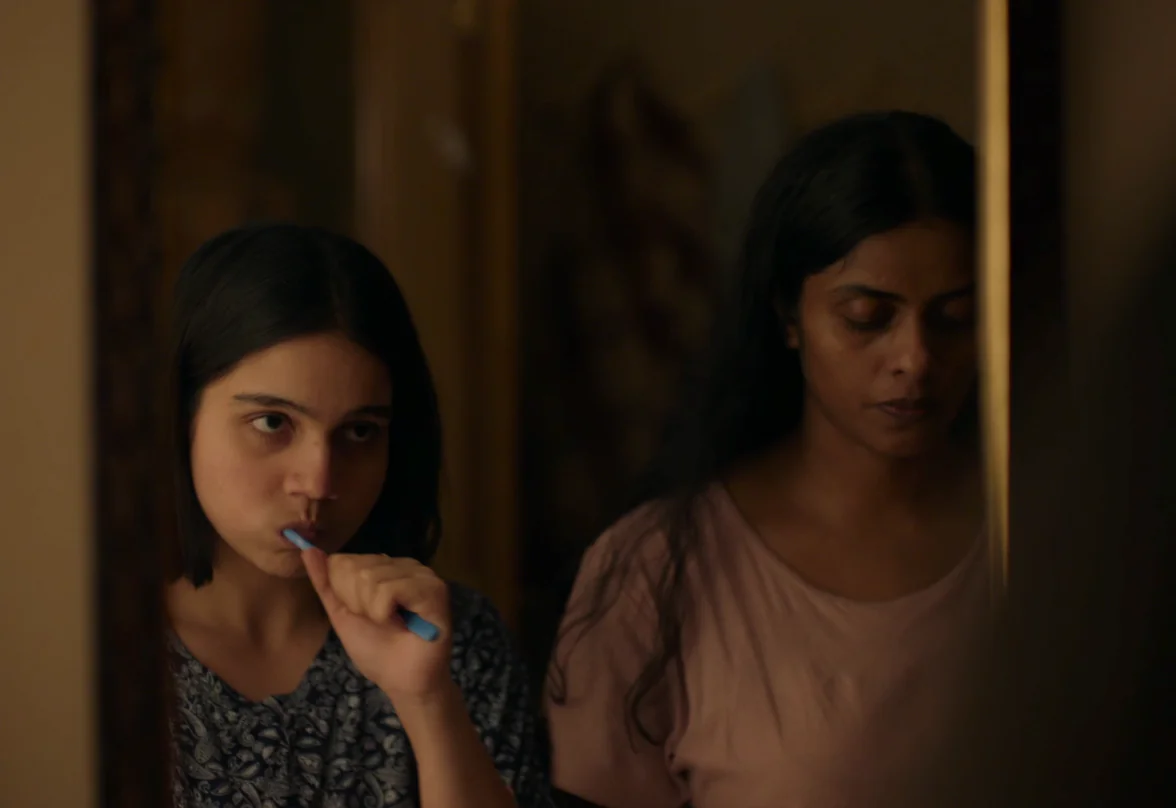
Girls Will Be Girls is a beautifully honest film. It walks us step by step through the rocky path of adolescence, pointing out the mistakes passed down through generations of women. Watching Mira’s choices and their consequences, we’re almost certain she will follow Anila’s path—and decades later, look at her own daughter with resentment and the inevitable, “When I was your age…” forgetting that, in fact, she was exactly the same. Girls Will Be Girls, says the Indian director with a hint of resignation, though somewhere in the suggestive scenes between the two women—young and mature—there is a glimmer of hope that this cycle can be broken.
Shuchi Talati doesn’t offer ready-made answers, but she asks the right and necessary questions. And they’re worth hearing—regardless of age, gender, or life experience.

