
Horror Movies
Revisiting ALICE, SWEET ALICE: Dread and Religious Symbolism
Especially in its first half, Alice, Sweet Alice is an exceptionally terrifying film, perfectly capturing the dirty realism of cinema of that time.

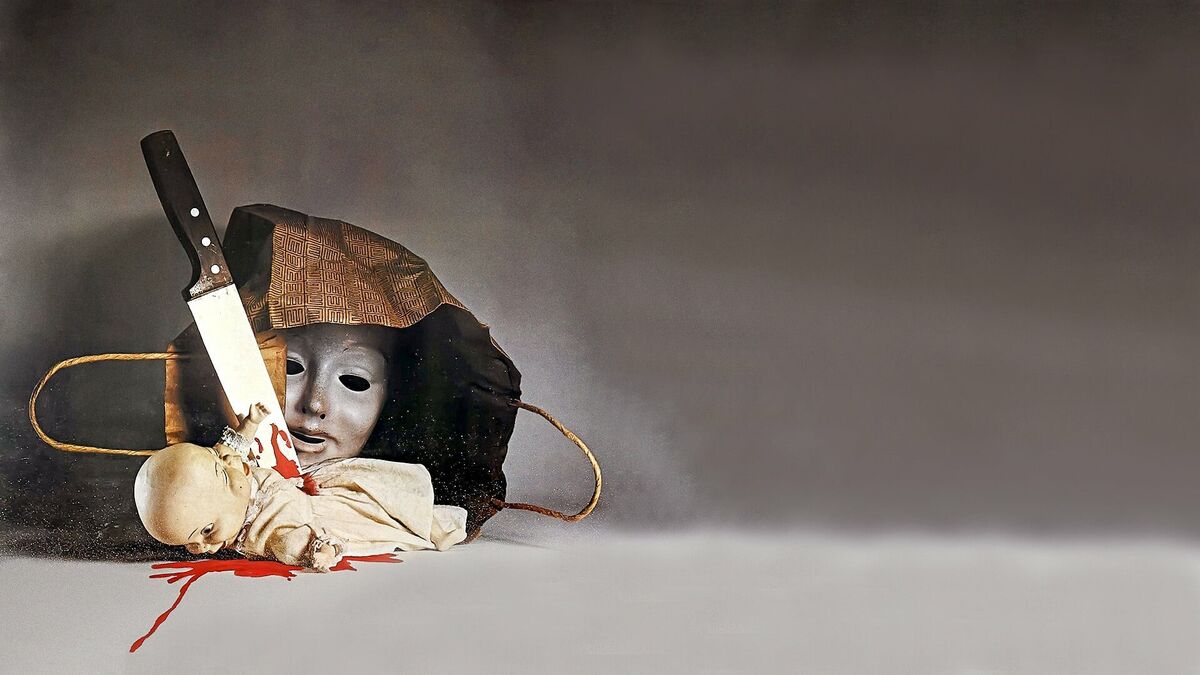
I had wanted to write about Alice, Sweet Alice by Alfred Sole for a long time, and May seemed like the perfect month for it due to the communion theme. And although the plot of this American horror film from 1976 does not directly address pedophilia in the Church, the current social atmosphere significantly affects the viewing of a film whose anti-Church elements become all the more pronounced. It is an exceptionally bloody and nasty puzzle, with the Catholic Church in one of the main roles; the question is how negative that role is.
The year is 1961. During a First Holy Communion ceremony, a gruesome crime takes place — 9-year-old Karen (played by Brooke Shields in her film debut) is strangled in the sacristy and then set on fire. Suspicion falls on her sister, Alice, only three years older, who shows pathological tendencies. But is it possible that the girl killed her own sister? What motive could she have had?
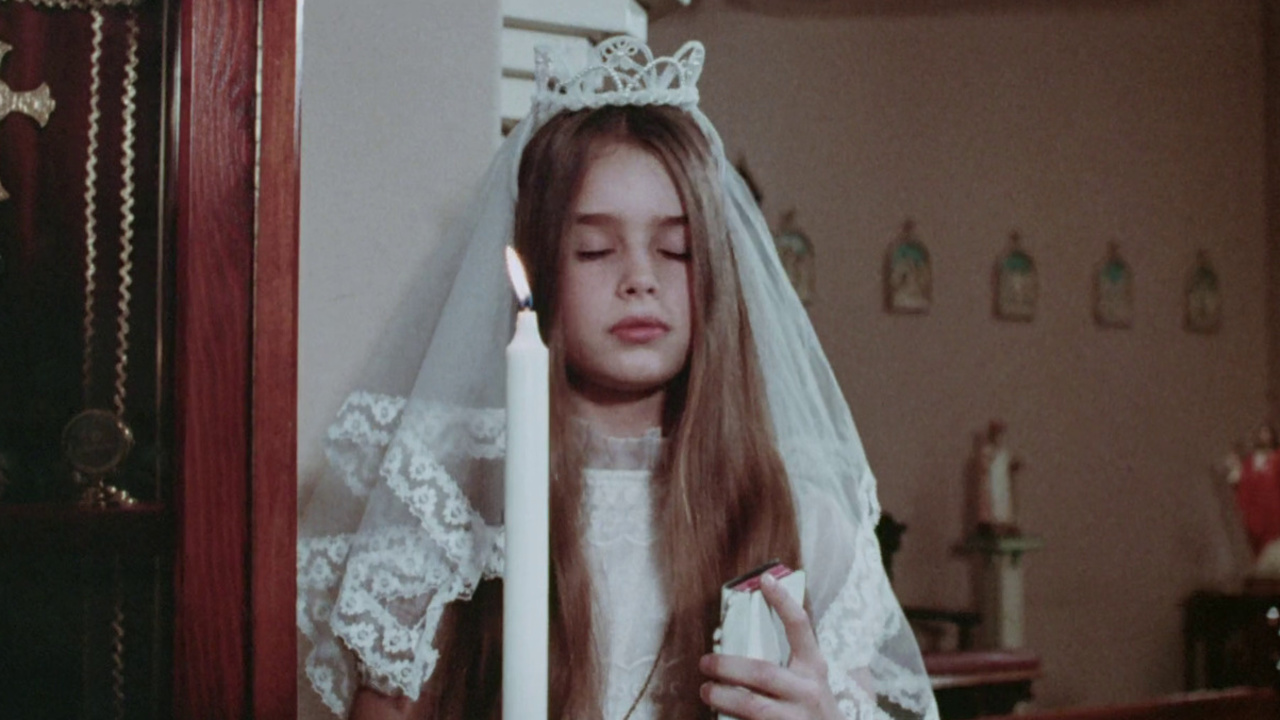
Horror cinema has taught us that children can be monsters too — a few months ago I revisited Orphan, a fantastic example of a thriller about an evil child. However, Alice, Sweet Alice (originally titled Communion) escapes simple categorization. The titular heroine is brazen, aggressive, indecent, even depraved, and the screenplay, written by Rosemary Ritvo and Sole, is initially deeply interested in finding the cause of this state of affairs.
There is something unnatural about Alice, although it is hard to believe that Paula Sheppard, who plays her, was 19 during the making of the film! This explains both the adult timbre of the character’s voice and the filmmakers’ freedom in placing her in scenes inappropriate for a child actor.
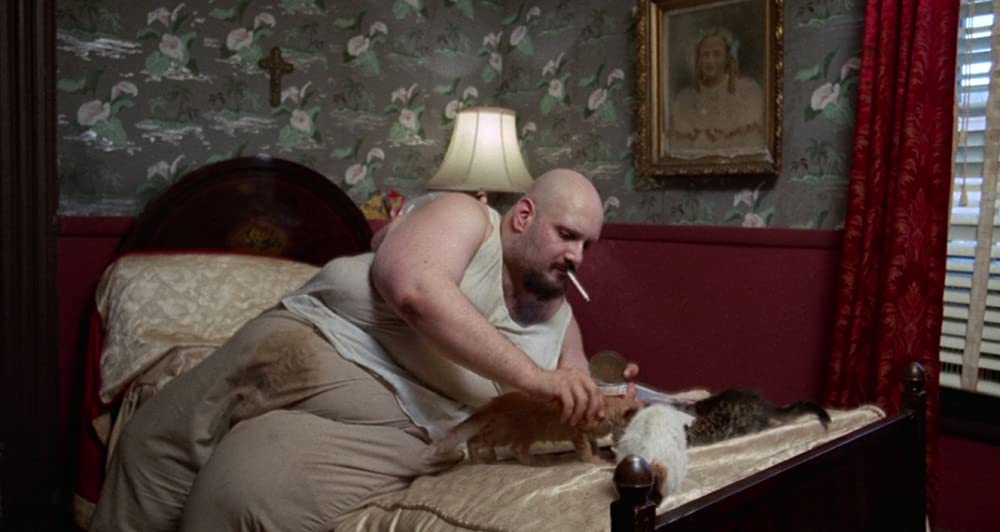
In one of them, Alice becomes the target of an attack by the owner of the house where she lives, the extremely obese and repulsive Mr. Alphonso. The director repeatedly shows that it is the 12-year-old who provokes the man, but this does not change the fact that he commits molestation. At another point, two policemen talk about her lustful gaze and breasts, which she allegedly wanted them to touch, although I did not perceive such an intention there.
Perhaps, then, Sole does not present Alice as an evil child, but as one who has simply ceased to be a child in the eyes of others. It is easier then to accuse her and make her into a victim, also in a sexual sense. The question of what happened to the innocence of the titular heroine lurks beneath the surface, between the attempt to solve the mystery of her younger sister’s death and the subsequent murders, and the increasingly prominent religious elements.
The horror here takes the form of a killer hidden behind a transparent mask, dressed in a yellow raincoat. Earlier we see that Alice dresses the same way and has an identical mask — regardless of whether she is the killer, it is hard not to associate her with danger. The director, openly inspired by Don’t Look Now made three years earlier, similarly builds an atmosphere of dread around an almost identical figure, and even before anyone dies, serves us a masterful jump scare.
The moment when Alice frightens Karen by pulling the mask off her face and revealing the wrinkled visage of an old man underneath (in reality it looks like another mask) is both a tribute to Nicolas Roeg’s masterpiece and a very early signal that the main heroine has long since said goodbye to childhood innocence. What follows are a cruel child murder, violent knife attacks, and a bleak atmosphere, but after some time the attempt to explain Alice’s nature gives way to a critique of the Catholic Church.
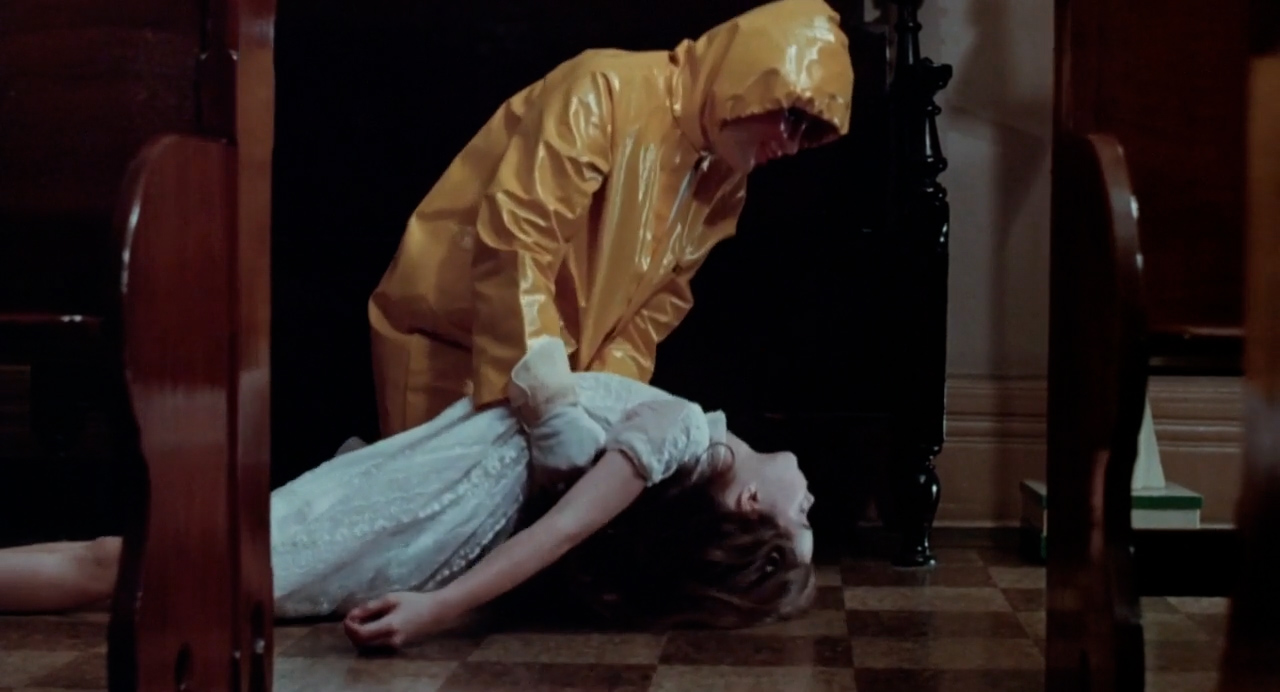
Sole suggests that upbringing in the Catholic faith is insufficient and illusory — at best it leads nowhere, at worst it pushes one straight into the arms of madness. Confirmation of this thinking can be found already during the film’s opening credits. We watch a praying girl holding a cross in her hands, one that ends in a blade. It is not subtle, but it is worth knowing that for the director, Alice, Sweet Alice was a form of retaliation against the Catholic community, which had successfully removed his previous film — the erotic satire Deep Sleep — from cinemas, accusing it of indecency.
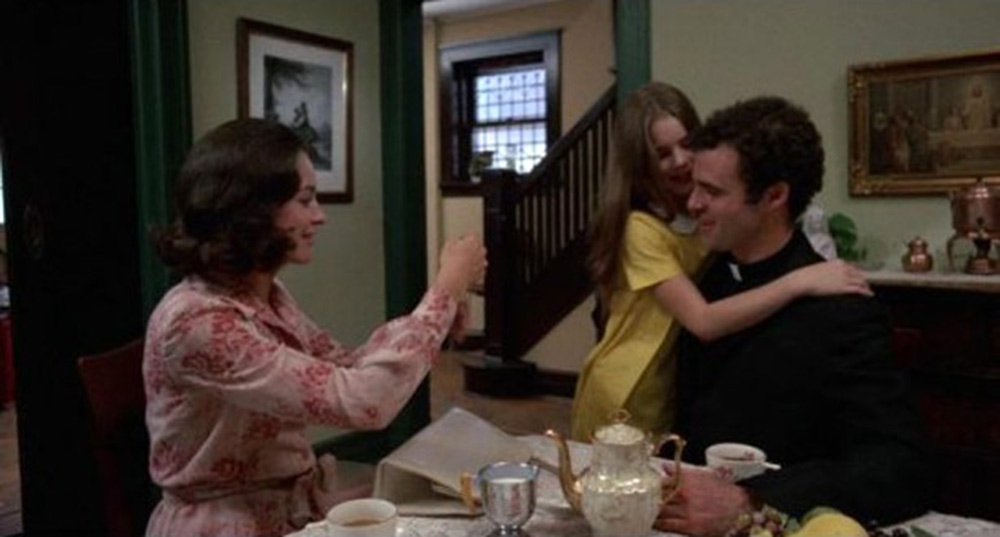
Perhaps that is why the characters in his horror are depicted either as hysterics or as exceptionally cold individuals, devoid of emotions, perhaps even feelings. In the former category, the girls’ mother and their aunt take the lead; in the latter, the father, who left the family several years earlier to start a new one. Similarly, the character of Father Tom is reduced to the role of a rather indistinct and, in fact, ineffectual priest, who wants to help the grieving family but cannot. He notices Alice’s disturbing behavior and even informs the school about it, but not her closest relatives. Ultimately, he allows evil to grow in his immediate surroundings, being completely unaware of it.

Unfortunately, at the moment when we receive confirmation of the killer’s identity and learn their motivation, the film loses its strength. It ceases to be an attempt to diagnose a child whose guilt does not necessarily stem from murdering her sister; Alice is presented as evil, yet ultimately we learn nothing concrete about the cause of her behavior. The edge of the critique of the Church is also simply blunt, ultimately pointing the finger primarily at those who believe too strongly and hatefully. Sole is not reckless enough to say outright that religion turns us into psychopaths, but he is also unable to find another solution for his film.
This does not mean that Alice, Sweet Alice becomes a disappointing horror. Especially in its first half, it is an exceptionally terrifying film, perfectly capturing the dirty realism of cinema of that time, the atmosphere of monstrosity associated with a brutal murder, and the unease evoked through religious symbolism. More alarming than that, however, is its portrayal of a child through the prism of a complete lack of innocence, naivety, and everything associated with childhood. But just because it is not visible does not mean it is not there.


Looking back at DEAD SNOW: A Blizzard of Nazi Gore Fun

DEAD SUSHI: Exotic, Spicy, and Wildly Entertaining

Revisiting ALICE, SWEET ALICE: Dread and Religious Symbolism

PUPPET MASTER: LITTLEST REICH – Achtung! It’s Good!
