Horror Movies
Looking Back at THE WAILING: Exceptionally Intense Horror
Not everything is clear in The Wailing, but thanks to that the horror penetrates under the skin even more strongly – an exceptionally intense experience.

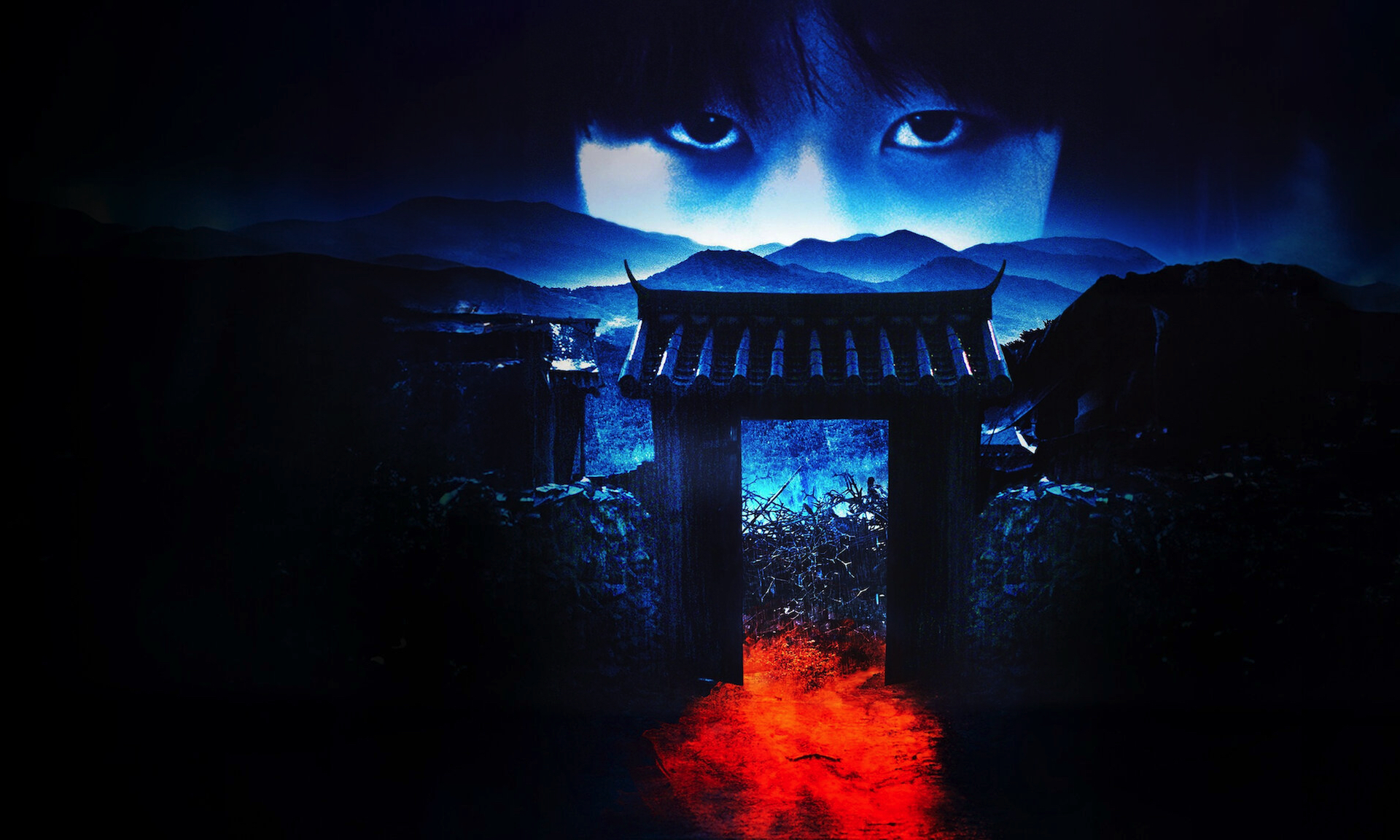
When I was watching The Wailing (Gokseong), a Korean thriller that over time increasingly reveals its affinity with horror, I was reminded of the myth of Orpheus and Eurydice. When the titular king manages to persuade Hades to release his beloved from the land of the dead, he is given the condition that on the way back he must not turn around to check whether Eurydice is following him. Orpheus, however, breaks this prohibition, for which they are both punished.
It is a sad parable about human uncertainty and disbelief, perhaps also foolishness. A word given by a god is not enough for a human in whom fear gains the upper hand over faith.The Wailing begins as a criminal mystery and ends with a series of moral and existential questions, using our religious beliefs as a source of endless doubt and fear.

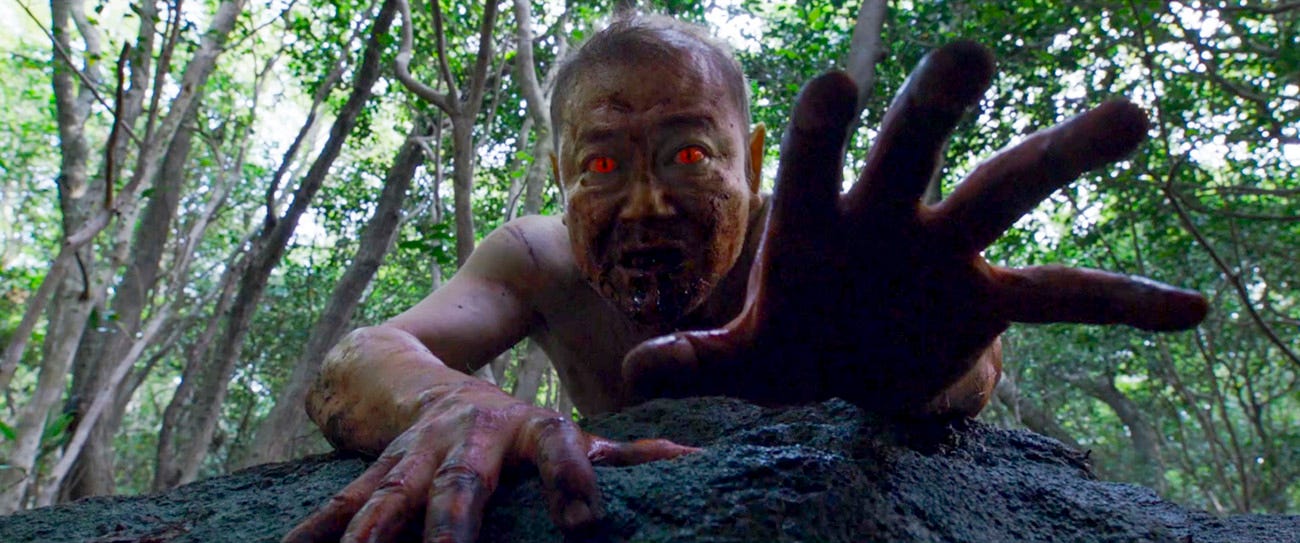
In the small town of Goksung, a series of brutal and difficult-to-explain murders takes place. The perpetrator is always someone from the victims’ immediate surroundings who, after the killings, falls into a strange, almost catatonic state. The officer leading the investigation, the not particularly bright and cowardly Jong-Goo (Do Won Kwak), initially attributes this unexpected aggression on the part of the attackers to mushroom poisoning, but after some time he realizes that behind the entire epidemic of deaths there may be a certain elderly Japanese man (Jun Kunimura) who has recently taken up residence in a hut in the nearby forest.
The confrontation with him brings even greater misfortune – Jong-Goo’s daughter begins to show symptoms similar to those that had occurred in the future murderers. A shaman (Jung-min Hwang) is called in to help.
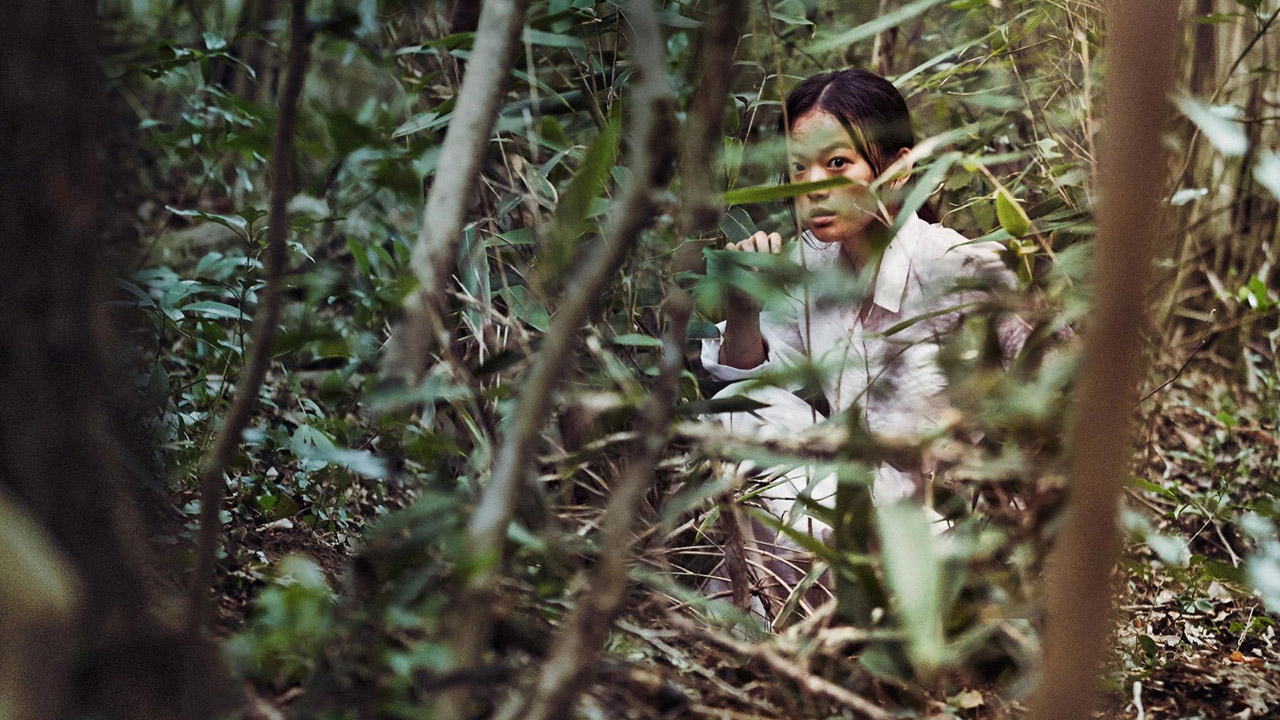
This police thriller very quickly changes course, adding supernatural elements to the criminal puzzle and supplementing its realistic convention with the cognitive unease typical of horror cinema. Director and screenwriter Hong-jin Na here and there places scenes suggesting the supernatural nature of the mysterious Japanese man, although these are always either third-hand tales or dreams that the protagonist begins to have. Perhaps, then, the monster is imagined, and the foreigner – whatever influence he may have on the locals – is only a human being.
This, however, does not explain the lightning strike that hits a person who moments earlier had been cursing two policemen with precisely such a fate. It is hardly surprising when one of the participants in the events becomes a young deacon, officially present only as a translator, but soon expressing fears of a religious nature.
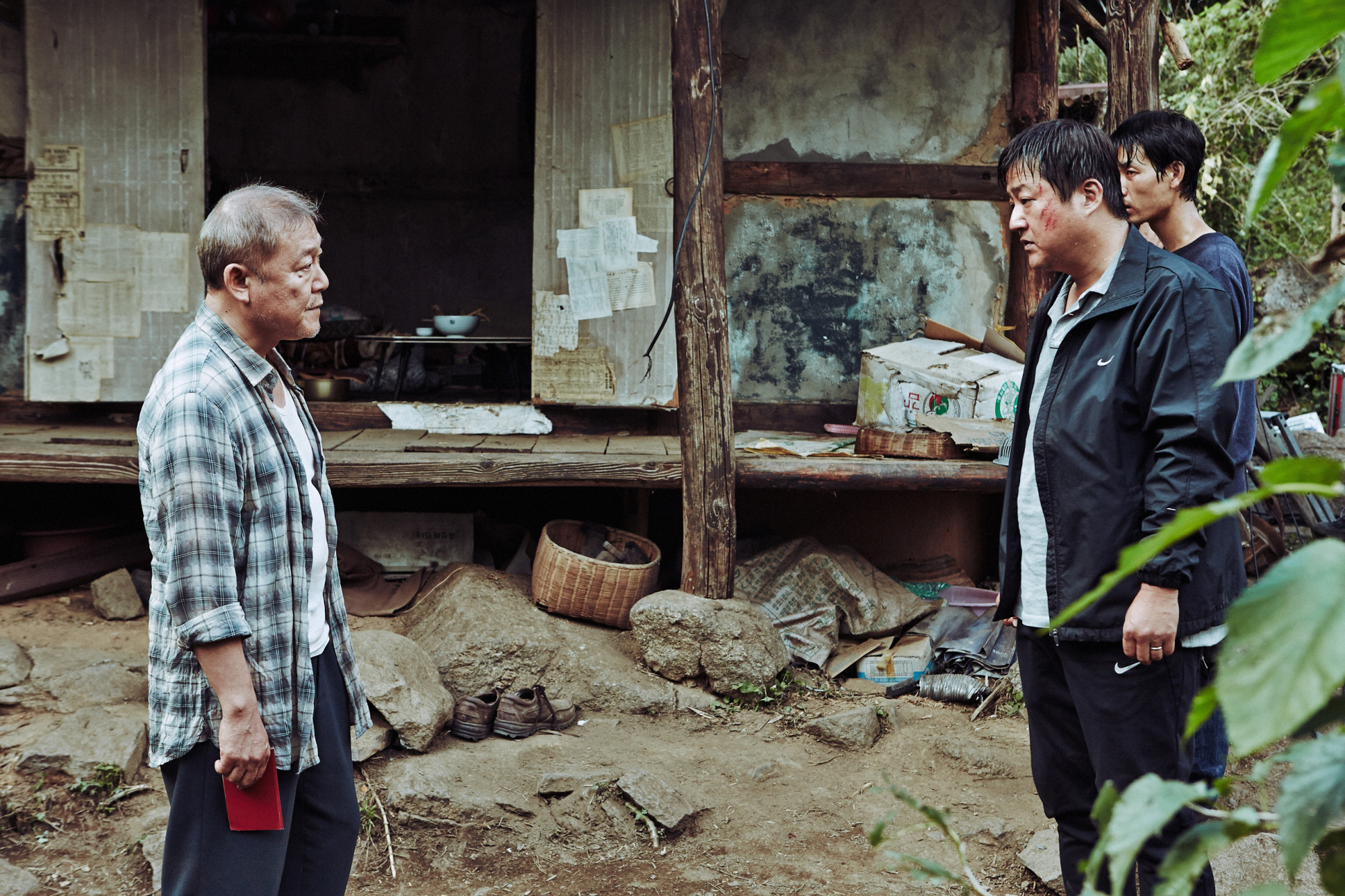
The summoned shaman, who professionally performs spectacular rituals, reacts in a similar way. He not only calls the policeman’s daughter’s condition a possession, but also names its perpetrator a demon who in reality does not even have a bodily shell. The director very confidently crosses the boundary between what is real and what is fantastic, because his protagonist, too, does not long resist the theory of the foreigner’s downright diabolical nature.
Jong-Goo may not be among the smartest citizens of his town, but he sees that behind the macabre murders stands an evil more powerful than anything human. Incomprehensible and cruel, ready to use a several-year-old girl in an act of its hatred. Yet the policeman is unable to place full trust in spiritual help – he is astonished by the little cross on his partner’s neck, and he also watches the shaman’s actions with uncertainty. He seeks rescue and at the same time doubts what he cannot comprehend.
Na previously made two thrillers – the superbly suspenseful The Chaser and the somber The Yellow Sea. In both, he threw his protagonists into the deep end, examining how far they could go in order for justice to be served. These were ambivalent moralities, as we observed the actions of criminals, a pimp and a man hired to do dirty work, who suddenly realize that the situation they have found themselves in is beyond them, but that does not mean they are to submit to it.
The Wailing presents the opposite vision – a good man (the policeman may be a poor one, but a loving husband and father) who, in the face of an unknown threat, has trouble making the right decisions.

These doubts also affect the viewers, because Na leaves many things in the realm of conjecture, drawing a clear line between good and evil, yet making it difficult for us to recognize them. At a certain point we begin to feel like Jong-Goo, deprived of support in reality, disoriented and desperate. It is hard not to believe in anything.
The Wailing surprises with its abundance of interpretative possibilities, in the finale building tension not on facts, but on suppositions that find no confirmation right up to the very end. Not everything is clear here, but thanks to that the horror penetrates under the skin even more strongly, making the screening an exceptionally intense experience.
A very long screening, it must be added – the film runs for over two and a half hours, during which humor repeatedly breaks through the otherwise gloomy plot, and logic does not always go hand in hand with the characters’ choices.
With only his third film, Na proved that he is one of the best Korean directors working today, while also creating a work whose complexity and existential dread remind me of the output of another Asian filmmaker, the Japanese director Kiyoshi Kurosawa. Unlike his older colleague, however, the Korean director is decidedly more energetic.