
Review
PONYO. Ghibli’s Visual Spectacle [REVIEW]
Ponyo tells the story of two families driven by entirely different dynamics. On one side there is overprotectiveness and fear; on the other, trust and bravado.

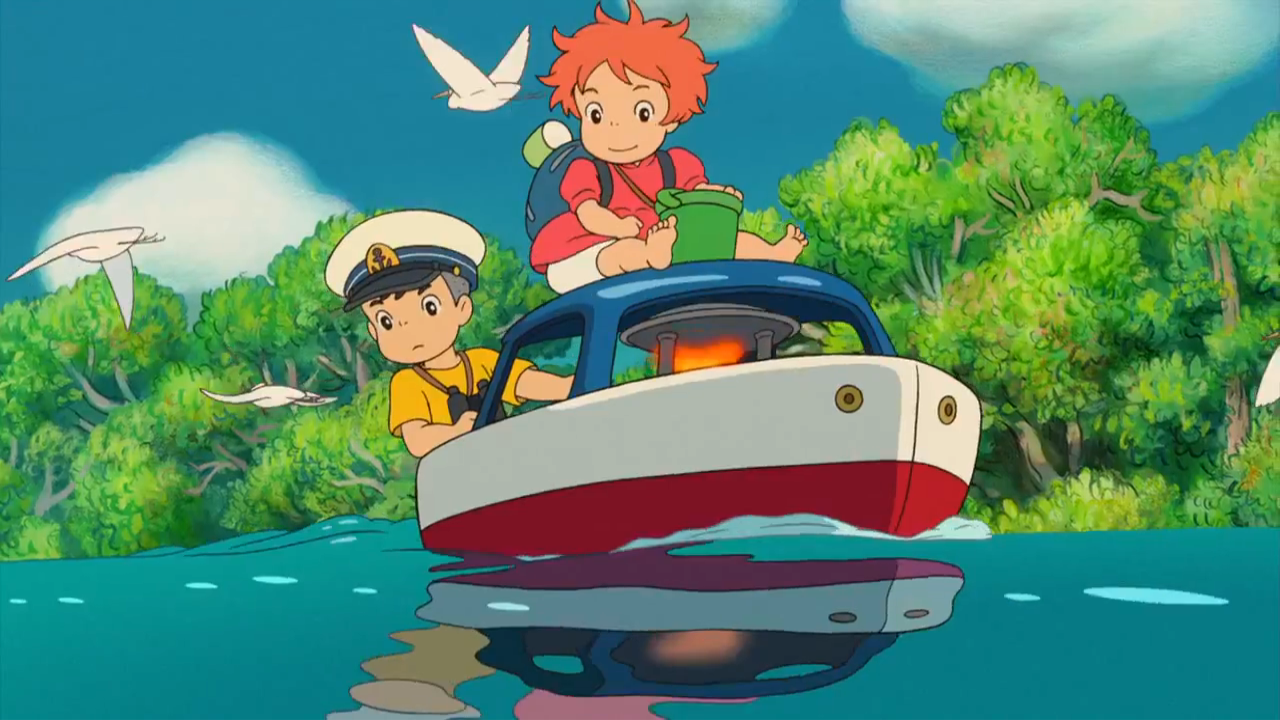
If Studio Ghibli is especially known for anything, it is its ability to fuse everyday life with astonishing fantasy. At the intersection of these two conventions, true masterpieces have often been born. Within the Japanese studio’s body of work, this genre blend has manifested itself in many variations, in different proportions and with varying intensity. On one end of the spectrum we can place the expressive Spirited Away and Howl’s Moving Castle; on the other, the more restrained My Neighbor Totoro or The Secret World of Arrietty. Ponyo, meanwhile, lies somewhere in between: a visual spectacle interwoven with a considerable number of intimate sequences and trivial conversations.
Most importantly, however, in all of these films a family story driven by psychological nuance coexists with a dazzling, larger-than-life fairytale quality which, in relation to the main plot, functions as a counterpoint, a reflection, an allegory, a punchline, an addendum—and above all as an exaggerated expression of fears, desires, and needs.
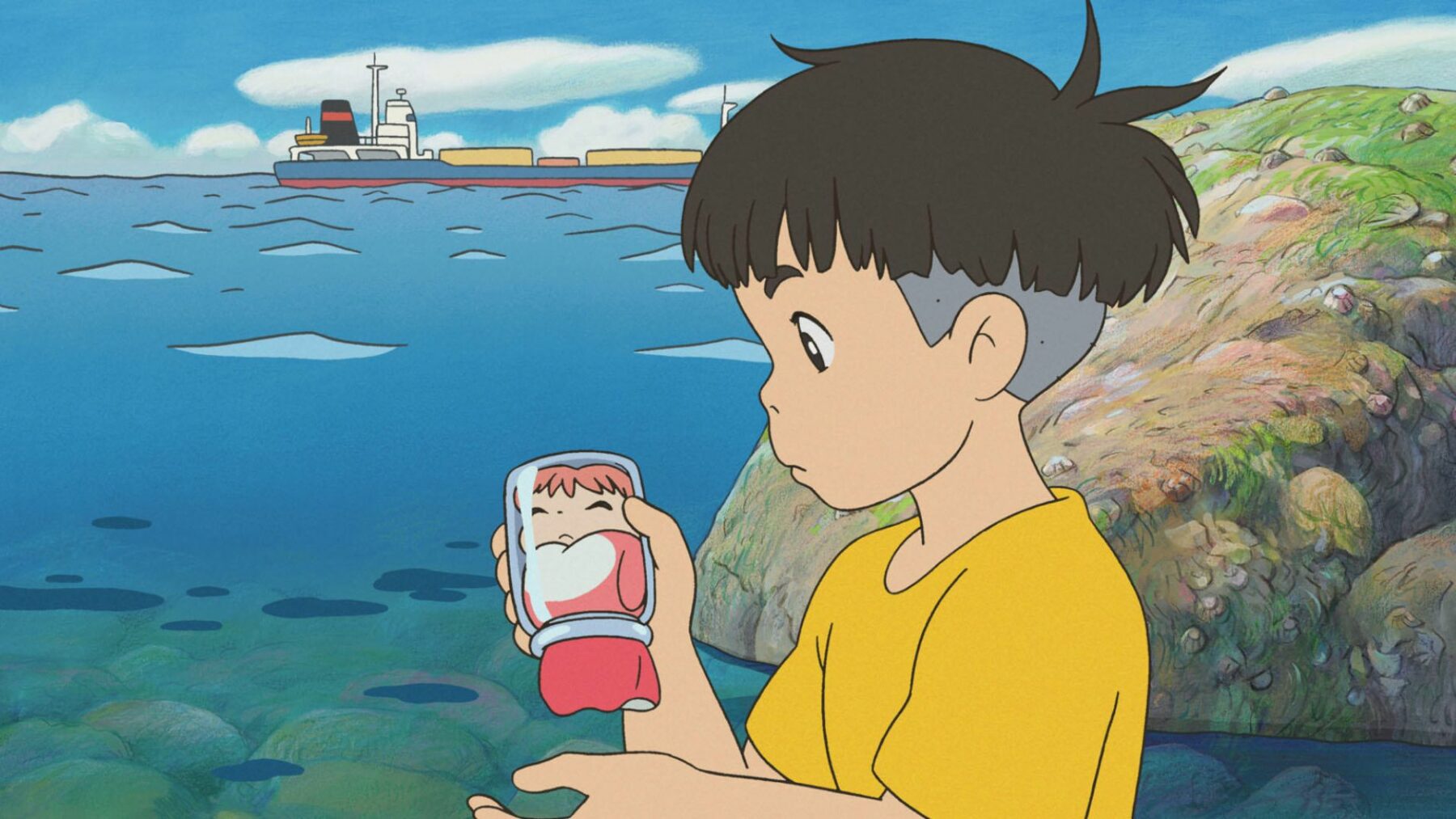
The main character, bearing the meaningful name Brunhilda, is a tiny fish—a sea princess (clearly personified by the filmmakers and resembling an infant). Brunhilda lives in a magical underwater vessel with her father Fujimoto, the king of the sea and a sorcerer. He takes devoted care of all aquatic creatures, paying particular attention to maintaining a safe separation between his world and the one above the surface, dominated by humans. He is convinced that the established order must be guarded at all costs, that a healthy balance must not be disturbed. That balance, of course, will be broken by Brunhilda’s unbridled curiosity.
When the little fish approaches the shore and peeks beyond the water’s surface, she is caught by five-year-old Sosuke. The boy tries to befriend his catch and gives her the name Ponyo. In approaching Sosuke’s family storyline, Hayao Miyazaki shows a tenderness that may call to mind the work of Yasujiro Ozu or Hirokazu Kore-eda. The boy lives with his mother in a house on the coast. His father works on a military vessel close enough to shore that Sosuke and his mother, Lisa, can sometimes spot him through binoculars, and at night send him greetings in Morse code using a flashlight. Miyazaki conveys longing through subtle staging choices. We are given images of inertia (Lisa would gladly spend every day lying in bed), quiet meals for two, the slow passage of time, and waiting for the family to finally be together.
Yet Miyazaki finds a common denominator that binds the stories of Ponyo and Sosuke. The friendship forming between the two children is the most foregrounded and guiding thread, built on an opposition: the first child is kept on too short a leash, while the second is burdened with too much responsibility. What chiefly interests the filmmakers, however, is what happens around this pair. Miyazaki tries to capture what separation is and how extremely the characters—especially the adults—react to it.
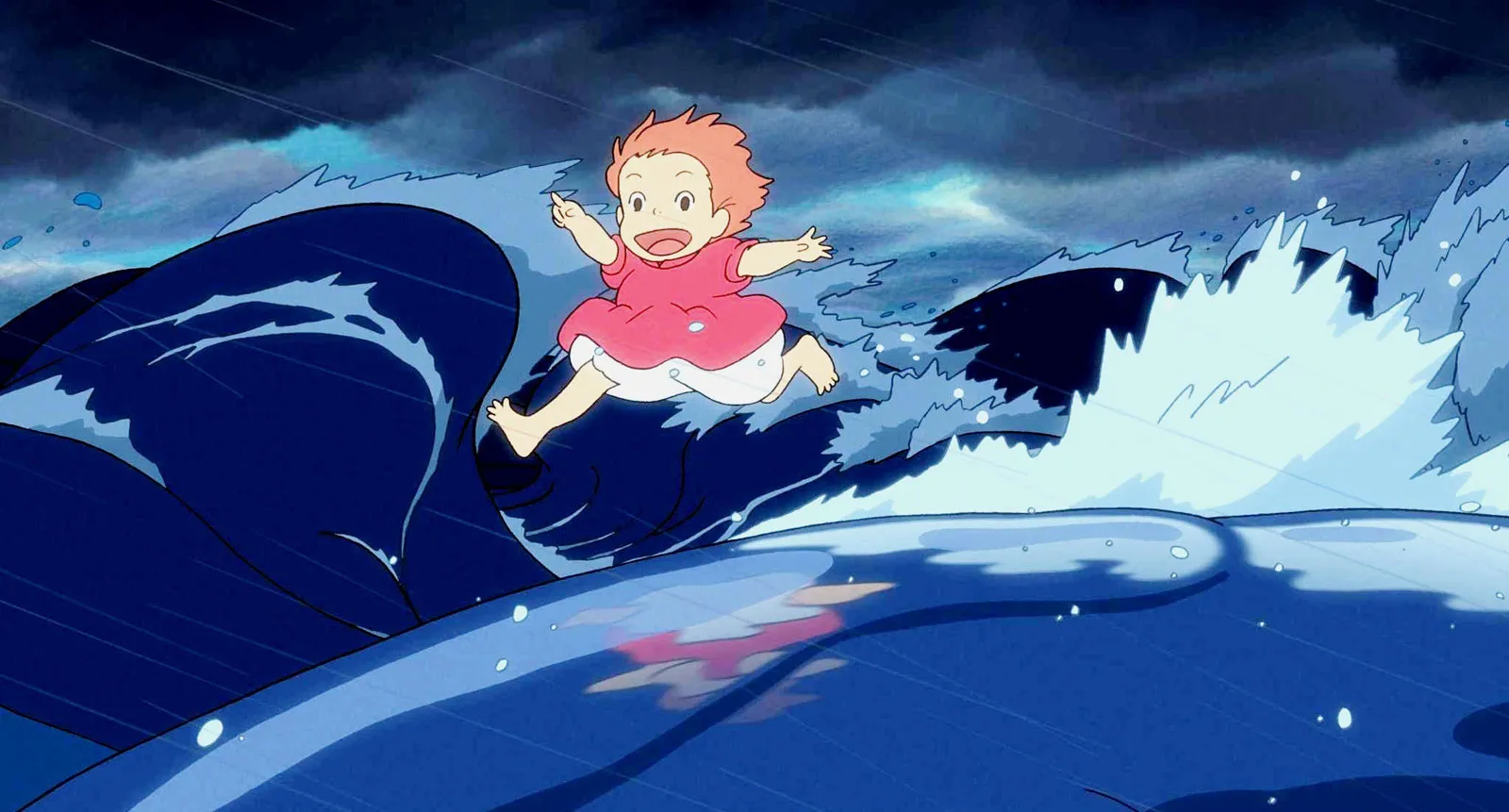
Ponyo tells the story of two families driven by entirely different dynamics. On one side there is overprotectiveness and fear; on the other, trust and bravado. Fujimoto is so desperate to get his daughter back that he unleashes a gigantic storm. Faced with it, Lisa must return to work to care for patients at a nursing home. She leaves the house in the midst of the raging tempest and tells her young son to stay behind and look after the home.


Looking back at DEAD SNOW: A Blizzard of Nazi Gore Fun

DEAD SUSHI: Exotic, Spicy, and Wildly Entertaining

Revisiting ALICE, SWEET ALICE: Dread and Religious Symbolism

PUPPET MASTER: LITTLEST REICH – Achtung! It’s Good!
