
Review
WAR MACHINE. One of the Best Netflix Movies


An American general, Glenn McMahon, is sent to Afghanistan. His mission is to bring order to a country exhausted by dangerously prolonged military operations. He finds himself among soldiers and politicians who have lost faith in the success of any further action. McMahon therefore devises a daring plan: he wants to give meaning back to the war and lead his men to victory. This is the premise of War Machine, a feature-length film produced by Netflix and released on May 26, 2017.
It is not so much a war film as a black comedy or satire, based on Michael Hastings’ book The Operators: The Wild and Terrifying Inside Story of America’s War in Afghanistan. The main character in the film is modeled after General Stanley McChrystal, whose story is told in the book. It is worth noting that the publication inspired the filmmakers primarily because of the controversy it provoked.
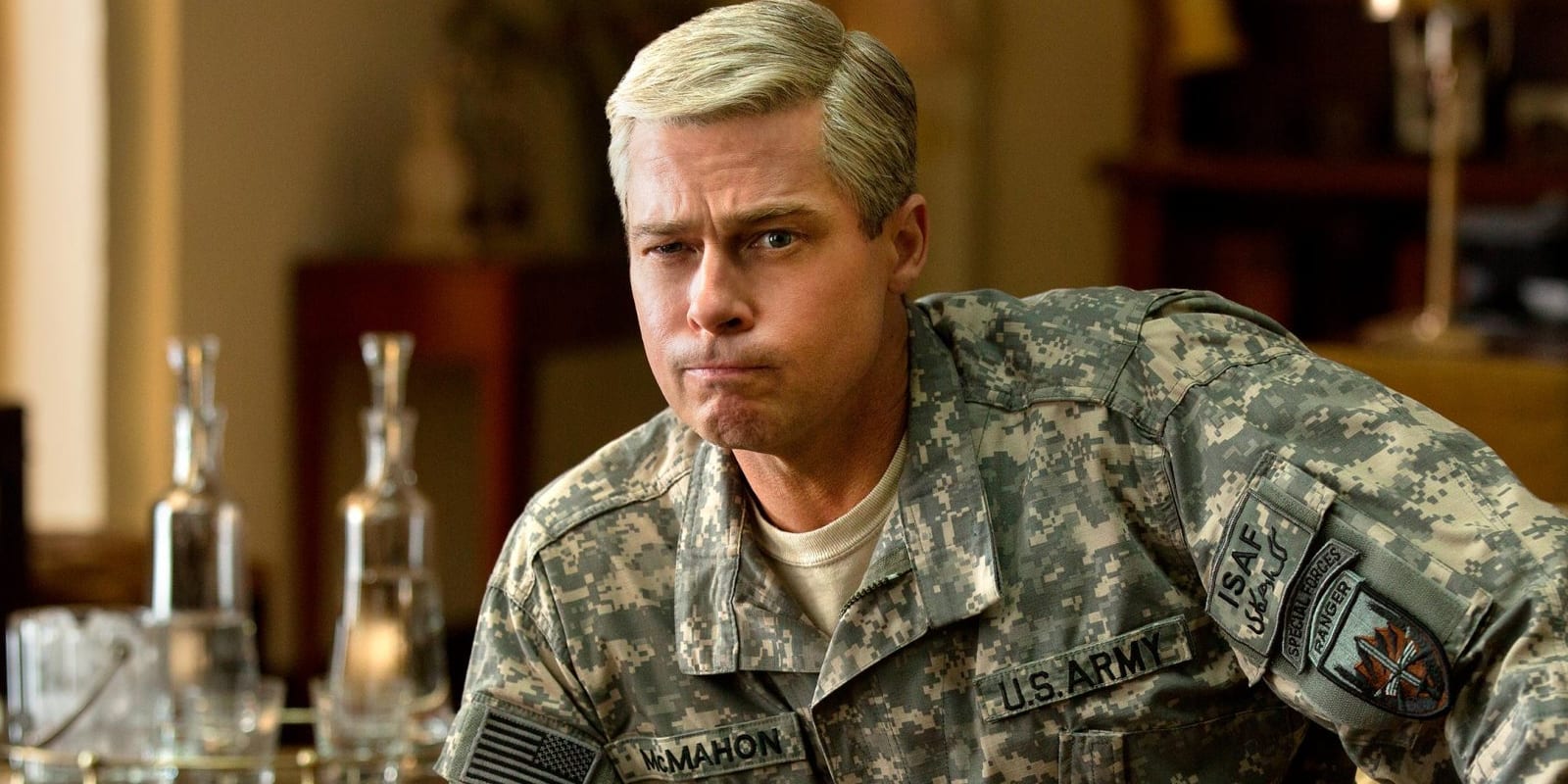
The general is portrayed as an eccentric celebrity, idolized by his subordinates, using the war to pursue his own ambitions. The book, with its vivid descriptions of various excesses committed by the U.S. Army during Barack Obama’s administration, led to one of the most spectacular resignations in U.S. history. Interestingly, many of those same people are now working alongside Donald Trump… The author, however, never got to write a second chapter. In 2013, Michael Hastings — a young, promising journalist — died tragically in a car accident. To this day, speculation continues about the true cause of his death.
Did War Machine come close to matching the impact of the book? If you’re looking for controversy in the film, you might be disappointed. The satirical war format clearly suggests that the events on screen should be viewed with a large dose of irony. Nonetheless, it manages to offer a sharp, engaging, and bold commentary on the war in Afghanistan — one that, while neither condemning nor glorifying the conflict, ultimately makes clear which side of the barricade the viewer is meant to stand on.
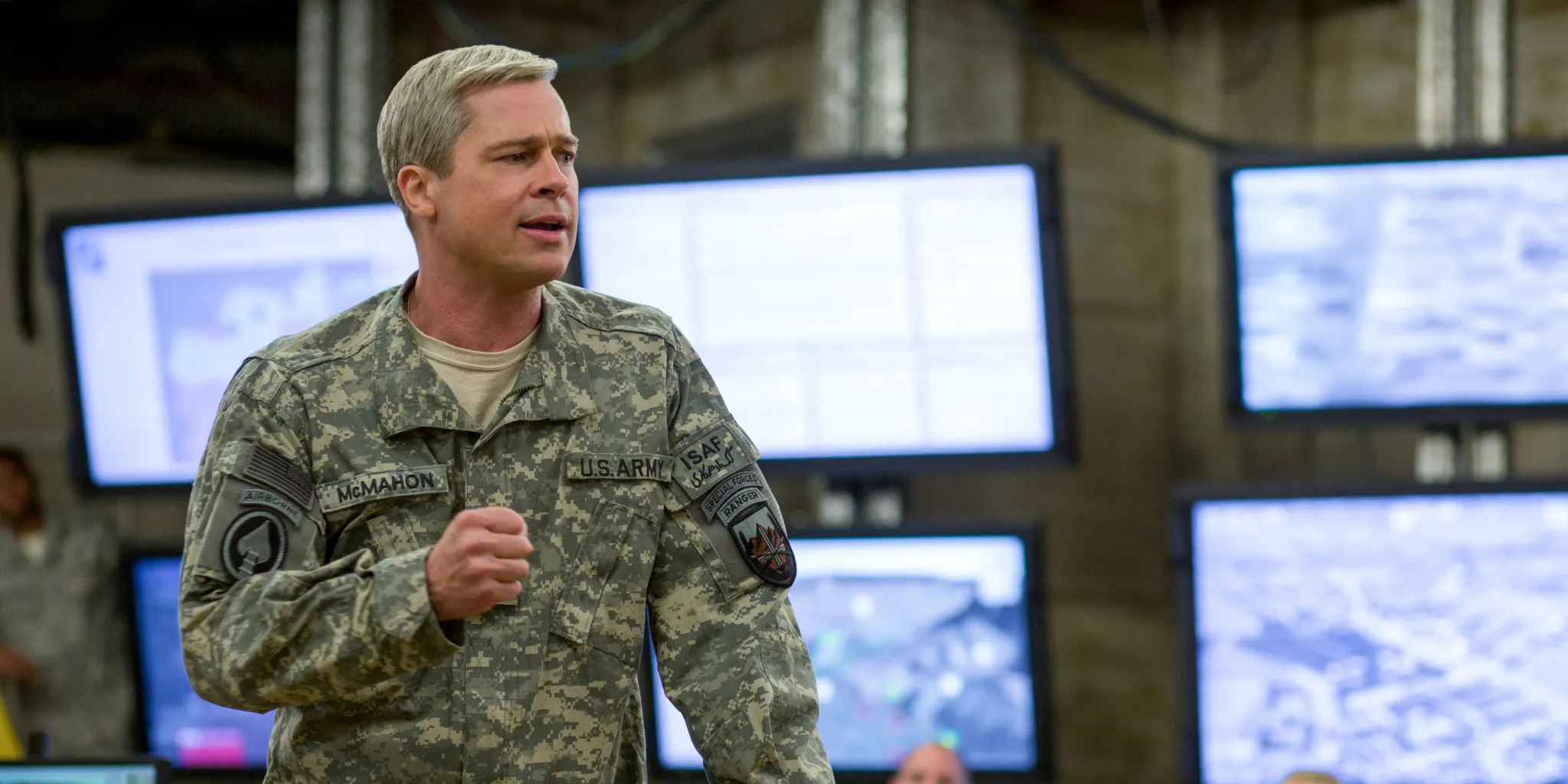
And for that reason, in my humble opinion, it’s one of the best — if not the best — films produced by Netflix, a platform often criticized for the quality of its feature films. Americans may not like it, as they lived through the events described by Hastings and know the story all too well. For everyone else, however, War Machine operates on a universal level, mocking the typical, blind mechanisms of war.
General Glenn McMahon, the military celebrity and “god,” is, of course, portrayed by a real-life celebrity — Brad Pitt. This was undoubtedly intentional. Pitt, as usual, also served as a producer. I can’t say, however, that I’m entirely a fan of his performance in War Machine. The actor often tries a bit too hard to be funny, pushing the character dangerously close to caricature. That wouldn’t be a problem if the film fully embraced its satirical tone from start to finish, as Stanley Kubrick’s classic Dr. Strangelove does. But War Machine often turns serious, showing genuine emotion (such as in the moving depiction of the general’s marriage), where Pitt’s exaggerated grimaces feel out of place — reminiscent of another military leader he played, Lieutenant Aldo Raine from Inglourious Basterds.
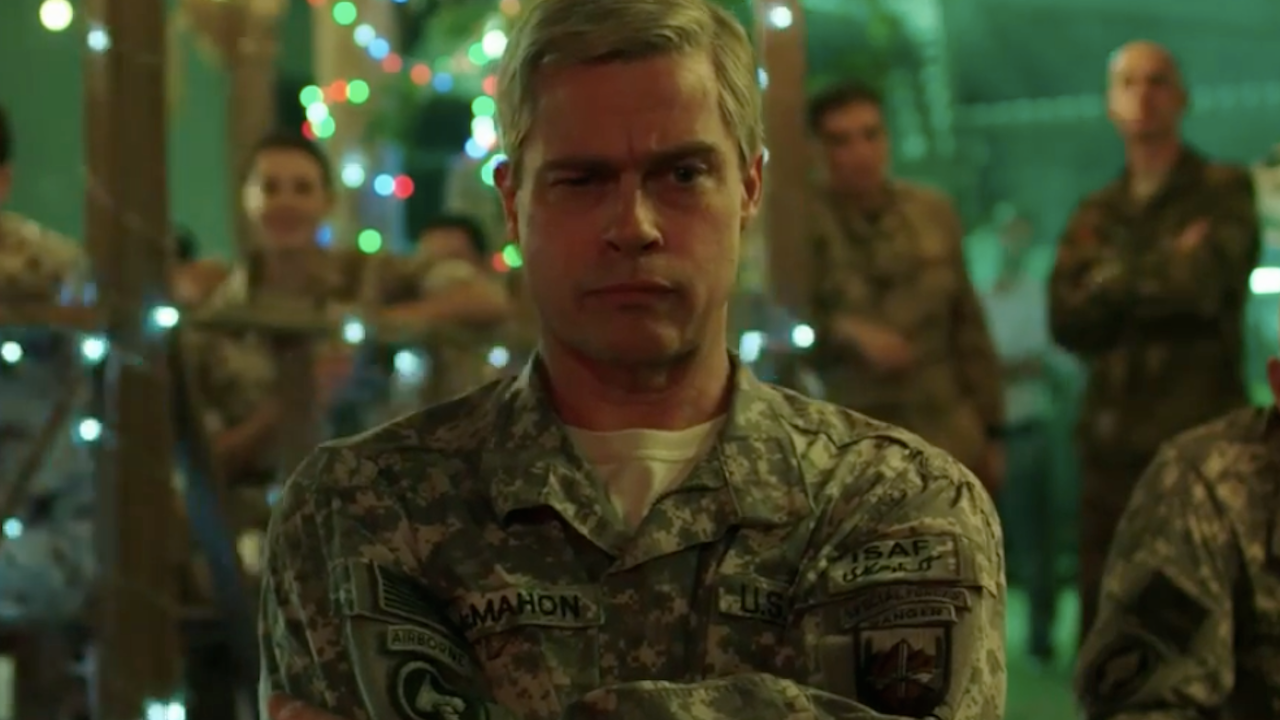
Fortunately, there’s enough authentic charisma in the character to carry the film’s main message. At first, together with the protagonist and the narrator (who seems to represent the voice of the book’s author, granted access to McMahon’s inner circle), we come to understand that the methods and strategies chosen for Afghanistan were misguided. As McMahon notes, you can’t win a country’s trust by pointing a gun at it.
Later, in the film’s key scene — when the general is interviewed by a German journalist (a memorable cameo by Tilda Swinton) — a bitter truth dawns on both the viewer and the protagonist. Somewhere along the way, the original purpose of the war, launched after the September 11 attacks on the World Trade Center, was lost. Instead of focusing on destroying Al-Qaeda — the actual terrorists — the Americans chose to spread across the entire country, fighting insurgents whose only ideology and motivation stemmed from resentment toward foreign soldiers occupying their homeland and imposing their own political system.

That is why McMahon — or McChrystal — was such an important figure, and why his downfall was so deeply felt. His mission was to restore meaning where none could be seen. He managed to awaken ambition and dreams of greatness, even when they stood on shaky ground. War Machine seeks to remind us of that — using humor and distance to deliver its message.

