
Review
THIRTEEN LIVES. Shows Great Respect for Its Subject
Beyond its surprisingly austere, decidedly un-Hollywood form, Thirteen Lives also shows great respect for its subject.

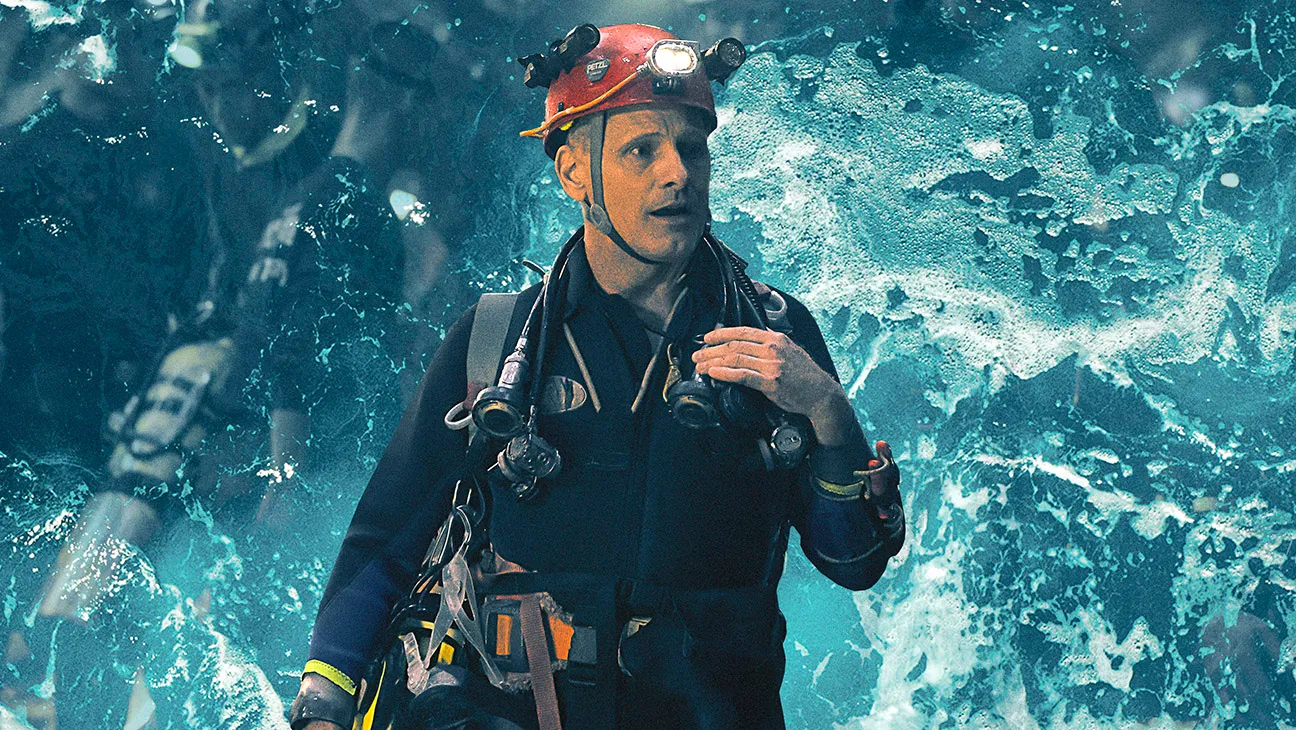
When, at the turn of June and July 2018, the rescue operation of twelve teenage footballers and their slightly older coach was underway in Thailand’s Tham Luang cave, Hollywood screenwriters were already gearing up to bring the story to the screen. Stories of this kind—“larger than life”—are perfect cinematic material, and it is hardly surprising that only a few years were enough for major stars of world cinema to take up the subject. This is how Thirteen Lives by Ron Howard came to be—an Amazon Prime original film recounting those blood-chilling events.
For the sake of accuracy, the star-studded production (Viggo Mortensen, Colin Farrell, Joel Edgerton) was not the first feature film to depict the rescue at Tham Luang. As early as 2019—less than a year after the events in the Thai cave—local director Tom Waller made The Cave of the Yellow Dog, cast almost exclusively with local actors. That production was re-edited and released for wider distribution by Lionsgate, but even in this form it couldn’t compete in terms of reach with Thirteen Lives, which is promoted not only by famous faces but also by the name of an Oscar-winning director.
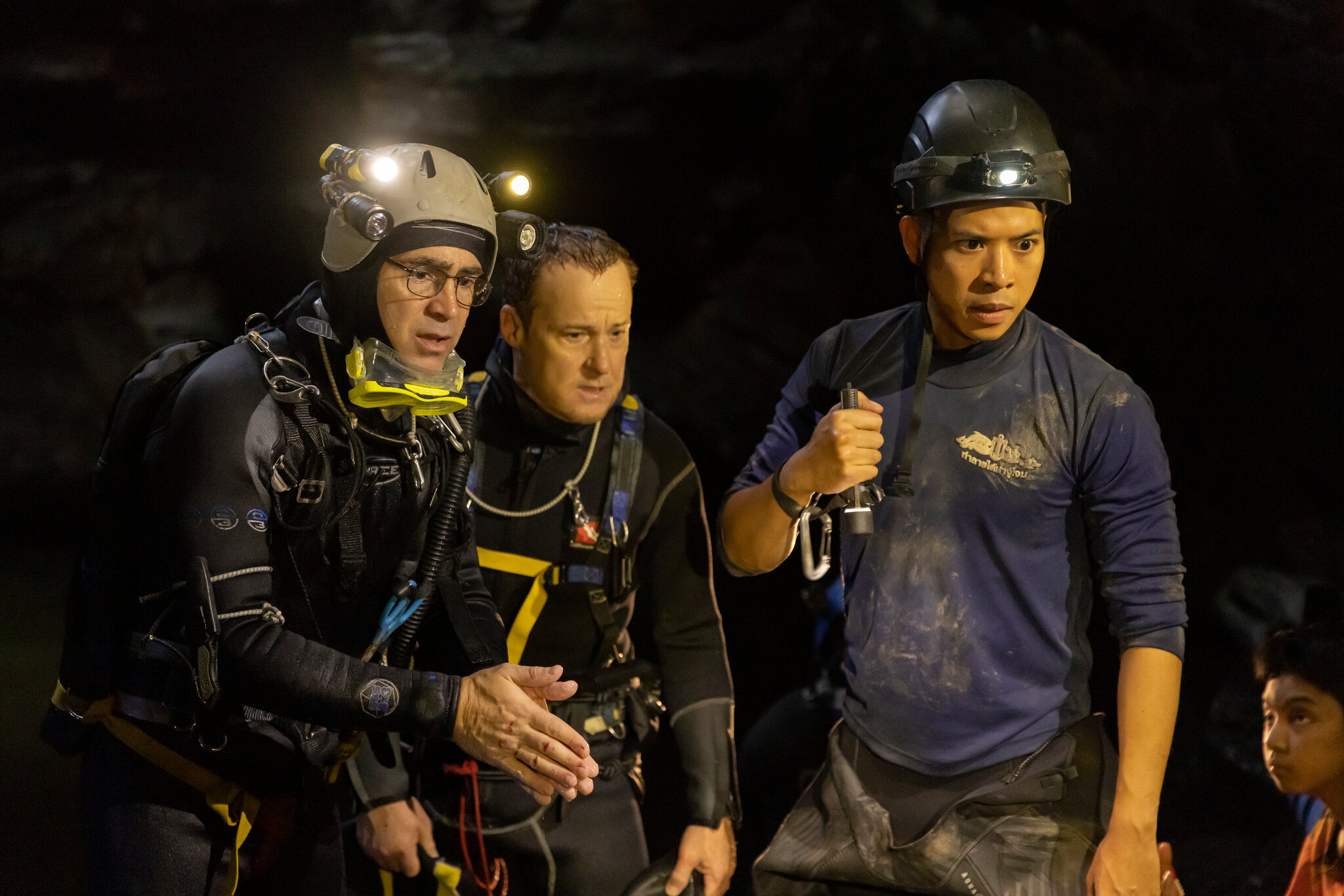
Interestingly, none of these productions had direct access to the survivors—the exclusive rights to their story were immediately acquired by Netflix, which released the six-episode scripted series Thai Cave Rescue, just a few weeks after the premiere of Thirteen Lives.
For those who did not closely follow global news in the summer of 2018: on June 23, a group of twelve members of a local football team, aged 11 to 16, together with their 25-year-old coach, entered the Tham Luang cave. While the thirteen were deep inside the cave, a torrential rain began, causing parts of the cave to flood instantly and preventing the boys and their coach from getting out. Within days, diving teams from almost all over the world were on site, led by John Volanthen (Colin Farrell) and Rick Stanton (Viggo Mortensen), who became the unofficial leaders of the global rescue operation aimed at locating the group of thirteen athletes. When they were finally found—more than a week after they had gone missing—the next challenge was how to bring them out alive from a location four kilometers from the cave entrance.
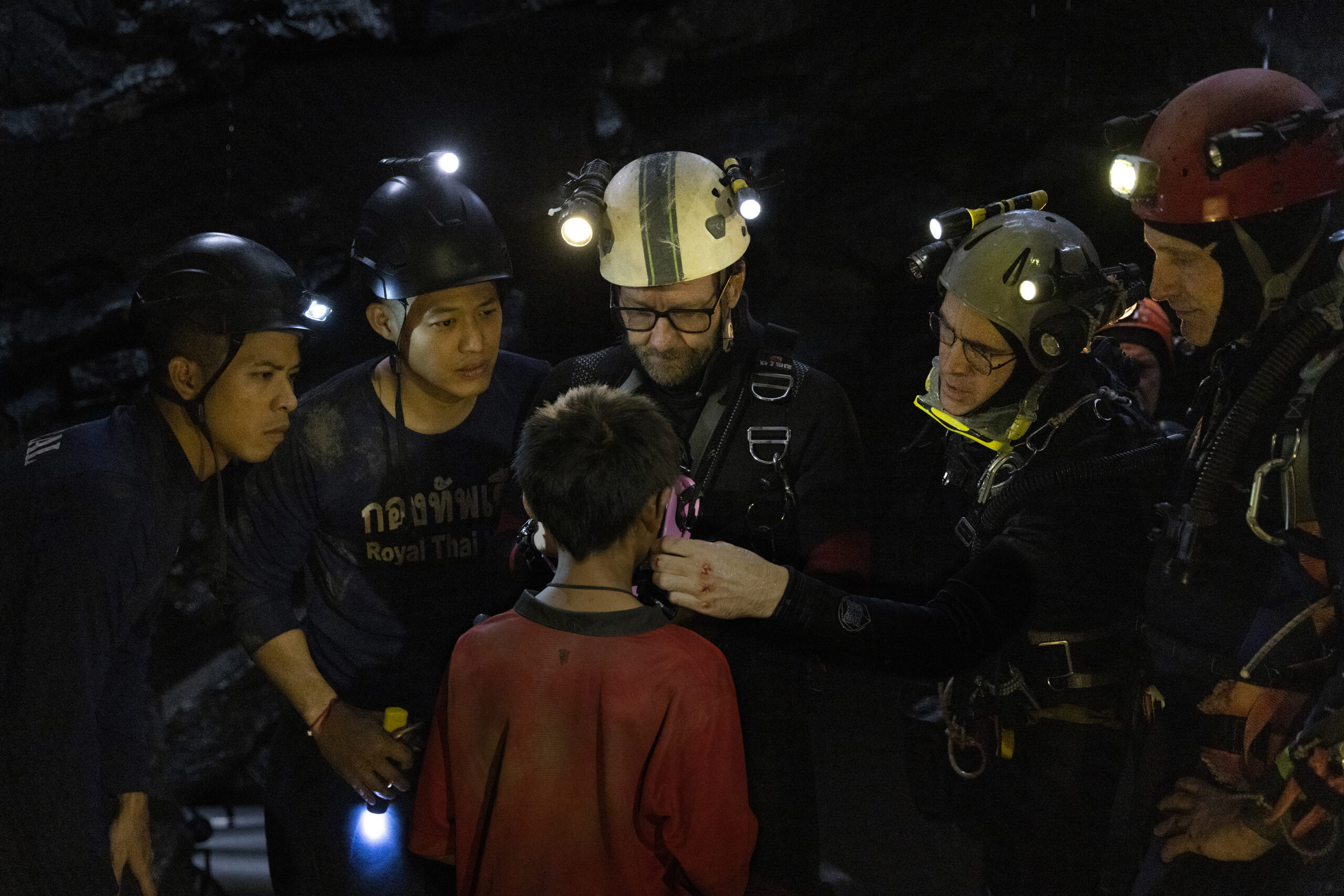
Ron Howard directed Thirteen Lives in an extraordinarily austere manner, achieving a highly promising blend of near-documentary, almost zero-degree style with the professionalism of a narrative feature. We have excellent actors here—besides Mortensen, Farrell, and Edgerton, also Tom Bateman (Death on the Nile) and Paul Gleeson (The Thin Red Line)—as well as an acclaimed director, and a devilishly talented and experienced Thai cinematographer, Sayombhu Mukdeeprom, who has collaborated, among others, with Luca Guadagnino and Apichatpong Weerasethakul. It is thanks to his cinematography that the film achieves not only an astonishing realism that heightens the viewer’s sense of participation in the entire process, but also something that could be described as the “spirit of Thailand.” Viewers who have visited this fascinating country may not entirely agree with me, but there is a certain mysticism in Thirteen that accompanies the cave itself and its surroundings—also a credit to this exceptional cinematographer.
Beyond its surprisingly austere, decidedly un-Hollywood form, Thirteen Lives also shows great respect for its subject. Howard’s film maintains a serious tone and asks very difficult yet pointed questions about the moral dimension of the decisions made by the rescue team. Is it worth taking enormous risks to save even a single boy, or is it better to remain passive, thereby avoiding responsibility for the death of any of the boys? Thirteen Lives is not another Hollywood disaster spectacle about great heroes in shining armor—it is rather a flesh-and-blood drama that poses important, if uncomfortable, questions and once again proves that “real heroes don’t wear capes.”

