Review
THE RICHEST WOMAN IN THE WORLD: Huppert Steals the Show
The Richest Woman in the World is a stylish, well-acted story that works very well as a witty portrait of a bizarre relationship, and a world of enormous money.

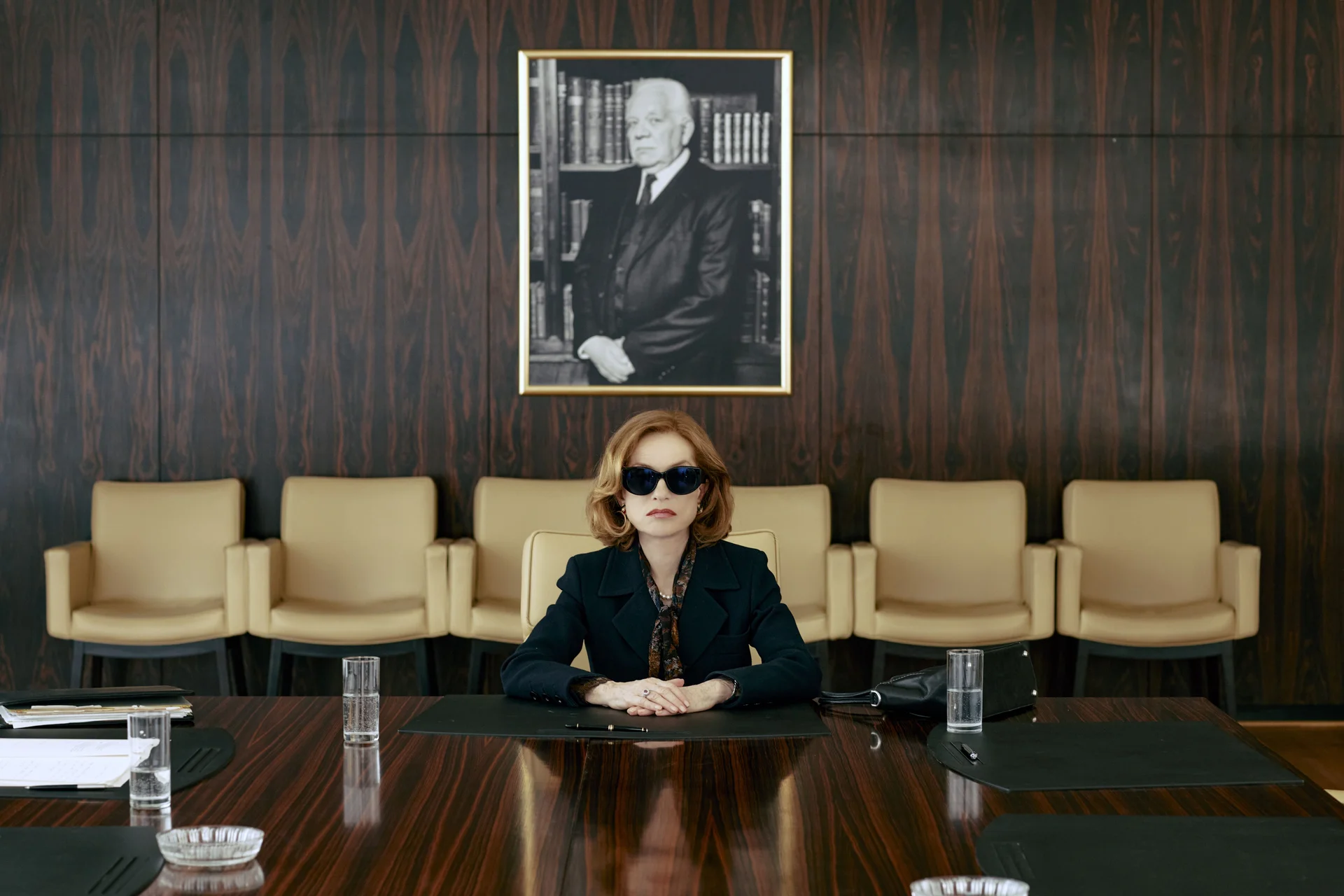
At the beginning of the 21st century, a moral scandal erupted in France involving the French billionaire Liliane Bettencourt, the heiress to the L’Oréal cosmetics empire and for many years the richest woman in the world. It came to light that Bettencourt had given enormous sums of money to the photographer and artist François-Marie Banier, with whom she maintained a close relationship. The gifts included not only cash, but also works of art and real estate. The case became widely known when the billionaire’s daughter accused Banier of taking advantage of her mother’s advanced age and declining health. These events serve as the basis for Thierry Klifa’s film The Richest Woman in the World.
Let us note at the outset that the film does not attempt to be a chronicle of events and it is difficult to treat it primarily as a biography – it is a story about power, money, and relationships that can slip out of control. At the center of the story is Marianne Farrère – a magnate of the cosmetics industry, played by Isabelle Huppert, as always full of class. The actress creates a character who is cold and distant, yet at the same time intriguing.

Her Marianne is a woman who has spent her entire life functioning in a world of luxury and elites, where everything is under strict control and the days must be meticulously scheduled in a calendar. Everything changes when the eccentric photographer Pierre-Alain Fantin enters the scene.
The character played by Laurent Lafitte is the opposite of Marianne’s orderly world. Direct, maliciously witty, and completely devoid of respect for conventions, he quickly disrupts the atmosphere of sterile luxury in which the heroine lives. It is enough to mention that already during their first interaction he states that the woman has terrible hair and is badly dressed. Their relationship, which is a strange mixture of fascination, friendship, and mutual dependence, becomes the heart of the film.

At the same time, it causes consternation among Marianne’s family and collaborators, and at times it is hard to blame them – the man is the type of person who is exceptionally capable of testing one’s patience, and Lafitte fits perfectly into this role. At times I could not stand him, but in this case it is a compliment for the actor.
The supporting cast also includes several interesting roles. Marina Foïs, especially as Marianne’s daughter, convincingly conveys the growing frustration with her mother’s relationship with the photographer, and Raphaël Personnaz also attracts attention in the role of Jérôme, one of Marianne’s employees. Through this character we are able to look at the woman’s world somewhat from the outside, which provides an interesting perspective. Over time he also becomes an important element of the entire puzzle, but you should discover that for yourselves.

The film’s greatest strength, however, remains Huppert herself. The actress performs in a very restrained, almost minimalist manner, yet she is able, through small gestures or a change in tone, to suggest an entire range of emotions experienced by Marianne. Because of this, for a long time the viewer is not certain whether the titular heroine is an unaware victim of manipulation, or rather someone who simply allows herself a bit of chaos in her orderly life and genuinely enjoys it.
This ambiguity, combined with the performance of the French star, makes The Richest Woman in the World engaging to watch throughout. Klifa’s film is also impeccable on the technical level – full of luxurious interiors, picturesque locations, and costumes that easily draw the eye.

The film does not delve very deeply into the political or social background of the real scandal (the fact that the affair is widely discussed is conveyed mainly through scenes in which the characters watch television). However, these shortcomings are compensated by efficient storytelling and Klifa’s clear enjoyment in observing his characters.
The Richest Woman in the World, although it touches on themes of absurd wealth (where millions are spoken of as if they were small expenses), inheritance, and scandal, is not something on the level of Succession. Above all, it is a stylish, well-acted story that works very well as a witty portrait of a bizarre relationship, a world of enormous money, and an intriguing woman.