
Review
SHARP OBJECTS: An Oppressive, Uncomfortable Masterpiece
What they did in the ending of Sharp Objects s a masterstroke—it leaves the viewer with mouth agape even if one has previously read Flynn’s novel.

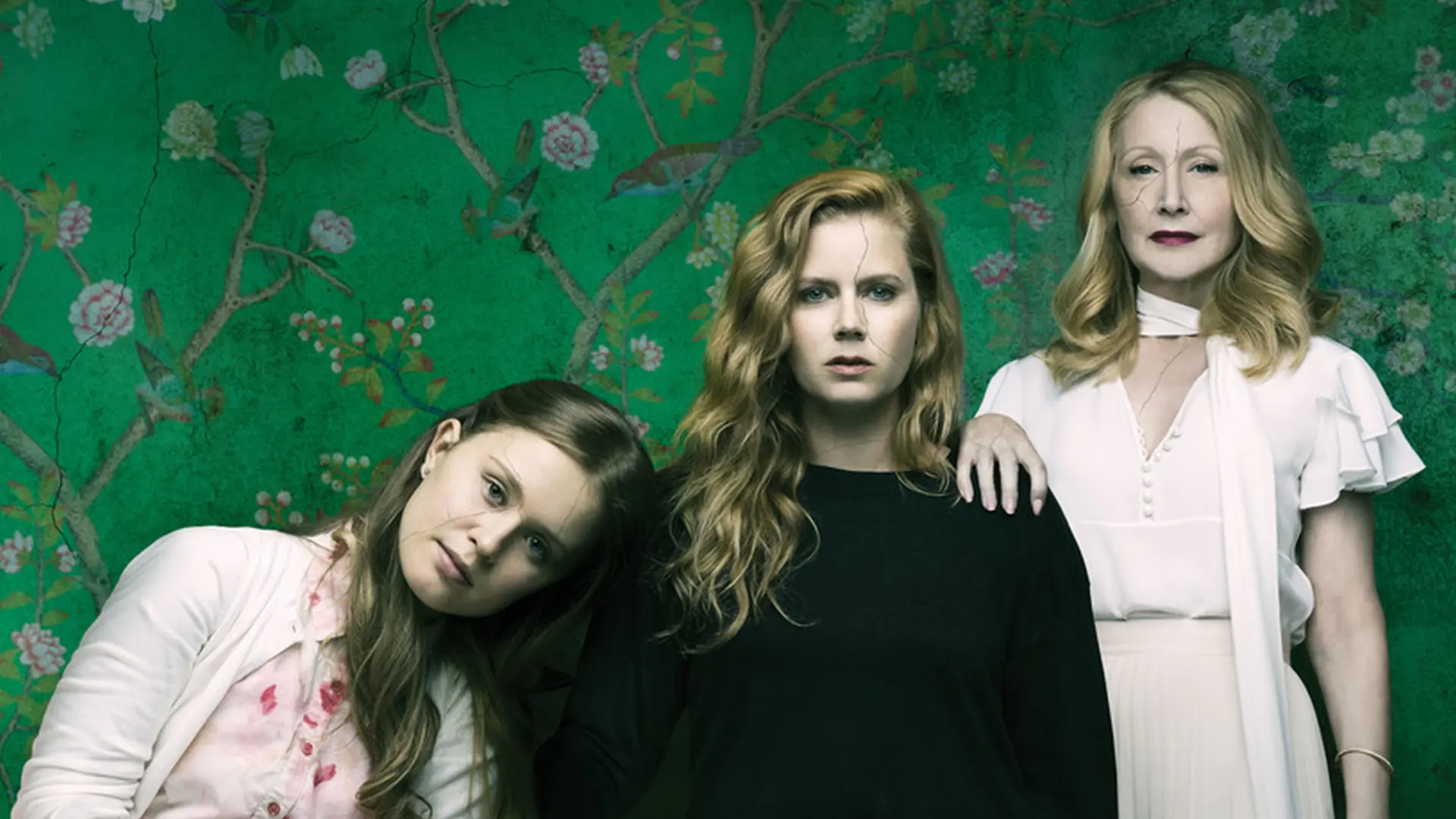
It is one of those series I waited for very, very much. After films had been made based on Gillian Flynn’s other books (Gone Girl, Dark Places), her Sharp Objects—the first title in her oeuvre—was taken up. And although that novel was the one I liked least of Flynn’s work, a few pieces of information about the adaptation made me forget all about that. Not only was it to be a miniseries rather than a feature film, but it was to be produced by HBO—the network that long ago won the battle for the television throne.
One of my favourite entries in their catalogue is Big Little Lies directed by Jean-Marc Vallée, who also stood behind the camera for Sharp Objects. Finally, in the role of a reporter wrestling with the demons of her past we saw Amy Adams, one of the best actresses of our time (no, I am not exaggerating).
I admit that, when I sat down to watch the first episode, I had enormous expectations. I had inflated the balloon myself, and it could easily have burst—each week I feared it would finally happen. But nothing of the sort occurred. Sharp Objects turned out to be one of the best series of the year, and perhaps the very best.
The story takes place in tiny Wind Gap, a backwater hole somewhere in the southern United States. Camille Preaker arrives there to investigate the death of a teenager and the disappearance of another. A woman who abuses alcohol and self-harm does not know how to cope with her problems—although she is a capable journalist, she does not use her potential at all.
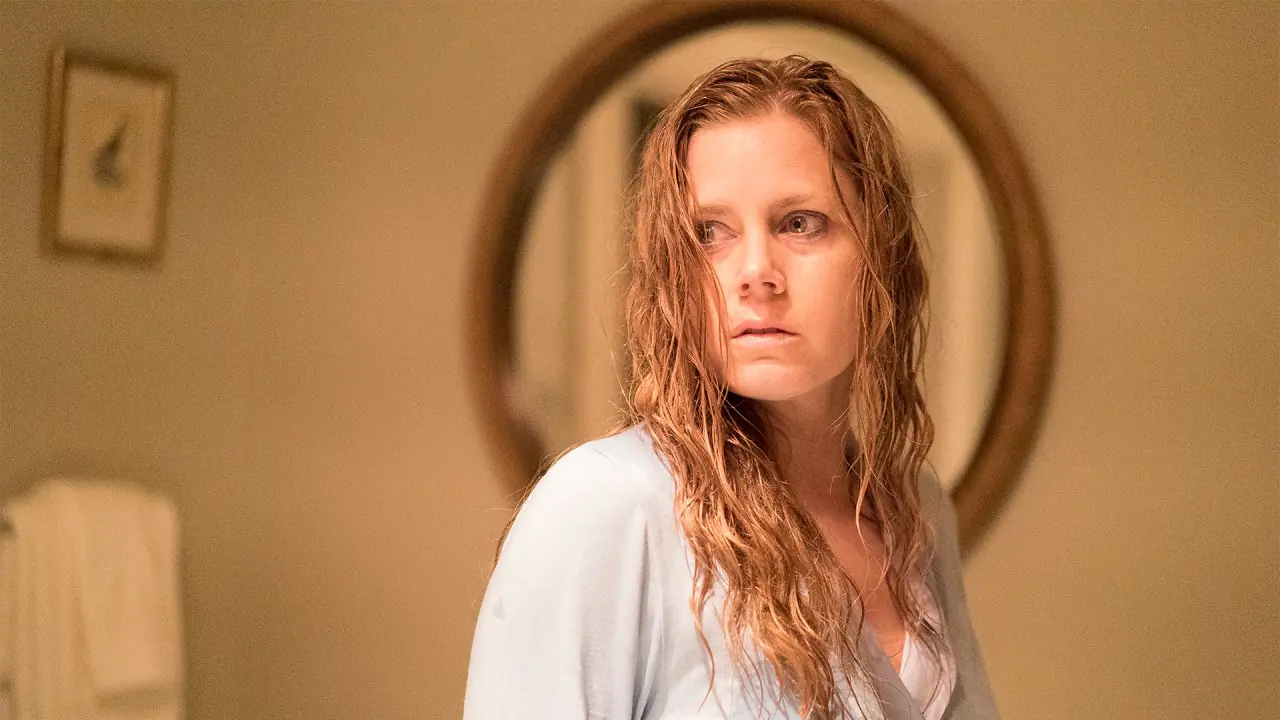
Her boss, who treats her almost like a daughter, not only wants her to finally face a serious professional assignment; this trip is also to be Camille’s chance to work through her past trauma—after all, she grew up in Wind Gap, her younger sister died there, and it was there that she began to cut herself.
She lodges with her mother and stepfather and meets her adopted sister. Conducting her own investigation in the place she once fled, she becomes ever more convinced that her decision was the right one. She does not fit in there and wants nothing to do with the people who live there. Nevertheless, she intends for the first time to finish what she began.
With such a plot, one might have expected another conventional crime drama—a who killed puzzle combined with the complex psychological portrait of the investigator. Usually that investigator is a police officer; this time it would have been a journalist.
And that would have been that. Yet conventional is the very last adjective I would assign to Sharp Objects. This series is entirely different. The identity of the killer really drops into the background as early as the second or third episode. Something else matters—the portrait of the town, its people, the relations between Camille’s family and the rest of the inhabitants, the dynamics between Camille and her mother, the secrets of the past, and finally the atmosphere. Or rather, the tonal layers of atmosphere.

The story unfolds during a hot summer, symbolising the stifling heat and the mustiness that has taken hold of Wind Gap, and one can feel it at every step.
This series is oppressive, uncomfortable, uneasy. The viewer should not be at all surprised that the heroine wanted so desperately to escape. Watching these episodes is not easy, but that has nothing to do with the brutality of the scenes or the ingenuity of the killer’s methods—this is not anything in the style of David Fincher’s Seven. It is the setting itself that repels. As the heroine herself says in one scene, there is no small-town charm there—only the provincial stench. It is hard to imagine a better summary.
A promise made by the creators in the first episode is fulfilled with interest.
Everything unfolds slowly, languidly, but precisely as it should. The narrative—which includes, among other things, bizarre montage insertions in the form of memories or hallucinations—evolves with each subsequent episode, taking an even more surprising form in the finale. What they did in the ending is a masterstroke—it leaves the viewer with mouth agape even if one has previously read Flynn’s novel. The creators tell this ostensibly simple story in an exceptional way. From that merely decent book they managed to extract its best elements, then amplify them and add a few things of their own. Eight weeks with Sharp Objects was truly a great television experience.

Amy Adams created one of her finest roles in this production—Camille could easily have become a caricature, but instead the actress presented us with an ambiguous, extraordinarily believable heroine. Patricia Clarkson, who for years has been regarded as a master of distinctive supporting roles, once again confirmed that she very much deserves that title. It was also wonderful to see Elizabeth Perkins on screen after so long—her role was not large, but it was a colourful, memorable performance. The greatest applause, however, belongs to the debutante Eliza Scanlen.
As Amma, Camille’s mysterious adopted sister, she outshone Adams herself in some scenes. This young woman has all the makings of a star. Let us hope she uses it wisely and appears in equally good productions in the future.


Looking back at DEAD SNOW: A Blizzard of Nazi Gore Fun

DEAD SUSHI: Exotic, Spicy, and Wildly Entertaining

Revisiting ALICE, SWEET ALICE: Dread and Religious Symbolism

PUPPET MASTER: LITTLEST REICH – Achtung! It’s Good!
