
Review
PAN’S LABYRINTH. A film that stays in memory forever
It is the year 1944 in Pan’s Labyrinth, and in Spain, after the exhausting civil war, the dictatorship of General Francisco Franco has taken hold.

It is the year 1944 in Pan’s Labyrinth, and in Spain, after the exhausting civil war, the dictatorship of General Francisco Franco has taken hold. Guerrilla fighters loyal to the Republic are hiding in the forests. Power lies in the hands of fascist zealots in blue uniforms, men like Captain Vidal. Nothing is obvious or simple anymore. People are murdered without reason. They live in fear, constantly worried whether there will be enough bread for them, rationed sparingly from the captain’s tightly locked pantry. They line up in long queues, smiling respectfully, trying somehow to survive, to endure in a world that has ceased to be safe or friendly.
A world of wicked wolves, ravenous toads, and pale-faced monsters.
Eleven-year-old Ofelia comes to live on Captain Vidal’s estate with her pregnant mother. Carmen’s first husband had been a humble tailor, but his memory is precious and beautiful to both women. Had it not been for his death in the war, there would never have been a marriage to Vidal, nor this gloomy, creaking old house, nor the constant fear of tomorrow. Ofelia seeks comfort in fairy tales—magical stories where good always triumphs over evil, where virtues are rewarded and sins punished. Her mother stopped believing in magic long ago. Life is what it is—hard, sad, heavy. Ofelia’s little brother is about to be born into a world with little joy left. Perhaps he senses this, since he so stubbornly resists being born.

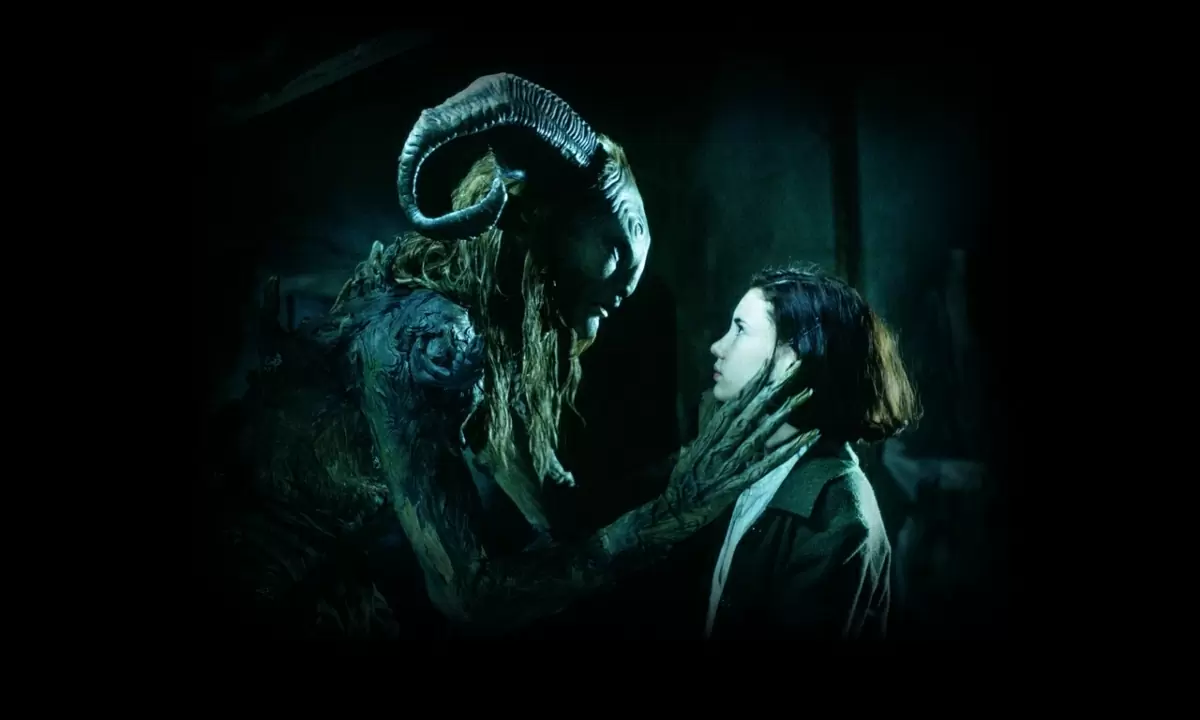
Near this grim house, where the captain’s word is law, Ofelia discovers a very old labyrinth. Almost in ruins, it nevertheless lures with an undefined beauty, an unspoken promise. Following the trail of a small flying fairy, the girl suddenly comes face to face with a majestic, ancient Faun. The strange creature entrusts Ofelia with a mission made up of three dangerous tasks. If she completes them before the full moon, she will return to the world where she truly belongs—the underground fairy realm, where she was once Princess Moanna.
The word labyrinth comes from Greek, and certainly one of the most famous labyrinths is the one Daedalus built in Crete for King Minos. The monster imprisoned within it—the Minotaur, with the body of a man and the head of a bull—was defeated by Theseus.
References to labyrinthine structures can also be found in the works of Herodotus and Pliny. This peculiar architectural form, with a single entrance and a single true path leading to the center, inspired thinkers and writers alike. Jorge Luis Borges pondered its symbolism in his stories; Umberto Eco used it in The Name of the Rose. The labyrinth symbolizes the journey toward enlightenment, the pilgrimage toward light, the liberation of the spirit, and above all, the art of choice. Although there is only one path to the center, this can only be seen from a bird’s-eye view. Inside the labyrinth, choosing one path or another may lead the traveler astray, taking him further from the goal and pushing him off course.
Everything depends on the decisions one makes. The challenge taken on by Ofelia is her own journey through the labyrinth, a journey in which she must choose between what is right and what is easy, a journey in which she can also be deceived—straying in the wrong direction, moving away from her destiny, and suffering punishment for her disobedience.
Ofelia’s guide through the labyrinth is the Faun—an ambiguous, dark figure whose memory stretches back to the beginning of time. According to myth, fauns watched over shepherds and their flocks and were gifted with the ability to foresee the future. The Romans worshipped the god Faunus and his female counterpart, the goddess Fauna, embodying feminine perfection, the Mother of Destiny. Faunus spoke to people through dreams, revealing the future in symbols and riddles. Those who wished to learn the truth about their fate had to venture deep into the forest, into the very heart of Faunus’s domain, risking getting lost in the wilderness. Knowledge was the reward for courage and for choosing the right path.
Fauns are neither clearly good nor evil—their guidance may be misleading, but only because it can be wrongly interpreted. Though truth is singular, the way to it depends entirely on the sum of one’s choices.
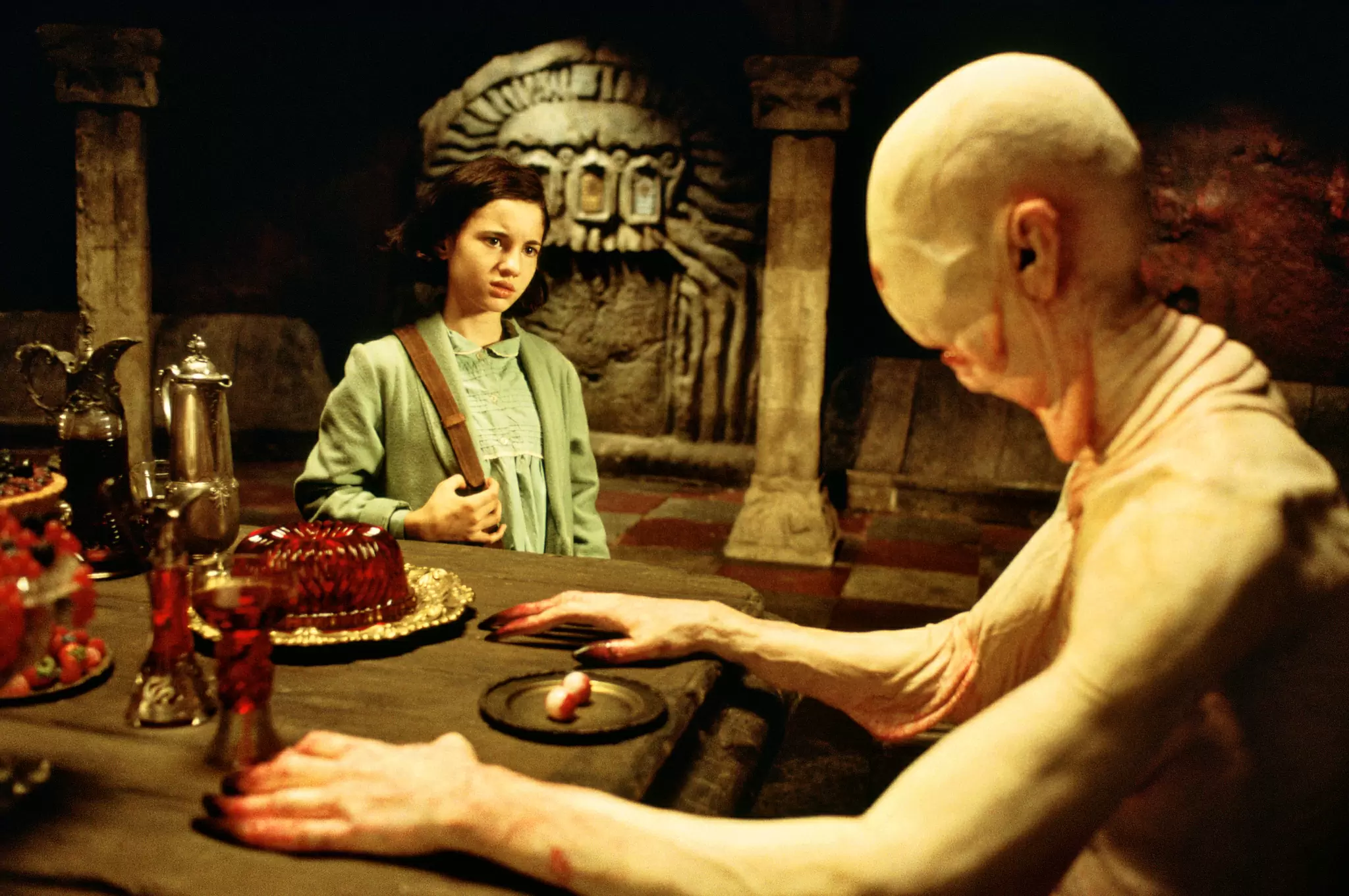
Evil is cunning—it may take a form pleasing to the eye, tempting with promises of power, pleasure, or happiness. Only Ofelia can decide whether to be deceived and tricked, or to remain faithful to the right path. Demonic creatures embodying evil in fairy tales can wear convincing human masks. The Faun warns Ofelia: beware, you will encounter something that is not human, though it may once have been. Her fairy-tale journey through the labyrinth mirrors her real life. Ofelia’s choices are of universal importance—when she stands against evil, supports her sick mother, protects her brother, and overcomes successive circles of initiation leading to the labyrinth’s center.
The toad hidden in the roots of a tree, the terrifying eyeless creature guarding a laden table, and the cruel Captain Vidal—these are all one and the same. The promise of happiness and the triumph of innocence over evil and destruction takes such a clear form only in fairy tales. Yet belief in it helps one stay on the right path even when everything seems meaningless, when the goal disappears from sight, and undeserved suffering goes unrewarded. We are all afraid of the big bad wolf. He is strong because he is dangerous, victorious because he wields power, and he wields power because he uses fear. But the fact that we do not see the center of the labyrinth during our journey does not mean that it does not exist.
Perhaps there is meaning after all. It is not visible at first glance—maybe only because we do not look carefully enough. Someone who rules all through terror, who grows into the center of the universe, who is everywhere and sees everything—one day he may not even be worth remembering by name. Perhaps it is worth trusting fairy tales. Trusting that maybe, where the observer’s eye sees only meaningless death, there is actually a path to a land of happiness. The terror of the big bad wolf will one day end, while fairy tales endure forever.
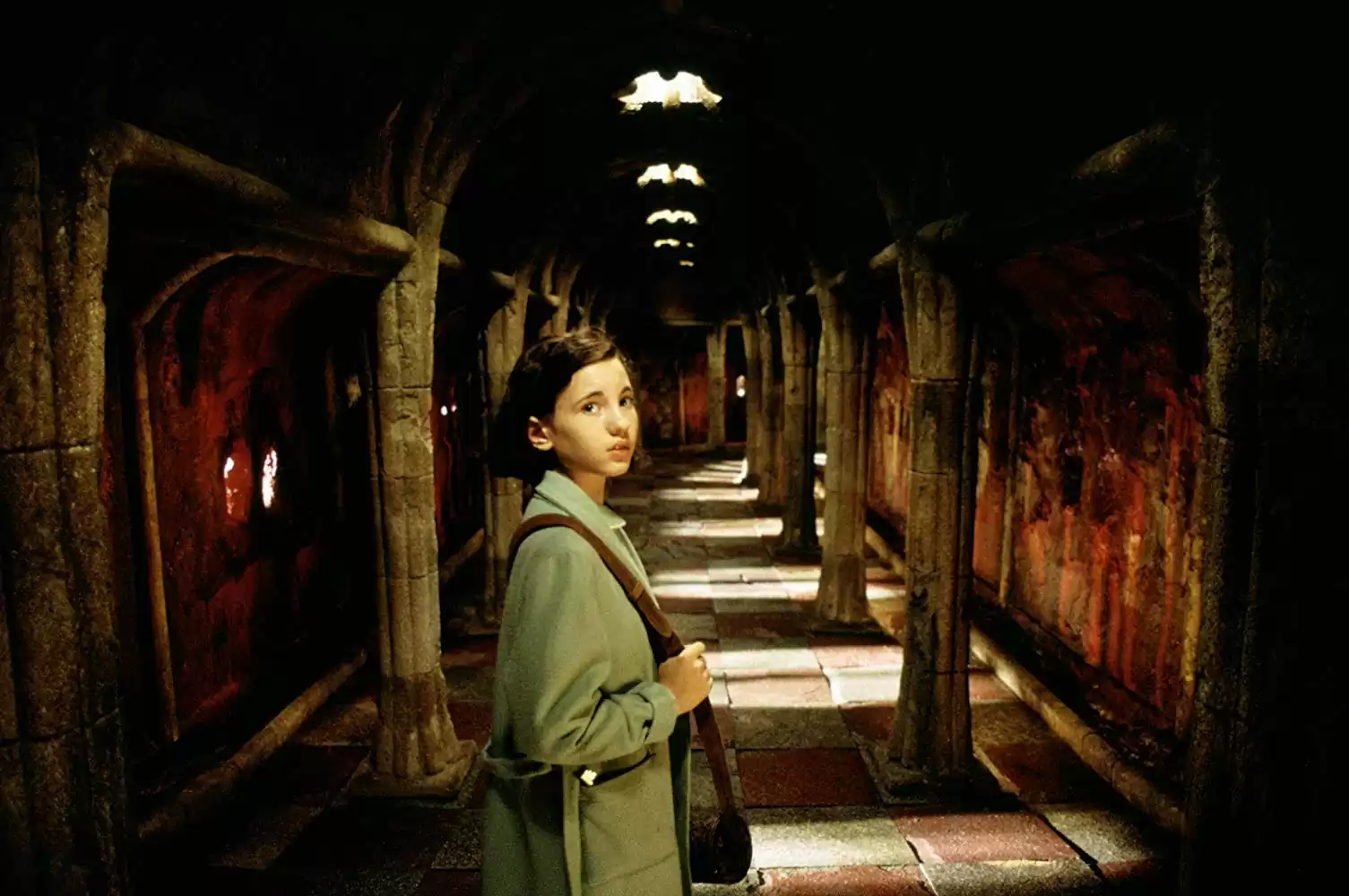
If one expects a classic magical story with all its rules, one will likely be disappointed. The two worlds—the real one and the magical one—though related, seem alien to one another, made of different matter, utterly incompatible. That is because the fairy-tale world has a clearly defined goal, while the real world is mired in fear and doubt, which seem to lead nowhere. Yet in both, the path runs through the same labyrinth. And in the heart of the labyrinth lies hope for what cannot be seen at the beginning of the journey. One must only trust in the validity of one’s choices, even when no apparent reward is given.
Remember that we are one step closer, even when it feels as though we stand still. This message, hidden in the journey of little Ofelia, is what makes del Toro’s film sink deep into the heart—forever.

