
Review
MY LIFE AS A ZUCCHINI. Far Removed from Cinematic Didacticism
My Life as a Zucchini is far removed from cinematic didacticism, yet it holds enormous educational potential—above all for adults.

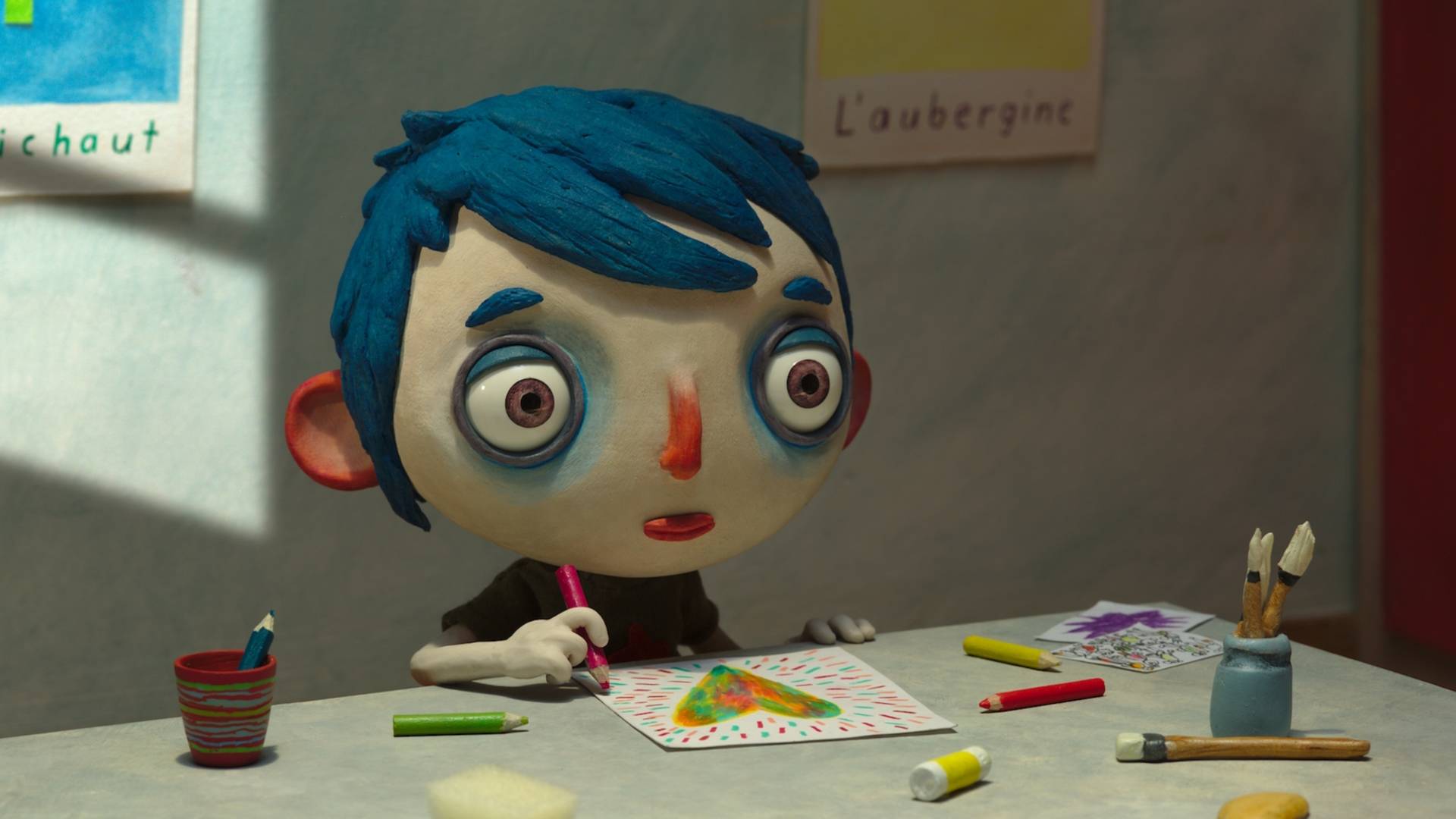
Nine-year-old Ikar (the name is telling in terms of the story’s resonance, though it’s best if each viewer assigns their own interpretation) never had a chance to truly get to know his father. He left the family very quickly. In the boy’s memory, there remains an idealized image of his dad—a superhero with a billowing cape. This is exactly how he depicts him on the kite he has built himself. His mother does little besides staring blankly at the television screen and emptying can after can of beer, stacks of which cover nearly every square meter of the apartment. She calls her son Zucchini.
This is hardly an affectionate nickname; it is more mocking in nature. Yet Ikar has grown attached to it and wants to be addressed that way. Before long, the nickname will remain only a memory of his terrible mother—a tragic chapter in his life. Still, after some time, the boy will glimpse a light at the end of the tunnel.

With no one close to him, Ikar ends up in an orphanage. He takes one empty beer can from home and carries his kite tucked under his arm. These objects are laden with meaning, introducing a melancholic mood. They recall the past and intensify Ikar’s sense of “lack”—a feeling of existential emptiness with nothing to fill it. Zucchini carries the burden of heavy, traumatic experiences. Yet this sensitive boy seems to believe that it is better to have even such experiences and not deny them than to be entirely devoid of them. He does not reject what has shaped him.
At the orphanage, the protagonist meets peers who, like him, have been abandoned and left to fend for themselves. My Life as a Zucchini begins on a somber, dramatic note. The filmmakers accumulate successive children’s stories—of drug-addicted parents, alcoholic parents, suicides—offering a portrait of a fractured society whose victims are innocent children. From this perspective, the orphanage appears as a haven of safety. The minors find protectors, whether in the form of a caring police officer or the staff of the children’s home—not to mention the strong friendships that develop among the children themselves.

This French-Swiss animated film is cinema about acceptance, about finding a way out of trouble, about emerging awareness, about getting back on one’s feet. It is a multi-stage process that each character goes through. The most important step is breaking the first barrier—the ability to tell one’s story and to express the thoughts swirling in one’s head. Ikar’s inner confrontation with his demons and his overcoming of shyness form the central thread of My Life as a Zucchini. Paradoxically, the stylized puppet animation amplifies the impact of many scenes. The filmmakers precisely stage the film’s key moments.
What matters most is the characters’ body posture, the composition of the frame, the distances between the puppets, and the lighting. The limited facial expressions of the protagonists are not a problem. Instead, numerous stylistic choices often carry the strongest emotions, allowing us to enter Zucchini’s psyche and identify with him even more deeply.
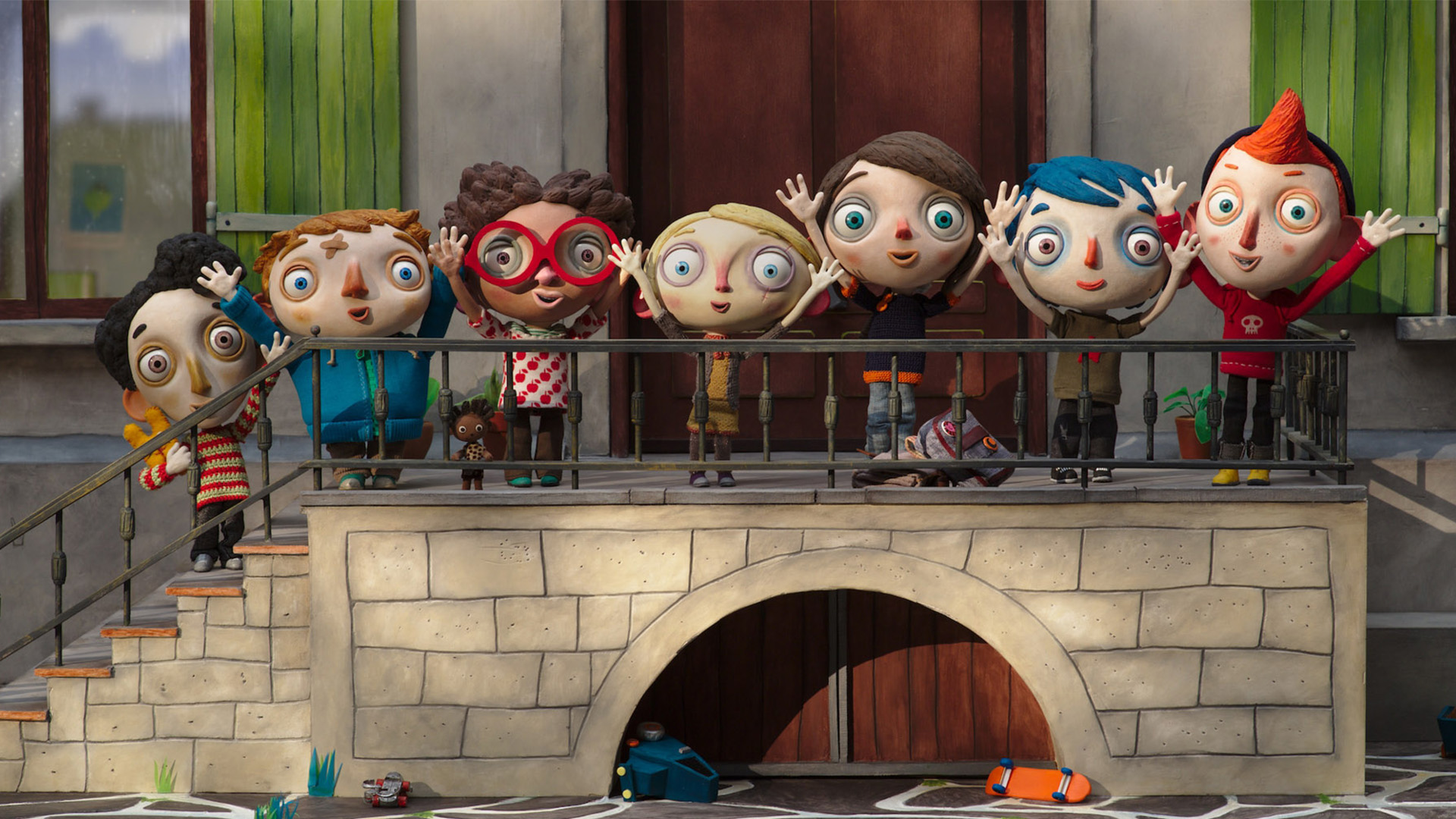
My Life as a Zucchini is a film of refined form, endowed with a distinctive mood that arises from the combination of opposing devices. We have heavy subject matter immersed in a vivid world rich in color and light—an unusual setting for this kind of cinema in itself. On a purely textual level, the film uses a child’s language to describe situations that would overwhelm many adults. As a result, My Life as a Zucchini emerges as a thorough psychological drama, full of nuances and details. In contrast stand the contextual, seemingly child-created images of the characters and their surroundings, at times resembling a sandbox or a toy-strewn carpet in a child’s room.
The world presented in My Life as a Zucchini feels imagined by the youngest and filtered through their sensitivity—at once naive and reaching for something more. Not without simplifications, yet truthful in every second.

In the apparent simplicity of Claude Barras’s animation lies extraordinary power. The director knows how to move the viewer while avoiding conventional tricks. The French-Swiss production provokes empathy rather than easy sentimentality. It primarily invites reflection, far more often than it prompts reaching for tissues. My Life as a Zucchini is far removed from cinematic didacticism, yet it holds enormous educational potential—above all for adults. Still, I wouldn’t hesitate to show Zucchini to younger viewers as well. After the screening, both sides will have plenty to talk about together.


Looking back at DEAD SNOW: A Blizzard of Nazi Gore Fun

DEAD SUSHI: Exotic, Spicy, and Wildly Entertaining

Revisiting ALICE, SWEET ALICE: Dread and Religious Symbolism

PUPPET MASTER: LITTLEST REICH – Achtung! It’s Good!
