
Review
MARS: A Science-Based Vision of the Human Journey
In human DNA lies the determination to push boundaries and expand our horizons. Mars proves that we will emerge victorious from this journey into the unknown.

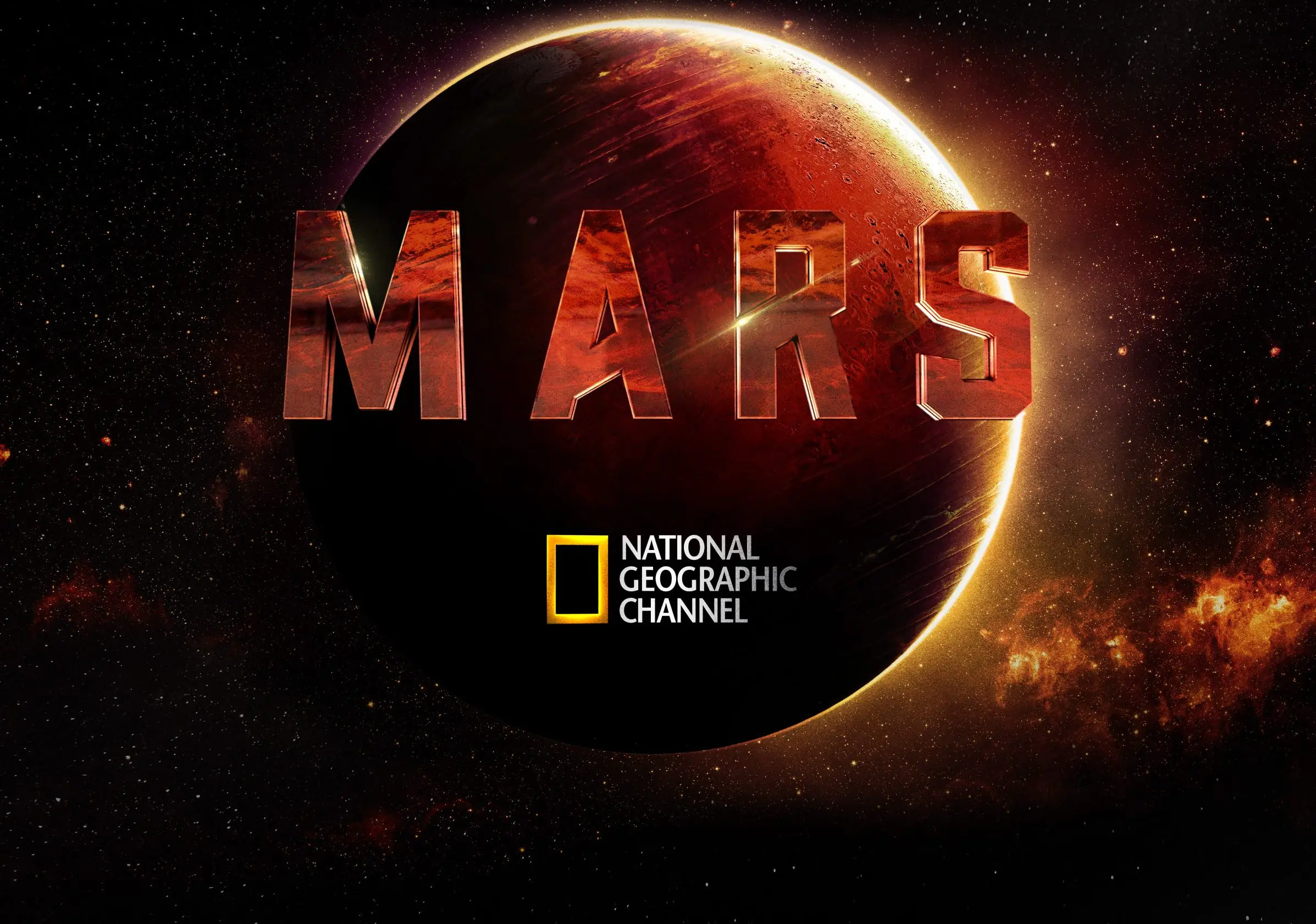
If, in cinematic science fiction, you’ve always been more interested in the hidden, science-based aspects of probability than in visual fireworks, National Geographic has created the perfect title for you. The six-episode series Mars, is a combination of hard sci-fi and documentary. The production turned out remarkably well, showing step by step the realization of the dream of space exploration—proving at the same time that the boundary between science fiction and reality is becoming increasingly thin.
Let’s say it plainly.
We won’t live on Earth forever. It’s simply impossible. If we’re not wiped out by natural disasters caused by environmental pollution or if we don’t annihilate ourselves through nuclear war, in a few billion years, the blue planet will turn into a vast desert anyway. This will be caused by a process completely beyond our control—the Sun’s expansion and rising temperature. The end of our world is therefore only a matter of time. That’s why, most likely (as the characters in Interstellar observed), humanity’s destiny from the very beginning was not to save the Earth, but to elevate technology to a level that would allow us to evacuate from it.

We’ve now arrived at a very responsible moment in our history. The phase of gazing at the stars and examining individual planets is behind us. The time has come to conquer space. The trail was blazed by the Apollo 11 mission, which planted a flag on the Moon in 1969. Next in line for exploration is Mars—the fourth planet in the Solar System. As confirmed by years of research, the conditions prevailing there are, for us, an invitation to arrive—the planet lies farther from the Sun, has a day similar to Earth’s, is rich in resources, and has an atmosphere.
Although plans for human conquest of the red planet have long existed in astronautics (and have successfully penetrated science fiction visions), it is only recently that they have taken on a real, tangible shape.

Between September 26 and 30 of 2016, Elon Musk—entrepreneur, multibillionaire, and founder of SpaceX—announced the launch of a wide-ranging project aimed at enabling humans to set foot on Mars and establish the first extraterrestrial colony within about twenty years. The long-term goal, as Musk himself points out, is to make humanity a multiplanetary species. A kind of calling card for this idea is the 2016 National Geographic Channel series already being called the station’s biggest global project. The series is produced by Ron Howard and Brian Grazer—creators who know what they’re doing, as they previously collaborated on Apollo 13. At their special request, the episodes were directed by Mexican filmmaker Everardo Gout, who had previously worked on the series Banshee.
It’s worth noting that the series’ score was composed by Nick Cave, the well-known Australian musician. The most important thing, however, is that the entire production is conducted with exceptional reliability, both technically and substantively, maintaining the highest level of credibility.

The action of Mars is divided between two planes—fictional and documentary. The main storyline takes place in the year 2033, the moment when the Mars journey project is in its final stage.
We follow the interplanetary voyage of the spacecraft Daedalus, whose crew grapples with the hardships of settling on the red planet. The second, documentary storyline unfolds in the present day, in 2016. We get to hear fascinating interviews with figures from the world of science and business and learn their perspectives—including predictions and concerns regarding the project. Apart from Elon Musk himself, the documentary features, among others, James Lovell—commander of the Apollo 13 mission, Neil DeGrasse Tyson—a well-known astrophysicist, and Andy Weir—the author of The Martian, which Ridley Scott adapted into a film last year. Importantly, the two storylines complement each other.

It turns out that one of the most serious barriers future astronauts may face during the maiden voyage to Mars is not technological but… psychological—there is no certainty as to how humans will handle the hardships of long-term isolation. The series, for now presenting only hypotheses, frequently leans toward negative conclusions or leaves many questions hanging in the air.
But it is almost certain that answers to these and other questions are currently being worked out.
It won’t be easy; on the path to our goal, we will often taste failure. Many of these failures will take the form of the deaths of individual volunteers, blazing a trail for their successors. But Mars proves that we will emerge victorious from this journey into the unknown. In human DNA lies the determination to push boundaries and expand our own horizons. And from this perspective, there is room for optimism—the future belongs to us.

