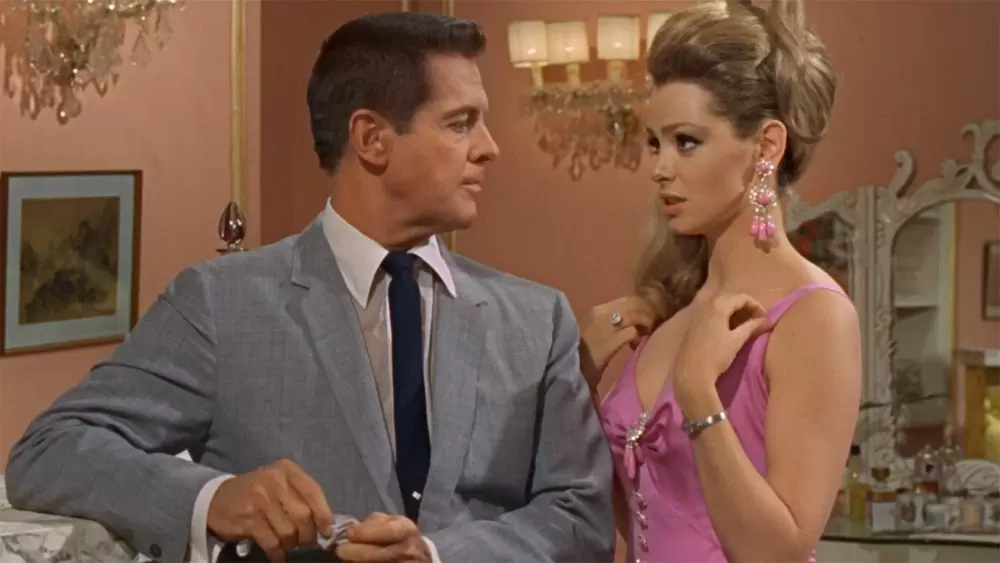
Review
FIVE GOLDEN DRAGONS. A Spy Comedy in the Footsteps of Bond
Two elements, however, rescue Five Golden Dragons: its high entertainment value and its light, comedic tone—it is a parody of the spy genre.

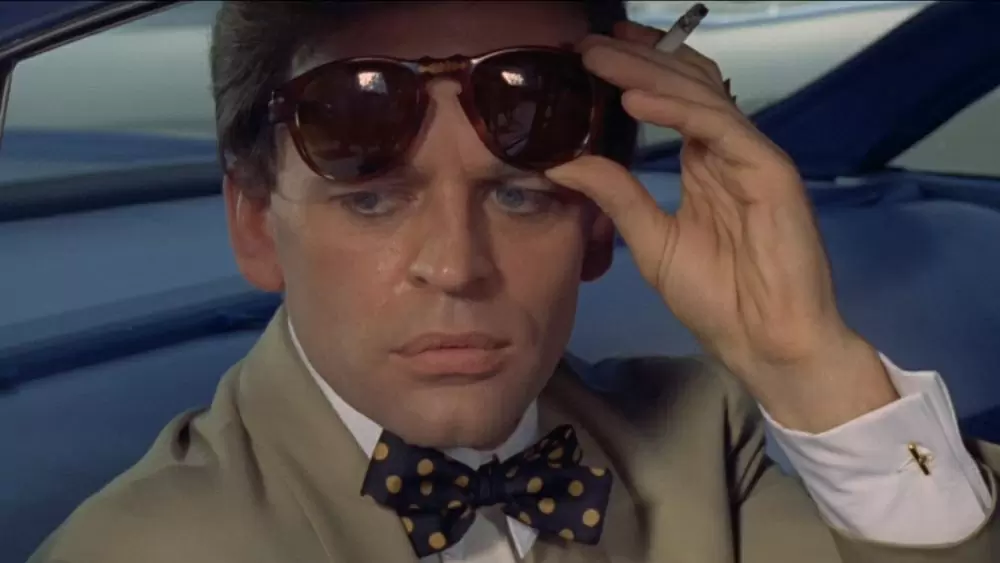
Five Golden Dragons is one of many films made in the wake of the popularity of Agent 007’s adventures.
American playboy Bob Mitchell is spending his vacation in Hong Kong: sightseeing around the city, relaxing by the hotel pool, and flirting with two beautiful sisters he meets at the hotel, Margret and Ingrid. This idyllic holiday is interrupted when, by a twist of fate, Bob stumbles upon the trail of the Five Golden Dragons—a powerful international crime syndicate involved in daring thefts, drug trafficking, and other illicit dealings.
The syndicate’s board intends to sell its shares and black market connections to the mafia for $50 million, thus withdrawing from illegal business altogether. To achieve this, the criminals must first eliminate their subordinates and other potential witnesses to their crimes—including Margret, for whom they hire a paid assassin named Gert. Commissioner Sanders and Inspector Chiao of the Hong Kong police set out in pursuit of the culprits. Bob tries to help Margret, but is he really who he claims to be?
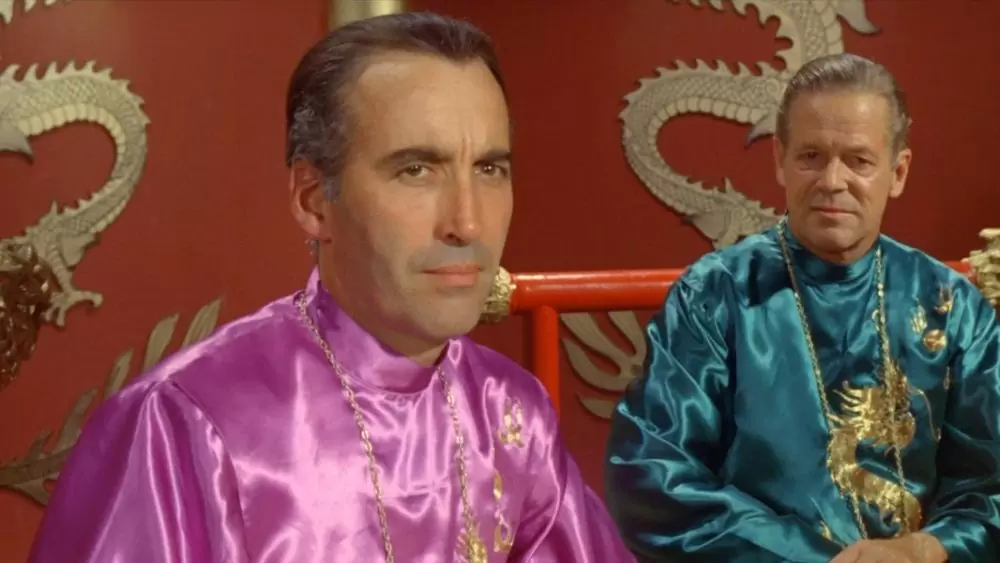
Five Golden Dragons is one of three films—alongside Jeremy Summers’ The Vengeance of Fu Manchu (1967) and Lindsay Shonteff’s The Million Eyes of Sumuru (1967)—produced through the collaboration between British producer Harry Alan Towers and Hong Kong’s Shaw Brothers studio. These titles also share the same screenwriter, Peter Welbeck (actually a pseudonym for Towers), as well as overlapping directors, actors (Christopher Lee, Maria Rohm, Klaus Kinski), and crew members. Each of the films premiered just a few weeks apart and was shot on a modest budget.
The goal was profit: both The Million Eyes of Sumuru and Five Golden Dragons were clearly riding the wave of the box-office success of the James Bond series. We therefore get exotic locations, beautiful women, fast-paced action, a professional killer (played here, naturally, by Kinski), a criminal syndicate, and an utterly implausible plot.
In the 1960s, Europe produced a flood of such films, and Summers’ picture does not particularly stand out from this overproduction. The plot is as thin as watered soup and as random as the meeting of an umbrella and a sewing machine on an autopsy table.
Two elements, however, rescue Five Golden Dragons: its high entertainment value and its light, comedic tone—it is a parody of the spy genre that highlights the absurdities found in films about secret agents, mad villains, and women playing both sides. Even the casting of Robert Cummings as the protagonist who “accidentally saves the world” feels like a joke: the American actor was nearing sixty at the time, and it’s hard to believe he could defeat his on-screen foes (trained killers!) in a fistfight. Cummings, however, does not take his role seriously—and the same can be said for the filmmakers.