
Review
CHAINED FOR LIFE. On the set of a horror film
Chained for Life is, on the one hand, a lyrical but never sentimental story about empathy; on the other, a film-within-a-film, at times absurd and funny.

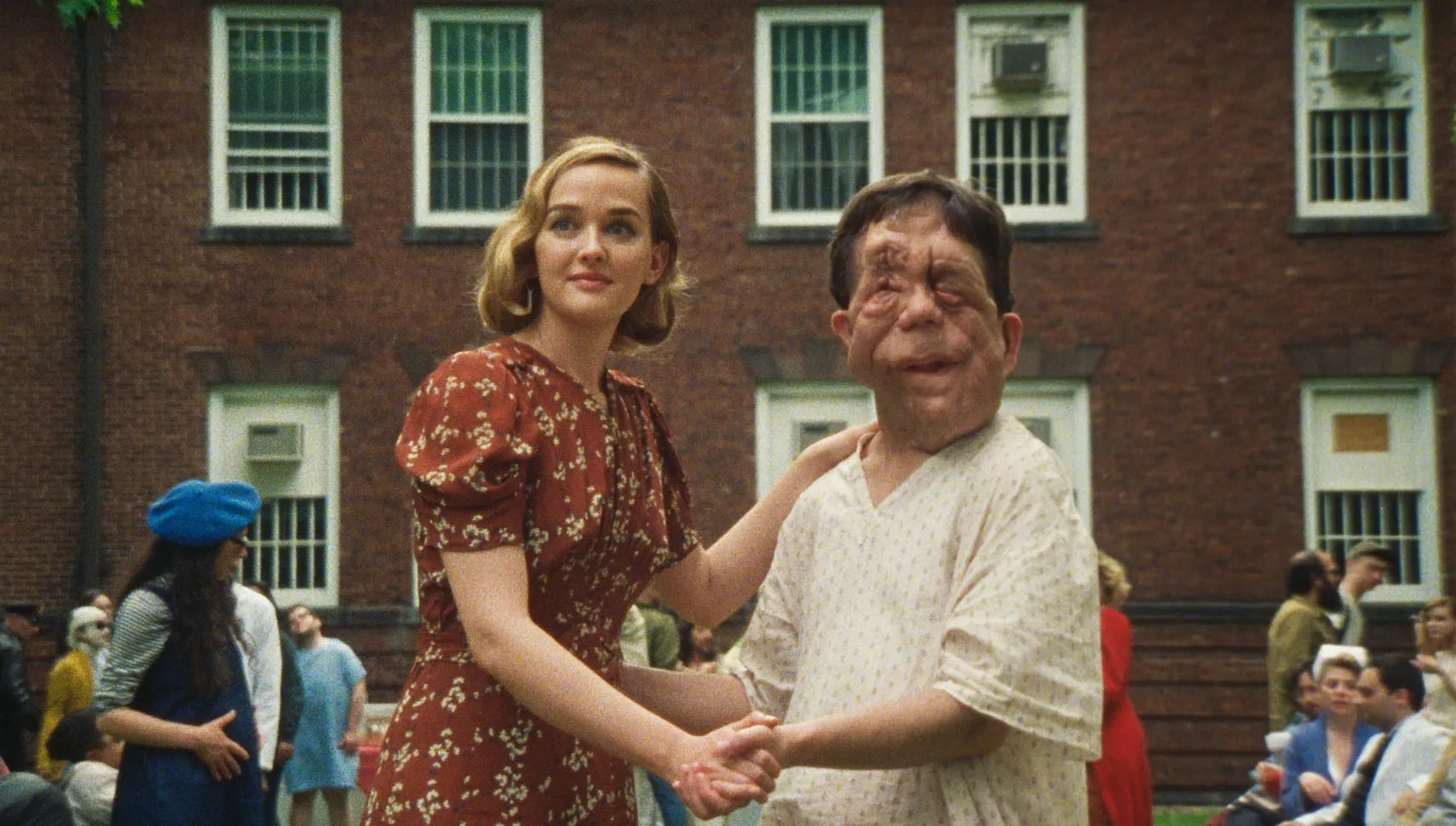
Actors and actresses who are beautiful start with an enormous advantage because we love to look at them. Actors and actresses are usually more beautiful than ordinary people, and why not? Why should we be deprived of the pleasure of beauty…? The handsomer they are, the more roles they can play… This quote from Pauline Kael, the famed American film critic, used at the beginning of Chained for Life, invites us to consider whether cinema truly is reserved for beautiful actors and how much influence we have over that as viewers.
Do we even agree with the thesis above, which sounds somewhat provocative? Because what about those Kael doesn’t mention — where is the place for the less handsome in all this? Do we want to watch them? And if we do, is it not perhaps because they deviate so strongly from the accepted ideal of beauty? If we like looking at beautiful people because they are beautiful, can the same be said of ugliness? It’s hard not to feel that these aesthetic questions touch on moral ones — it’s worth reflecting on our fascination with what is unnatural, perhaps even repellent.

There are many question marks here — fortunately, Aaron Schimberg’s film approaches the subject of beauty and ugliness in cinema in a decidedly non-didactic yet wonderfully subversive way, exploring how movies have “taught” us to react to departures from accepted norms.
The plot revolves around the making of a film that from the outset feels like a pretentious dud. A celebrated German director (played by Charlie Korsmo — Robin Williams’s son in Hook) is shooting his English-language debut, a horror film about a mad scientist experimenting on his deformed charges. The eurotrash quality and exploitation sensibility — or lack thereof — spill off the screen: a visually refined kind of trash where real deformities serve as scares, with a blind beauty placed at the center of this circus.

American actors are cast, drawn by the director’s name. Filming takes place in a real hospital, with physically disabled individuals playing the patients: dwarfs and a giant, conjoined twins, a person with two faces — one male, one female. One of the characters is Rosenthal, a man with a severely deformed head who partners the lead actress Mabel (Jess Weixler — the same one who discovered she had a vagina dentata in Teeth). Initially frightened just by meeting him, she soon grows to appreciate his company. The atmosphere on set is calm, at times even surreal. Before long, the film’s fabric begins to bleed into reality.
Rosenthal is played by Adam Pearson, whom viewers may remember from e.g. Jonathan Glazer’s sci-fi drama Under the Skin. The actor’s unusual appearance, caused by neurofibromatosis, contrasts sharply with Scarlett Johansson’s physical perfection, though her alien coldness, otherness, and habit of murdering unsuspecting men ultimately made Pearson’s character surprisingly sympathetic to us.

In Chained for Life, too, Pearson’s character is paired with a beautiful woman — but Schimberg is less manipulative than Glazer, refusing to turn Rosenthal into a victim. Moreover, the director addresses cinema’s exploitative nature without any attempt to shock the audience (though not without provocation), constantly forcing us to confront our expectations. The film resists classification into any specific genre, playing with conventions even in that regard.
We’re on the set of a horror film for a reason: the director cares only about shock value. There’s even a classic horror shot when Rosenthal steps out of the shadows to frighten the audience. But the moment is hilariously funny, because Pearson’s character doesn’t react the way Herr Director wants, and later questions the point of the scene. The German justifies it with a flat metaphor and a reference to Orson Welles on The Muppet Show, as if trying not to offend the actor by admitting that since he looks like a monster, he must play one in the film.
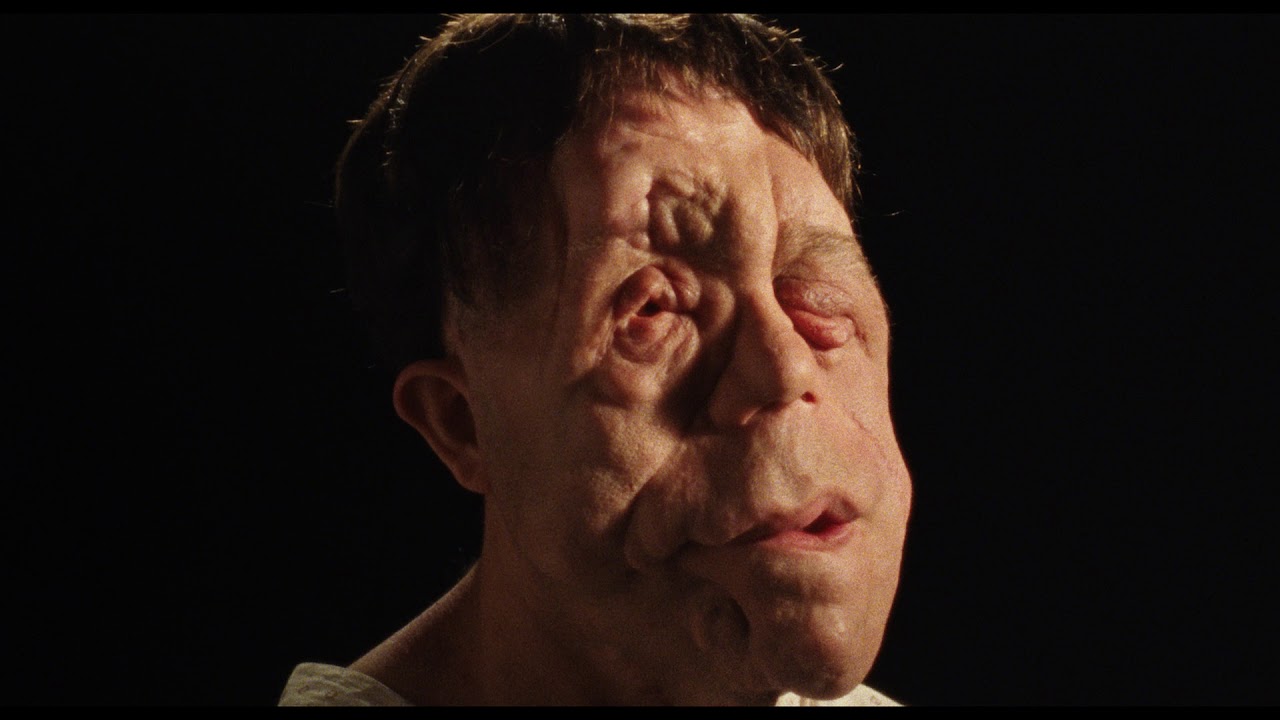
Is that how we perceive Rosenthal and actors like him? I’d like to say no. That nearly 90 years have passed since Tod Browning’s notorious Freaks, and that filmmakers and audiences are now more progressive. That David Lynch’s The Elephant Man affected us with its humanistic message in a way that changed our perception.
That cinema has accustomed us to ugliness, bodily deformities, and horror-like thinking. Schimberg’s brilliance lies in using even such a worn theme as the hunt for a serial killer (with facial scars!) near the hospital where the film is being shot to undermine our supposed progressiveness. He awakens in us the suspicion that perhaps the psychopath is one of… But we can’t think that! We mustn’t! These are ordinary people, even if they look as though they’re hiding something from the world. Probably something terrible.
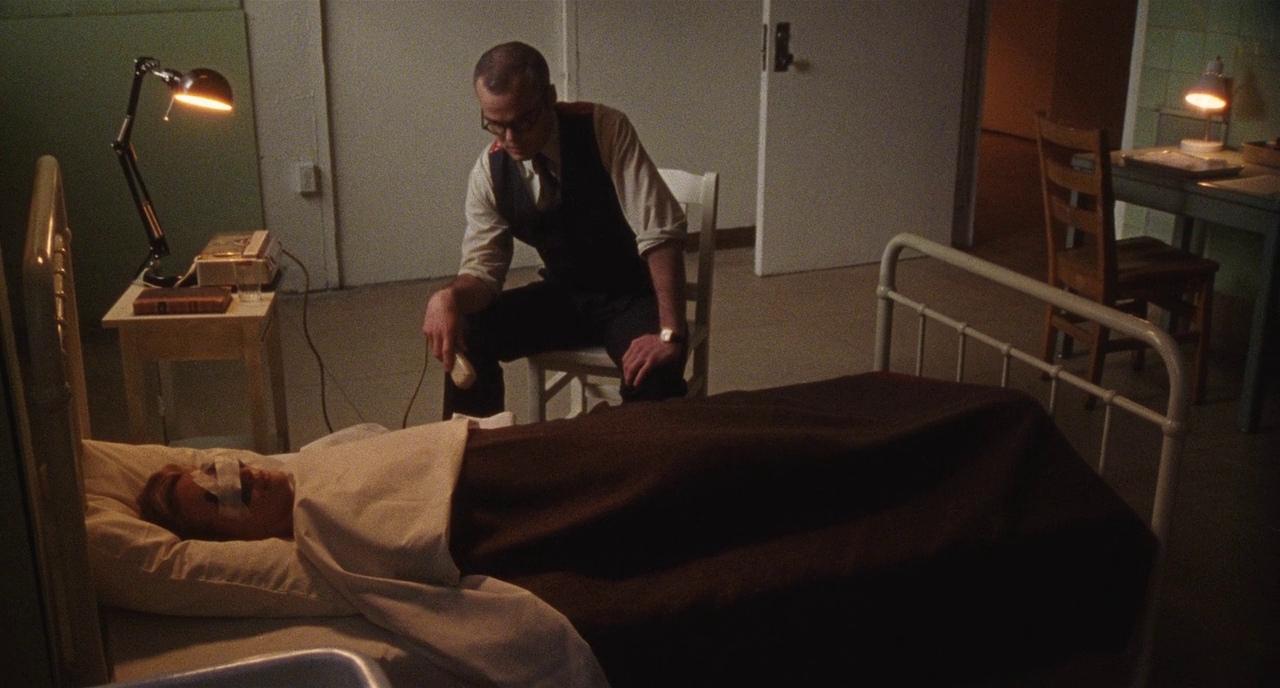
And what about the beautiful ones? Those who walk with confidence, convinced they deserve to be seen? There’s Max, who wants to be taken for an intellectual and everyone’s friend, though his pomposity and ignorance are easy to spot. Mabel is friendly and open, though her naïveté becomes clear in an interview where she quickly lapses into silliness. I’m not saying everything she says is wrong — especially her point that playing a blind woman is part of her job (a nod to current debates about proper representation in cinema). But her claim that Orson Welles’s talent lay in his ability to play both black Othello and white Iago is at best thoughtless.
Also, Welles is mentioned once again — an actor who in his youth was attractive and incredibly charismatic, but later grew obese and aged ungracefully. I’m not sure that’s the association Schimberg intended.
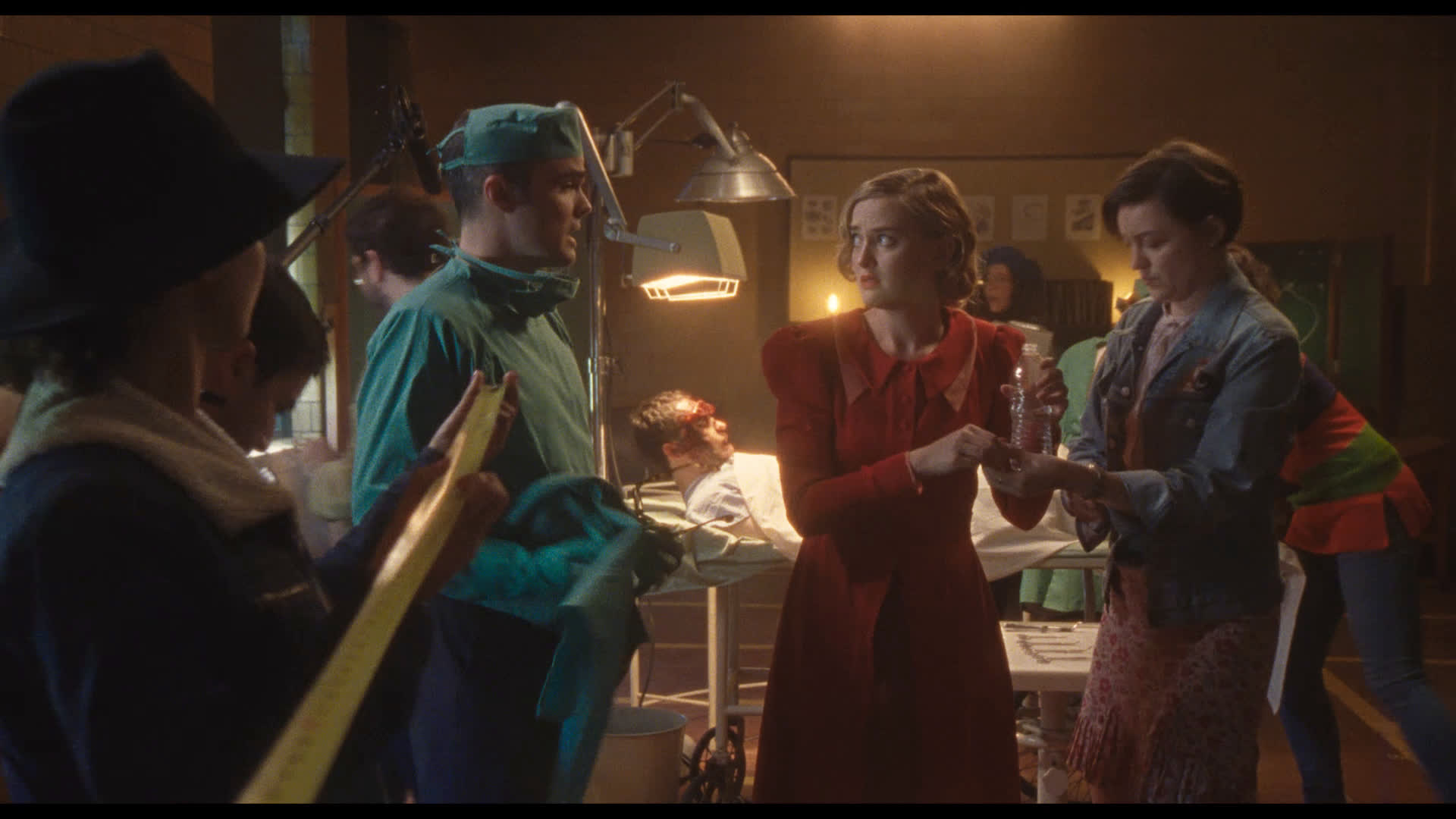
Ultimately, the director portrays the professional, “normal-looking” actors as the ones hiding more than their deformed colleagues. Someone tosses around quotes but doesn’t know their source; someone else always wants to have something to say, even if it’s nonsense; even the seemingly minor moment when a crew member secretly injects insulin confirms that sharing our imperfections is hard. It’s easier to conceal them, mask them. Rosenthal has no such option — quite the opposite. His appearance ensures that people see only his disability, everything else pushed aside. His remedy becomes a “borrowed” camera that captures more interesting things than the German director’s horror film.
Chained for Life is, on the one hand, a lyrical but never sentimental story about empathy; on the other, a film-within-a-film, at times absurd and funny, showing cinema from behind the scenes by blending realism with unpredictable narrative. It toys with horror tropes, reminiscent of Peter Strickland’s Berberian Sound Studio, but is far more cheerful, even when unsettling things appear on screen. And above it all hover Kael’s words from the opening. Films have conditioned us to like what perhaps we truly do: patterns, pretty things, pretty people, simplicity.
Meanwhile, Schimberg’s work fights the associations that equate deformity with monstrosity, beauty with goodness or wisdom, and escaped madmen with thriller-style resolutions. Even the Polish title can be read as a metaphor for these entrenched habits.


Looking back at DEAD SNOW: A Blizzard of Nazi Gore Fun

DEAD SUSHI: Exotic, Spicy, and Wildly Entertaining

Revisiting ALICE, SWEET ALICE: Dread and Religious Symbolism

PUPPET MASTER: LITTLEST REICH – Achtung! It’s Good!
