Horror Movies
PHANTOM OF THE PARADISE: Absolutely Freakin Bananas!
Phantom of the Paradise is a work unlike any other, and although assembled from many well-known elements, incomparable to anything else.

This was meant to be the breakthrough in Brian De Palma’s career, his first major success after years of scraping by and making low-budget productions. Unfortunately, released in theaters in 1974, Phantom of the Paradise turned out to be a spectacular failure and a financial flop. Partly because of the lack of promotion on the part of 20th Century Fox, partly because of its eccentricity and strangeness, for which audiences were unprepared, the film completely failed to interest viewers… until later.
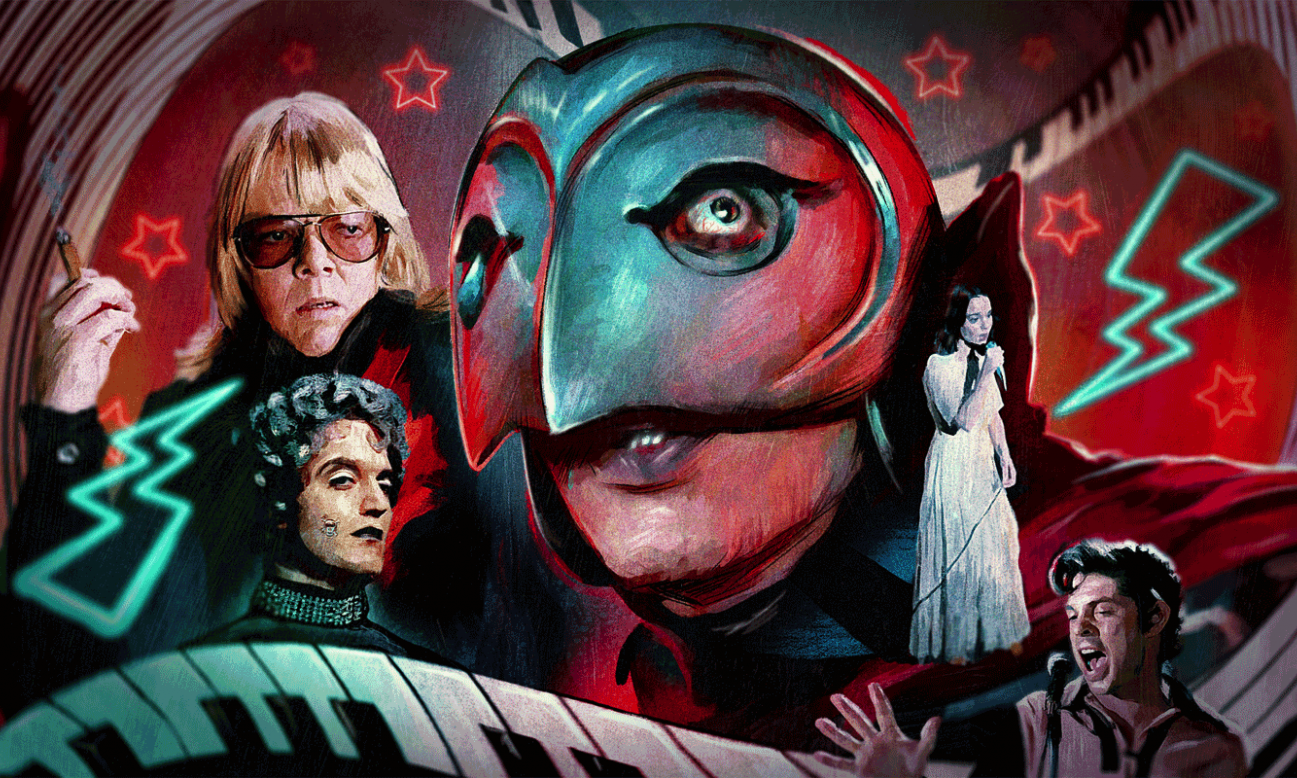
The history of the reception of Phantom of the Paradise closely resembles what happened a year later to The Rocky Horror Picture Show. Screened at midnight showings, it gradually acquired a legion of fans and the status of a cult film, which it maintains to this day, particularly in Canada, France, and South America, where in some cinemas it was shown continuously for over a year. Even the famous masks of Daft Punk were inspired by the one worn in the film by William Finley.

The film is a rock opera, a musical with elements of horror and black comedy, additionally seasoned with a generous dose of camp, deliberate kitsch, and glam rock. Paul Williams, in the 1970s the most popular composer in the United States and a celebrity adored by Americans, agreed not only to write for Phantom of the Paradise a set of extraordinarily catchy songs, but also to play the role of Swan: a satanic music producer, owner of the demonic label Death Records, whose logo is a dead swan—and with his somewhat sweet, somewhat repellent appearance of an aging boy, Williams only adds unsettling extravagance to the character he portrays.
During one of the recording sessions, Swan takes notice of Winslow (William Finley), a young musical genius and the creator of a cantata inspired by Faust. Exploiting his naivety and trust, the producer steals the work, and when Winslow attempts to claim his rights, Swan frames him for a crime, as a result of which the young musician is sentenced to life imprisonment and ends up in Sing Sing. Soon afterward, as part of a prison experiment, Winslow is deprived of his teeth, and after escaping and sneaking into Swan’s estate, he suffers an accident in which his face is disfigured and his vocal cords destroyed.

Hidden behind a metal mask, cloaked in a black cape, he becomes an angel of vengeance and kills all those who unlawfully exploit his music—written especially for Phoenix (Jessica Harper), the singer with whom he is in love. His vendetta, however, cannot lead to a happy ending, because earlier, manipulated, he agreed to sign with his own blood a pact in which he surrendered his soul into Swan’s possession…
Everything here is exaggerated, extravagant, and baroque. The director presents an authorial, original approach to the convention of the musical—or rather the anti-musical—and the rock opera. It is enough to know the basic De Palma package, namely Scarface, to understand how excellent this filmmaker’s sense of combining music with image is.

The songs written for Phantom of the Paradise by Paul Williams constitute a successful cross-section of what was current in the first half of the 1970s, so we have glam rock (Life at Last), pop in the style of The Beach Boys (Upholstery), rock and roll (Goodbye, Eddie, Goodbye), a ballad with piano accompaniment (Faust), and more soulful moods (Old Souls).
The extraordinary, futuristic set design, in turn, is the work of Jack Fisk—a regular collaborator of Terrence Malick, David Lynch, and Paul Thomas Anderson, and privately the husband of Sissy Spacek. Elements characteristic of De Palma’s mature craft also appear, such as split-screen editing, but the overall stylistic approach does not resemble the director’s other films. The comic-book frames and eye-assaulting colors are more reminiscent of the films of Ken Russell, although there can be no question of their being an inspiration: Phantom of the Paradise was released earlier than Tommy.

Beneath the colorful surface, however, lie melancholy and a sad pastiche describing the situation of the artist in a world ruled by money. In this postmodern mishmash, references to Faust (signing a pact with the devil), The Picture of Dorian Gray (Swan removing his face in order to preserve eternal youth), The Phantom of the Opera (the title and the entire story of Winslow), as well as scenes inspired by The Cabinet of Dr. Caligari or Psycho (for who would De Palma be without references to Alfred Hitchcock?) combine in a wild yet astonishingly coherent manner.
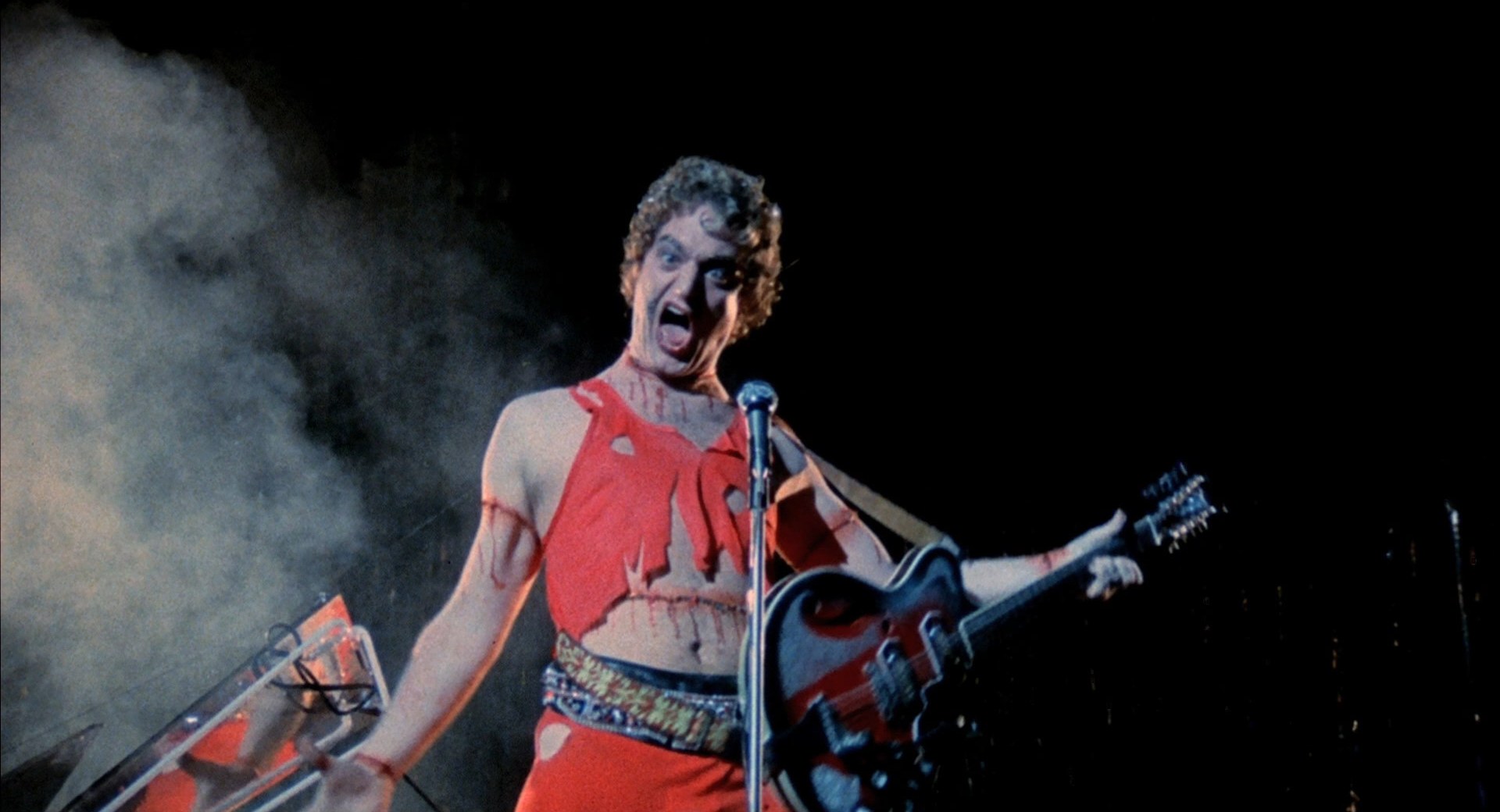
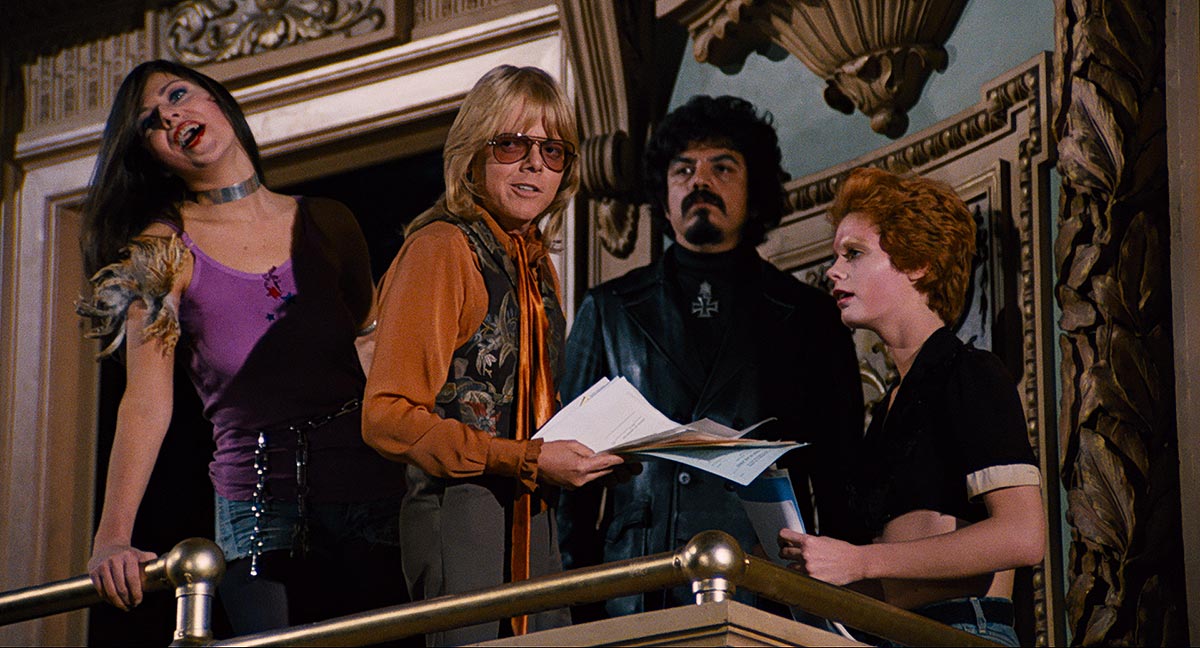
It is also an expression of nostalgia for former, non-commercial music with soul and a bitter satire of the greedy music market, promoting garishness and mediocrity (embodied by the caricatured vocalist Beef), while ruthlessly exploiting true talents such as Winslow and Phoenix. Show business here is dark, dirty, diabolical, which is most powerfully demonstrated in several absolutely perfect scenes. Aspiring female singers, as part of an audition, lie down with the famous music producer on a wide bed and, as if plunged into hypnosis, wail and mantra-like repeat his name, paying homage to him like a god.
A crowd excited by the concert during which Beef died by electrocution chants: We want Beef!—we want beef, we want meat. And the final sequence, in which the audience of a television program, actively participating in the tragedy unfolding live on air, dances to the sound of an electric guitar so carefree and cheerfully that it becomes grotesque.
The Rocky Horror Picture Show was intended above all to attract your attention. Despite the obvious similarities between these films, Phantom of the Paradise is a work unlike any other, and although assembled from many well-known elements, incomparable to anything else. If in cinema you are a seeker of curiosities and a collector of irregular pearls, if you prefer twisted plot lines to straightforward ones, and the risk of experiment to the certainty of perfection—then Phantom of the Paradise will possess you as well.