
Review
WAR OF THE WORLDS. A Bizarre Piece of Science Fiction [REVIEW]
War of the Worlds is an anti-surveillance film at heart. The aliens come to steal our precious data, and the indirect culprits turn out to be the corporations

I sometimes like to imagine what October 30, 1938, might have looked like in the life of an average American. A model husband and father comes home exhausted after a long day of work. Driving through the streets of his small hometown, he turns on the car radio to relax a bit—only to hear news reports blaring about an alien invasion of New York. Disbelieving his own ears, the man jumps out of the car and rushes to the nearest phone booth—already occupied by thirty other people—to warn his loved ones that they must pack up and flee immediately. Anywhere, as long as it’s far away from those cursed United States, magnets for all the world’s misfortunes.
Although the extent of the panic triggered by Orson Welles’s radio adaptation of The War of the Worlds is still debated to this day, there’s no doubt the future filmmaker hit the bullseye with his idea. He fooled thousands of Americans, cynically exploiting their chronic—yet entirely justified—fear of war. What’s more relevant to this review, however, is that he simultaneously demonstrated the adaptability of H.G. Wells’s now-classic novel, which bends effortlessly to fit any time and circumstance.
Updated for modern times and produced by Amazon (a fact that will matter later), War of the Worlds A.
D. 2025
Every suspicious behavior earns them an immediate reprimand from their overprotective father. His obsession with control is put to the test when Earth is suddenly attacked by an alien civilization.
It’s impossible to write about Rich Lee’s War of the Worlds in a completely serious tone. Though the film premiered on Amazon’s streaming service just a few weeks ago, it already has something of a cult status. Zero percent positive reviews on Rotten Tomatoes, a 1.
0 average on Letterboxd. Yet audiences don’t seem to care: since its release, War of the Worlds has ranked among the most-watched films on Prime Video. Why? It’s all thanks to the phenomenon of so-called hate-watching. That’s exactly the mindset best suited for War of the Worlds. These films are meant to be watched with friends, expecting them to be at least as bad as their reputation suggests. Under these conditions, everything that would normally cause deep irritation and prompt you to turn off the TV suddenly becomes a source of paradoxical joy. From Ice Cube’s catastrophically bad acting to the laughably cheap special effects—worthy of Wakaliwood productions—there’s a certain twisted pleasure in it all.
Watching War of the Worlds is a surreal experience, resembling—at least to some extent—watching someone else’s livestream. My colleague Maciek Niedźwiedzki was right when he wrote in his review that cinema “doesn’t get along with Facebook-style interfaces or WhatsApp windows.” Films made in a similar style (like Searching or Unfriended) prove this—they’re rather weak, offering little beyond their gimmicky format. But Lee’s project surpasses them all in every way.
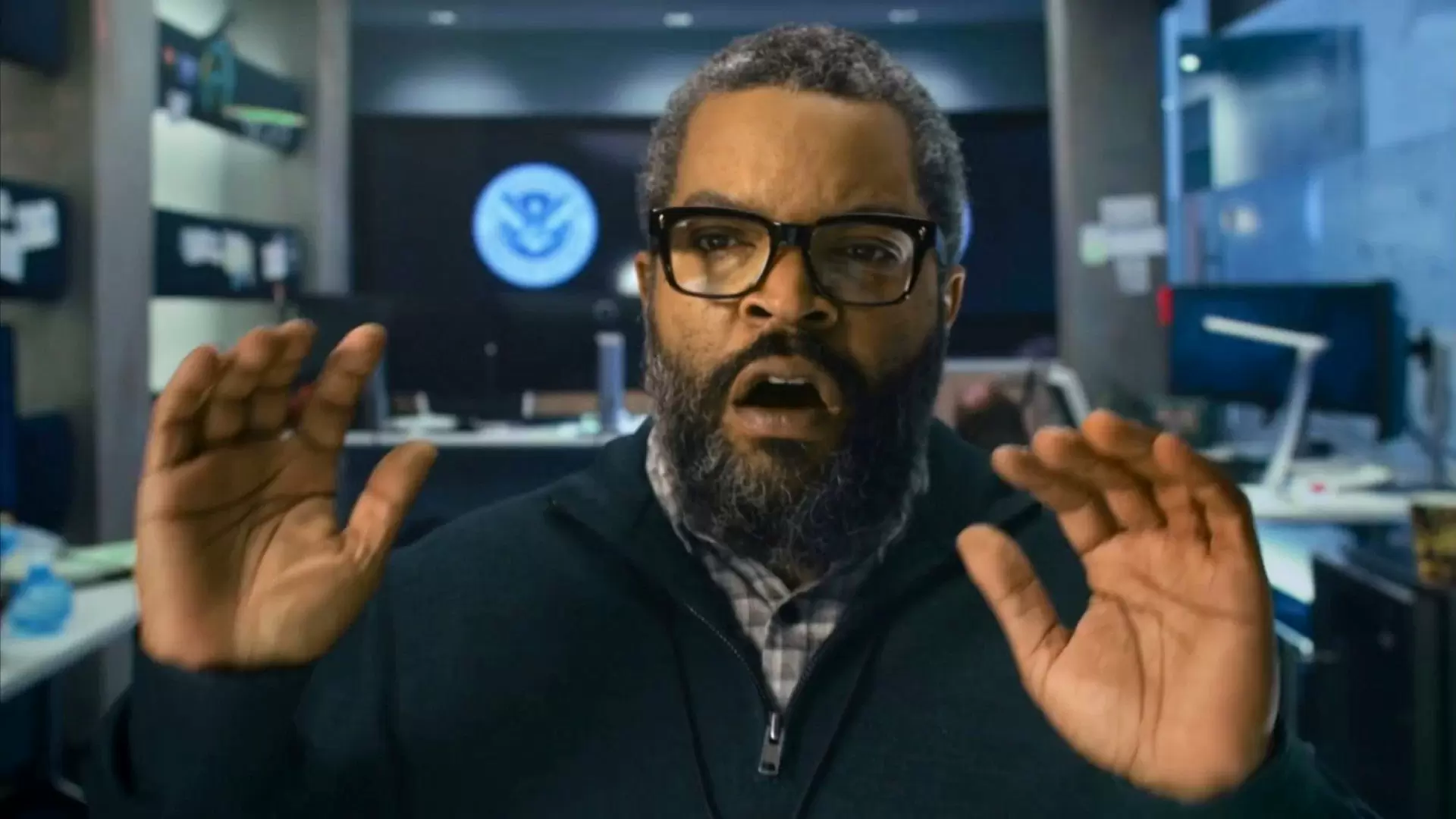
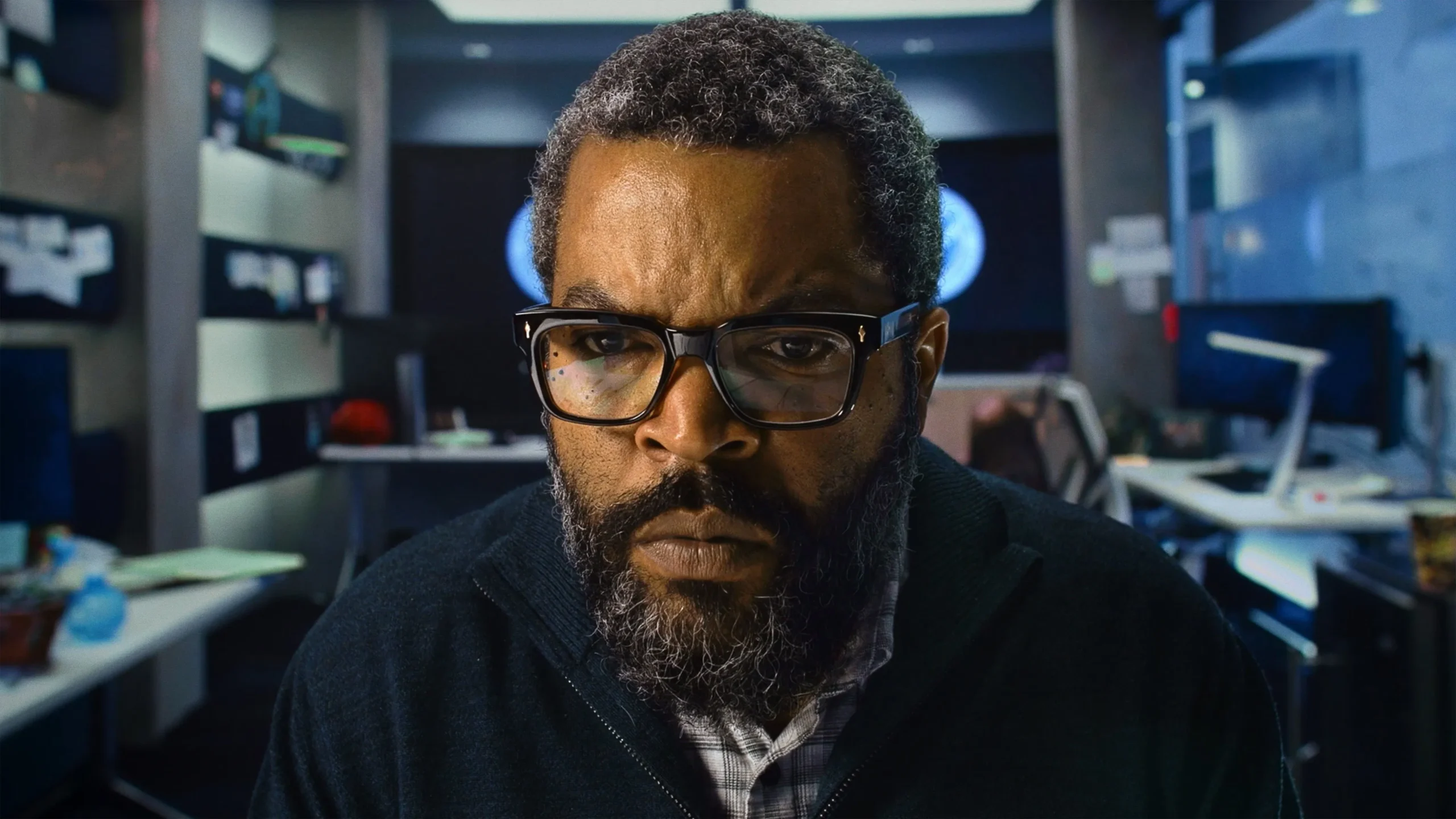
Ninety percent of the movie consists of static shots of the American rapper reacting to each new plot development. Ice Cube constantly clutches his head, mumbles under his breath, then leaps out of his chair shouting “Damn!” or “Oh my God!” Unsurprisingly, many of these clips have already gone viral as memes: his exaggerated reactions are funny enough on their own, but in the film’s dramatic context, they’re twice as hilarious (the “reaction” to his son’s supposed death is especially worth watching—played in perfect comedy style. Ice Cube’s still got it!).

Plenty of absurdly bad films are doomed from the pitching stage, as Ryan George from Pitch Meeting regularly demonstrates. Surprisingly, War of the Worlds isn’t one of them. The idea of portraying an alien invasion through computer and smartphone screens isn’t inherently bad. After all, we’re all, to some extent, addicted to screens: our electronic devices—whether we like it or not—could one day bear silent witness to our own apocalypse. The biggest problem with Lee’s film lies in its execution.
The whole thing looks like it was shot over a single weekend on Zoom (filming did indeed happen during the pandemic). The only thing distinguishing it from an amateur project is the presence of professional actors. The quality of the VFX makes you wonder where exactly the $65 million budget went. How much did Ice Cube inflate his fee after reading the script? How much money was spent on those massive green screens forming the backdrop of every other scene? At no point does the film feel like a big-budget production. What it does feel like, however, is something else entirely: the nauseating stench of shameless product placement.
Remember when I mentioned at the beginning of the second paragraph which company produced this new War of the Worlds? Well, you actually don’t have to: the film reminds us with the frequency of a spinning minigun.
In the climactic sequence—sure to go down in the annals of bad cinema—our protagonist orders a USB stick from Amazon, which is then delivered by a company drone piloted by one of the film’s side characters. As if that weren’t enough, the drone crashes badly and lands upside down in the street. Salvation comes in the form of a random passerby, who is persuaded to help—this is not a joke!—with a $1,000 Amazon gift card.
Leaving aside the “subtlety” of this self-promotion, the real absurdity lies in how this ad contradicts the film’s central message. Because yes, you guessed it: War of the Worlds is a libertarian, anti-surveillance film at heart.
The aliens come to Earth to steal our precious data, and the indirect culprits turn out to be the corporations and agencies amassing citizens’ information on a massive scale. Which, frankly, sounds like a grim joke coming from a corporation that does the exact same thing every single day. But of course, in Jeff Bezos’s noble hands, our data is perfectly safe—and in case of an alien invasion, we can always count on his fleet of drones.

