
Review
THREE FLOORS. A Film about Generations [REVIEW]
Three Floors is above all a film about generations. It offers a simultaneous glimpse into every stage of growing up


One building, three floors, several families. A thoroughly soap-opera-like setup. A couple in a mid-length marriage with a young daughter. Lucio and Sara are both climbing the professional ladder; in their relationship there are minor and slightly more serious frictions. What binds them is their boundless love for their little daughter. It isn’t perfect, but no one is thinking of not carrying on. Above them lives Monica, who has just given birth. Her husband, a construction worker constantly away on assignments, didn’t even manage to make it to the delivery. Still, no harm done. There are no particular grievances here; trust remains intact. They have grown used to long-distance love.
Across the hall lives a retired couple. She is still sharp, physically and intellectually fit. He is showing the first signs of senile dementia. On the top floor lives an experienced couple of judges. Their son, in his early twenties, at one point gets involved in a harmless bar brawl. At another time he gets behind the wheel drunk and fatally hits a pedestrian. This tragic event opens Three Floors by Nanni Moretti.

Problems, little problems, misunderstandings, secrets and little secrets. In a wide-angle view, Nanni Moretti’s film tells a story about parental responsibilities and children stepping into adulthood. The Italian director focuses primarily on turning points—events that shape character, significantly disrupt a seemingly idyllic status quo, and tear at the seams of properly functioning families. An obsessive and irrational suspicion of rape, a car accident, a brutal confrontation between son and father, an affair with a neighbor. The weight of these events, however, is not matched by overt acting or staging. Moretti values above all the delicacy of dialogue, the subtlety of gestures, and a realistic setting.
The accumulation of misfortunes is merely a narrative device. On this level, Moretti is exceptionally clear and direct. Three Floors moves from the very beginning in a clearly defined direction. The clarity of its conclusions and of the emotional effect it aims for remains an immanent feature of Moretti’s cinema.
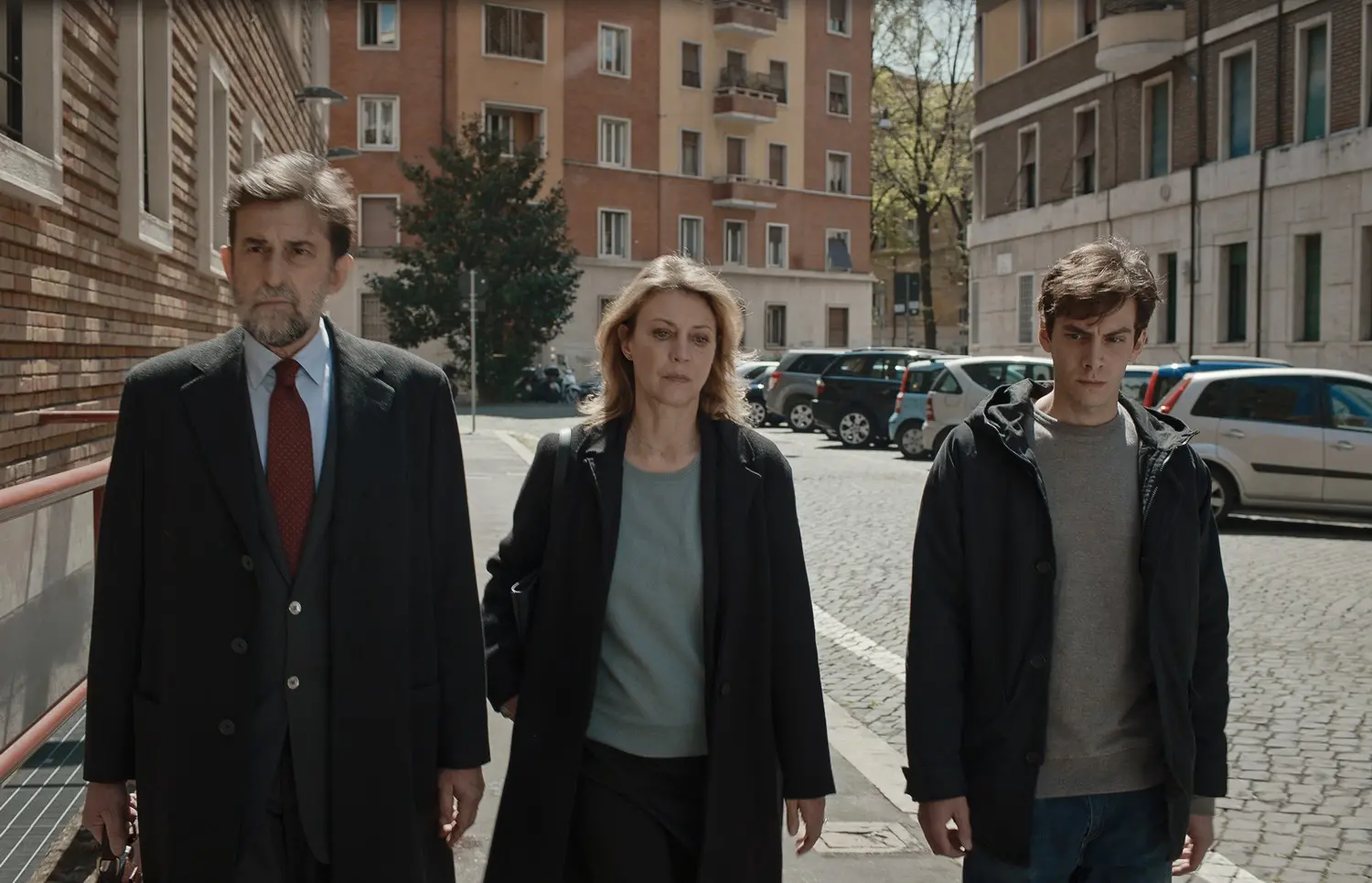
This is, after all, cinema about the necessity of talking—and the soothing power of conversation. Cinema about accepting one’s own weaknesses and about redemption. Several characters adopt the wrong perspective, fail to fight for what matters most, allow themselves to be carried away by private ambitions, say a few words too many, take too many steps in the wrong direction. Moretti tempts his characters, pushes them off the beaten path, forces them to make corrections—of beliefs, attitudes, misplaced trust—and observes their reactions.
The plot of Three Floors is rather selective, focusing on boundary moments in the lives of each family. There is less ordinary everyday life and more difficult choices. Fewer gray mornings, more historic moments. This creates the impression of a somewhat jumpy narrative that does not allow all nuances to fully resonate and does not exhaustively justify every transformation. In this respect, Moretti relies on the viewer to fill in the gaps and complete the story. He trusts in the baggage of experience brought by audiences—mothers, fathers, sons, daughters—during the screening. Only then, wholly, partially, or in small fragments, might we meet the film’s characters somewhere along the way.

Three Floors is above all a film about generations. It offers a simultaneous glimpse into every stage of growing up—of gaining and losing vital strength. An innocent infant, an anxious little girl, a rebellious twenty-something. A single mother, a couple in their prime, and those who must come to terms with the autumn of life. It is precisely this intergenerational perspective that gives Moretti’s film a universal, timeless quality. Their stories intersect only at a few points; sometimes they complement one another, but most often they function as separate novellas, enclosed under one roof in a Roman apartment building.

