
Review
THE LOST SYMBOL: Not Flawless but Successful Nonetheless
The Lost Symbol is nonetheless a successful take on the once mega-popular franchise that we are slowly forgetting due to increasingly worse book material.

The Lost Symbol is not a perfect and flawless work, but overall it is quite enjoyable to watch. In my opinion, it is a very well-made prequel. I love the novels by Dan Brown, who is the author of the literary original. However, I am not a big fan of the films. Something is missing from them, despite the million-dollar budgets, top-tier actors, etc. The series is made on a much smaller scale, which gives more room for the development of the characters and the story itself. And 10 episodes is really plenty of time to get to like them, to see how they change, and – more importantly – how the creators changed the original text in a rather unusual way.
But what did not work? The romantic subplot is probably the worst thing that could happen to any book signed with Dan Brown’s name. I was glad that these elements were somewhat removed from later adaptations. I do not deny that several academic sapiosexuals would go for Professor Langdon, but the love affairs forcefully inserted at the very end of the books always caused a bit of cringe in me. Here the creators go a step further, and we have in the foreground the pains related to the affection between the main character and Katherine Solomon, the daughter of Peter Solomon, Robert’s mentor.
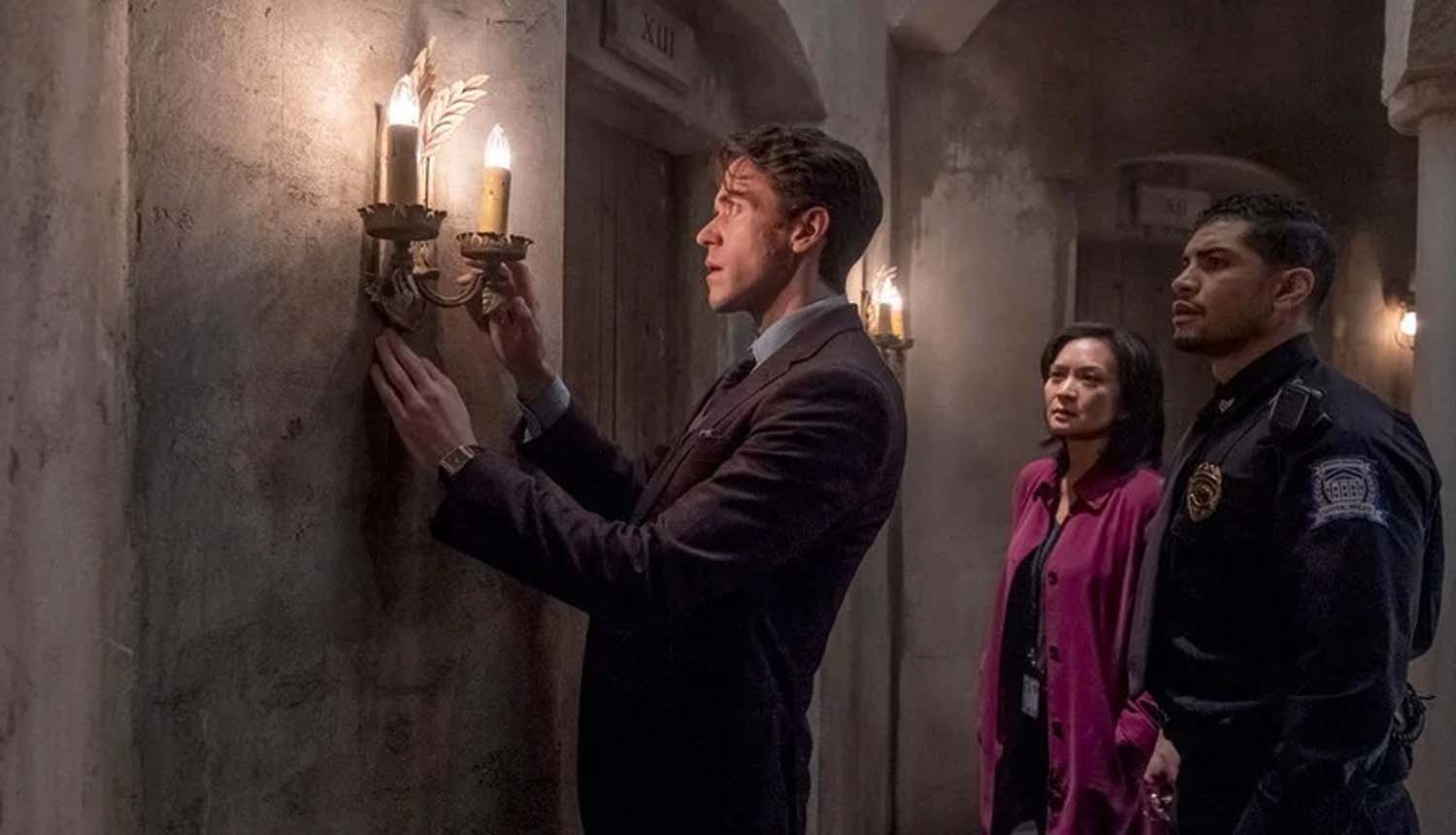
However, these two extremely intelligent people behave as if they were in kindergarten. This subplot genuinely adds nothing to the series, and we never hear about Katherine again, even though it was her – according to the creators of the series – that Langdon was supposed to propose to. I believe this was completely unnecessary. The action of the book The Lost Symbol takes place after the events of The Da Vinci Code. Robert Langdon is a well-known professor, he writes books about symbols, and in the meantime, he managed to discover the identity of the descendant of Jesus Christ and Mary Magdalene.
However, the creators of the series decided to do something extraordinary and created the aforementioned prequel, through which we meet our hero as a person who is just beginning his career and discovering his passion for this kind of adventure. In other adaptations, he is unbreakable when it comes to symbols, signs, etc., but here he is only beginning to become aware of his abilities in the search for ancient artifacts. But he still manages quite well, although in this case, he will rely on the help of others. I am not at all upset that such changes were introduced.
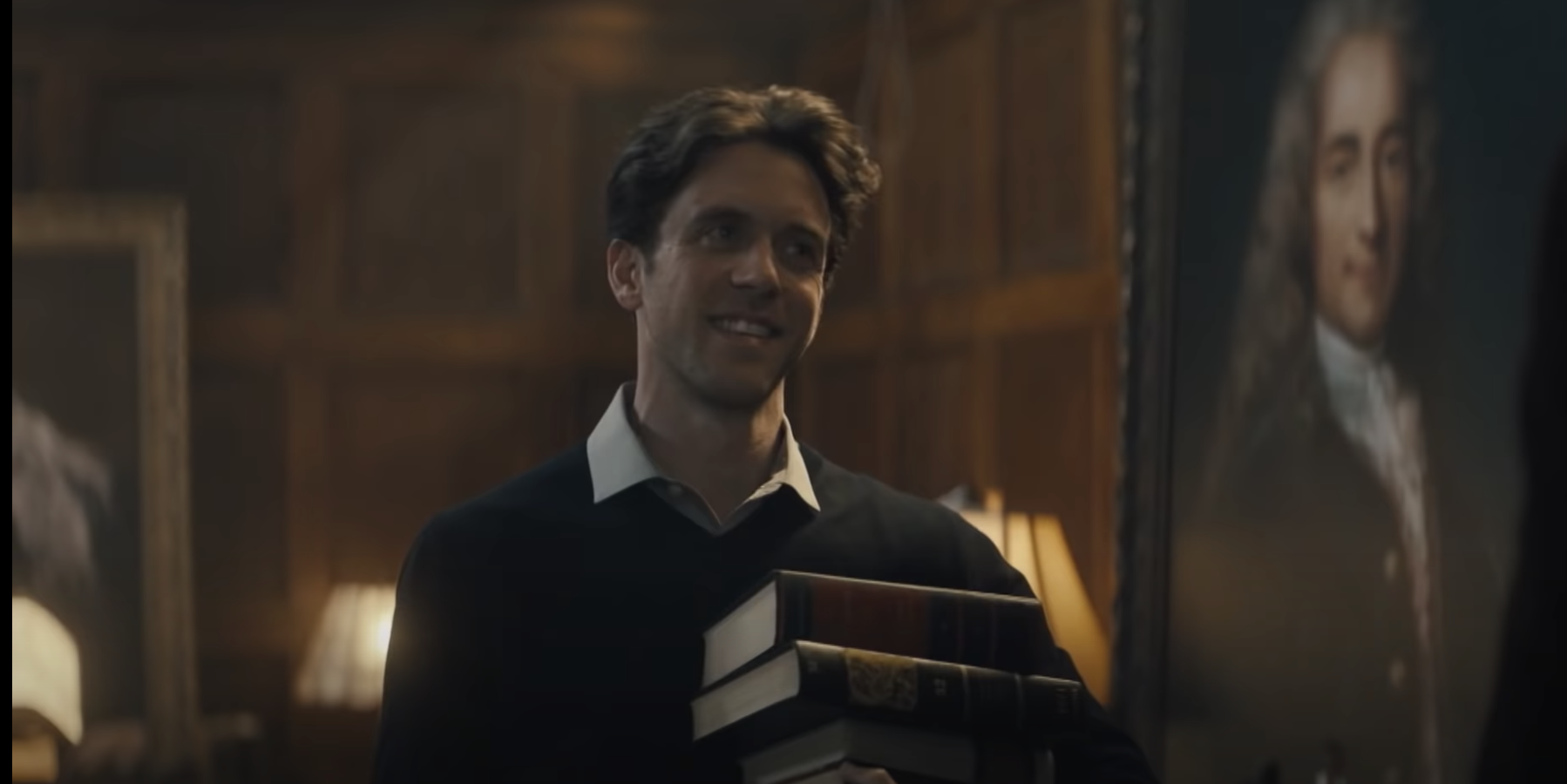
Meanwhile, the finale gives the characters an opening to discover further mysteries, not necessarily related to Dan Brown’s books. And I would genuinely like to see Robert Langdon transform into a professor and adventurer à la Indiana Jones. The idea of making The Lost Symbol a prequel is spot on. In terms of acting, it is really decent, although, Ashley Zukerman has much more to offer the viewer than the adequate Tom Hanks, with all due respect to the latter. Since his Langdon is only at the beginning of his journey, he is at times confused, unsure of his knowledge and abilities, but when necessary, he can be the smartest person in the room.
Moreover, his interactions with his mentor, played by the excellent Eddie Izzard, are pure comedy, where two outstanding scholars joke about Isaac Newton. This version of Langdon is younger, much more curious about the world, and aware of his shortcomings. I like this approach, as it is something different from what we have seen on the big screen and read in the books. I feel that the series makes the characters a bit more human and closer to what they could be in reality. Dan Brown has accustomed us to the fact that his hero is practically infallible (except for one slip-up in Inferno). Here he makes mistakes, gets things wrong, and sometimes does not know the answers to seemingly simple riddles.
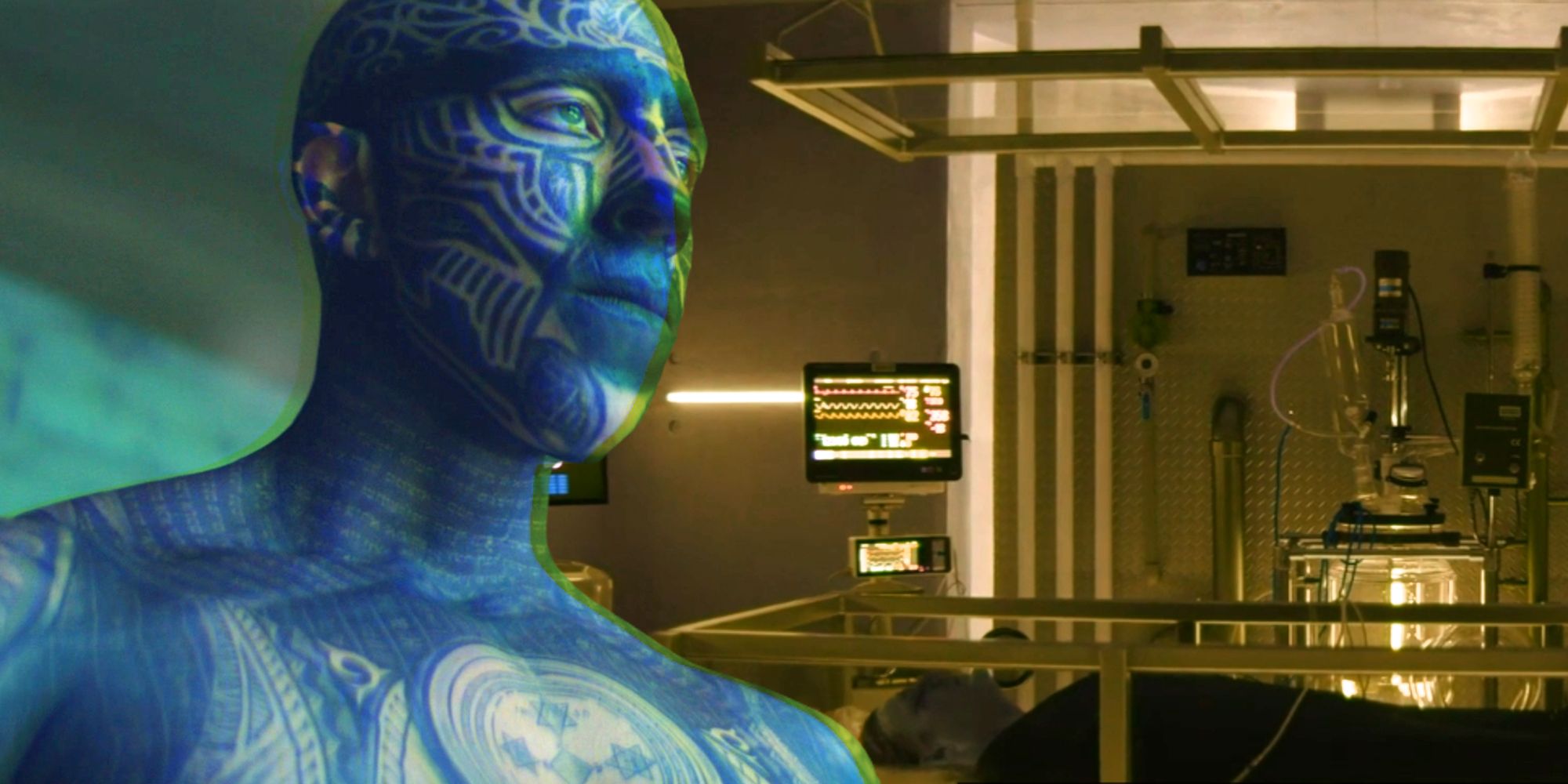
As in all of Dan Brown’s books, we are dealing here with: secret societies (this time the Masons once again make their presence felt), an ancient mystery, a terrifying and bizarre villain, a lot of scientific gibberish, unusual symbols from the past, an even stranger science professed by Peter Solomon’s daughter, and a ticking clock reminding the main characters that their time is running out. Unlike in the book, they have more than 24 hours, but there is no escaping the classic running from point A to point B. And this is not a flaw at all, because that is the charm of adaptations of Professor Robert Langdon’s adventures.
All fans of conspiracy theories, symbols, and ancient artifacts will be delighted with the series version of Langdon’s adventures. A lot is going on, there are many references to the history of art, mathematics, Freemasonry, etc., the characters are very easy to like, and their adventures are so engaging that I would gladly watch a continuation. Admittedly, I would shorten the whole thing by a few episodes that were unnecessarily stretched to as many as 10, but I still remember the days when 20 episodes per season were somewhat standard.
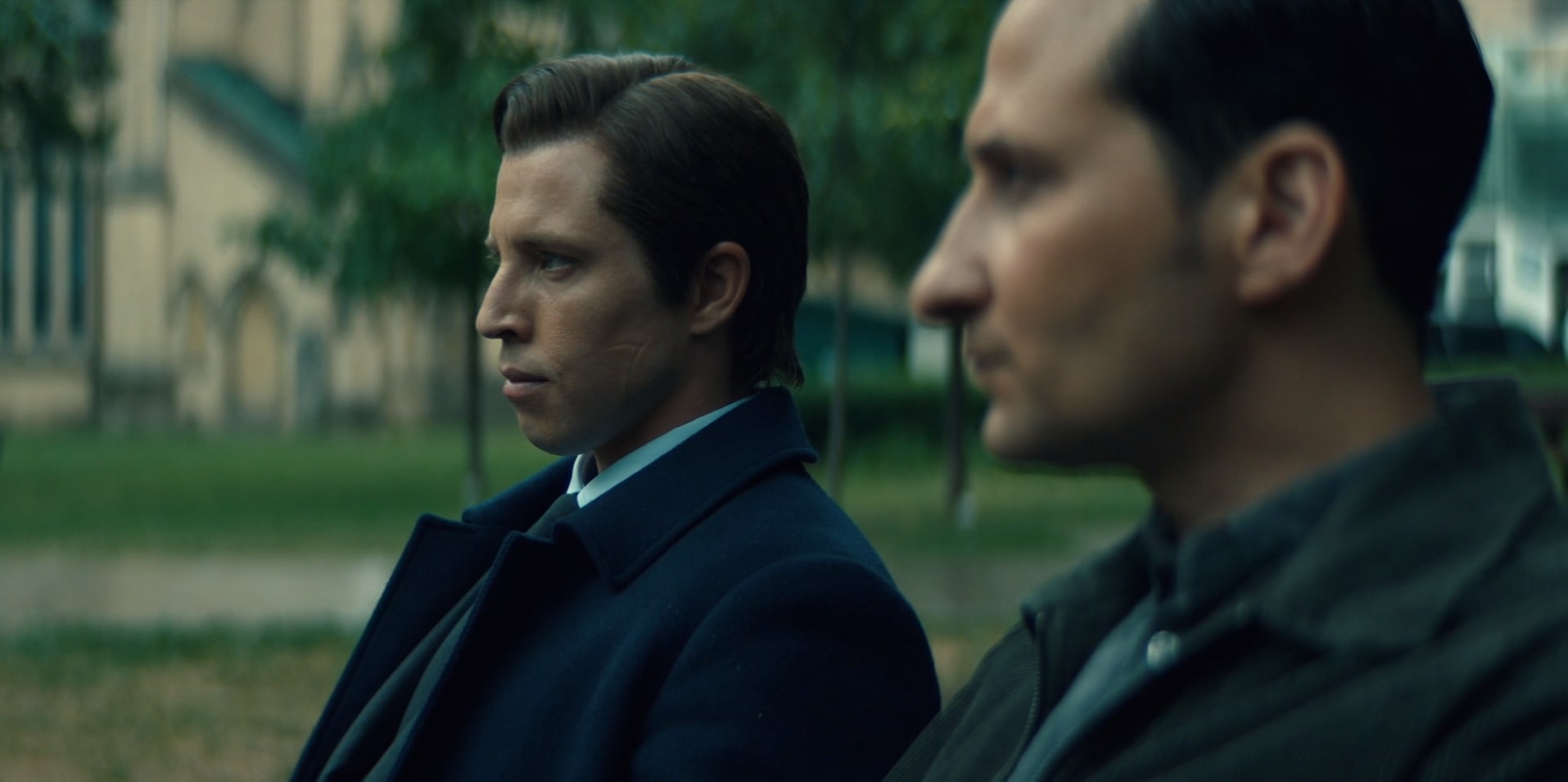
The entire series is nonetheless a successful take on the once mega-popular franchise that we are slowly forgetting due to increasingly worse book material. That is why I am extremely curious whether we will get a handful of new adventures of the future professor with the second season – according to rumors, it is supposedly going to focus on the latest book titled Origin, whose action takes place in Spain.


Looking back at DEAD SNOW: A Blizzard of Nazi Gore Fun

DEAD SUSHI: Exotic, Spicy, and Wildly Entertaining

Revisiting ALICE, SWEET ALICE: Dread and Religious Symbolism

PUPPET MASTER: LITTLEST REICH – Achtung! It’s Good!
