
Review
THE LOST DAUGHTER. On Loneliness and Motherhood
In short, The Lost Daughter is both formally accomplished and thematically compelling. It is impossible not to notice the film’s distinctly female perspective


Choosing the adaptation of a popular novel as the material for a directorial debut is not the safest move. A first-time filmmaker, already facing the countless challenges of their inaugural project, also takes on the inevitable comparisons to the literary original, as well as the demanding task of convincingly transforming words into images while preserving the essence of the story. The matter becomes even more delicate when we’re talking about an actress making her directorial debut—someone entering the field with a different set of skills and experience than, say, a film school graduate. Nevertheless, Maggie Gyllenhaal (Secretary, The Dark Knight, The Kindergarten Teacher) has taken on precisely this challenge: adapting a well-known book for her first feature film.
Without hesitation, the actress-turned-director dove into the deep end, bringing to the screen, with a star-studded cast, a script based on Elena Ferrante’s The Lost Daughter.
The protagonist of the film—titled identically to the novel—is Leda Caruso, a professor of comparative literature at an American university who arrives on a Greek island for a holiday. On the beach, she quickly encounters a large, somewhat shady-looking family group, within which her attention is drawn to Nina, the mother of a young daughter, Elena. The younger woman stirs in Leda a set of not fully defined emotions—a mix of fascination, a peculiar kinship of souls, and the midlife nostalgia of a woman looking back on her youth.
However one might describe this relationship, introduced within the first fifteen minutes, it becomes the narrative fuel for the rest of the film: Leda’s uneasy attempts to navigate her solitude, her haunting memories, her regret over past mistakes, and the unspoken threat posed by the domineering family to which Nina’s husband belongs.

Gyllenhaal deftly weaves together the different threads, creating a suggestive but never heavy-handed structure built on the fluid interplay of present moments and flashbacks, interspersed with longer, precisely composed scenes that capture the unspoken struggles of the protagonist as she is swept by recurring waves of sadness. The result is a vivid study of loneliness that gradually unfolds into a broader meditation on motherhood and the difficulty of finding oneself in that role. Leda’s observations of Nina and young Elena are regularly intercut with memories of her own struggles with her daughters, Bianca and Martha, and the parallel drawn between the two situations grows increasingly unsettling as the film progresses.
The screenplay works steadily to bind past and present into a dialectical whole—the present emerges from the past, while also providing closure to its meaning.
The construction revolves around three figures: the present-day Leda, her younger self, and Nina. The latter serves as a catalyst for Leda’s memories, but also as proof of the universality inherent in Caruso’s seemingly personal story. Gyllenhaal views Nina through the eyes of her older protagonist, creating an intriguing tension between the actresses portraying them—Olivia Colman and Dakota Johnson—a tension tinged with homoerotic undertones and a certain raw intensity.
Johnson embodies sensual youth constrained by motherhood, while the younger Leda, played in flashbacks by Jessie Buckley, conveys the daily drudgery and unfulfillment of a young intellectual burdened by childcare, her portrayal rooted more in physicality than sensuality. These two visions of young motherhood orbit around Colman’s mature Leda, a seemingly composed woman whose polished manners and warm smile conceal deep frustrations and dark secrets. All three actresses deliver faultless performances, but Colman stands out, once again excelling in conveying subtle gestures of discomfort and uncertainty. Her performance feels entirely born of the script, while still being quintessentially “Colmanesque. ”
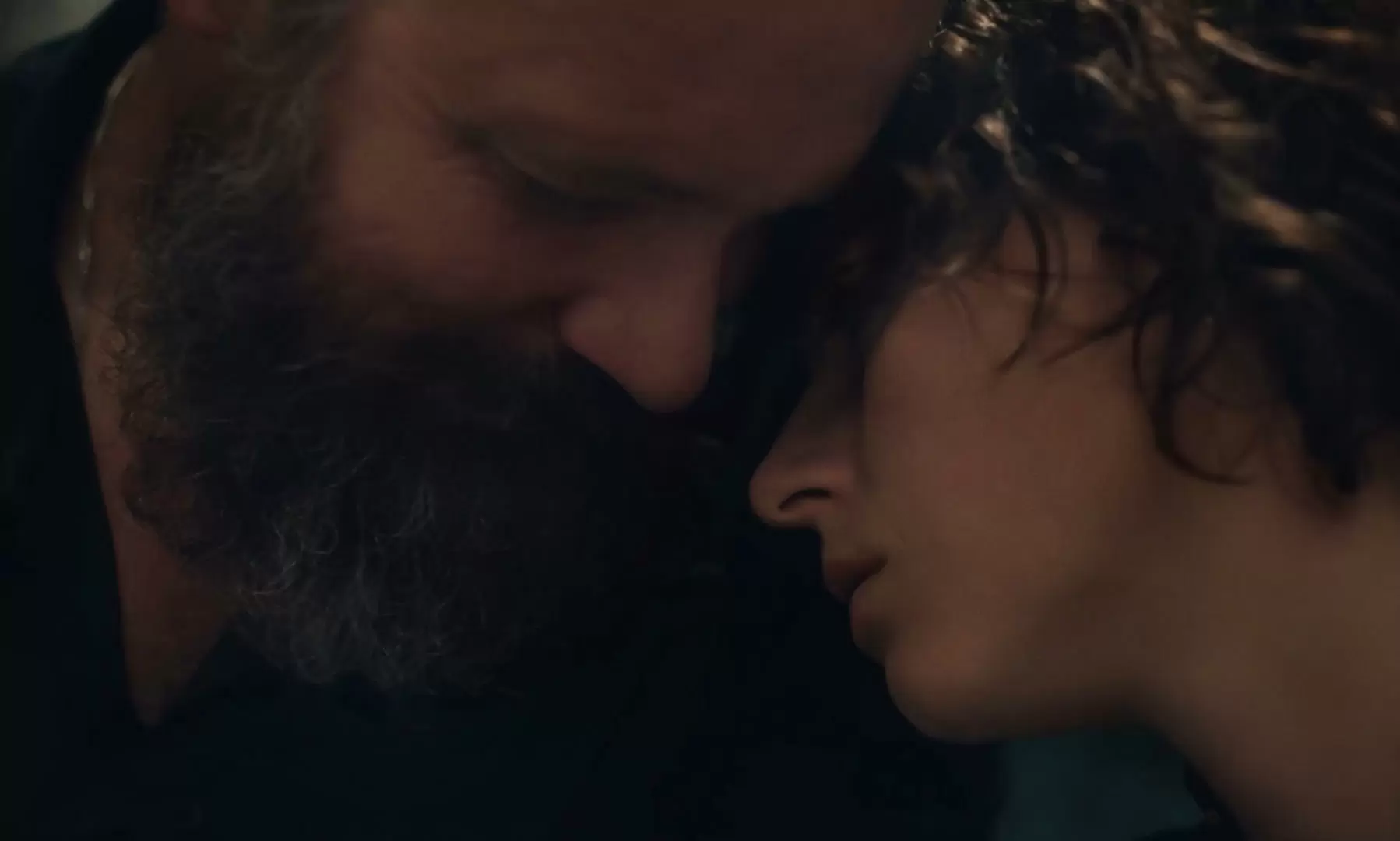
The trio of performances, one of the film’s strongest assets, is also a testament to Gyllenhaal’s direction. She not only guided actresses with distinct temperaments and strengths but also wove their performances seamlessly into her vision. The Lost Daughter is not a mechanical adaptation of a story into moving pictures; it bears a distinct authorial imprint—the kind that separates award-contending films from passable TV or streaming fare. In portraying female experience, Gyllenhaal occasionally strikes Almodóvarian notes, lending her story a bittersweet tone, balancing the weight of inner conflict with lighter, humorous touches (in which Colman shines), and later evoking a gently dreamlike mood as temporal layers blur during flashbacks.
Even when the film’s final acts rely somewhat heavily on conventional dramatic formulas, the artistry of cinematographer Hélène Louvart (Happy as Lazzaro, Invisible Life) redeems it. Her atmospheric, intimate camerawork creates a constant sense of closeness to the protagonist, making us not just observers but companions on the picturesque Mediterranean island.
In short, The Lost Daughter is both formally accomplished and thematically compelling. It is impossible not to notice the film’s distinctly female perspective, standing out against the increasingly outdated male gaze on bodies and emotions. Following Ferrante’s lead, Gyllenhaal discards stereotypes and clichés about motherhood, opting instead for a nuanced and probing study of her protagonist’s experience.
There is no moralizing here, no easy solutions, no judgment of choices—only a multidimensional story of mothers and daughters in their raw, unpolished truth, freed from conservative stereotypes. The Lost Daughter is feminist cinema in a “gentle” mode: it applies critical reflection and revision of gender roles within a classically accessible aesthetic. There is no revolutionary upheaval, but rather a thoughtful, well-crafted exploration of the theme within the realm of high-quality mainstream filmmaking.

