
Review
THE FOUNDER. Solid, by-the-numbers Biopic
The Founder is a solid, by-the-numbers biopic. It’s hard to be bored by it, but equally hard to be deeply moved by any particular element.


The Founder. America, the 1950s. Ray Kroc goes door to door at small-town restaurants, selling kitchen gadgets designed to increase and speed up production. Ray (played by Michael Keaton) doesn’t inspire much sympathy; he’s an aggressive traveling salesman, even capable of eliciting pity with his ineffective determination. He desperately wants to break through and make a name for himself, but at the same time he lacks many essential skills. He’s a dreamer and a workaholic whose low morale is buoyed mainly by motivational platitudes from a vinyl-recorded self-help guide along the lines of “How to Succeed in Business.”
Ray lacks patience and the ability to think strategically. He acquires these two traits only after meeting the McDonald brothers (Nick Offerman and John Carroll Lynch), who run a small but locally very popular hamburger joint. Dick and Mac are model entrepreneurs and perfectionists, focused on the quality of the products they sell. Aware of their brand’s potential, they had tried in the past to open more locations. However, lacking sufficient financial resources and the right approach, they were unable to maintain their own high standards at two additional outlets. They ultimately abandoned the idea of building a restaurant chain.
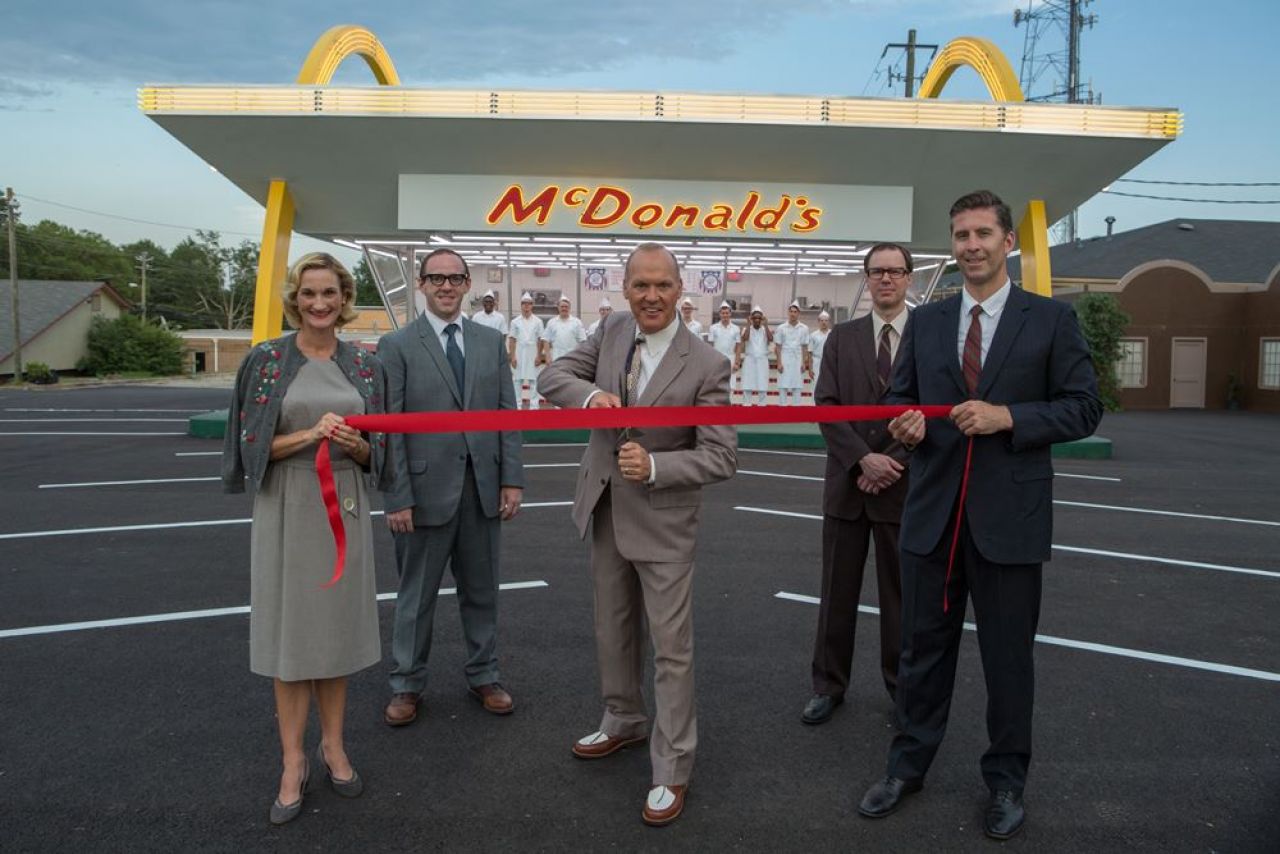
Their innate modesty and moderate ambitions eventually prevented them from changing company policy. Ray Kroc, on the other hand, immediately sees that he has struck gold—a pioneering concept that, with the right promotion, could generate enormous profits. He manages to win the McDonalds over. The brothers enter into a partnership, agreeing to Ray’s idea. McDonald’s will become a franchise, for which Kroc will seek investors.
A conflict between the two sides is, of course, inevitable. Director John Lee Hancock devotes most of his attention to the clash between opposing business philosophies: Kroc’s expansive but risky strategy versus the McDonalds’ cautious yet stable method. Hancock gives both concepts a voice and sensible arguments, highlighting the limitations and the non-material costs that such different entrepreneurs must bear. The screenplay guides us through the successive stages of the company’s development in a comprehensive and consistent manner. In a sequence full of nostalgia, it recounts the opening of the McDonalds’ first restaurant, while also focusing with undisguised fascination on the stubborn and enterprising Kroc.
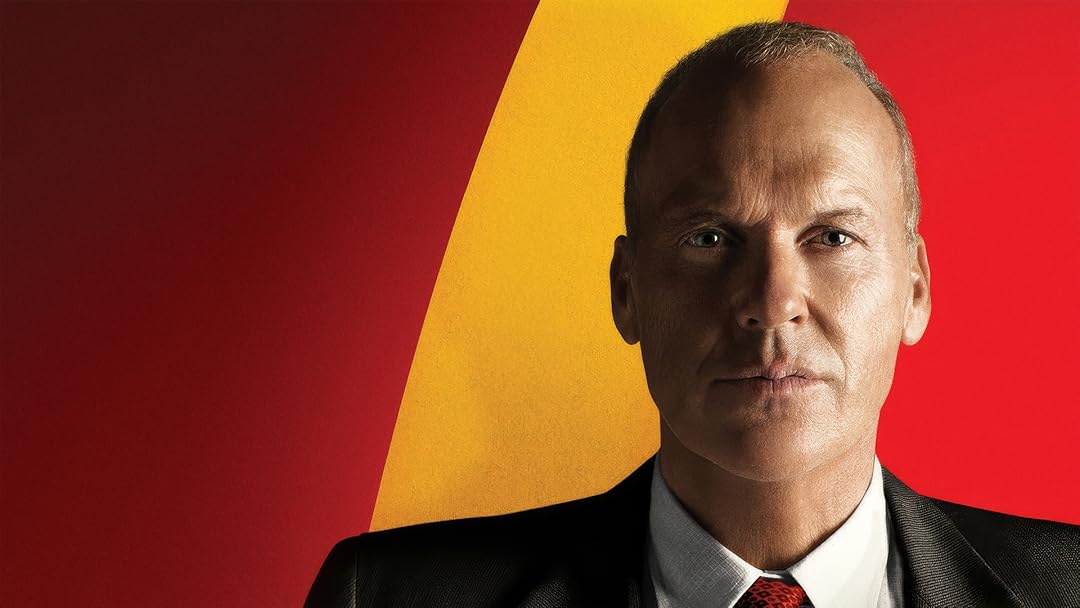
The Founder avoids simplistic value judgments about the characters’ needs and motivations. On a reflective level—concerning the nature of running a business and the collision between the local and the global—it offers a wealth of sharp observations. From the purely technical aspects of constructing a restaurant, through building a desirable image and cultivating a specific atmosphere among employees, to generating desire among potential customers and employing various promotional techniques.
Hancock’s film works somewhat less effectively as a clash of personalities. Ray Kroc could have been a good friend to the McDonalds were it not for the ill-fated contract. The conflict between them lacks sufficient dramatic weight, as they share neither an exceptional friendship nor binding promises. As a result, The Founder carries a certain emotional coolness, at times even producing indifference toward the events portrayed. Neither Keaton’s energetic, charismatic performance nor the film’s brisk pacing fully compensates for this. To flesh out the portrait of the protagonist, Hancock introduces a side plot involving Ray’s marriage to Ethel (Laura Dern).
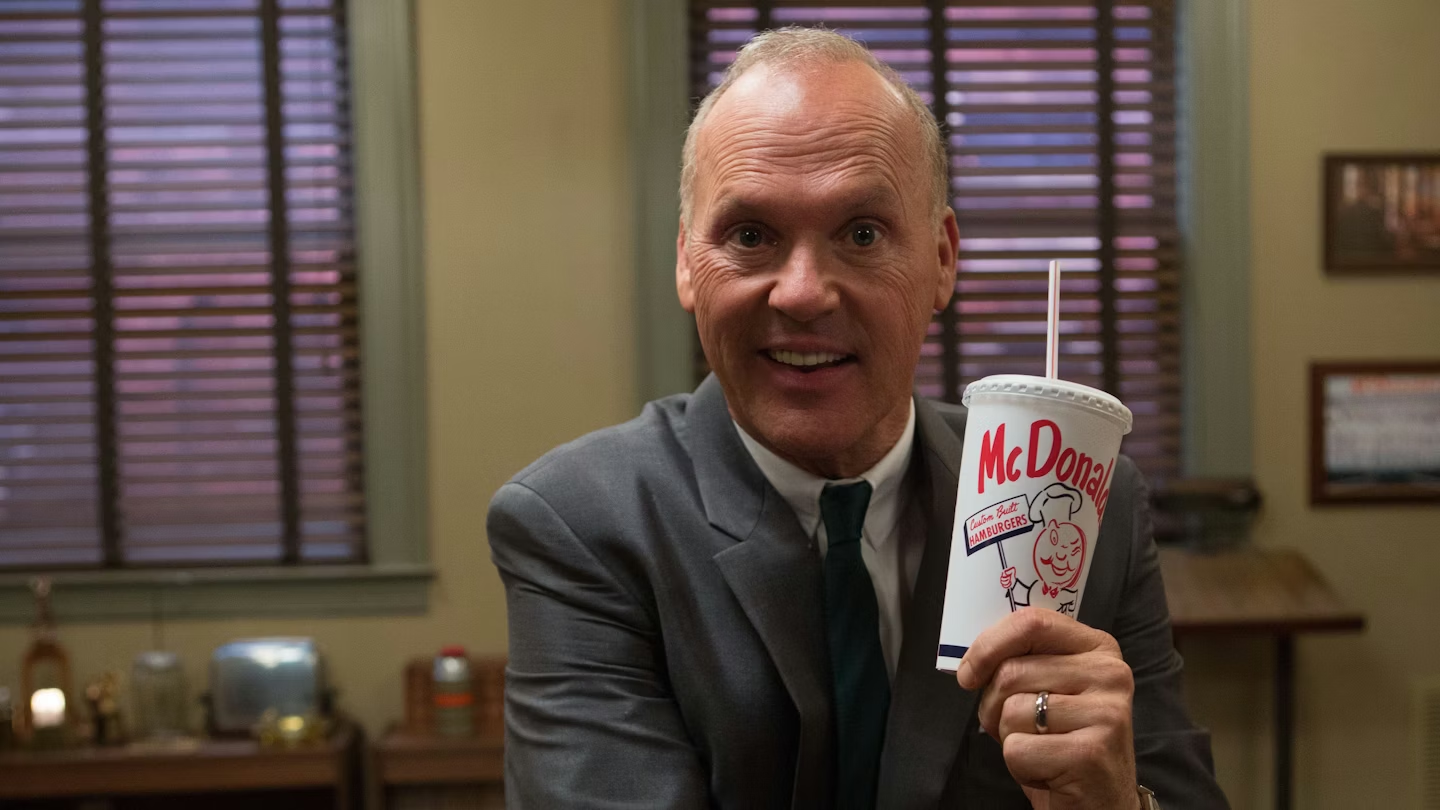
This thread, however, is written rather tersely and in shorthand. Dern’s character exists primarily to highlight her husband’s obsession. Unfortunately, she is not an autonomous figure but another tool used to describe Ray.
The Founder is a solid, by-the-numbers biopic. It’s hard to be bored by it, but equally hard to be deeply moved by any particular element—whether a surprising plot twist, unconventional direction, or exceptional acting prowess. Hancock leads us by the hand: a reliable guide, but not an especially intriguing filmmaker. His films lack bite; the American director makes gentle, highly accessible cinema—and therefore also fairly anonymous. That said, it’s unlikely that any viewer would consider a screening of The Founder a waste of time.

