
Review
SLENDER MAN. A Horror Outdone by Memes
Slender Man is a film without character, with characters without character, and with an antagonist without character. It doesn’t work even as entertainment.

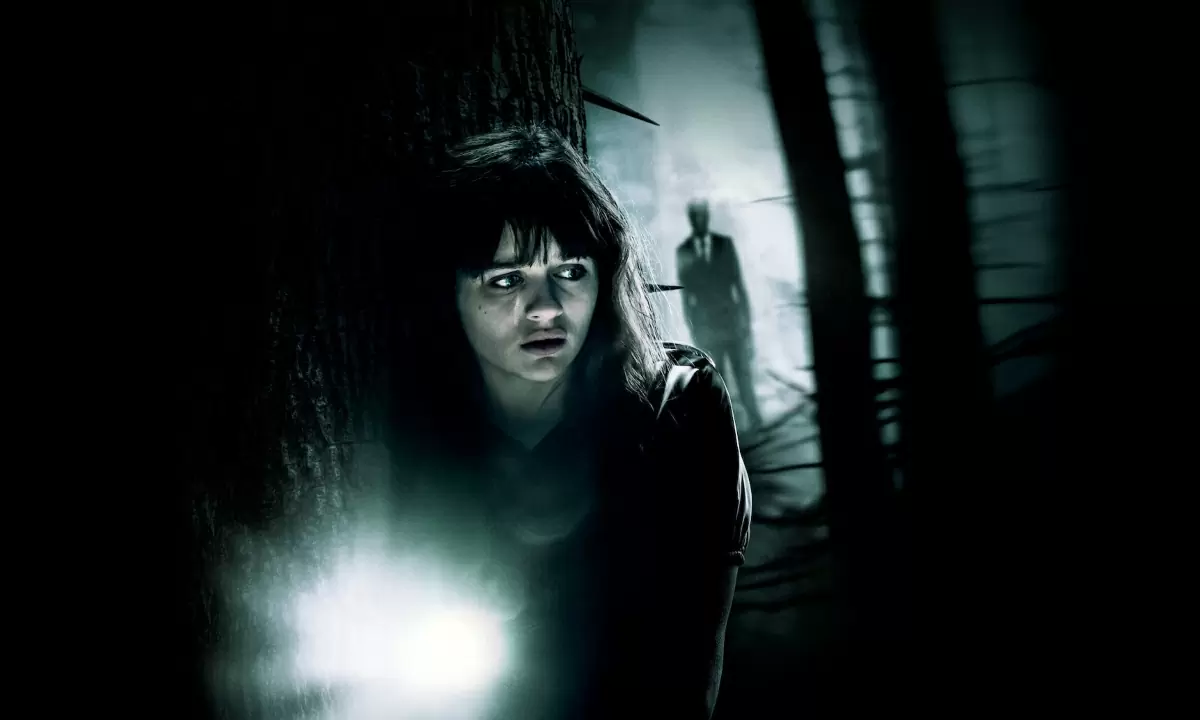
The history of bringing Slender Man story to the screen resembles the path He-Man had to take before finally landing on the big screen. First came huge popularity from another source (toys, an animated series, or creepypasta and the inspiration for the Enderman character in Minecraft), followed by years of producers doubting whether it could actually make money. Eventually, there was a breakthrough—but too late, and unfortunately by way of the path of least resistance.
Slender Man was born in 2009 on an internet forum, where users challenged each other to create fictional photos depicting paranormal phenomena. Over time, all sorts of legends began to circulate about the faceless monster. Specific traits were attributed to him (the most famous being that you mustn’t look at him), and some people became so absorbed in the make-believe world that they started searching for truth within these modern myths.
But just as a Ouija board cannot possess mystical properties—since, alongside G.I. Joe or Transformers, it is merely one of many Hasbro products—Slender Man is nothing more than a figment of human imagination. Obvious? Apparently not—in 2014, a twelve-year-old girl stabbed a classmate nineteen times, allegedly at the command of our dark character. The debate around the figure intensified. On one hand, there were cameo appearances in My Little Pony: Friendship Is Magic; on the other, outrage from parents who would have preferred their children to be listening to Slayer’s discography instead.
One might think that nearly a decade of accumulated fear would be enough not to create an arthouse piece on the level of Get Out or Hereditary, but at least a solid, classically constructed horror film in the style of The Conjuring or It. Hopes began to fade, however, when Sylvain White was chosen as director—a man who handles TV productions reasonably well (Empire, The Following) but who also bears the blame for the abysmal I’ll Always Know What You Did Last Summer—the third installment of the ’90s slasher franchise that you probably didn’t even know existed (and it’s better to go on pretending you don’t).
After the premiere, all doubts were gone—the feature-length Slender Man loses out to memes, amateur videos, and images circulating online. As a character intriguing enough to join the pantheon long dominated by Michael Myers, Jason Voorhees, Freddy Krueger, and a few others, he has been chastised by his creators and condemned to the limbo of mediocrity.

White’s inventiveness is on the level of a hamster’s, scratching away at the plastic bottom of its cage day after day. A pointless effort. We get clichés like chaotic flashes of unsettling imagery (always with an eye close-up, because eyes are supposed to be scary); a cursed video that means death upon viewing; “creepy” children’s drawings; characters failing to turn on lights in dark rooms; and a dreadfully dull online investigation. Needless to say, the only intended source of fear here is jump scares. What’s missing is the most important element—Slender Man himself. To be fair, Michael Myers is barely present in the first Halloween, and Jason Voorhees isn’t even in the original Friday the 13th, but in those films their absence is used to build tension, and the anticipation itself becomes the most thrilling part.
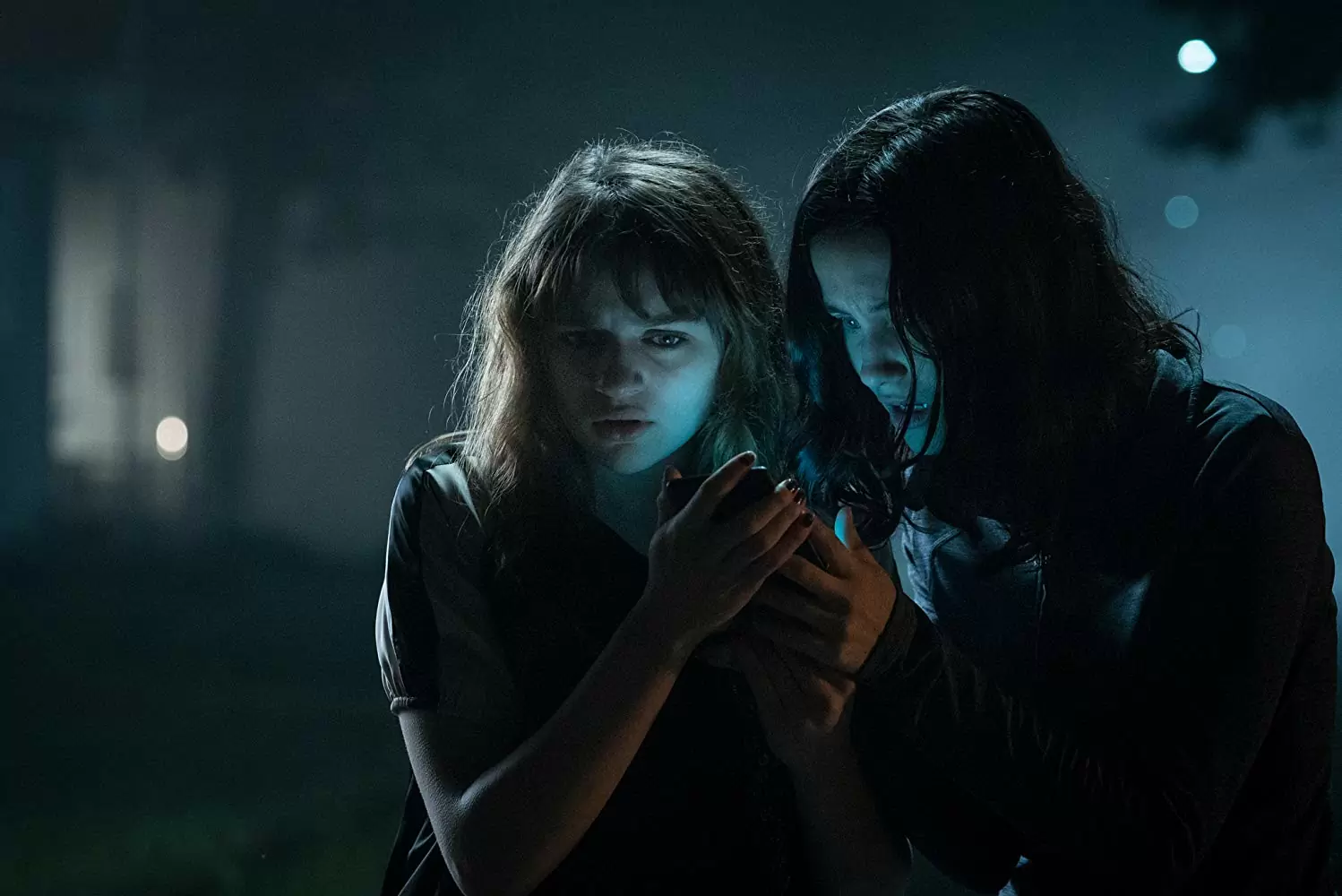
In Slender Man, however, we just watch a teenage girl browse websites—and it feels like being the kid whose dad says, “Want to play?” only to grab the controller himself, leaving you to sit silently on the couch and cheer him on.
Slender Man is a film without character, with characters without character, and with an antagonist without character. It doesn’t work even as simple entertainment meant to deliver a few chills; it leaves behind only a sense of weariness. The disappointment here is much greater than after watching The Forest, The Crucifix, or The Witch in the Window, because those films didn’t waste ten years of potential. There is no reason to see this movie in a theater except as penance. Don’t waste your time.

