
Review
POCAHONTAS. Familiar Pattern Turned Upside Down


Before I move on to Pocahontas, I must say that I remember very well when Snow White offered to help the dwarfs. If they gave her shelter, she would clean for them, do the laundry, and cook. It was a perfect arrangement. The seven irresponsible little men must have felt extremely comfortable. They no longer had to frantically look for socks every morning, no one went hungry, and the house sparkled with cleanliness as never before. All that was left for them was work and sleep. The princess herself seemed made for it — her delicate hands perfectly suited to the new role. The role of a housewife.
Ah yes, she was also a princess. The first of many on whom Walt Disney built his legend. Snow White fell into a deep sleep and could only be saved by the kiss of a prince passing by by chance. On a horse, with a sword, dressed beautifully, and, in all likelihood, with a castle waiting for him in inheritance. The perfect match. The perfect setup — one that firmly cemented the power of patriarchy. I never warmed up to that love-at-first-sight trope. I can’t explain everything away with that device. It’s a narratively convenient deus ex machina. It only seemingly rescued the sweetly sleeping princess and neatly tied up the loose end.

To me, the princess fell into new trouble. They would dress her in heavenly gowns, paint her face, perfume her, lock her in chambers, and she would gaze at the stars from her balcony. She would love her husband because he provided all this for her, because he took care of her like an innocent child. A purchased smile would appear on her face. The housewife had turned into a Barbie doll. Sleeping Beauty fulfilled yet another pattern. The complete woman — beautiful in makeup and gracefully dancing with a mop in her hands.
Snow White and the Seven Dwarfs was, of course, a technological revolution — one of the few milestones of cinema itself. I don’t doubt that. Yet to me, that film cast a shadow over everything Walt Disney would later put his name to. His productions, beyond their astonishing audiovisual brilliance, were bastions of moral conservatism. They reinforced an uncomfortable status quo. They strengthened beliefs in class and racial divisions and clearly assigned social roles according to gender. Of course, it was a product of its time, but as an adult returning to Disney’s classical era, I approached it with distance and cool detachment. I’m not sure I’d want to show those films to the youngest viewers.

I feel much better with Disney of the 1990s. In fact, I feel remarkably comfortable there. How much I needed heroines like Pocahontas and Mulan. The productions created by that studio in the last decade of the 20th century display an ideological clarity that should be a foundation for the modern citizen of the Western world — one wrongly raised in the conviction of his own dominance, in the absolute rightness of his cultural models, proud of a civilization marked by technological success and the triumph of its ideas. In that context, Pocahontas may well be Disney’s greatest cinematic achievement — drawing deeply from postcolonial reflection and chipping away at the walls of proud patriarchy.
It is we, the discoverers and victors, who come to enlighten the pagan Indians and drain their life force to the last drop of blood. We will replace their superstitious faith with venerable Christianity, dress them in suits, teach them manners and the proper way to taste wine. We are also better at killing and clearing forests. After all, the natives had never heard of firearms. The creators of Pocahontas sketch caricatured portraits of the British newcomers to the unknown land.
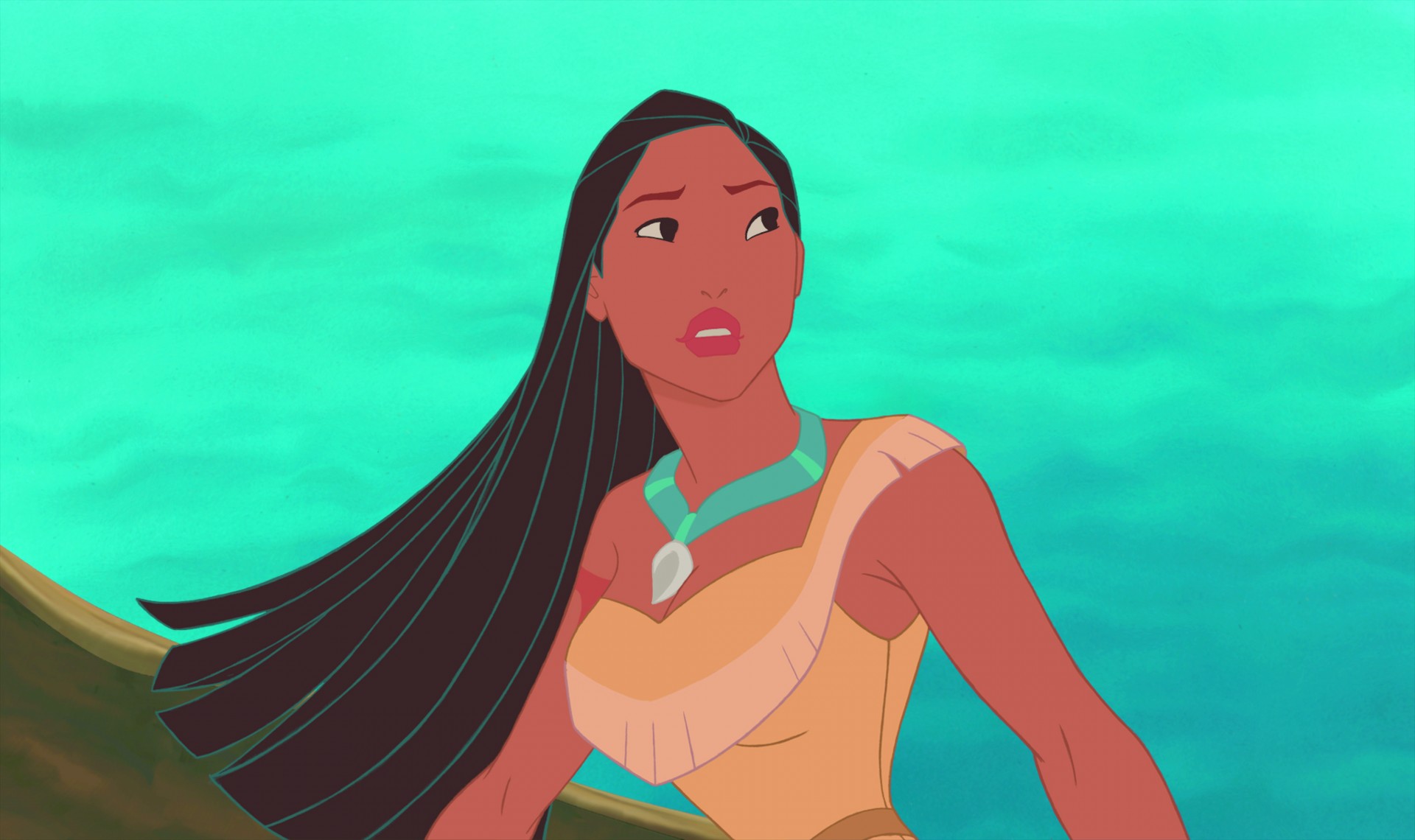
They attack the colonizers with fitting aggression — as they should — for that is perhaps our greatest failure. Not a single catastrophe, but a crime stretched across centuries. Pocahontas is a cry on that matter, an apology, and an appeal. The creators do not play with nuance — it is a vivid, almost glaring depiction of the world. The filmmakers clearly assign moral rightness to one side of the conflict. Only one side is just. The transformation of John Smith’s crew seems historically impossible. But then again, it’s a fairy tale for children — a colorful musical — and in those, good and decency must always triumph. At least we’ve grown that far.
Pocahontas, the rebellious daughter of the tribal chief, is not convinced about the arranged marriage to a deserving tribal warrior. The title heroine is not a preprogrammed maiden for whom a kiss seals a union. Pocahontas is a personality that cannot be confined within the limits of generational tradition — she sees more. She will go to war, defy her father, even shout him down, and break off her engagement. In her actions, Pocahontas is ahead of her time. She is not a puppet in men’s hands, but a self-aware individual who transcends the narrative clichés of old man Disney. Mulan, of course, would go several steps further — in her case, a daring leap over an abyss, ending in a flawless landing.
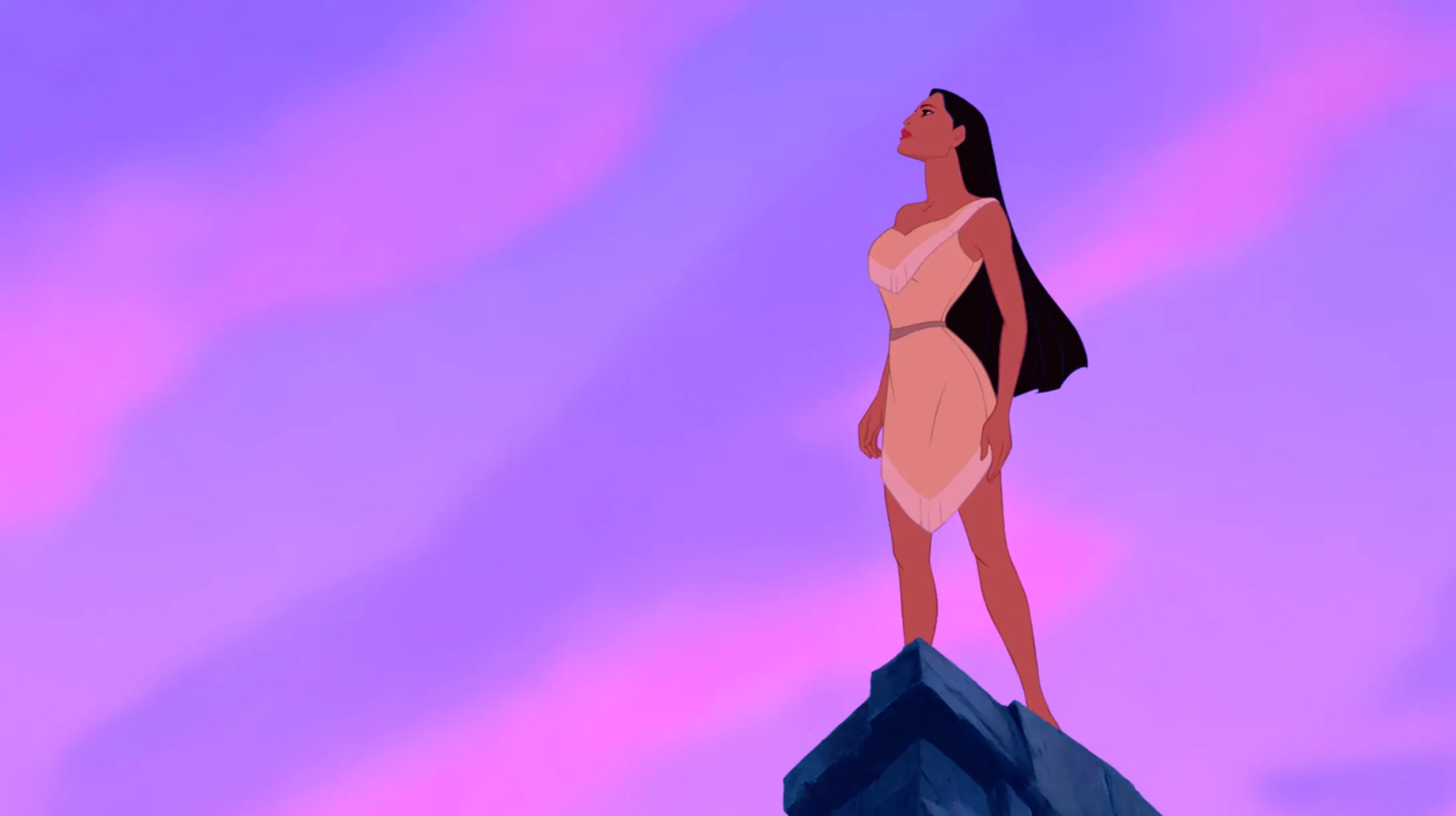
In Pocahontas, Disney turns the familiar pattern of the Disney fairy tale upside down. It is the Native woman who kisses the wounded, dying John Smith. She awakens him from his sleep, and he opens his eyes to a new reality. That kiss is not merely the ultimate proof of love — it erases all differences between “us” and the Other, the Stranger. It opens a new chapter. The romance is pushed into the background; it’s no longer just about uniting two people, but two worlds. Pocahontas dared to write her own story — even under threat of losing her head. It’s as if a bomb had gone off under Snow White’s glass coffin. Fortunately, its echoes are still clearly heard.

