
Review
PASSENGERS. A Space Cruise Through Wasted Potential
So—is Passengers a bad movie? Not exactly. It’s more of a tragic missed opportunity: a potentially bold psychological thriller neutered into something safe.

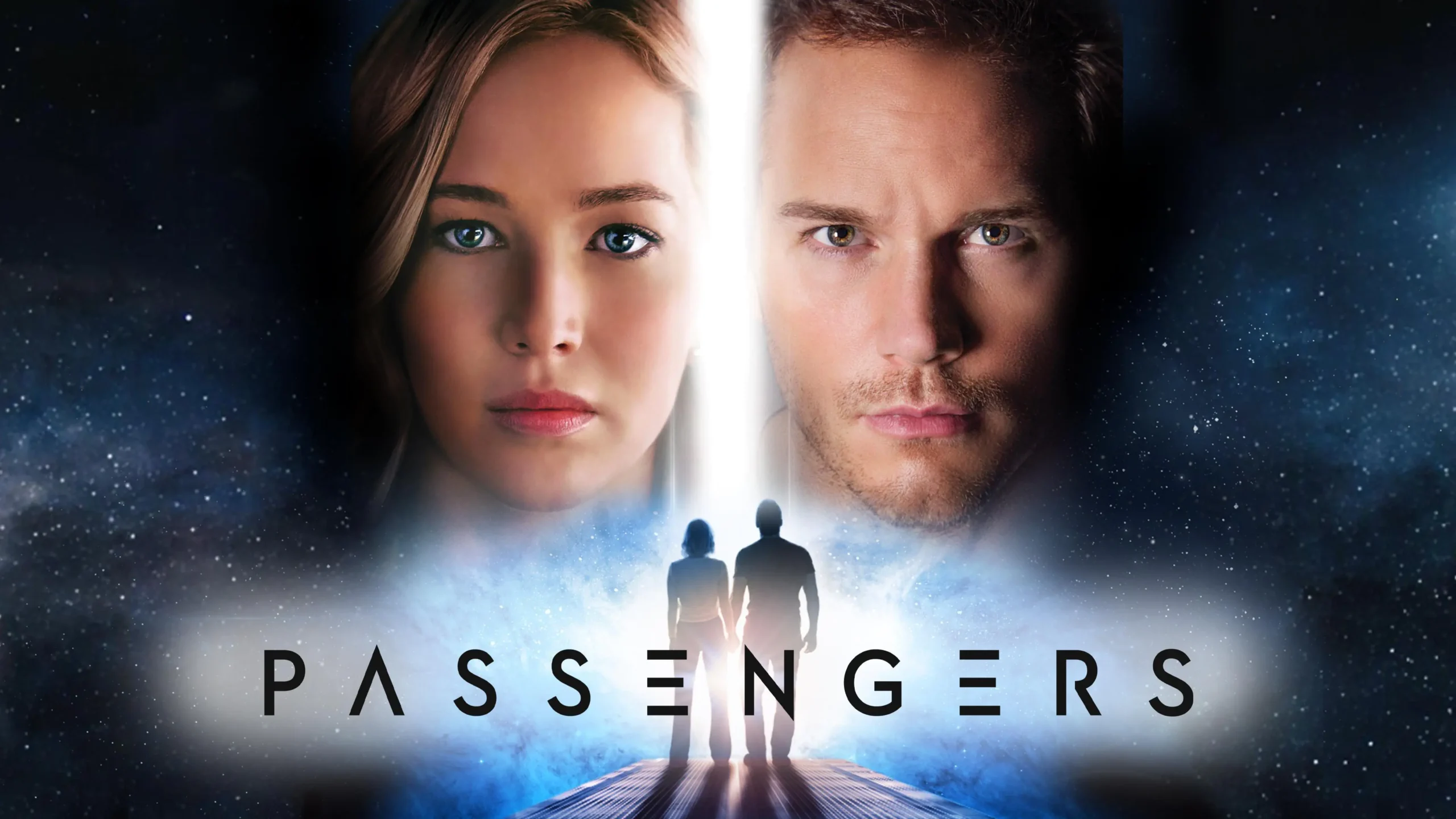
The script for Passengers, penned by Jon Spaihts, floated around Hollywood for nearly a decade, long hailed as one of the most promising unproduced sci-fi screenplays. Eventually, Columbia Pictures took the plunge and financed the project. The studio bet big, handing the reins of (at least on paper) a sweeping sci-fi epic to Morten Tyldum—whose only major Hollywood credit at that point was the decently received The Imitation Game—but hedged their bets by casting the two most bankable stars of the moment: Jennifer Lawrence and Chris Pratt. On the surface, everything was in place. And yet, the devilish hand of studio meddling and a Frankenstein’s-monster script ultimately undermined what, at times, could have been a truly intriguing spectacle. The film’s biggest sin? Its marketing. I won’t spoil key plot points, but let’s just say the trailers are even more misleading than Suicide Squad’s. At the core of this story—about two passengers prematurely awakened from cryosleep 80 years too early aboard a ship heading for a new Earth—is a devilishly tricky moral dilemma, easily the most original thing the movie has going for it. The first act is genuinely strong, laying out a compelling study of loneliness (think Cast Away in space or The Martian), the fragility of the human psyche in isolation, and desperate choices in the face of silence. It’s a solid philosophical entry point, asking: does the end justify the means? All of it is well acted and smoothly directed, even if some slapstick humor feels a bit too light for the heavy themes it’s brushing up against.
Sadly, this is likely where the producers stepped in. Faced with a story so morally murky it could derail any romantic space fantasy, they chose to sand off the edges and repackage the film as a sweet cosmic date night between two photogenic Americans. Cue trailers promising flirty banter, steamy zero-G kisses, and a spaceship disaster thrown in for good measure. In doing so, they undercut the very elements that made the story interesting in the first place. Because in modern sci-fi, if nothing explodes, it doesn’t sell. 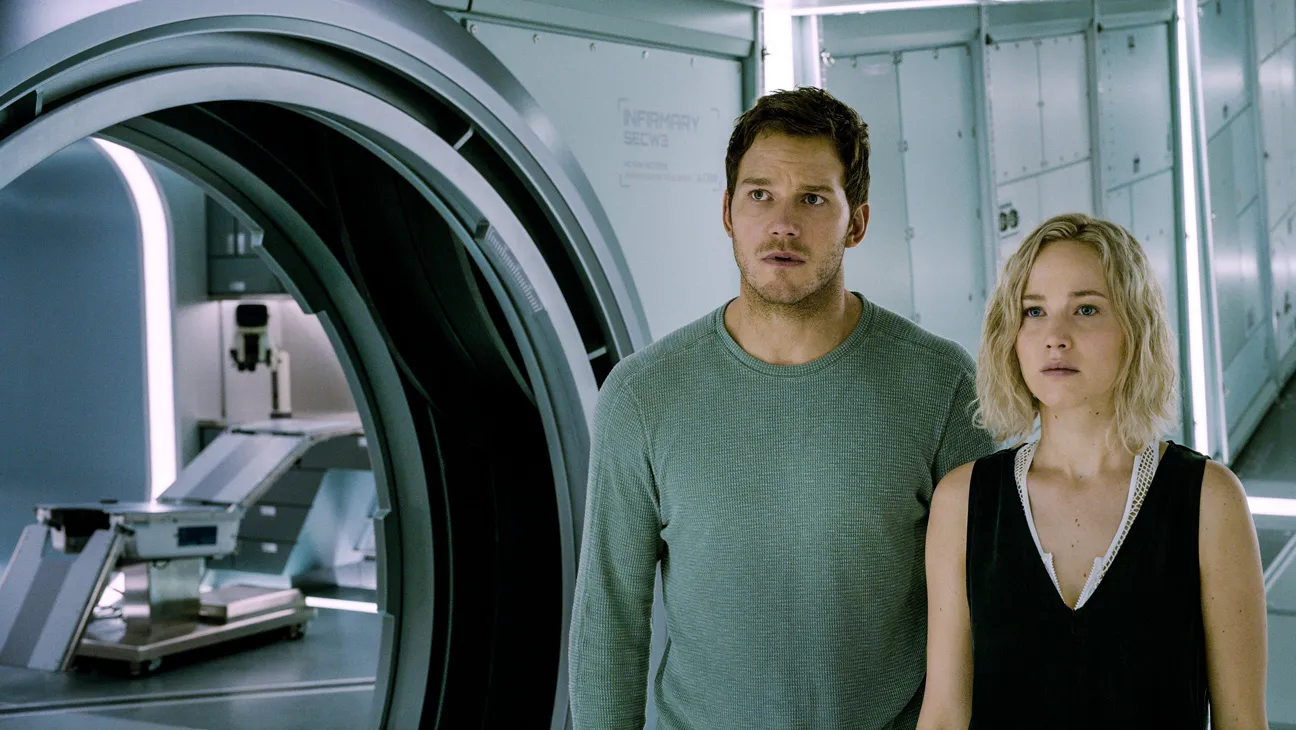 So comes Act Two, where the inconvenient philosophical dilemma is all but swept under the rug—awkwardly referenced when necessary, but never truly confronted—and in rolls a charming, well-lit romantic comedy that might’ve done fine in February, but feels hopelessly out of place come December.
Especially once viewers realize how the plot maneuvered its way to this genre pivot. And it’s not that this middle stretch is poorly made. Lawrence and Pratt have easy chemistry. They’re charismatic, funny, effortlessly likable—the kind of movie stars you can’t help but root for. Their performances manage to patch over some of the yawning plot holes and tonal whiplash. But really, they’re just playing themselves: Pratt gives us the eternally lovestruck goofball with moist puppy eyes, and Lawrence delivers manic-pixie energy with occasional emotional outbursts.
They work overtime to drag this story across the finish line. It’s just a shame that Thomas Newman’s syrupy score insists on underlining every emotion with a fluorescent highlighter. Yes, we get it—space is majestic, love is blooming—let your actors do the work, Thomas. Special mention goes to Michael Sheen, who absolutely nails his minor role as the ship’s robo-bartender, squeezing charm out of every scene he’s in.  Unfortunately, the film stumbles hard when it comes to narrative cohesion. Its three acts feel like forcibly stitched-together episodes from a sci-fi anthology series.
Most jarring is the final “disaster movie” act, which ditches the moral complexity and relationship drama in favor of generic pyrotechnics. Sure, our heroes sprint around in spacesuits, perform desperate repairs, and tick all the boxes of blockbuster third-act mayhem—but it’s all hollow. There’s no heart. Just another director checking off a studio-mandated to-do list. And as for the sci-fi? It’s barely there. The spaceship is a sterile, futuristic backdrop that looks more like a Marriott lobby crossed with a mid-budget Star Trek set than a living, breathing sci-fi world.
It never once sparks wonder or makes us curious to explore its depths alongside the characters. So—is Passengers a bad movie? Not exactly. It’s more of a tragic missed opportunity: a potentially bold psychological thriller neutered into something safe and digestible. What we end up with is a bland genre smoothie—part loneliness drama, part rom-com, part disaster flick, part sci-fi, but not fully any of them. Still, the result is oddly watchable. If you can squint past the troubling implications and just enjoy the pretty faces, the performances are solid, the pacing is decent, and there are moments of genuine charm.
It’s perfectly serviceable one-time entertainment. Just don’t expect it to stick with you—and don’t expect it to live up to the film it could’ve been if the filmmakers had had a bit more spine.

