
Review
NEGATIVE SPACE. Brilliant In Its Simplicity.
Negative Space, subtly tinged with black humor in its finale, proves to be brilliant in its simplicity. It leaves ample room for thought and reflection.


What impresses me most about short films is that a story capable of conveying so many emotions can be condensed into such a small runtime—often to the film’s benefit. But what amazes me even more is how easily one can get to know, feel close to, and understand the characters, as well as the complex relationships between them, in just a few minutes, frequently with the use of very restrained means of expression. The ideal example of such a film is Negative Space, a story about a father and son whose relationship is perfectly illustrated through the prism of a multigenerational skill: packing suitcases.
Fewa years ago, this animated film resurfaced online, though it had already been known as a short film nominated for an Oscar in 2018. How on earth did it not win the statuette? I have no idea. It was beaten by Pixar’s short Lou, unfortunately rather average and unadventurous. Negative Space, created by Max Porter and Ru Kuwahata, is instead a perfectly tailored bittersweet poem about a family obsession.

The subject of this mere five-minute film, based on a poem by Ron Koertge, is the peculiar relationship between a father and son bound by a shared obsession—meticulous suitcase packing that borders on a kind of secret art.
The son, the film’s protagonist and narrator, guides the viewer through the successive stages of perfect packing as taught to him by his father, while also finding time for a nostalgic return to the past. And that is essentially the entire plot. It is impossible to find a single unnecessary or wasted scene or image in this miniature; Negative Space presents itself as an exceptionally economical yet refined and thoughtful work. It does not interfere with the reception of the poem on which it is based—quite the opposite, it enriches its source.
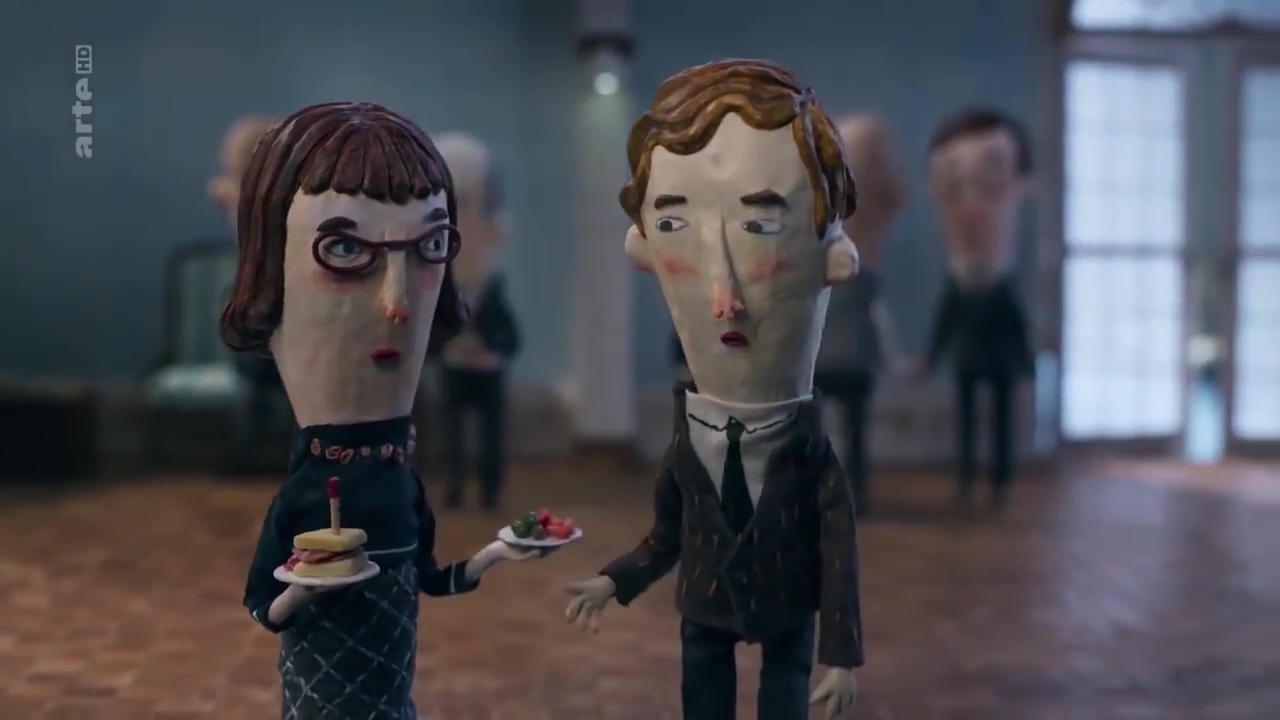
The concise narration, the modest presentation of the characters, the distinctive, childlike stop-motion animation—all of this consistently works in the film’s favor. The greatest strength of this French production lies in its imaginatively metaphorical depiction of the packing process: socks that roll themselves up, piles of disordered shirts and blouses flooding everything like an ocean wave, a belt slithering like a snake. Through these fairy-tale images, the filmmakers manage to convey the son’s emotional closeness to the seemingly banal act of packing, which for the man becomes a kind of ritual commemorating his father-mentor. The language of cinema offers this extraordinary possibility: to know and understand the relationship between these two characters, we need nothing more.
It would also be a shame not to praise the expressive, meticulously crafted animation, thanks to which the story gains a deeply emotional and distinctive dimension. Negative Space, subtly tinged with black humor in its finale, proves to be brilliant in its simplicity. It leaves ample room for thought and reflection without ever becoming overtly didactic. Just a short story about packing clothes—one that moves and engages more than many feature-length films. See for yourselves.

