
Review
MORTAL KOMBAT. This isn’t an arcade [REVIEW]
Mortal Kombat thus turns out to be more a patchwork of energetic scenes stitched together with flimsy story fillers-a stew into which brand elements were tossed

![MORTAL KOMBAT. This isn’t an arcade [REVIEW]](https://filmfolly.com/wp-content/uploads/2025/09/MORTAL-KOMBAT.-This-isnt-an-arcade-REVIEW.webp "mortal-kombat | FilmFolly.com")
I was easily fooled. The flashy promotional campaign, featuring moving posters, attractive shots, and finally a very good trailer, made me believe that more than almost years after the premiere of the first Mortal Kombat, the reboot directed by debuting Simon McQuoid would not only be a success but would also bring real quality to the franchise. When I saw the first seven minutes of the film, which Warner Bros. released a few days before the premiere, I felt reassured—it looked more than promising. It simply looked good. Unfortunately, I must admit that the opening scene of the film is also its best one. The rest leaves much to be desired.
There was a time when sixty groszy was enough to bring a child joy. Back when computers in Poland weren’t yet a household item, and the only console available on the market was the Pegasus, the chance to play a good, popular game meant going to the arcade. In the early 90s, the prices for such entertainment weren’t too high. One game cost sixty groszy, and if you had one zloty twenty, you were ready to quickly revive your character after dying. After school, you’d finish your sandwich in a hurry and head straight there to blow off some educational stress. That’s when I first encountered Mortal Kombat.
The arcade cabinets with this game were constantly surrounded by players. While one more skilled, slightly taller player was in the middle of a match, the rest of the arcade’s visitors would cheer him on. For me and for those growing up in that era, this game became a kind of symbol of a muffled inner scream, a symbol of rebellion. While the world outside—in school, in the media—was presented to us in a tidy, safe, controversy-free package, just one round of Mortal Kombat would throw our eyes wide open with its uniquely vivid palette of emotions. From comedy, through horror, all the way to almost tangible violence.
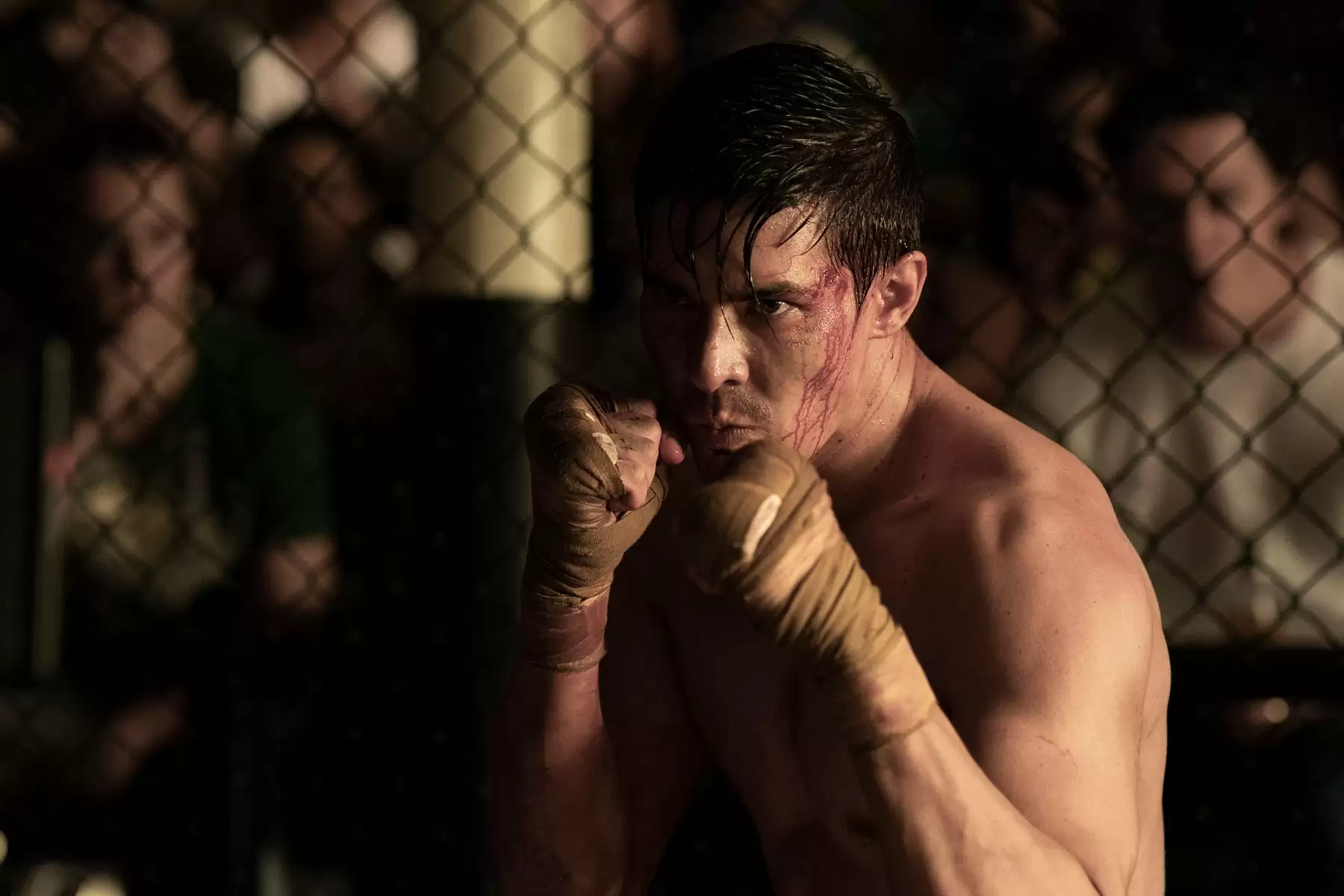
I write this to make it clear how personal my relationship with this franchise is, and consequently, how high my expectations were for its latest adaptation. I truly believed it could work—that after so many years the producers would finally be able to squeeze from this story, this rich mythology, and these fantastic characters something that their predecessors couldn’t. At the same time, I’d like to stress that I am a fan of Paul W.S. Anderson’s 1995 adaptation. I once wrote about why I consider that film the best video game adaptation ever made and compared it to the legendary Enter the Dragon, pointing out that Anderson rightly decided to base his film about the best fighting game in video game history on the formula taken from the best martial arts film in movie history.
That’s one of the reasons why the 1995 Mortal Kombat still holds up so well even twenty-five years later—because its script relies on proven tricks while skillfully blending well-executed fight scenes, the characters’ charisma, and an irreplaceable sense of adventure.
But let’s return to the new Mortal Kombat, a film that, it must be stressed, is wildly uneven. The promotional campaign’s creators were right to split the movie poster in half. Sub-Zero and Scorpion aren’t just symbols of two sides of an eternal conflict here. They directly embody the split in McQuoid’s film. While Scorpion, tied to the hellfire and infernal chaos, evokes the dynamism flowing from the action scenes, Sub-Zero’s icy touch becomes a sign of the narrative paralysis that freezes the story in place.
The core problem of this new adaptation is that while it tells the story of a grand tournament between the forces of the Netherrealm and Earth, between good and evil—it never actually gets to the tournament. Time passes, the heroes slowly prepare for the final showdown, gathering their forces against Shang Tsung. He, in turn, keeps sending his best warriors to kill the chosen one hiding among them. Meanwhile, the main character has no idea of his uniqueness—only his duel with Goro (which, interestingly, takes place right by his house) makes him realize he can fight for victory in the tournament on equal footing with the others.
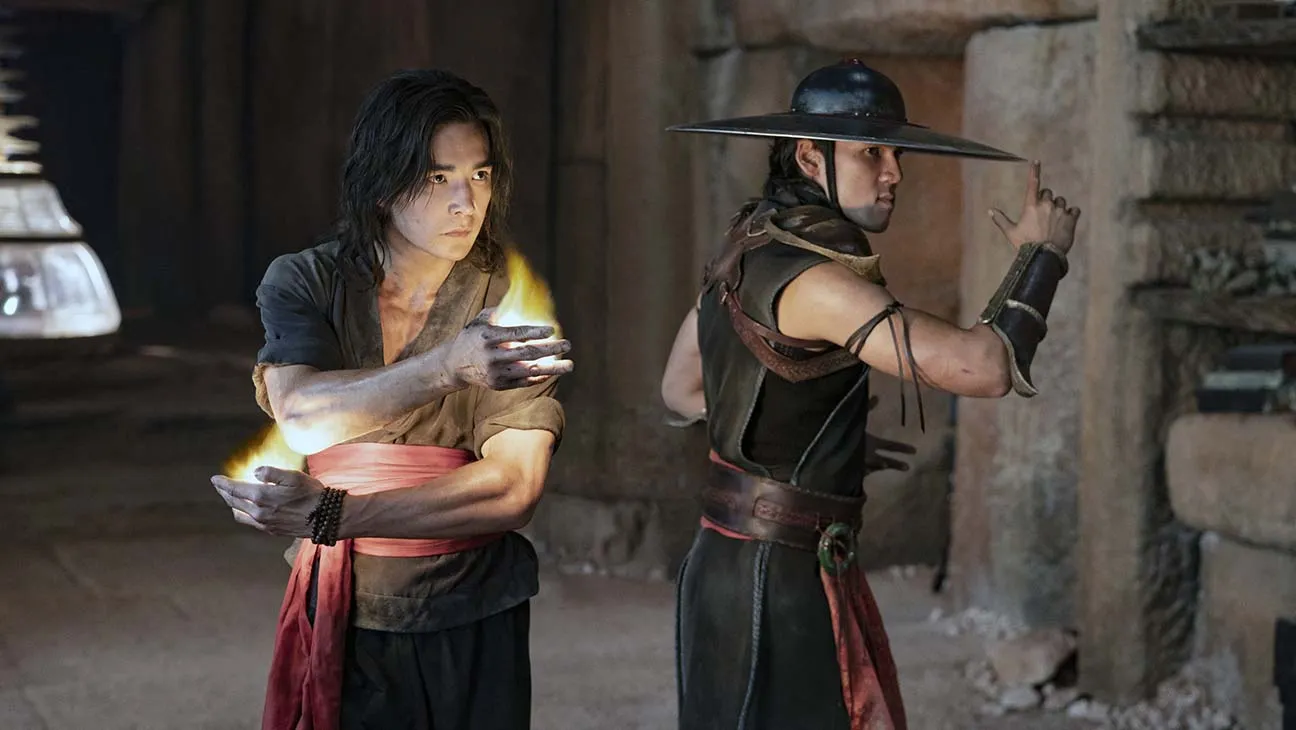
The problem is that by the time this finally happens, three-quarters of the movie has already gone by. From that moment, the creators have to rush to cram in everything they had promised in the trailer. In the final act, what we get is a showcase of scriptwriting shortcuts. The fights—something that should be the series’ trademark, something that in the 1995 film was introduced calmly, with reverence, and without hurry—are presented here in almost slapdash fashion. At one point I even felt the creators, while filming certain scenes, were working from a checklist of catchphrases and trademarks of the franchise that they simply had to tick off in front of the camera. There’s not a hint of flair in this, nor a shred of sincerity.
When Kung Lao, after a spectacular move, defeats Nitara and caps it with a direct-to-camera “flawless victory,” instead of chills down my spine, I see an obvious tonal clash, a blatant attempt to pander to the fans. It’s sad.
Mortal Kombat thus turns out to be more a patchwork of energetic scenes stitched together with flimsy story fillers—a stew into which brand elements were tossed without regard for how it might actually taste. To be clear—I’m genuinely glad the creators had their own recipe for the new Mortal Kombat and weren’t afraid to use it. That much is obvious. I remember years ago when a short film called Mortal Kombat: Rebirth by Kevin Tancharoen appeared online (he later fought hard for the chance to make a full-length movie).
That seven-minute film ignited fans’ imaginations and hopes that a serious adaptation of the beloved game in the spirit of modern action cinema’s neorealism could actually be made. Say what you will about the cult status of Paul W.S. Anderson’s 1995 film, but it was grotesque and kitschy—which, in a way, matched the spirit of the game. It turns out making a serious Mortal Kombat is an incredibly difficult task. Still, I believe the reboot’s creators shot themselves in the foot by building the film on a painfully simplistic script, by their inconsistency of tone (I personally would have preferred more genuine darkness to match the opening scene instead of artificial solemnity), and by their overuse of pompous music.

