
Review
MAGICAL NIGHTS. Enjoyable, Witty Film [REVIEW]
Magical Nights is an enjoyable, witty film brimming with sharp dialogue. It lifts the spirits, especially for viewers deeply interested in Italian cinema.


The early 1990s. Italy. Rome. On television screens across the Apennine Peninsula, viewers watched the dramatic final moments of the World Cup semi-final between Italy and Argentina, hosted on Italian soil. Diego Maradona converted a penalty; moments later, Aldo Serena missed the decisive spot kick. Argentina advanced to the final. Then, behind the devastated Italian fans gathered in a restaurant by the Tiber, a loud crash rang out and a mysterious black car plunged into the river. It was in this strikingly intriguing fashion that Paolo Virzì opened his film Magical Nights.
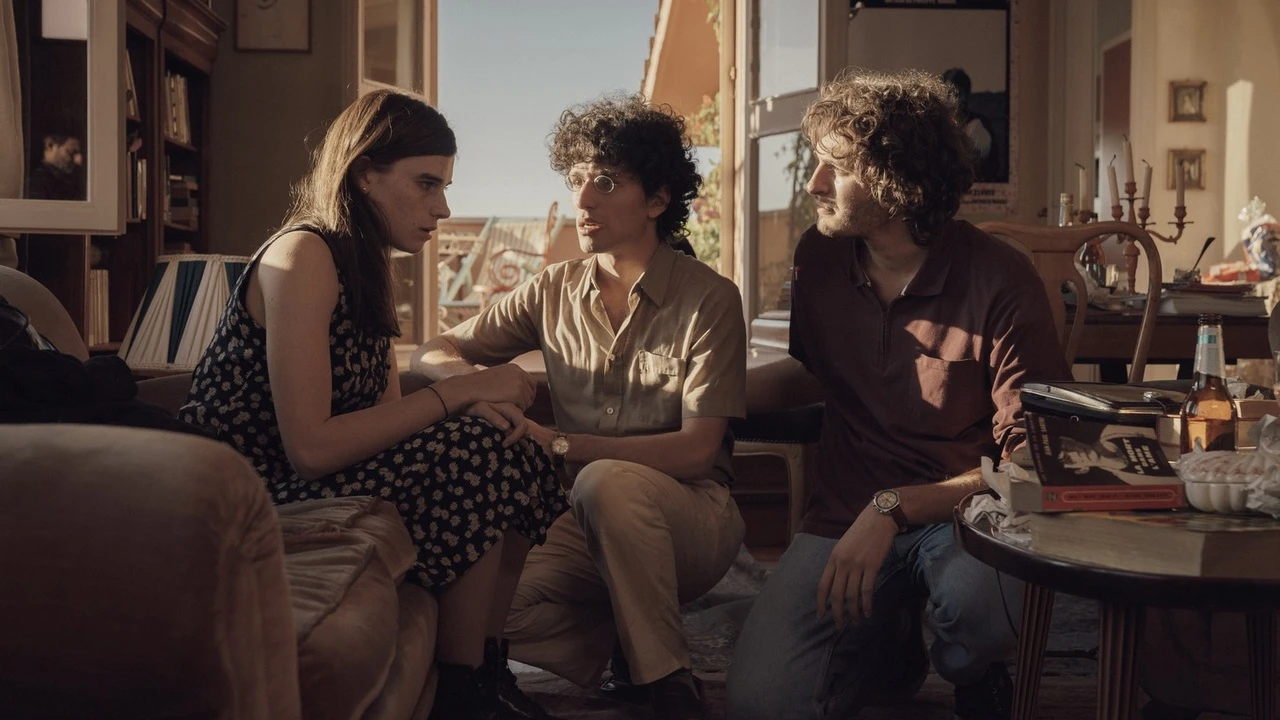
Carabinieri soon arrived at the scene. Inside the wreck pulled from the water, they discovered the body of renowned film producer Leandro Saponaro. The man had most likely been murdered. In the lapel of his jacket, officers found a photograph showing Saponaro alongside three young, ambitious, and temperamentally very different screenwriters: Antonino, immensely knowledgeable but somewhat pedantic; Luciano, capable of writing a script in a single night and eager for new connections—especially with women; and the withdrawn, drug-dependent Eugenia. The trio were forcibly taken to the police station, where they began explaining to the commissioner the nature of their relationship with the tragically deceased producer.
At this point, the film launches into an expansive flashback, taking us back a month. Antonino, Luciano, and Eugenia arrive in Rome for a prestigious screenwriting competition. Before long, they are swept up in the whirl of the titular “magical nights” that dictate the rhythm of life in the Eternal City. Virzì deliberately pushes the criminal intrigue into the background. Saponaro’s death quickly becomes little more than a pretext for a nostalgic tale about the fading glory of the Italian film industry.
In Magical Nights, much of the dialogue revolves around cinema itself. The characters who populate the film discuss the state of Italian filmmaking, reminiscing about the good old days filled with great works—both real and imagined. Among the real ones mentioned, almost in passing, are La Dolce Vita and Amarcord by Federico Fellini, L’Avventura by Michelangelo Antonioni, and Jules et Jim by François Truffaut.
There is a wealth of supporting characters, yet they are drawn vividly enough that viewers quickly remember who is who, who makes the decisions, and—most importantly—whose opinion truly matters.
The nostalgia is deepened by the appearance of characters modeled on real Italian stars. In one gem of a scene, Luciano, attempting to reach the office of a lawyer who also serves as his agent, passes through a dimly lit room. From the side, loud sobbing can be heard, briefly interrupted by a request to close the door. Moments later, the lawyer reveals that the weeping figure in the adjoining room is none other than Marcello Mastroianni, distraught over yet another departure of “that bitch” (read: Catherine Deneuve). In another excellent scene, Antonino travels with Saponaro to a film set to sign a lucrative contract with “one of the Italian masters.”

Until the very end, we do not know which great director is being referenced. Will it be a real figure or an invention? Or has the slippery Saponaro deceived the naïve Antonino—and us along with him—and no meeting will take place at all? Eventually, through a thick artificial fog, the silhouette of a director emerges. It is Federico Fellini himself, working on his final film, The Voice of the Moon. Antonino’s stunned, speechless awe is instantly shared by every cinephile in the audience.
Fortunately, Virzì does not stop there, nor does he entirely exploit nostalgia—at least not without irony. He maintains a degree of distance from the era by introducing satirical elements. Luciano, thanks to his stubbornness, begins collaborating with television producers whose subordinates, gathered in one large, smoke-filled apartment, hammer out endless episodes of soap operas on typewriters like modern-day slaves. Antonino, meanwhile, is led astray by the smooth-talking but financially desperate Saponaro, who quietly attempts to transform his niche artistic project into commercial, profit-driven trash. Eugenia, for her part, believes she has become pregnant after a sexual encounter with her favorite French film star, Jean-Bernard—a character clearly evoking Jean-Paul Belmondo.
Magical Nights is an enjoyable, witty film brimming with sharp dialogue. It lifts the spirits, especially for viewers deeply interested in Italian cinema and able to catch its many subtle references. At the same time, it does not shy away from more serious undertones, such as Eugenia’s unplanned “pregnancy,” the consequence of an encounter with a famous actor who used his celebrity to satisfy his desires—a theme that remains painfully relevant. Although Virzì transports us back to the 1990s, inviting audiences to immerse themselves in nostalgia and momentarily escape reality, the film’s ultimate message proves fundamentally anti-escapist.
It is stated outright near the end by the police commissioner, who addresses the three young protagonists with paternal tenderness: “You want to be screenwriters, yet you cannot always be spectators. Children, sometimes look out the window.”

