
Review
DUST BUNNY. Between a Child’s Dream and a Nightmare

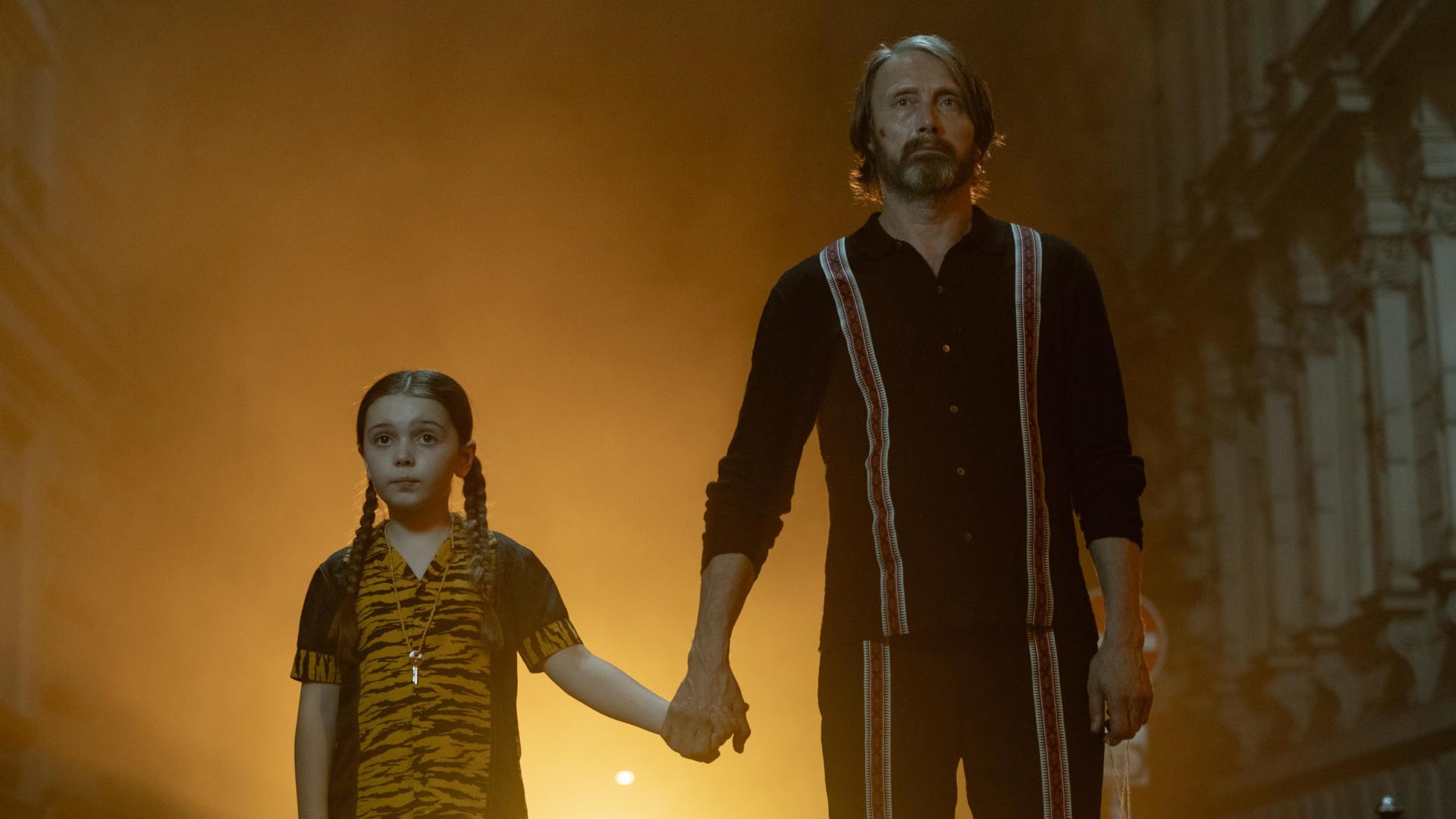
The second day of Splat!FilmFest brought one of the most anticipated events of this year’s edition – the Polish premiere of Dust Bunny, Bryan Fuller’s feature-length debut. Known for his fascination with aesthetics that merge beauty and death (Pushing Daisies, Hannibal), Fuller has, for the first time, transferred his imagination to the big screen. He created a dark fairy tale in which a child’s imagination becomes both a shield and a trap. From a place we all know – under the bed – a monster emerges, bringing with it the uncertainty and unease of everyday life.
The film’s protagonist is 10-year-old Aurora (Sophie Sloan), who believes that beneath the floor hides an exceptionally hungry monster that devours whole anyone who disturbs its peace. When the beast kills her parents, the girl decides to hire a mysterious neighbor she once saw in a daring action scene in Chinatown. The man from apartment 5B (Mads Mikkelsen) does indeed make his living as a killer, but he’s more of a Léon: The Professional type than a Witcher – he hunts people, not the monsters of children’s fantasies. He agrees to help Aurora out of guilt, convinced that her parents’ deaths were a tragic mistake, as he was actually the intended target.

Dust Bunny stands out for its highly stylized visual design – nearly every frame displays rich, painterly detail, reflecting much of the visual sensitivity of cinematographer Nicole Hirsch Whitaker. The interiors, hallways, and alleyways are filled with surreal elements suggesting that this entire world is filtered through a child’s imagination. Yet in this world, monsters are not natural; adults don’t believe in them, leaving the child isolated in her trauma. Fuller and his director of photography use light and shadow with painterly precision, contrasting warm, cozy spaces with dark, claustrophobic corners.
Special mention must go to the visual effects. CGI was used to show the monster seamlessly merging into the floor, but close-ups employed a large puppet designed by comic book artist Jon Wayshak and built by Legacy, a professional FX studio. This combination gives the creature both a tangible, “realistic” physicality and a fluid, dynamic movement, making every appearance both unsettling and believable within the film’s universe.

The filmmakers didn’t intend Dust Bunny to be a horror film in the traditional sense. Fuller focused instead on building an atmosphere of unease and on the emotional bond between the two main characters – Aurora and her neighbor. It’s a story only tinged with horror, where monsters – both real and imagined – mirror the characters’ inner fears. Yet Dust Bunny isn’t without humor. The church scene, where Aurora steals money from the offering plate to pay the hitman, is not only one of the most memorable but also one of the funniest moments in the film – and a visual and musical gem in its own right.
In this grotesque fairy-tale world, the actors shine. Mads Mikkelsen, as the mysterious neighbor, combines the cold precision and discipline of a professional killer with genuine warmth and empathy toward the 10-year-old Aurora. The role played by Sigourney Weaver, on the other hand, embodies the adult world’s authoritative and detached side, offering a striking contrast. Bryan Fuller’s discovery, Sophie Sloan, is the beating heart of the film, making the viewer deeply invested in the young heroine’s fate. She portrays a child’s curiosity, fear, and determination with striking naturalness.
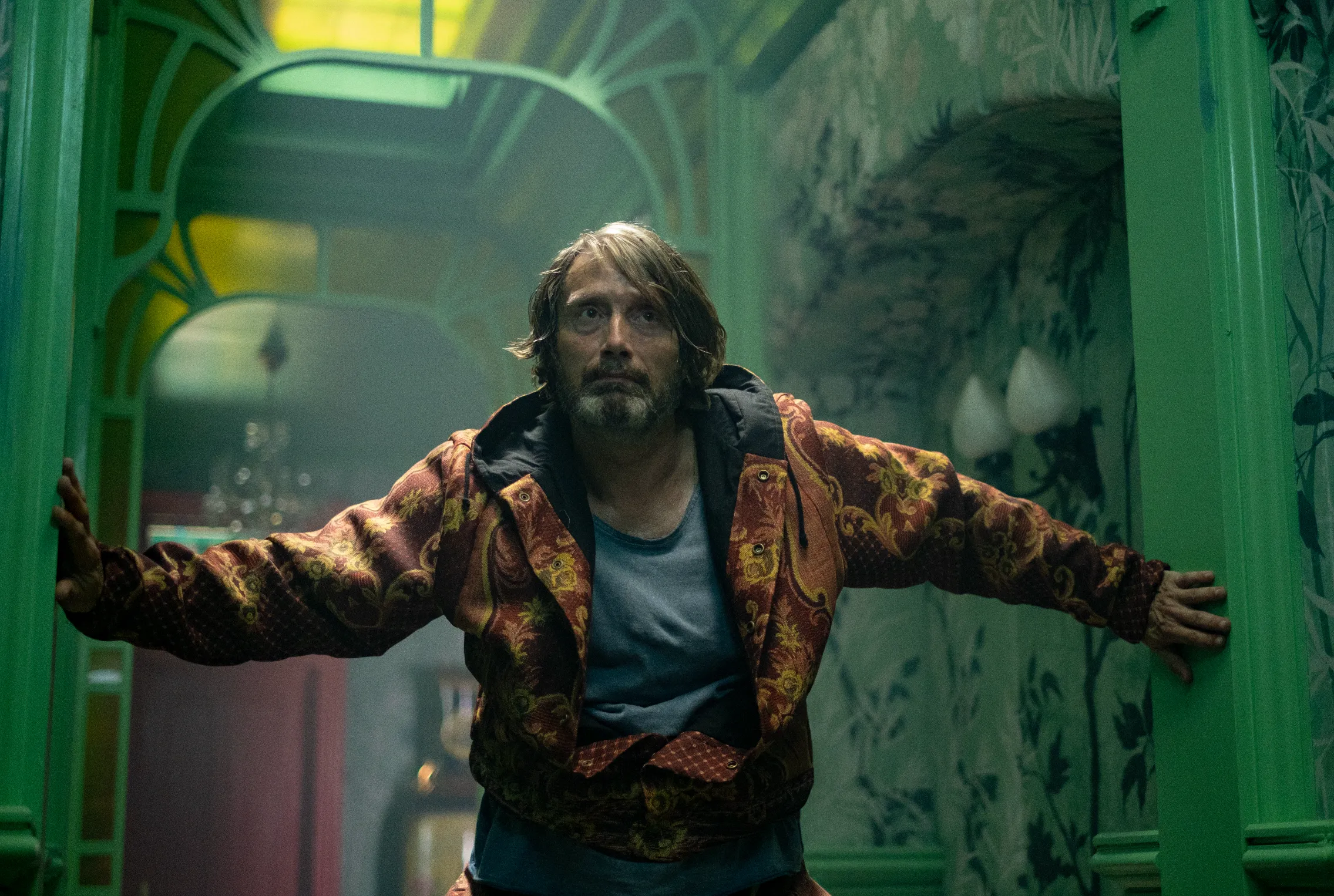
While the film doesn’t seek to terrify, it hypnotizes – leaving the viewer in awe of its crafted world and visual splendor. The fantastical and horrific elements blend seamlessly with real emotional struggles. Aurora believes that monsters kill her family – not just her parents, but several foster families – because she herself is evil and undeserving of love. This moral burden adds extraordinary psychological depth to the story. The viewer follows her inner struggle – fear, guilt, and a growing sense of loneliness in the face of a terrifying world.
Dust Bunny proves that horror cinema can be beautiful, emotional, and poetic. It was, without doubt, a deeply satisfying screening – a film that lived up to high expectations and left the impression of a work perfected in every detail.

