
Review
SNOW WHITE AND THE SEVEN DWARFS. Groundbreaking Achievement
Once upon a time, there lived a beautiful princess named Snow White – this is how Disney’s 1937 animated adaptation of the Brothers Grimm tale begins.

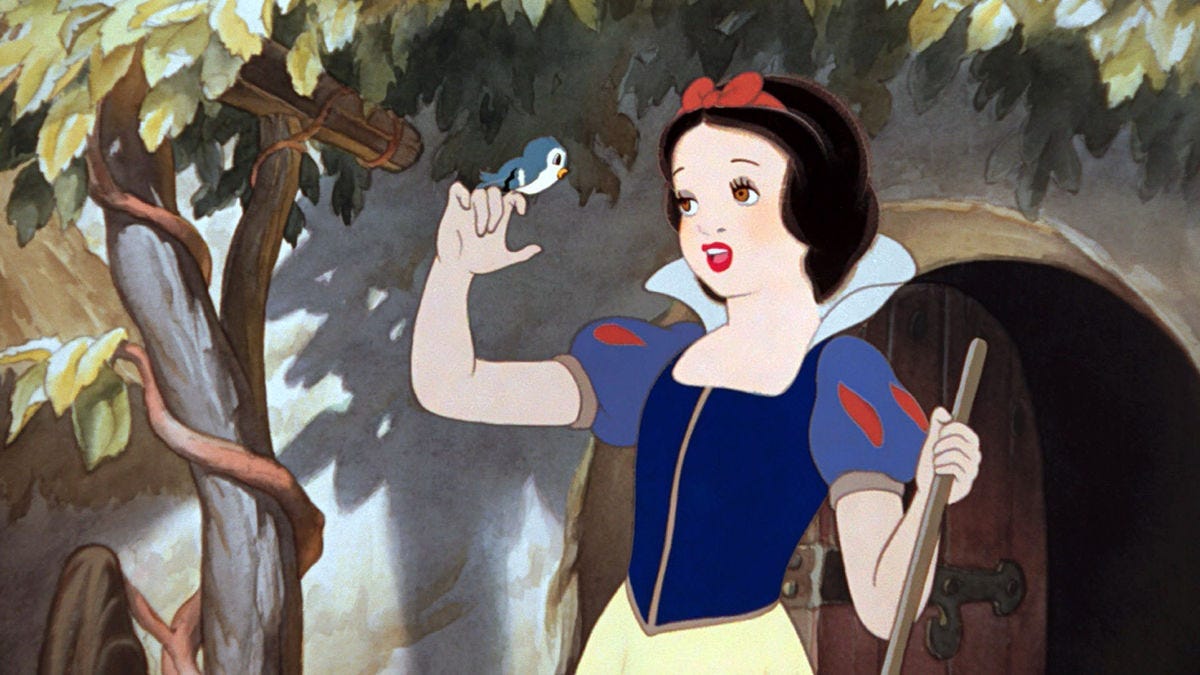
Once upon a time, there lived a beautiful princess named Snow White – this is how Disney’s 1937 animated adaptation of the Brothers Grimm tale begins. It marked the studio’s first venture into feature-length animation — a journey that continues to this day, raising generation after generation of young viewers, despite the passage of time and advances in animation technology.
By now, almost everyone knows the story of the beautiful princess who became the object of her cruel stepmother’s hatred and jealousy. Saved by a huntsman ordered by the Evil Queen to kill her, Snow White finds refuge with seven dwarfs in a cottage deep in the forest. But when the Queen discovers she’s been deceived, she sets out to kill the girl herself. Giving her a poisoned apple, she puts Snow White into a deep sleep, to the despair of the dwarfs and all the forest creatures who have come to love the princess with skin as white as snow. It is only a prince’s kiss that awakens her. Together they ride off toward his castle, where — as we can only imagine — they live happily ever after.
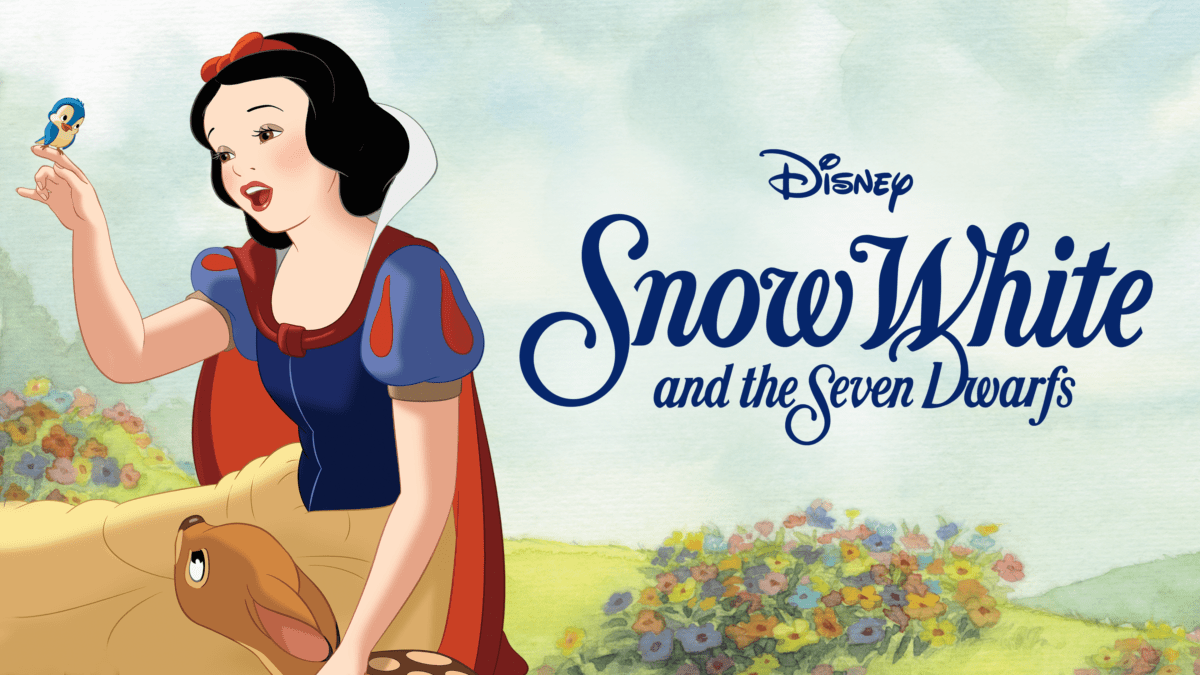
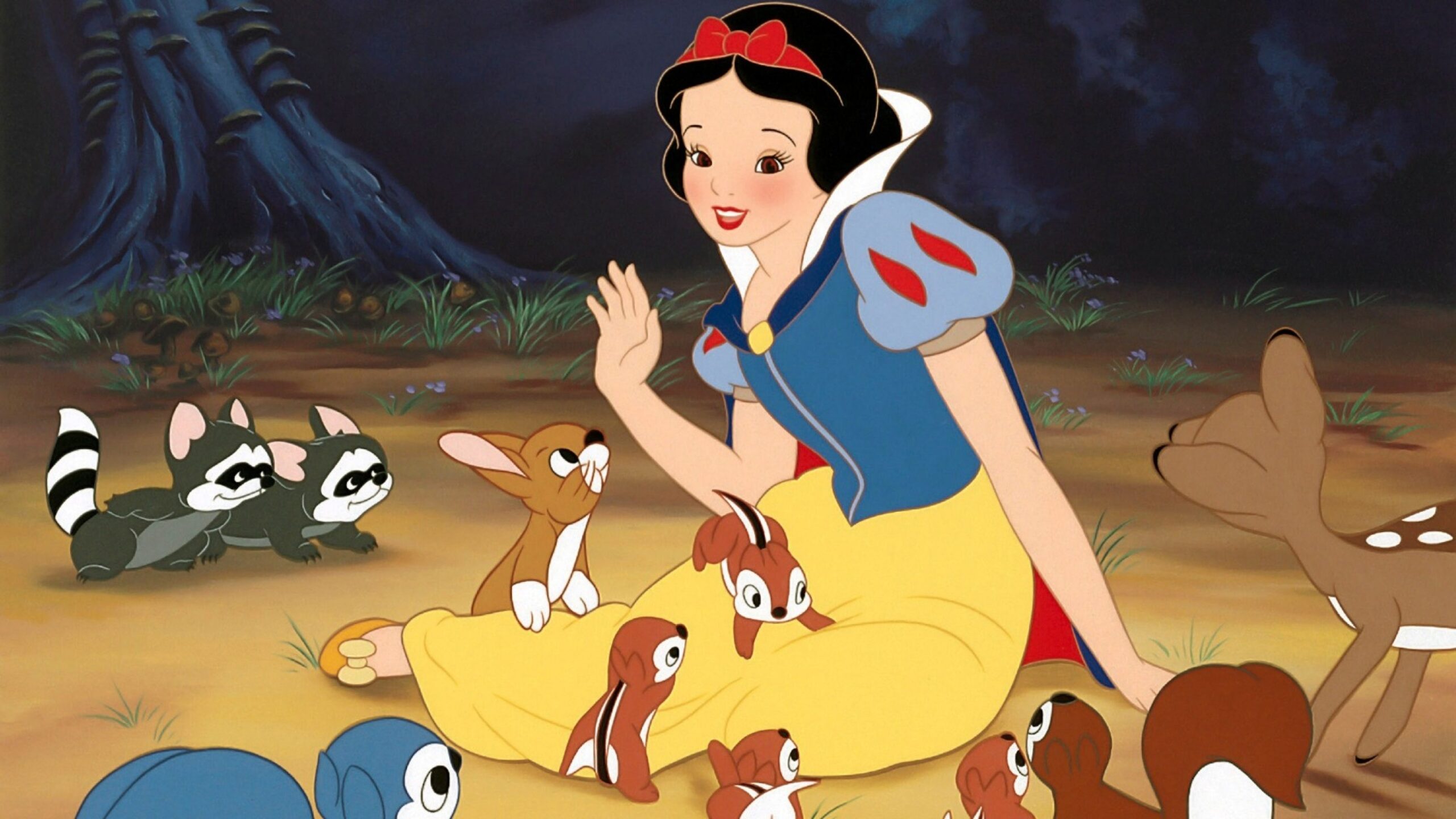
Disney’s version remains remarkably faithful to the Grimm brothers’ fairy tale, aside from a few small details. The studio’s Snow White has hair black as ebony and skin white as snow, with cheeks touched by a true rosy blush. To animate her, the artists studied the movements of Marge Champion, who served as their live-action model. Interestingly, some unused sketches later inspired the character of Maid Marian in Disney’s 1974 animated Robin Hood. Curiously enough, Snow White today might not even strike us as particularly beautiful.
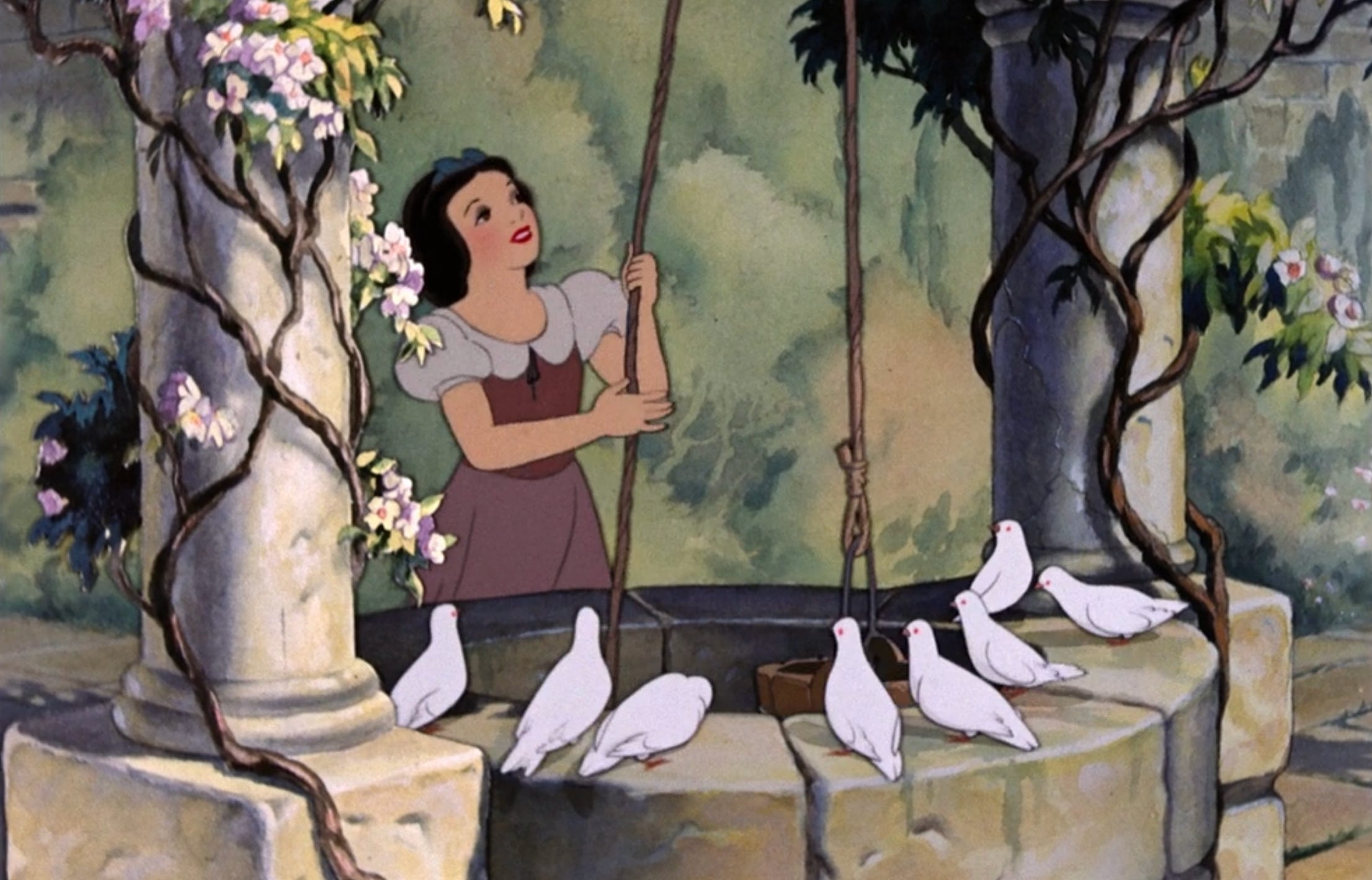
She’s a little plump — but that hardly detracts from her charm. On the contrary, it perfectly complements her goodness, openness, and even naïve faith in the idea that people are inherently kind. In her first scene, we see her wearing a tattered dress, scrubbing the steps of her stepmother’s castle. Is she angry about her fate? Not at all. She simply does as she’s told, humming to herself as if to make the chore more pleasant. That’s who Snow White is — accepting of whatever role life assigns her. There’s no rebellion in her, no fighting spirit, no desire to resist. She is gentle, and through that gentleness, almost passive. When she arrives at the dwarfs’ cottage, she immediately takes on a new role — once again shaped by her circumstances.
She becomes their caretaker, their mother figure — cleaning the house, cooking dinner, and kissing their foreheads as they leave for work. And when she’s saved by the prince, she transitions seamlessly into the role of a princess — riding toward the castle of her beloved without a moment’s hesitation. The ending is the most fairy-tale-like of all — even, one might say, naïve. After several months (as the changing seasons suggest), Snow White awakens from her sleep. She doesn’t ask any questions, express surprise, or even seem concerned. She rises, mounts the horse, and rides away — without thanking the dwarfs who watched over her for so long. Nor do they seem to expect any gratitude. The prince has come — naturally, everything changes, and Snow White departs with him.
To be clear, I must emphasize that I truly like and appreciate Snow White and the Seven Dwarfs. It was a groundbreaking achievement in the history of cinema, honored in 1939 with a special Oscar — one large and seven miniature ones. Still, that doesn’t change the fact that Snow White herself isn’t among my favorite Disney heroines, and for feminists, she’s probably the stuff of nightmares. Painfully gentle, kind, and submissive — yet even that, in its own way, can be beautiful.
Interestingly, her portrayal can also be read as a satire of German nationalism. The Queen’s appearance was inspired by the statue of Uta von Ballenstedt, the benefactress of Naumburg Cathedral — a figure who, during the Nazi era, was promoted as the ideal German woman. Either way, the Evil Queen’s design continues to astonish me every time I see her. Perfectly crafted by the animators, she’s a brilliant fusion of looks and character. It would be difficult to disobey such a queen — and even harder to defy her after her transformation into an old hag.
That hideous old witch, with her hooked nose, gnarled fingers, and enormous eyes, remains a masterpiece of animation. For many of us, she has become the very image of a witch — the first that comes to mind when we think of one. Consumed by her obsession with being “the fairest of them all,” she becomes the ugliest of all to achieve her goal: killing Snow White. Isn’t that wonderfully ironic?
Her attempt fails, and she dies fleeing from the dwarfs. The scene of her death is both strikingly vivid and deeply unsettling — though overloaded with gothic imagery meant to heighten the sense of terror. There’s a chase along a rocky cliff, a torrential downpour (it truly feels as if the rocks themselves are flowing with water), thunder, wind, and vultures circling over the witch’s body. All of it is designed to frighten the viewer.
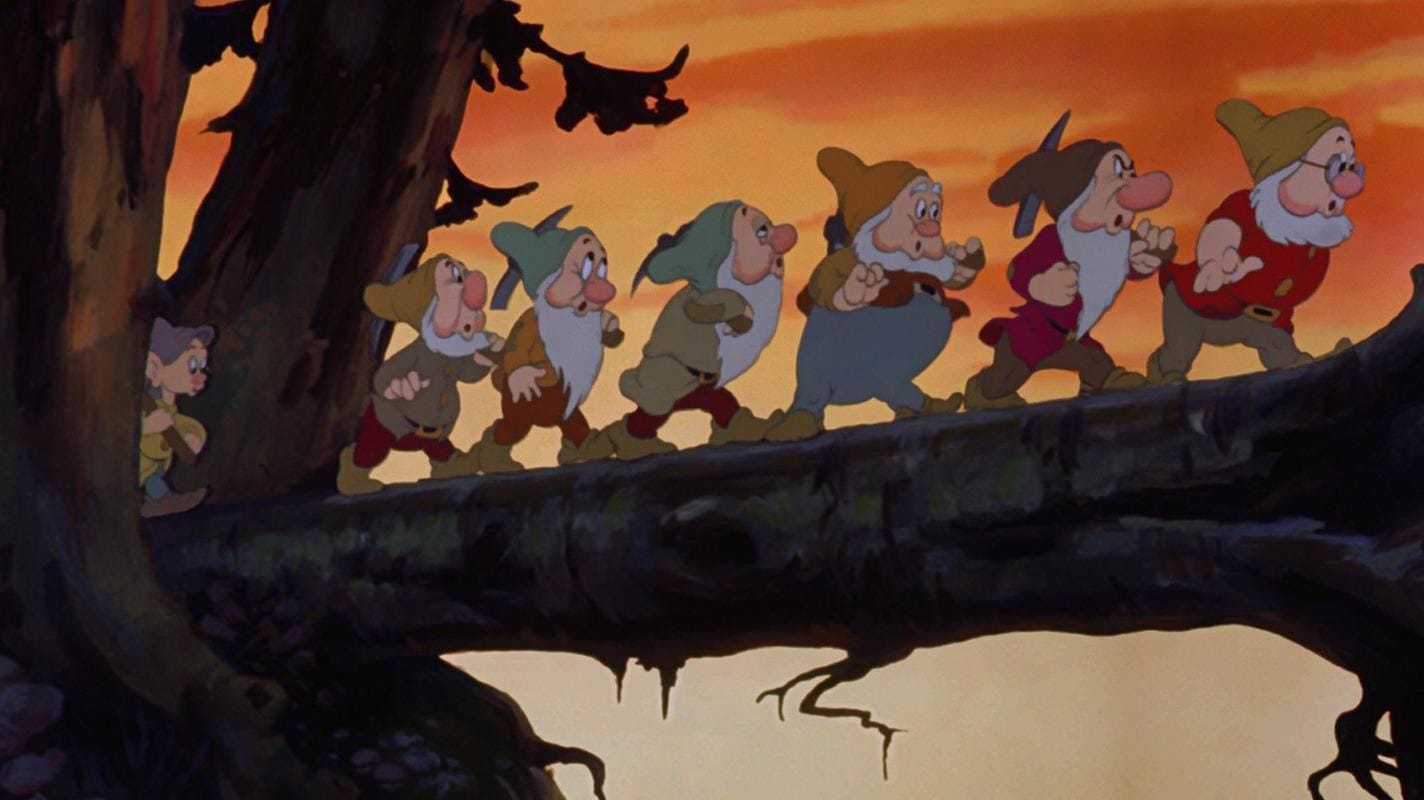
And what about the dwarfs themselves? Though reportedly inspired by real-life figures, only three of the seven truly stand out as memorable characters. Dopey, Grumpy, and Doc are so distinctive that they feel like fully realized personalities, while the remaining four blend into a kind of collective supporting role. Dopey doesn’t speak simply because he “never tried” — originally, he wasn’t meant to differ in that respect from the others, but since no voice actor seemed to fit, he remained mute.
Doc constantly mixes up similar-sounding words, while Grumpy delivers what could be called “universal truths” about women. The others lack defining traits beyond those implied by their names. That absence of depth is somewhat noticeable on screen, but perhaps such simplifications were necessary — giving seven characters complex personalities would have greatly lengthened the film.
In two years, Snow White will celebrate its 90th anniversary. Of course, some might say, “It’s aged,” “Animation is done differently — better — now,” or “Kids today won’t want to watch it.” Yet despite the passage of time, it remains a milestone in film history and continues to offer genuine joy to new generations of young viewers.

