
Review
THREE LOVES. Bold and Distinctive [REVIEW]
Three Loves may not be perfect, but it’s bold, distinctive, and proof that there can be flair and finesse in even the most unexpected corners of Polish film.

![THREE LOVES. Bold and Distinctive [REVIEW]](https://filmfolly.com/wp-content/uploads/2025/09/THREE-LOVES-Bold-and-Distinctive-REVIEW.webp "three-loves-4 | FilmFolly.com")
In a cult Polish comedy from the turn of the century, actor Michał Milowicz delivered a now-iconic line: “This sad city could really use a bit of flair and finesse.” Though the character was speaking about local gangsters, the remark feels broadly applicable to many facets of Polish life—including cinema. Polish films often remain stuck between two poles: heavy, brooding “serious” arthouse dramas, or polite, formulaic genre pieces—typically thrillers or comedies that play it safe. Auteur-driven genre cinema is practically non-existent, and few filmmakers attempt to break free from the stylistic constraints imposed by the legacy of the Polish Film School, the “Cinema of Moral Anxiety,” or post-communist neorealism. One of the few directors actively trying to push against this mold is Łukasz Grzegorzek, who consistently attempts to make personal films in Poland that aren’t afraid of entertainment, genre hybrids, or humor that doesn’t feel like it was lifted straight from a cabaret show. His latest venture in this ongoing cinematic crusade is a film tagged as a “Polish erotic thriller.” Three Loves tells the story of a love triangle involving Lena, a just-turned-40 actress; her emotionally stuck ex-husband Jan; and a young law student named Kundel whom she meets by chance.
The passionate affair between Lena and Kundel destabilizes the already fragile dynamic between the exes, while Kundel finds himself ensnared in a web of emotions and desires he isn’t quite equipped to handle. The story unfolds along the familiar contours of an erotic triangle, with a few unexpected turns, leading to an ambiguous finale. As is typical for Grzegorzek’s work, there’s a distinctive earthy realism in how characters behave—though this time, naturally heightened for the sake of genre. The plot mainly serves as a vehicle: it’s there to provide structure, but the real focus is on what surrounds it. 
At times, we’re even treated to literal pink filters that push the visuals far from the typical gray streets and cold interiors of Polish realism. While Three Loves doesn’t resemble A Short Film About Love (despite some near-literal staging borrowed from Kieślowski), it shares more cinematic DNA with Pedro Almodóvar’s melodramatic erotic dramas. There’s a tongue-in-cheek quality to the film’s portrayal of romantic excess, and this layer of irony allows the audience to accept moments of naive characters, stiff dialogue, or questionable cause-and-effect logic. These quirks are disarmed by the film’s self-awareness and its clear signal that this is a stylized take on real life—not realism itself.
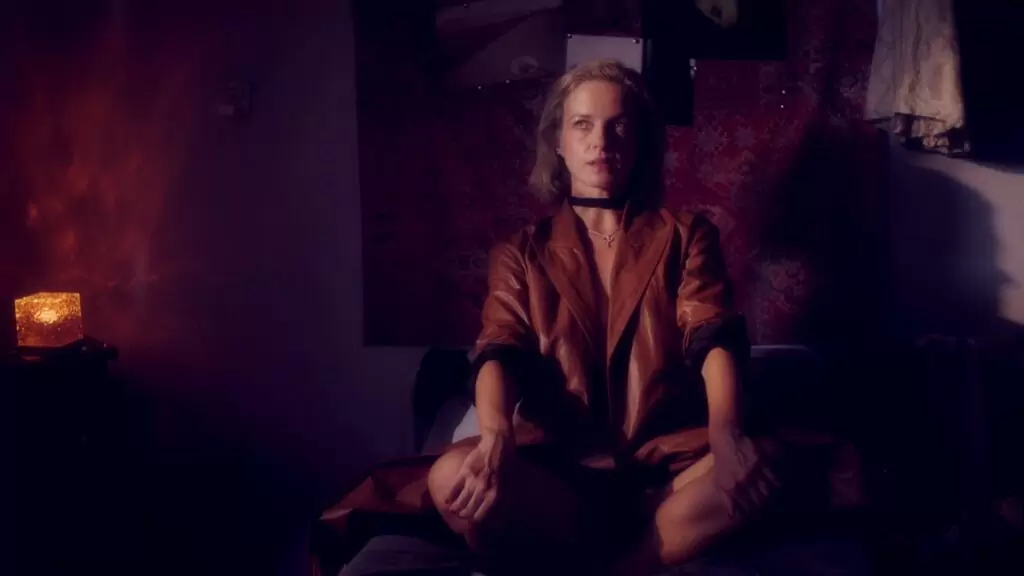 The cast embraces this tone remarkably well. Marta Nieradkiewicz steps outside her usual type to portray a woman caught between romantic idealism and real-world disillusionment. Marcin Czarnik finds surprising emotional depth in a character who, on the surface, might seem pitiful or even repellent. And the true discovery is Mieszko Chomka—a directing student making his acting debut—who completes the trio as the slightly pretentious but oddly likable Kundel. At times, his character even feels like a distant cousin of the lovable slacker archetype from Boys Don’t Cry, the film where Milowicz delivered that aforementioned line. If the script occasionally falters, this trio of performers keeps it afloat. That said, while Three Loves has plenty of charm, it doesn’t quite reach the heights of Grzegorzek’s earlier films. Despite the team’s efforts to smooth out the seams of the erotic narrative, there are moments where the story feels weighed down—common in dramas that step tentatively into genre territory. The film has the unmistakable feel of an experiment. Grzegorzek is working just outside his usual comfort zone, and as a result, some of the lightness and groundedness that defined his previous works is lost.
Still, his unique directorial voice remains intact, and that’s enough to forgive a few clunky lines or plot inconsistencies.  Ultimately, Three Loves succeeds because it dares to explore terrain that Polish cinema almost never ventures into. It may not be perfect, but it’s bold, distinctive, and proof that there can be flair and finesse in even the most unexpected corners of Polish film.

