Review
HARRISON BERGERON. A Science Fiction Dystopia
Harrison Bergeron seeks to show where a misguided policy of enforced equality at all costs can lead (“You don’t want equality, you want sameness”)

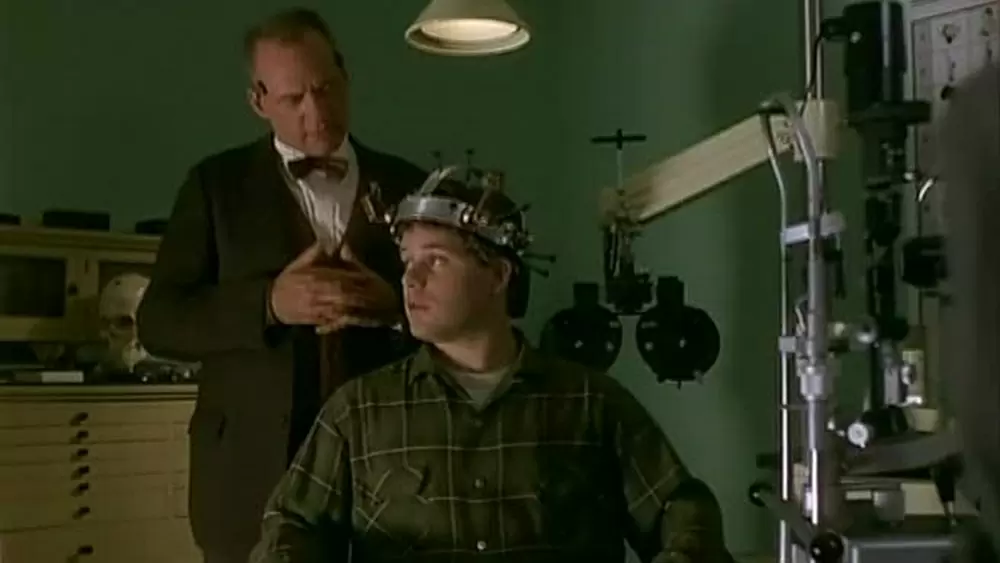
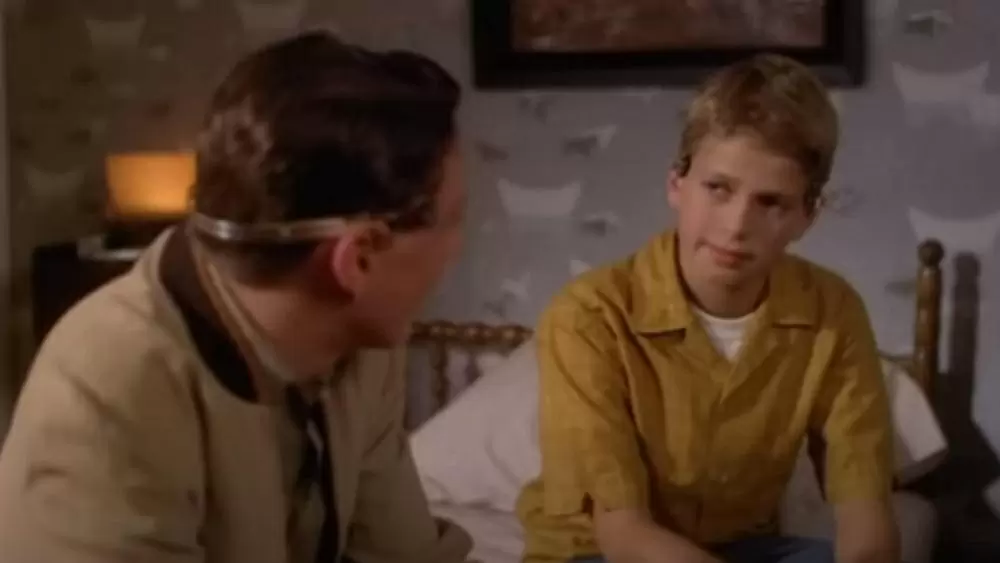
Thirty years ago, this film might have been a warning. Today, it feels more like a documentary. United States, 2053. A few decades earlier, a prolonged economic crisis and the widening gap between the richest and poorest layers of society led to a civil war known as “the Second American Revolution.” After its end, the country’s new authorities concluded that the root of hatred, jealousy, fear, and all conflict lay in inequality — and decided to eradicate it through extreme egalitarianism. Every U.S. citizen is thus forced to possess the same amount of material wealth, intelligence, physical ability, and social status, with mediocrity elevated as the highest virtue. Technology serves above all to stupefy the population: television and special headbands that lower IQ. Anyone who stands out intellectually risks lobotomy and complete idiocy — as in the case of Harrison Bergeron, a remarkably gifted young man who catches the attention of the authorities.
Kurt Vonnegut’s satirical dystopian short story Harrison Bergeron was first published in October 1961 in The Magazine of Fantasy and Science Fiction. It has been adapted for the screen several times, including as part of Fred Barzyk’s 1972 television production Between Time and Timbuktu and in short films such as Patrick Horne’s Harrison Bergeron (2006) and Chandler Tuttle’s 2081 (2009).
The only feature-length adaptation of Vonnegut’s story to date is the American television film directed by Bruce Pittman, starring Sean Astin (Harrison), Christopher Plummer (John Klaxon), Miranda de Pencier (Phillipa), Eugene Levy (President McCloskey), and Richard Monette (Shockley). Showtime aired Harrison Bergeron in August 1995, and three years later the film was released on VHS. Today it can be freely streamed on at least two popular platforms (one of them for free).

Harrison Bergeron is not a faithful adaptation of Vonnegut’s story, in which the title character wasn’t even the main protagonist: the plot focused more on his parents, who watched their rebellious son’s fate on television. What’s more, Harrison was depicted there as a fourteen-year-old genius, over two meters tall, handsome, and athletic — while in the film he is played by the short and chubby Astin. The subplot of a secret organization of highly intelligent decision-makers controlling the media and manipulating the public, into which Harrison is recruited as the protégé of the demonic Mr. Klaxon, is the invention of screenwriters Arthur Crimm and Jon Glascoe. Meanwhile, Vonnegut’s barely sketched motif of Harrison’s brief, brutally interrupted relationship with a nameless ballerina becomes in the film a romance with Phillipa, a beautiful decision-maker absent from the short story.
The film’s ending, too, is entirely different from Vonnegut’s.
Despite these changes, the spirit of the literary original has been preserved. Harrison Bergeron seeks to show where a misguided policy of enforced equality at all costs can lead (“You don’t want equality, you want sameness, and that’s something else entirely!” Harrison says to Klaxon at one point) — and that those who most fervently promote certain values often place themselves above the crowd, in line with George Orwell’s Animal Farm maxim: “All animals are equal, but some animals are more equal than others.” In the film, the inevitable consequence of systemic (and, it must be stressed, superficial) equalization across nearly every sphere of life is the erosion of individuality, the elimination of competition, the appointment of unqualified people to state positions, and a drastic decline in the intellectual level of a society fed with the lowest-grade entertainment. The question arises naturally: is this still a satirical science fiction dystopia, or already the reality of A.D. 2025?