
Review
WONDERSTRUCK. Unusual and Original Cinema
Wonderstruck is cinema of form. By depriving the actors of their voices, the director directs our attention to the image as the carrier of content and meaning.


Approaching Wonderstruck by Todd Haynes requires a particular mindset. It is slow, measured cinema. The director is not afraid of longueurs or narrative stagnation; his primary concern is atmosphere, the creation of an aura of the uncanny. Even though no miracles actually occur in Wonderstruck, the mood of Haynes’s latest film inevitably evokes a fairy tale. The film has two protagonists and two timelines. The first, shot in black and white, takes place in 1927. Its heroine is the teenage Rose (Millicent Simmonds), raised strictly by her father. Her only escape from the hardships of everyday life is the nearby movie theater, where she can watch her mother — a silent-film star — Lillian Mayhew (Julianne Moore).
The storyline of twelve-year-old Ben (Oakes Fegley) is set fifty years later. The boy has a creative, extraordinarily vivid imagination. He devours albums about astronauts and outer space. His room is crammed floor to ceiling with all kinds of gadgets: dinosaur figurines, board games, and spaceships. The boundary between waking life and dreams becomes fluid. He often returns in his memories to his mother (Michelle Williams), who recently died in a car accident. Ben has never known his father, but a clue left in a book prompts him to head for New York.

Rose decides to undertake an identical journey. In search of Lillian Mayhew, she sets out for one of New York’s theaters. If not her father, then surely her mother will be able to offer her at least a trace of parental warmth.
What binds the two storylines together is not only the similarity of Ben’s and Rose’s motivations, but also the narrative form, which adopts a child’s perspective: how a child perceives the world, how the city is magnified in their eyes, how they receive and understand the objects around them. Most importantly, however, both Ben and Rose are deaf-mute, so the way they communicate undergoes a significant modification. This is felt particularly strongly in Ben’s case, as he loses his hearing during the film as the result of an accident. From one day to the next, he is plunged into a completely unfamiliar reality — and we experience it together with him.
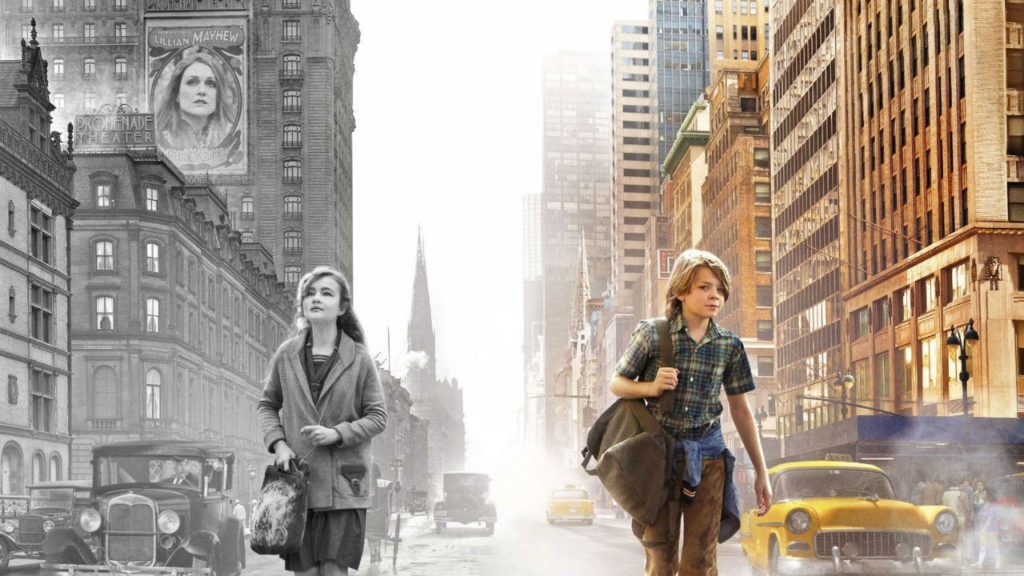
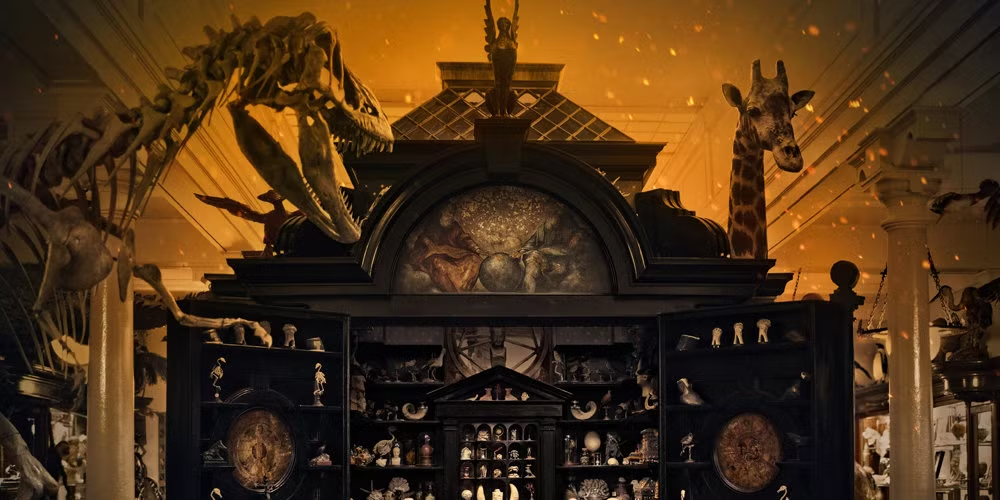
Todd Haynes overlays a very simple plot with several aesthetic filters. He immerses the film in nostalgia and a specific charm. He fuses the idealized convention of classic silent cinema in Rose’s storyline with Ben’s adventure, which recalls the style of New Adventure cinema. A key sequence of Wonderstruck takes place in the American Museum of Natural History. The building’s décor and its exhibits seem like a translation of a child’s exuberant imagination into reality. It is a space devoid of evil, yet captivating with its magical darkness and sense of the uncanny.
With his characteristic directorial precision, Haynes guides us through successive rooms. In the editing, he intercuts visits to the museum by the two protagonists, separated by fifty years. Wonderstruck demands patience, but it can intoxicate and hypnotize the viewer. It is a kind of cinema that, on the one hand, makes it easy to fall asleep out of boredom and glance impatiently at your watch during the screening (because atmosphere alone is not always enough), yet on the other hand it is pleasurable to surrender to the director’s oneiric, colorful vision. I experienced both of these states myself. I have no doubt that this is a film meant to be savored in a movie theater, where external stimuli are kept to a minimum.
Haynes keeps the question of what connects the two storylines open for a long time — what bond unites the fates of Ben and Rose. It is not a matter of straightforward narrative similarity. The closer we get to the end, the more dramatic power Wonderstruck accumulates. The director elegantly, though predictably, weaves the two narrative planes together. Yet these are not what will stay with me. The ending (enriched by a dreamy falling star) should surprise no one.
Wonderstruck is cinema of form. By depriving the actors of their voices, the director directs our attention to the image as the primary carrier of content and meaning. Haynes tells his story above all through symbols and visual allegories. Ultimately, it is cinema that demands concentration from the viewer, but is also unusual and original — not controversial, yet far from indifferent. It has considerable potential to divide public opinion, which is always the best kind of promotion for any film.


Looking back at DEAD SNOW: A Blizzard of Nazi Gore Fun

DEAD SUSHI: Exotic, Spicy, and Wildly Entertaining

Revisiting ALICE, SWEET ALICE: Dread and Religious Symbolism

PUPPET MASTER: LITTLEST REICH – Achtung! It’s Good!
