
Review
V FOR VENDETTA. What is the price of freedom?

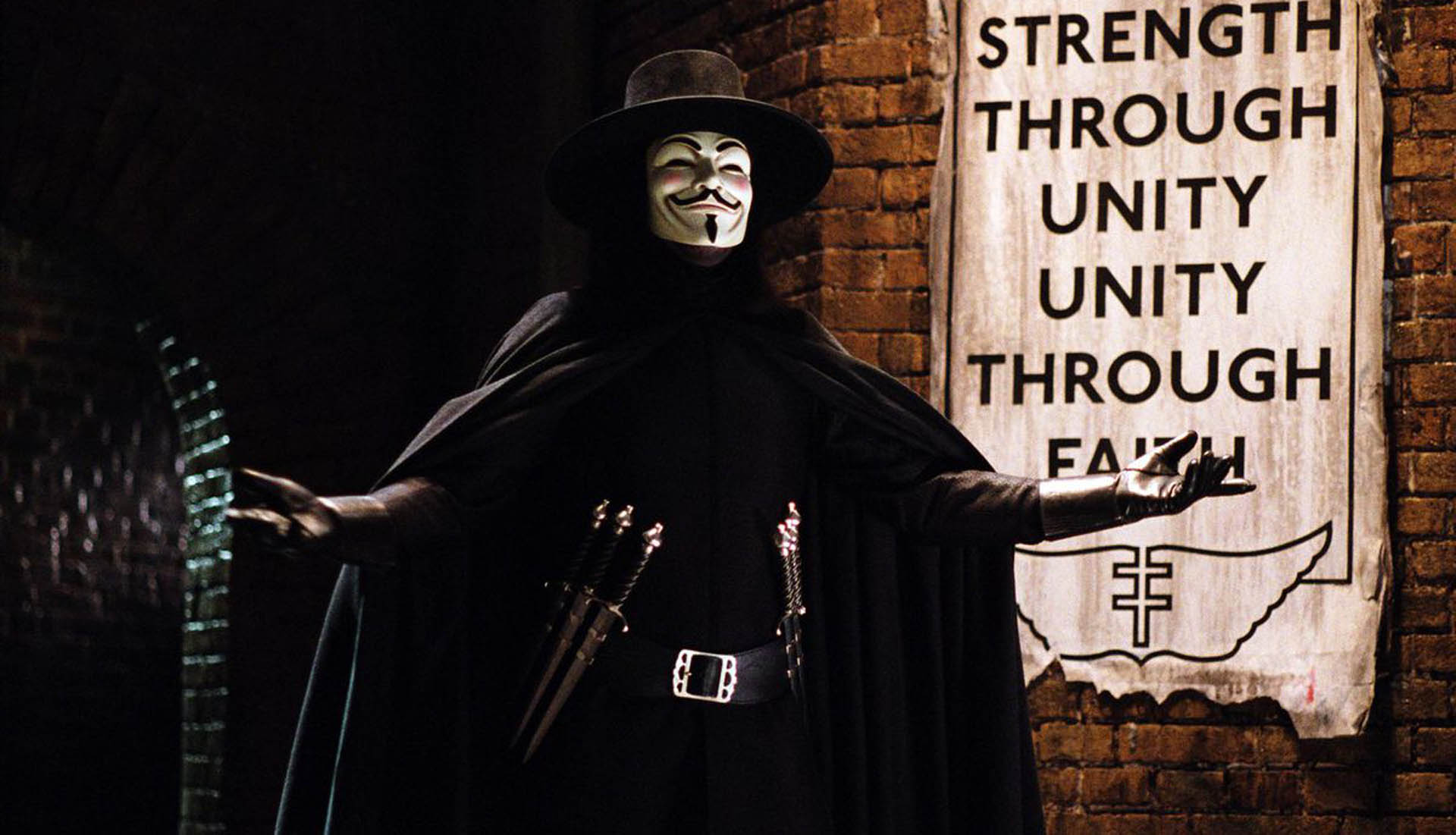
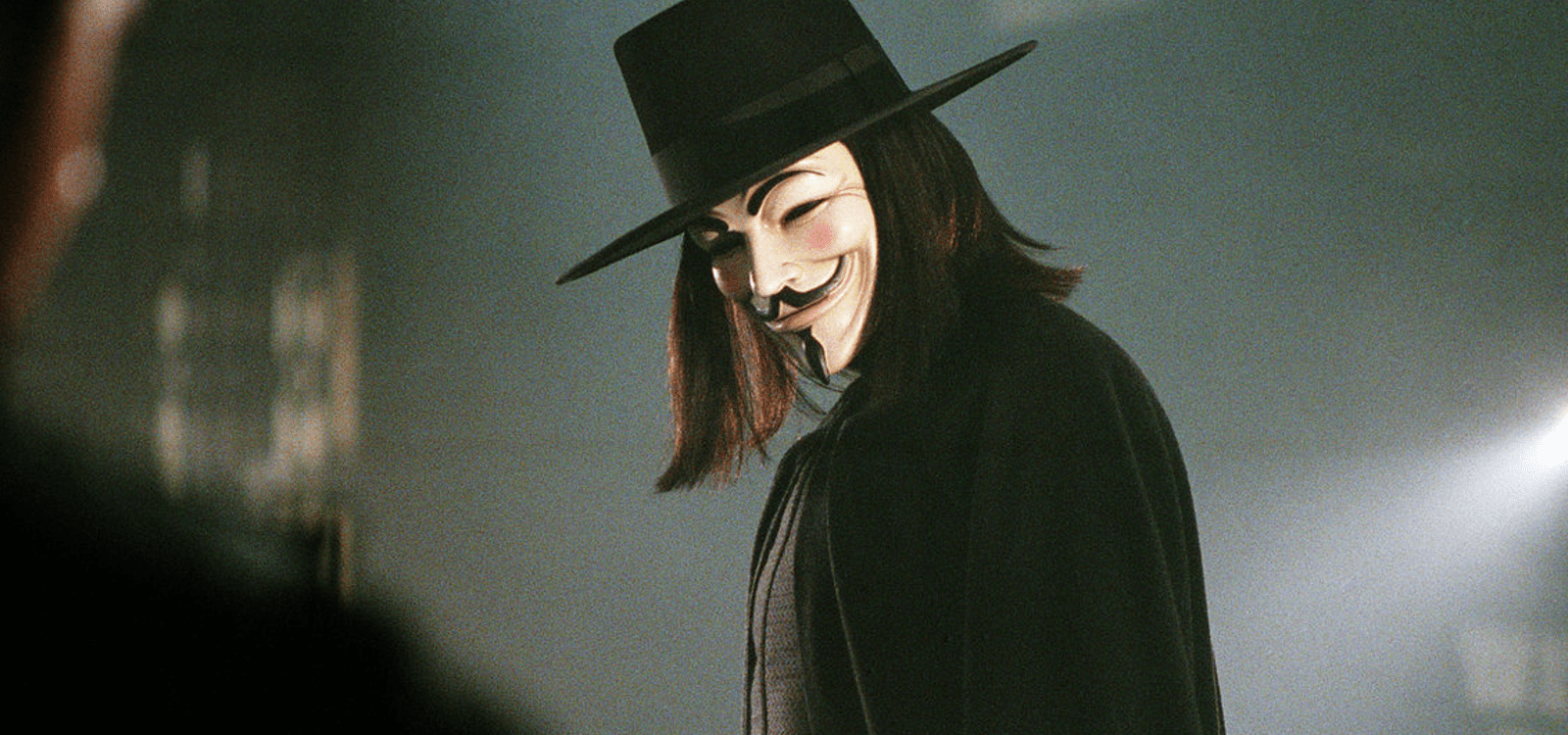
According to the master of thrillers’ advice, V for Vendetta begins with an earthquake. Of course, not literally. The film’s heroine, Evey, is saved from a police raid by a mysterious figure in a black cloak and white mask. The man introduces himself as V and takes her to the rooftop of a building, where he shows her the explosion of the Old Bailey that he orchestrated. The following scenes depict V taking over a television station and broadcasting a nationwide message announcing a revolution. In this address, which reaches every home in Britain, V criticizes the totalitarian system in power.
But he does not blame only the rulers—his accusation is directed at all citizens. For in such situations, society is never blameless—it is responsible not only for electing those in power but also, through silence, for consenting to their practices: curfews and raids, interrogations and torture, the information monopoly and censorship. V calls on the citizens to show their protest against the government by gathering one year later in front of the Parliament building. The date he sets is no coincidence—November 5th is the anniversary of Guy Fawkes’ death, the failed conspirator who in 1605 intended to blow up the English Parliament.

It is impossible not to notice the sources Alan Moore and David Lloyd, the authors of the comic on which the film is based, drew from. The analogies with Orwell’s 1984 are more than obvious—a totalitarian system in Britain, advanced tools of surveillance, war, and terrorist attacks—as a means to gain and maintain power. Also present is the problem of individual enslavement, though in the film it is pushed into the background by a larger question: what is the price of freedom? How far can one go to return it to society? Can the life of one person be taken in the name of another’s freedom?
These are questions that remain highly relevant today, touching between the lines on the contemporary issue of terrorism, viewed from a perspective not usually represented—that of those fighting for freedom. By pointing to possible dangers, the film speaks of three historical times—the past, the future, and the present. From the past, it brings forth the atrocities of the Holocaust—scenes of human experiments and mass graves evoke the experience of World War II—in order to show that the greatest tragedies of the 20th century may repeat themselves.
By introducing motifs familiar from everyday life, it also signals the questionable direction in which today’s governments may be heading. Although cameras, wiretaps, and satellites are supposed to ensure our safety, they also serve as perfect tools for controlling society.
V for Vendetta is not the only film expressing fears about the uncertain situation of the individual at the threshold of the 21st century. Over the past decade, many films have addressed the issue of human freedom in the state (e.g., Gattaca, Enemy of the State, Equilibrium), or at least touched on it (Code 46, The Island).
While their creators may sometimes let their imagination run wild, their stories do not come out of nowhere—they are the voices of authors who see that the policies of great powers are heading in a dangerous direction, that those in power sometimes go a step too far. And since these films are watched, it means the concerns they express also resonate within societies.
The degree of restriction of freedom in a state is not measured by the number of cameras or microphones installed on streets and in buildings. These devices in themselves are not a threat, as long as no one begins to tell us how we should look and how we should behave. Defining what we should do and how we should think is the worst form of repression that can be imposed.

In V for Vendetta, a problem still very relevant is also raised—homosexuality. In the film’s Britain, difference is not tolerated, including differences in sexual preference—several times throughout the film we are made aware that in a totalitarian state there is no place for gays or lesbians.
The day after watching V for Vendetta felt like a nightmare. Upon waking, I went to the window and saw two men installing a camera on the building opposite. My fear grew with each discovery—I noticed surveillance devices fixed above every entrance. Later I saw them placed at the corners of the block.

And finally, still holding a faint hope that their field of vision might be limited and that one could slip by unnoticed, I realized that two cameras were mounted together to cover everything. In my mind’s eye, I saw monitors displaying black-and-white camera feeds, people in interrogations, police officers in helmets, batons and shields, and finally a small camera in the corner of my own room… Remember, remember the Fifth of November…

