
Review
US. Best Approached With Minimal Prior Knowledge

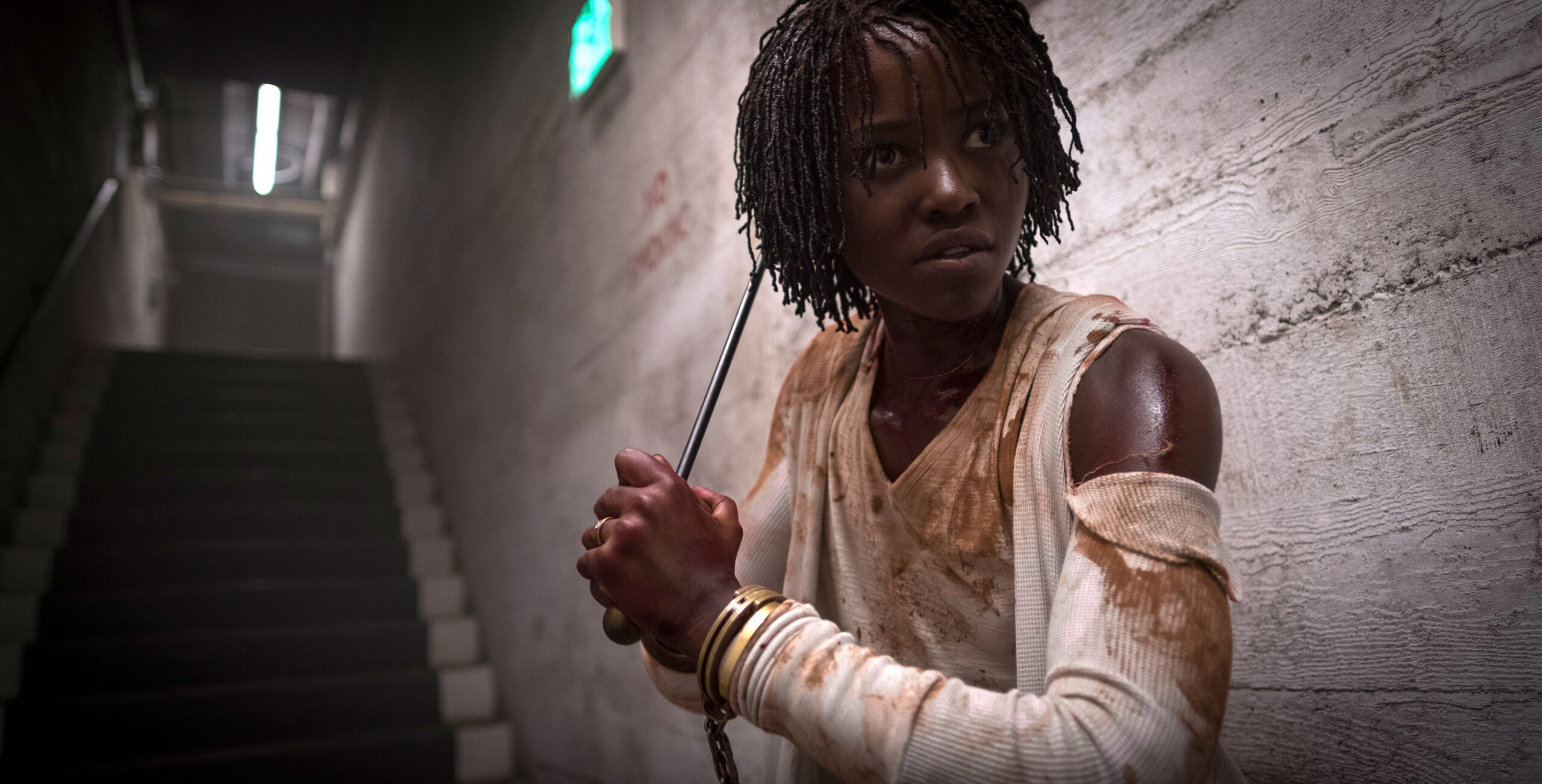
When Jordan Peele burst onto the scene with his debut Get Out, he didn’t just score a hit — he reshaped the landscape of contemporary horror. The film’s razor-sharp commentary on racial tensions in America, filtered through the mechanics of genre cinema, earned him the Academy Award for Best Original Screenplay and nominations for Best Picture and Best Director. In hindsight, that success placed the bar almost impossibly high. Few debuts arrive so fully formed, and from that point on, every subsequent project by Peele — previously known primarily for comedy — was destined to be measured against that breakthrough. Looking back now, years after the release of Us, it’s clear that his sophomore effort did not merely attempt to keep pace with Get Out — it confidently carved out its own territory.
Us was, and remains, a film best approached with minimal prior knowledge. The premise is deceptively simple: a seemingly ordinary American nuclear family — mother, father, son, daughter — travels to a coastal town tied to the mother’s childhood memories. Their idyllic vacation takes a violent turn when four figures dressed in red appear outside their home at night, revealing themselves to be grotesque doppelgängers. What begins as a home-invasion thriller gradually mutates into something far stranger: a psychological autopsy performed not only on its characters but on America itself.

Peele’s deep love for horror radiates from every frame. Yet he is no mere imitator. Much like Quentin Tarantino with crime cinema, Peele filters established genre conventions through a distinctly personal sensibility. Us operates brilliantly on multiple levels. It is first and foremost an effective horror film, drawing inspiration from classics like The Twilight Zone, relying more on meticulously sustained dread than on gratuitous gore.
The opening text about underground tunnels and hidden infrastructures beneath the United States signals that the film will not shy away from horror’s more bizarre dimensions. Peele embraces the uncanny — where the familiar turns hostile, where everyday reality becomes warped. Duality permeates the narrative: everything close to us may possess a terrifying mirror image. That thematic obsession with doubles fuels the film’s unease.
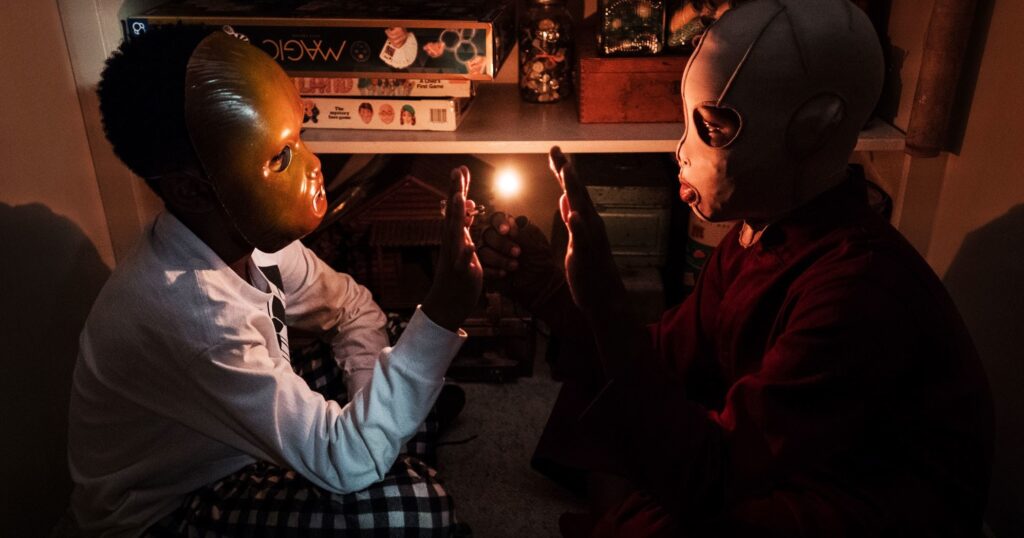
What remains striking, even years later, is Peele’s command of visual storytelling. He resists cheap jump scares, maintaining tight control over the screen. The camera moves deliberately, almost painterly, tracking increasingly hunted characters. It’s rare to see a director guide an audience so confidently through ambiguity, rationing answers while seducing us with imagery. The atmosphere of distorted paranoia recalls, at times, Funny Games by Michael Haneke — that sense of something recognizable yet fundamentally wrong.
The cast elevates the material enormously. The actors were tasked with portraying dual versions of their characters, and the film’s central tension hinges on that interplay. Lupita Nyong’o delivers what remains one of the most astonishing performances in modern horror. As the fiercely protective mother, she grounds the story emotionally; as her nightmarish double, she transforms completely — voice modulation, physicality, the haunted gaze — crafting a character who is at once identical and utterly alien. Even years later, her work in Us stands as a benchmark for genre acting.
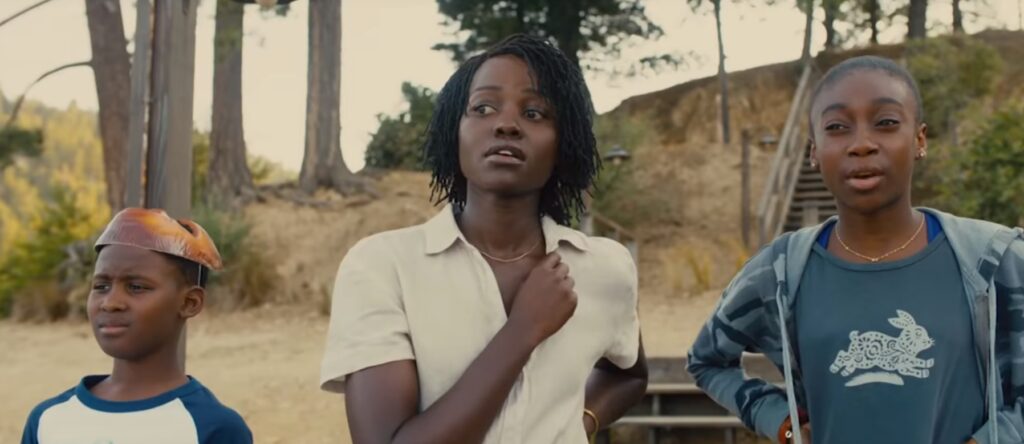
That eerie artificiality — exaggerated expressions, unsettling close-ups fetishizing madness — permeates nearly every major performance. It amplifies the film’s thematic concerns while intensifying its dread.
Peele once again takes familiar horror frameworks and overlays them with incisive commentary on America’s unresolved oppressions. The critique is present but never overwhelms the genre mechanics; the film remains gripping as pure horror while simultaneously addressing race, buried national sins, consumerism, repression, family fractures, and the terrifying challenge of confronting oneself.
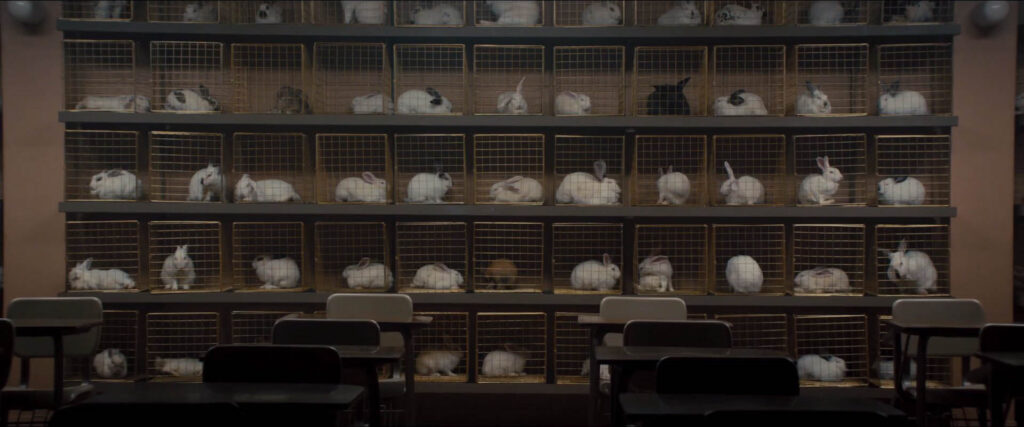
In retrospect, Us feels dense with meaning — almost swollen with subtext — and rewards revisiting. It has not faded into the blur of late-2010s horror output; if anything, its reputation has solidified over time. Peele met the expectations that followed Get Out without attempting to replicate it. Though certain thematic threads overlap, Us ultimately stands as a singular work, constructed from recognizable genre elements yet stamped with a clear artistic identity.
Most importantly, Peele once again proved that horror can unsettle both emotionally and intellectually. He manipulates the viewer’s sense of security, cloaks us in unease, and frightens us — all while articulating something urgent about the society we inhabit. Even years later, it remains a film that invites thought and conversation. Jordan Peele once again made fear feel necessary.

