
Review
UHF. Solid Dose of Absurd and Unforgettable Humor
UHF was not favored by critics, who quickly dismissed it as unfunny and lacking a clear idea of what it wanted to be.


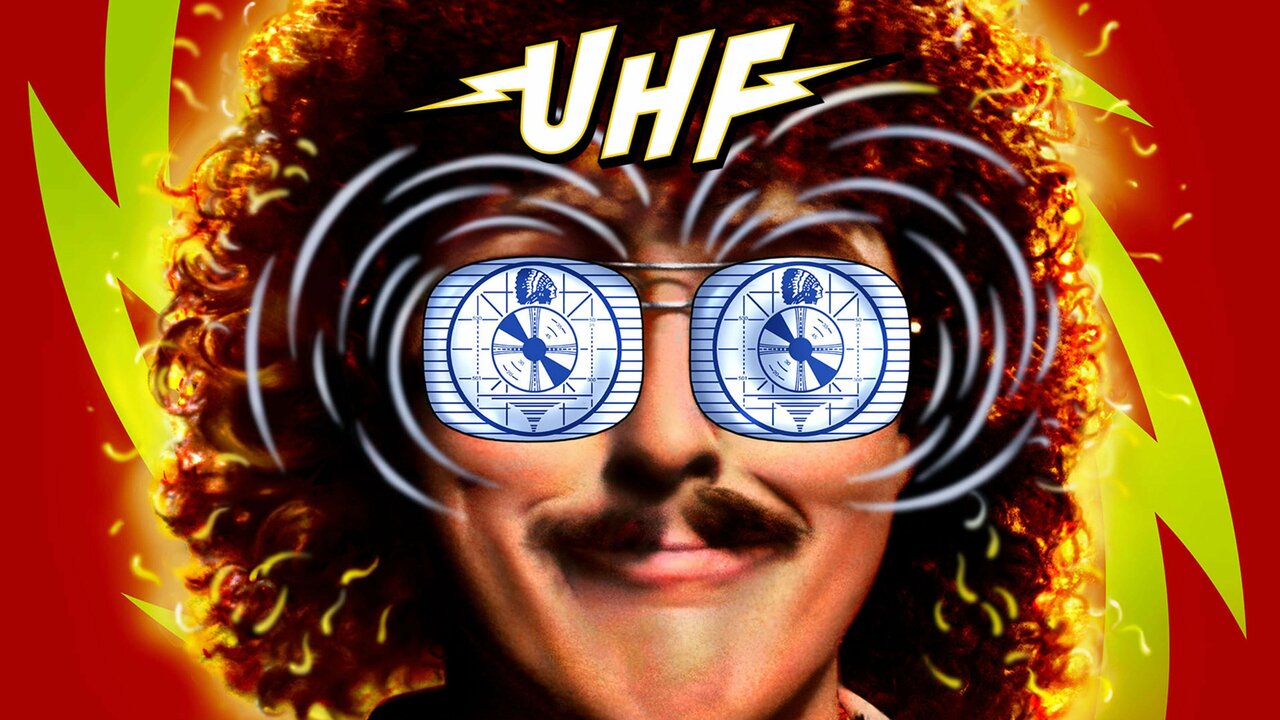
In the 1980s, “Weird Al” Yankovic was one of the more interesting figures on the American comedy scene. During that decade he released as many as five studio albums, which together earned four Gold and two Platinum certifications. Yankovic created primarily comedic songs, and his parodies of famous music videos proved especially popular. Riding this wave of success, the musician—together with his manager Jay Levey—came up with the idea of making a feature-length film that would use a formula similar to his parody music videos. This is how UHF (1989) came to be; although it was not warmly received by critics, it quickly won the affection of many viewers.
It becomes clear very quickly that the starting point for making UHF was Yankovic’s satirical output in the form of short, usually just a few minutes long, comedic clips. The plot is therefore very thin, and if all the sketches unrelated to the main storyline were cut out, the film would probably run no longer than about forty-five minutes. UHF tells the story of George Newman (Yankovic), a not particularly responsible dreamer who one day receives, as a gift from his gambling uncle, the rights to a low-rent television station broadcasting on the titular UHF frequencies.

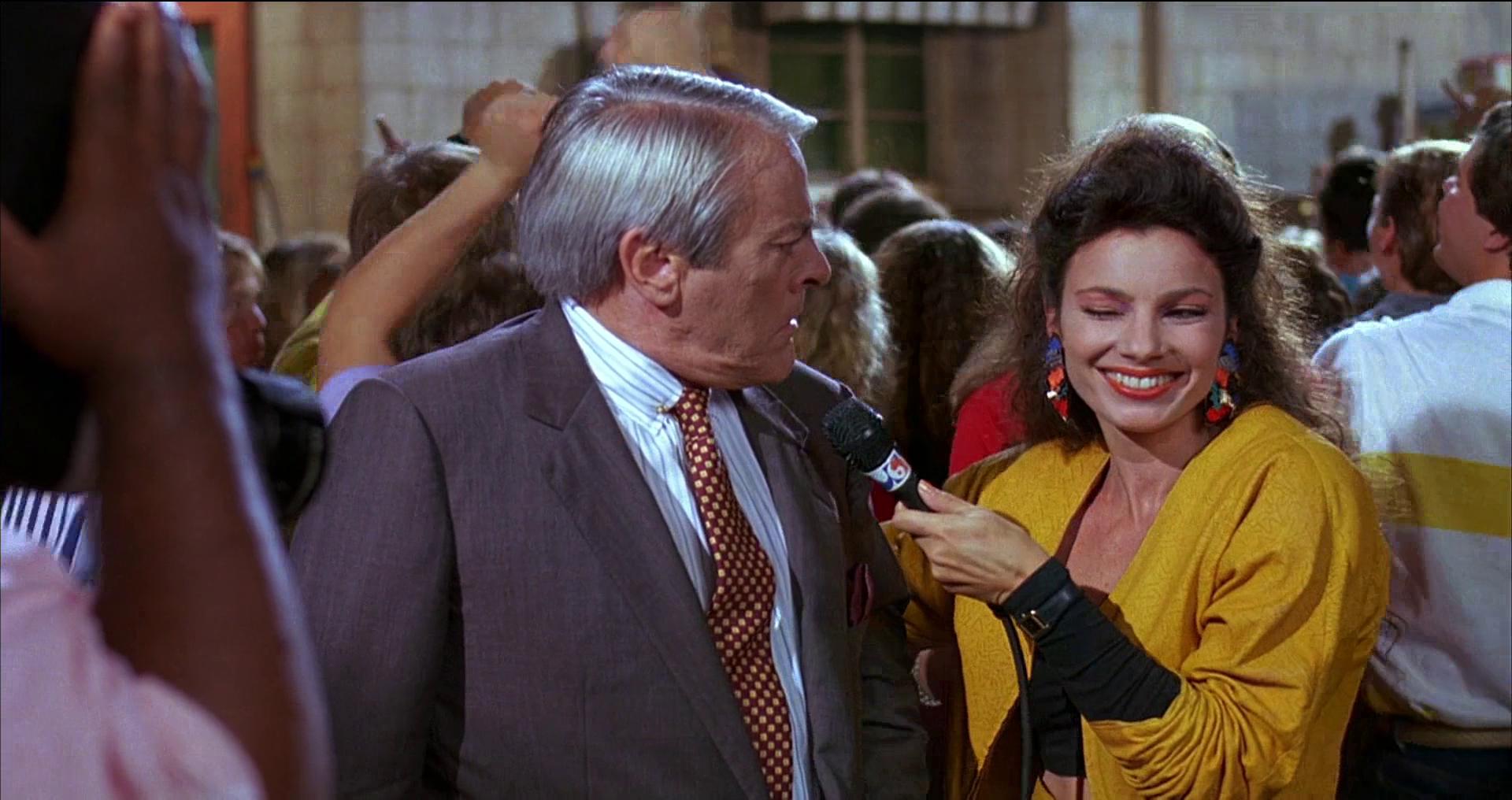
With no other career options available, George accepts the offer and begins devoting himself to creating fully original TV programs characterized by both low budgets and low production quality. And just when it seems that Channel 62 will turn out to be yet another failure for the protagonist, a huge and completely unexpected star of the station emerges in the form of an ad hoc hired janitor, Stanley Spadowski (Michael Richards). The business finally starts to turn a profit—something that does not sit well with R.J. Fletcher (Kevin McCarthy), the head of the local rival to “sixty-two,” a large nationwide television network.
The plot of UHF is essentially a pretext for presenting a succession of gags created by Yankovic and the already mentioned Levey, who serves here as the film’s director. This overarching function of the story about George and his crew is so evident that at times the action practically ceases to exist, giving way to a series of humorous asides. “Weird Al” and his manager wanted to create an absurd film parody in the vein of Airplane! (1980), and it takes little effort to notice that. The density of absurdities in UHF remains very high, but it lacks a coherent storyline to bind them together.
The key to the success of films by the Zucker–Abrahams–Zucker trio was precisely the story—seemingly serious in theory, like its characters, but executed with a massive dose of nonsense. This is exactly what UHF lacks most: a sensible story in a senseless form. In Levey’s film, that first element appears only in trace amounts. These traces are most evident in the motif of outcasts battling self-satisfied rich elites, as well as in the rivalry between a small, independent TV station and a media behemoth that mercilessly crushes all competition. On these otherwise interesting ideas, one could have built a wonderful comedy of errors that would not have suffered from such continuity issues.
As a result, UHF sticks in the memory not because of its plot, but because of its humor. Some of Yankovic’s gags are better, others worse, but those that land reveal his enormous satirical—and simply creative—potential; the fictional trailers for non-existent films are particularly brilliant. Al himself also seems extremely comfortable in the role of an idealistic loser who is not fully aware of the absurdities surrounding him.
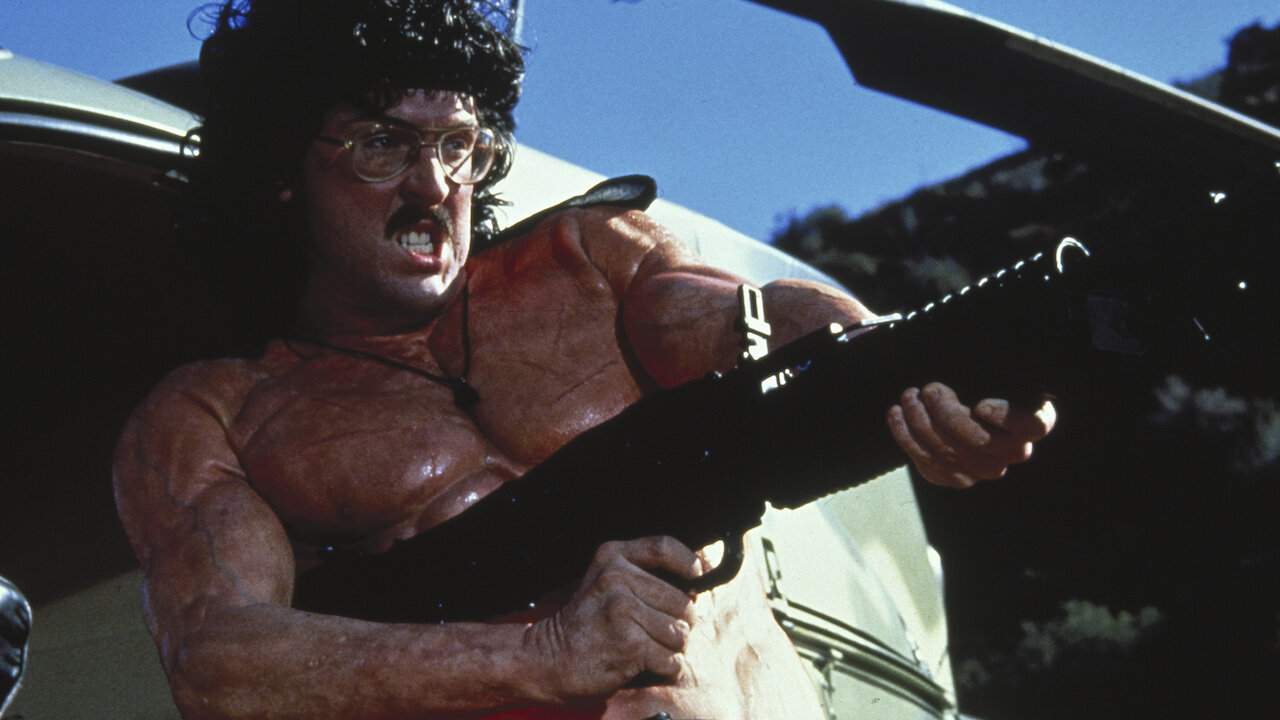
However, the entire cast is overshadowed by Michael Richards as Stanley Spadowski, the janitor who unexpectedly becomes an on-screen celebrity and a viewers’ favorite. If you have ever seen Tropic Thunder (2008) by Ben Stiller, you may remember one character’s advice about playing the mentally disabled in films: “Never go full retard.” One could say that Richards, as Stanley, goes full retard. The good-natured cleaner is clearly not the sharpest tool in the shed, but his guilelessness, loyalty, and rough-edged simplicity instantly steal the audience’s heart.
Richards is a volcano of energy here, performing with his whole body in every scene and using everything an actor can possibly bring to the table. Sure, some may say it’s pure overacting, exaggerated beyond the bounds of decency. But UHF is like that in its entirety, and the American actor’s displays of excess—responsible for a significant portion of the film’s comedy—are impossible to forget.
UHF was not favored by critics, who quickly dismissed it as unfunny and lacking a clear idea of what it wanted to be. In addition, the film did not earn much at the box office, so it did not stay in theaters for long, and the supply of VHS tapes quickly ran out. Over time, however, UHF gained devoted fans who—often unable to access their favorite film on any format—tried at all costs to obtain their own copy, sometimes paying several hundred dollars for one. It wasn’t long before the Levey–Yankovic production achieved cult status, and when MGM released a DVD edition in 2002, it quickly became a bestseller. To this day, many people retain an undiminished fondness for UHF, because despite its flaws, it delivered a solid dose of absurd and unforgettable humor.

