
Review
THE TARNISHED ANGELS. Yes, it is a specific kind of film
the Tarnished Angels had to earn its positive reception slowly and still remains a thoroughly forgotten, overlooked work outside a small circle of fanatics.

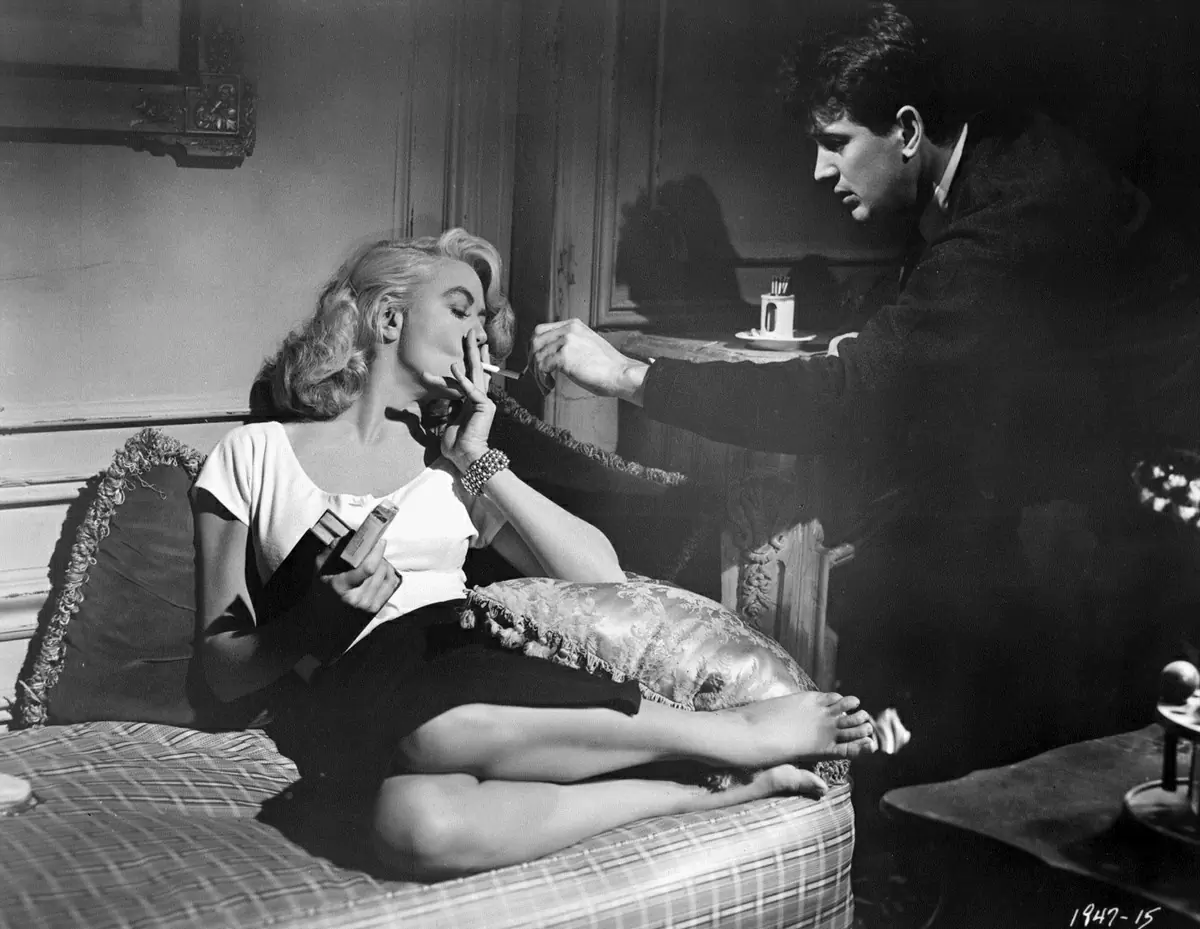
Born in Germany, Douglas Sirk (real name Hans Detlef Sierck) was once one of the key figures of “old” Hollywood. His films were filled with the brightest stars, brought in solid profits, and won Oscars. He himself—a specialist mainly in comedies and by no means in weepy melodramas—significantly contributed to the American studio system. Yet during his lifetime, he enjoyed rather an unfavorable reputation among critics as a third-rate director of lavish soap operas, only gradually gaining greater recognition, and eventually, the status of a master. Today, nearly thirty years after his death, he is almost completely unknown even to somewhat more knowledgeable film enthusiasts.
Just like the vast majority of his fairly extensive filmography, led by The Tarnished Angels, which Sirk himself considered his best work.
Beings of the skies indeed, but with exceptionally sorrowful faces. 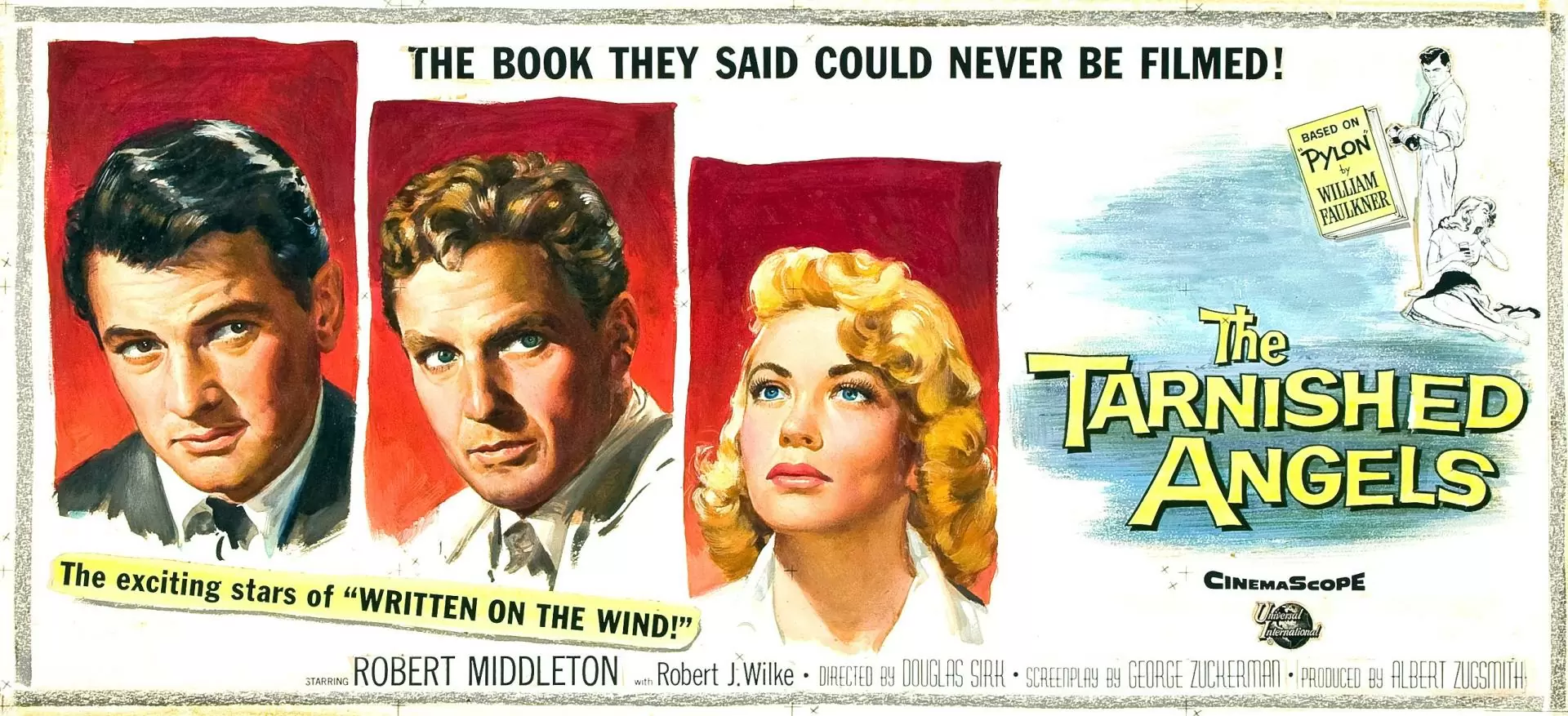 This is noticed by the local and equally unruly journalist Burke Devlin (a remarkably subdued Rock Hudson), who stumbles upon young Jack—a child of uncertain origin, the result of some high-flying affair. He offers the group, who have nowhere else to go, his apartment in exchange for a good “on the road” story. The inseparable trio—war veteran Roger Shumann (excellent Robert Stack), his beautiful parachutist wife LaVerne (the stunning Dorothy Malone), and their loyal mechanic Jiggs (the affable Jack Carson)—initially impress the reporter, who sees them almost as beings from another planet, an inexhaustible source of incredible stories, far more interesting and important than any politicians.
However, it quickly turns out that they are as unfulfilled as he is—he, who is on the verge of losing his desk job and dreams of literary fame—and just as lonely. They drink and smoke just as much, stewing in their own juices. Their day-to-day life is not just a perpetual journey, but an endless illusion of their own coolness. More often than with bread, they feed themselves and the child with lies about freedom, greatness, and happiness. Their unusual, yet incredibly believable relationship—briefly expanded to include Devlin, to whom they are far from feeding tall tales—is built on dust, smoke, oil, and crumbling metal. They are constantly performing, pretending to be someone they no longer are—or perhaps never were.
Always under pressure, uncertain not just of tomorrow but of the next few hours, they loyally support one another in the service of a lost cause, gambling their love after hours. And still quietly, naively hoping that fate will smile upon them again, that something will change for the better—as if unaware they’re running only on the fumes of fast-fading years. 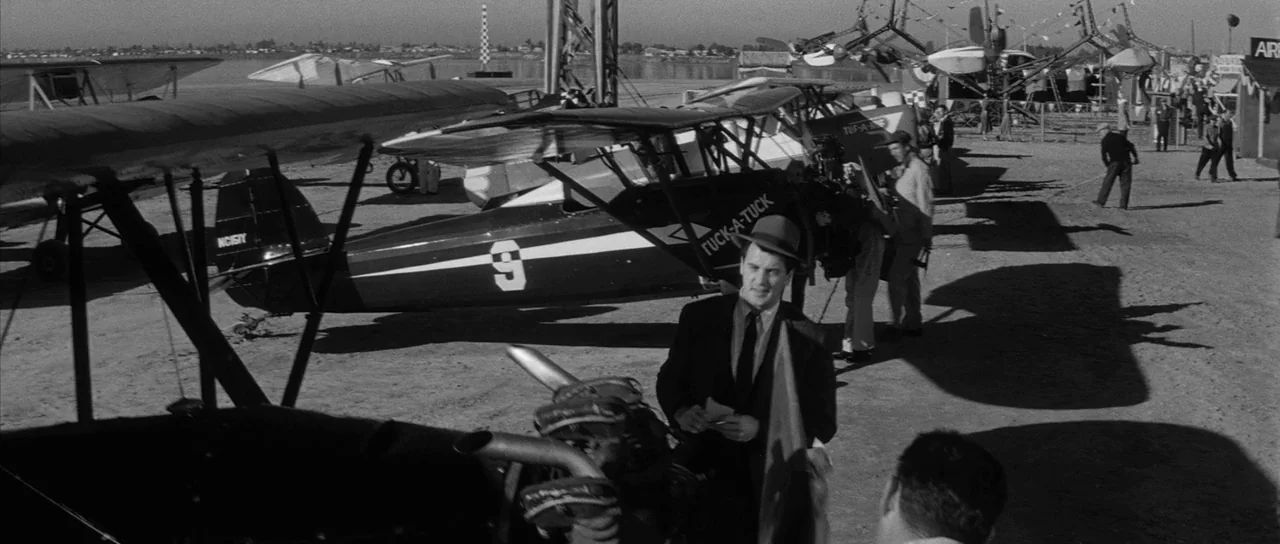 The most deluded seems to be Shumann, around whom everything revolves. A former ace of the skies, who shot down more enemy planes during World War I than history books credit him with, now races in second-rate towns for a few dollars, which he still can’t use to provide a decent life for his family.
As befits a pilot, he is arrogant and unyielding, unmoved by Devlin’s advances toward LaVerne, her unreciprocated feelings, Jiggs’s sharp retorts, or Jack’s unflagging admiration for his legend. His name and accomplishments mean next to nothing now, though in some places he can still get a free drink, and the aforementioned Devlin, LaVerne, and Jack still look up to him like a holy image. And everyone around—including Burke and Jiggs—cannot remain indifferent to LaVerne’s charms, deluding themselves with the hope of winning her heart and saving her from her predicament. They are errant knights, blindly battling imaginary windmills. 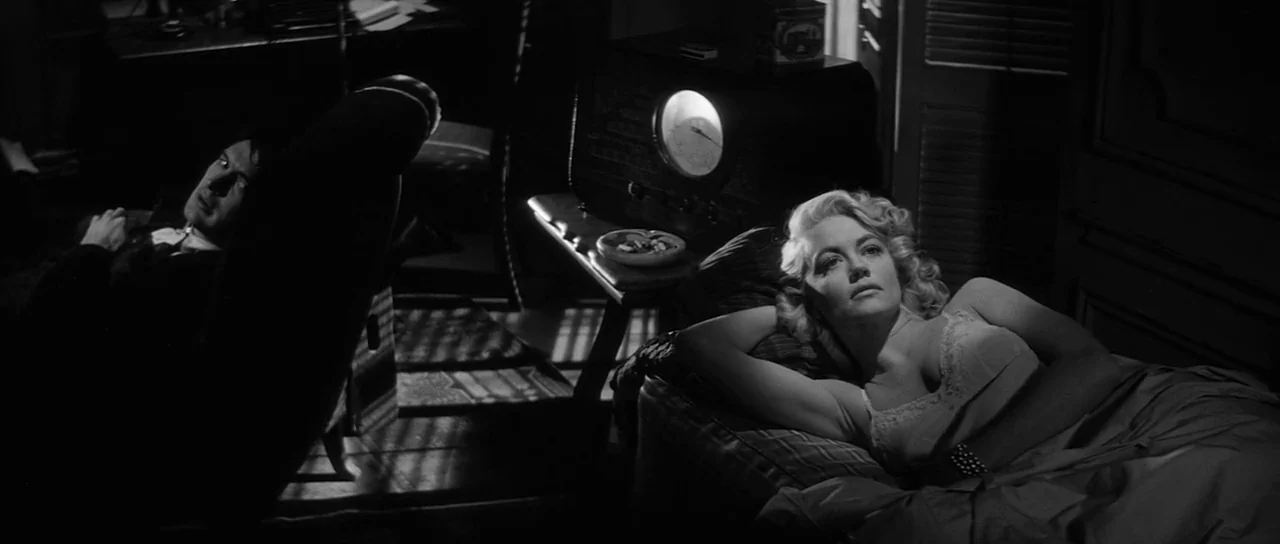 All this fatalism seems, at times, almost overdramatized, not helped by the now-archaic, overly theatrical monologues and exaggerated reactions to the simplest things. Yet paradoxically, this story has a bitter truth to it, the dialogue is concrete and sharp, even lifelike, and the emotions are sincere. Perhaps that’s why—despite critics who stifled the plot and an audience that didn’t show up in theaters—even Faulkner himself was very favorable toward the film, believing it to be one of the best adaptations of his work.
Even though very little of the novel’s core made it into George Zuckerman’s script. And what did make it into the frames was further—perhaps for greater contrast—interspersed with random episodes of an entirely different atmosphere, almost completely unrelated to the story’s core. Certainly, the authenticity of this bleak moving picture was helped not only by solid acting performances but also by Frank Skinner’s appropriately poetic score (it’s worth noting that Henry Mancini also unofficially had a hand in the film) and the beautiful, though unobtrusively styled, cinematography of Irving Glassberg.
The black and white was partly an artistic choice, but also a necessity due to a limited budget (Sirk, despite having the most creative freedom of his career here, faced skeptical producers). The excellent use of light and shadow, together with the absence of color, perfectly captures the mood of the Great Depression and the entire, only partially romantic story—lacking a happy ending just as much as it does permanent despair. Underscored with both erotic tension and a looming atmosphere of tragedy. 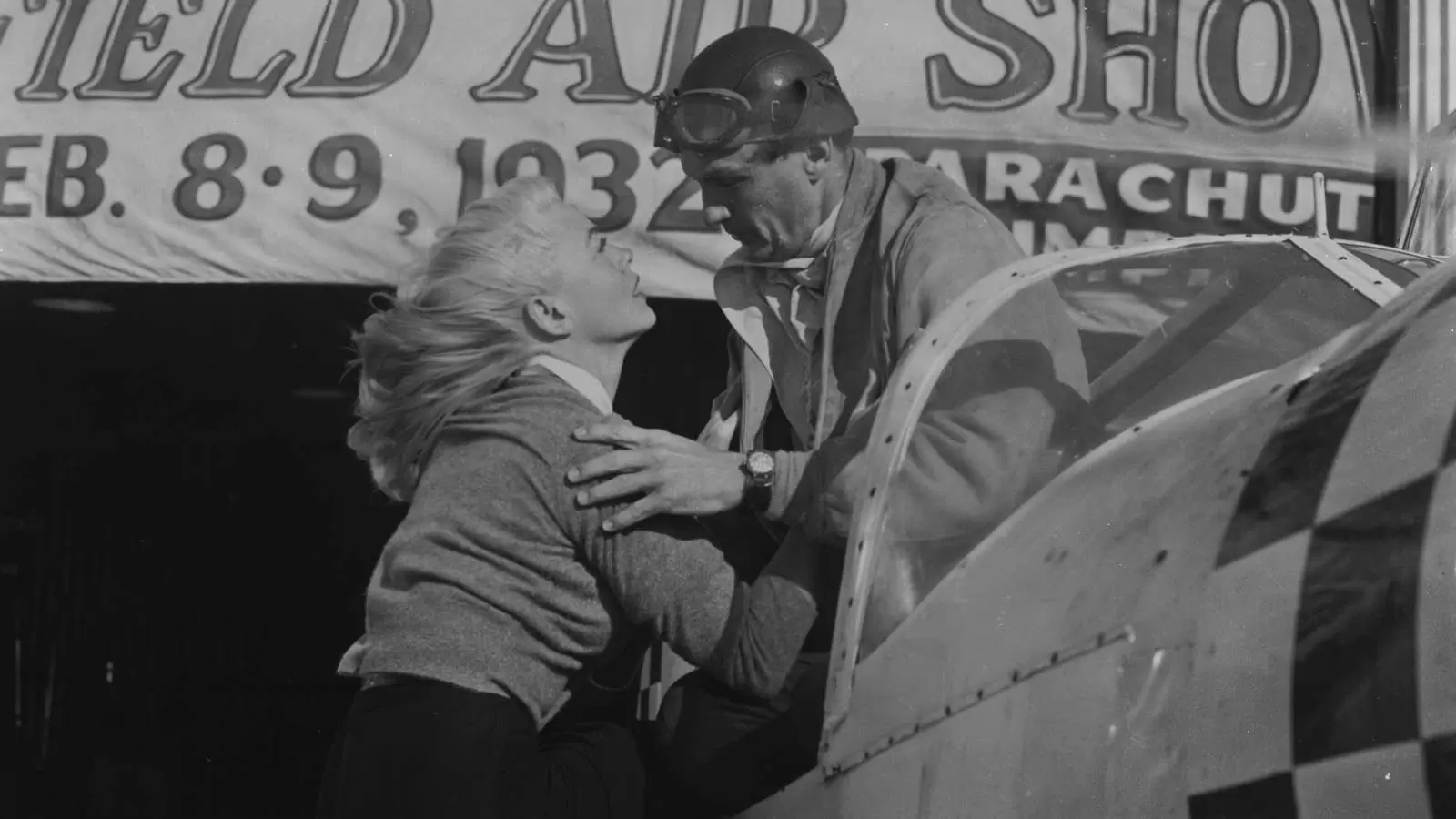 At the same time, all the aerial scenes—still impressive even sixty years after the premiere—make a strong impression. They are suitably spectacular, shot with verve, and maintain tension effortlessly, serving as the cherry on top of this otherwise studio-bound production. Yet you’d never guess the film was shot almost entirely indoors.
Apart from a small, sandy airstrip built on the outskirts of San Diego and its equally modest amusement park, the whole action plays out either in cramped buildings or through the use of rear projection—used here on a scale and with a finesse worthy of masters, and aging remarkably well. Even just for these few scenes, Sirk’s film is worth seeking out—a film that in its tone closely resembles The Misfits. Yet at the same time, it feels less ambitious, certainly less revolutionary, and doesn’t enjoy the same exceptional esteem, even though less than two years earlier the same team gave the world the Oscar-winning hit Written on the Wind. Meanwhile, The Tarnished Angels had to earn its positive reception slowly and still remains a thoroughly forgotten, overlooked work outside a small circle of celluloid fanatics.
Unjustly so. Yes, it is a specific kind of film. With characters nursing broken dreams and unfashionable attitudes. Yet it manages to captivate with its grounded nature, old-school tricks, and the thick aura of impending doom hanging in the air. It’s worth giving it a chance—to confront your own ideals.

