
Review
THE BEARS’ FAMOUS INVASION OF SICILY. Two Worlds

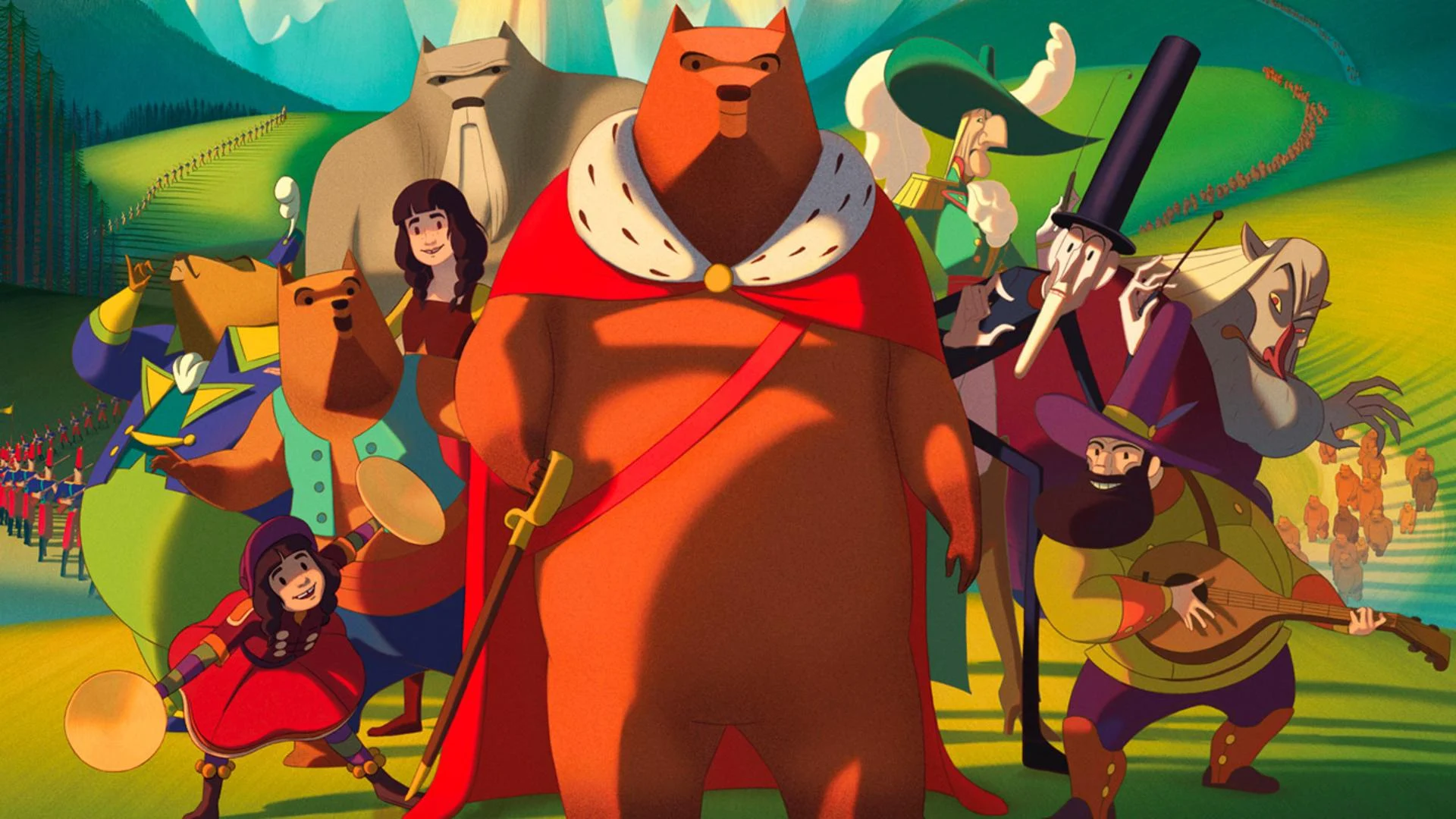
The first several minutes of The Bears’ Famous Invasion of Sicily may not win viewers over with its blocky animation and limited color palette. The snow is white, the trees green, the river blue. There are no half-tones or subtleties here—these are colors straight out of the Paint toolbar. Yet, over time, we must come to terms with and accept this aesthetic convention. It doesn’t seem to be the result of budgetary constraints but rather a deliberate artistic choice. All the characters and elements of the environment—bears, humans, mountains, and forests—are designed with a sense of simplification. They evoke the first associations and archetypal images buried deep in the imagination of every viewer. The soldiers resemble wooden toys dressed in Napoleonic uniforms, while the bears are anthropomorphic teddy bears.
In the opening of The Bears’ Famous Invasion of Sicily, we travel through a snow-covered mountain pass with a troubadour and his young companion. Seeking shelter from the cold and the night, the two travelers stop in a nearby cave, where they encounter a giant bear. Frightened, they begin to tell him one of the stories from their repertoire. Its main character is Leonce, the leader and ruler of a clan of bears living in the wild territories of Sicily. It will come as no surprise that these animals lead an idyllic life, spending their days basking in the sun and filling their bellies with delicious fish.
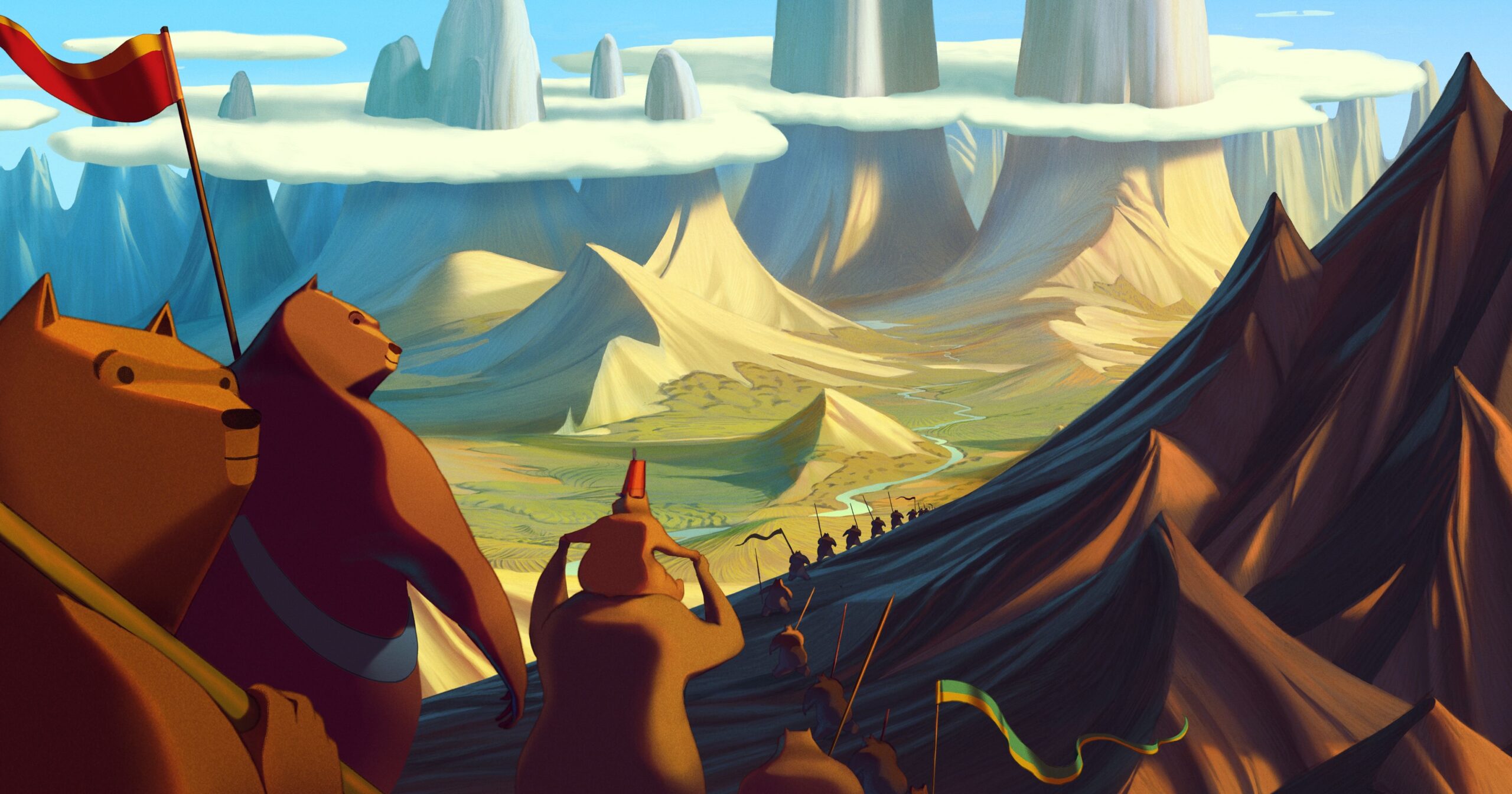
But idylls never last forever. The turning point comes when Toni—Leonce’s son—is kidnapped. No one knows by whom, where, or why. The rescue mission, the attempt to retrieve his son, and the confrontation with the antagonist—the Grand Duke—serve only as an extended prologue to The Bears’ Famous Invasion of Sicily.
The first half of the film follows, point by point, the narrative framework of a children’s fairy tale. It introduces a clearly defined conflict and offers an obvious resolution. It’s nothing more than a template, the setting up of pieces on a board. This is the joyful, adventurous part of the film, narrated by two travelers who love happy endings and lend the story a light, swashbuckling tone. But once they finish their tale, the bear sitting with them in the cave begins to speak. His story, introduced with the intriguingly ominous line—“That was not the end of King Leonce and his son’s adventures. Their fate continued beyond that”—serves as a counterpoint, reconstructing and subverting the genre. It’s filled with fascinating skepticism and psychological, mature complexity—a new perspective that casts shadows on all the familiar characters and adds an unexpected layer of meaning.
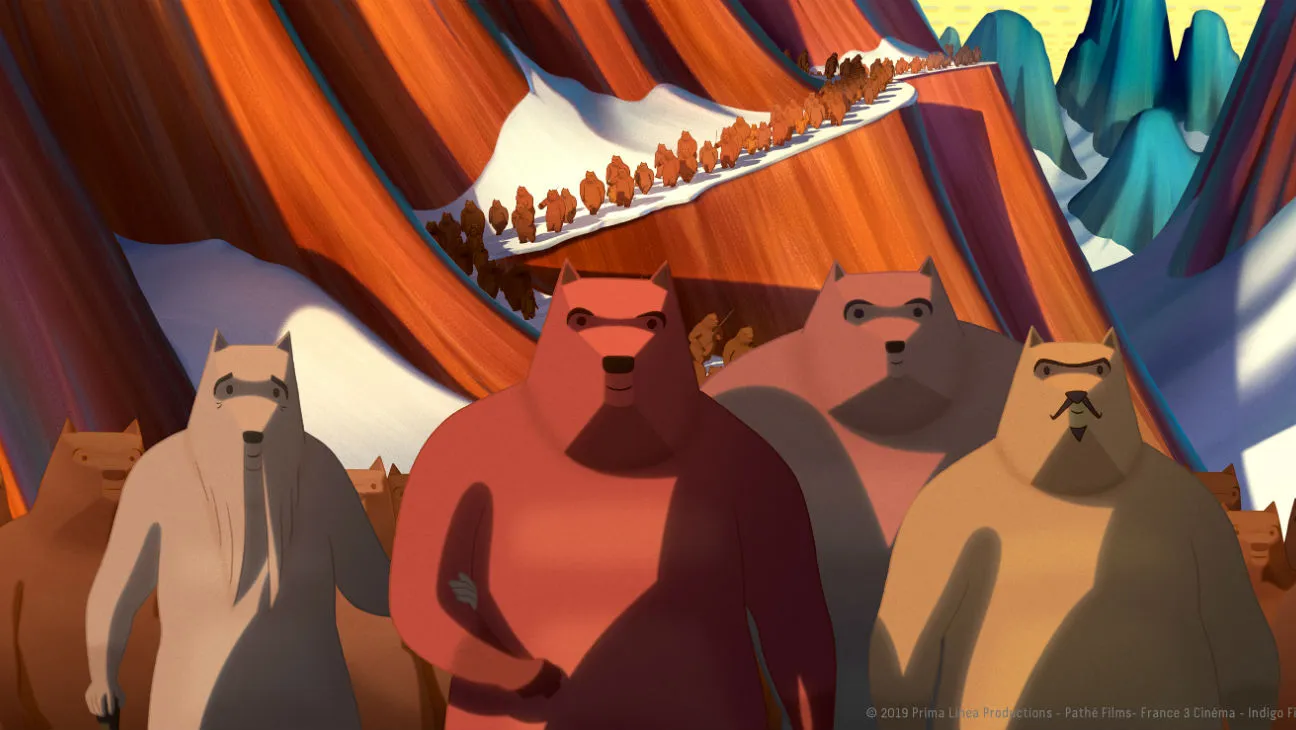
The Bears’ Famous Invasion of Sicily is two fairy tales, two perspectives, two worlds, two kinds of heroes, two leaders, and two endings. The narrative power of this Italian animation lies in the accumulation of contrasts, pairings, and juxtapositions. It’s a world built on dichotomies and opposites. The first half of the film draws a clear moral line between bears and humans—victims on one side, oppressors on the other. Later, a new filter is placed over this conflict. The characters’ attitudes and true motivations become more nuanced, and divisions arise within the bear community itself.
The only defining trait of humans ceases to be the rifle. These are the most vivid examples, but between the extremes we find many shades of gray. The naive fable evolves into a dramatic epic. Of course, it also matters greatly whose perspective—the human’s or the bear’s—we follow the story from.
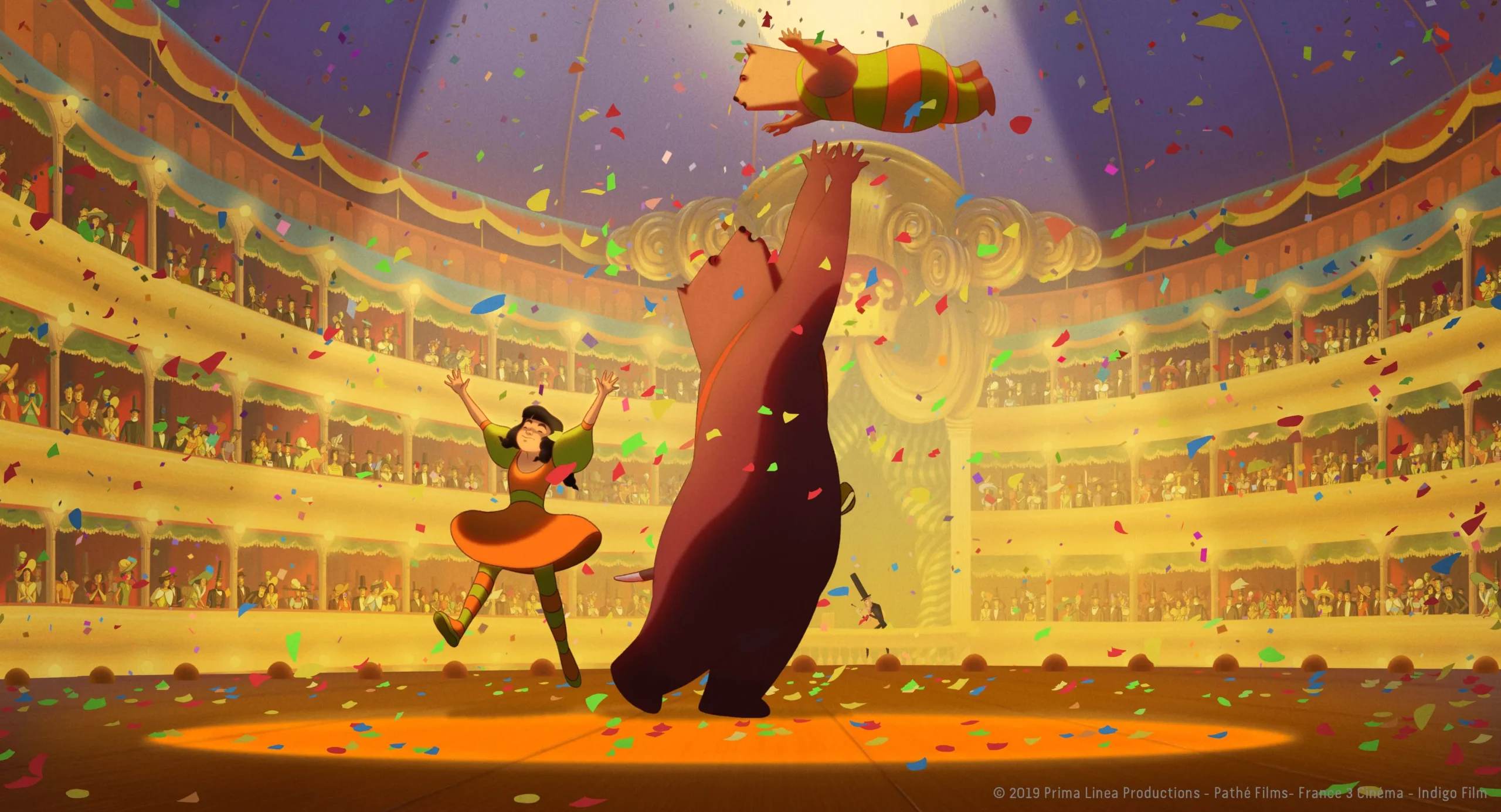
The Bears’ Famous Invasion of Sicily is an animation that demands a bit of patience, but that patience is handsomely rewarded. The creators consciously and deliberately lull the audience’s attention, navigating familiar narrative patterns with sensitivity and tact. Yet these are necessary devices to achieve the final effect. The filmmakers seek to expose some storytelling mechanisms while revealing depth and multiplicity of meaning in others. The Italian animation also serves as a tribute to the art of storytelling—to the mastery of pacing and dramatic composition. If you’re looking for narrative sophistication in cinema, you’ve come to the right place.

