
Horror Movies
LAKE PLACID Revisited: A Perfect Guilty Pleasure
Lake Placid is permeated with a parodic note: at heart, it is above all an unpretentious mockery of monster movie conventions.

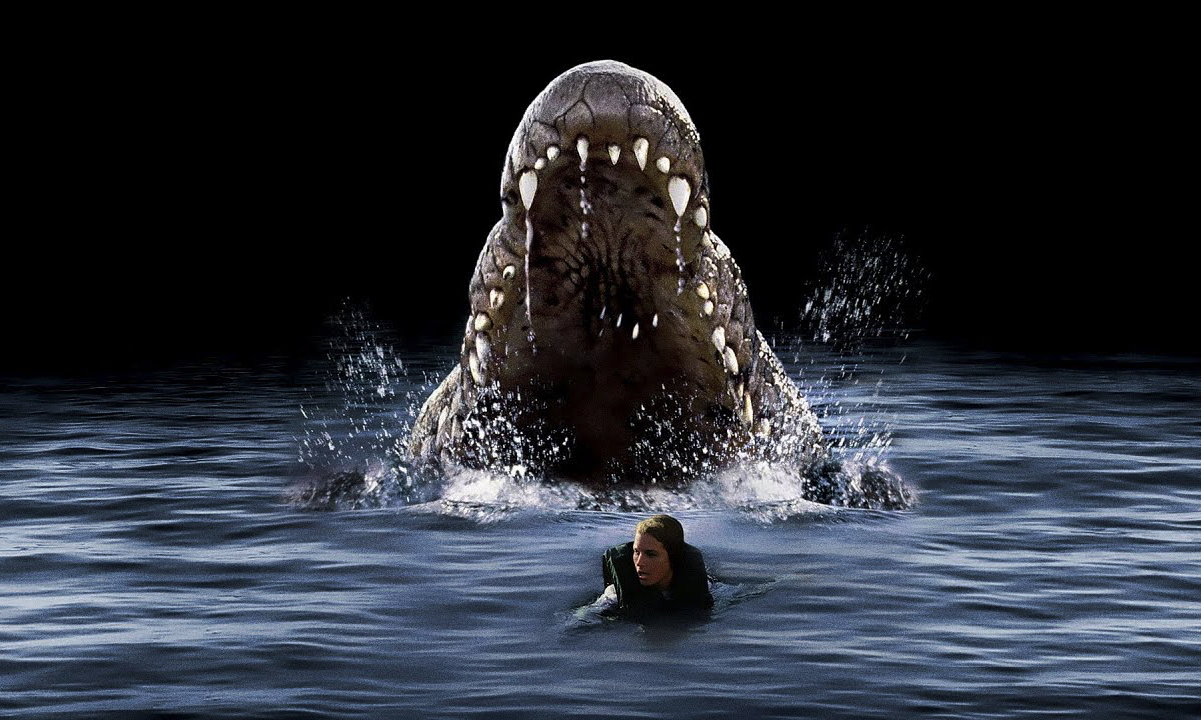
David E. Kelley is a child of fortune. First of all, he is married to Michelle Pfeiffer. Second, he can boast a long list of brilliant television successes, as a producer and, above all, as a screenwriter: Ally McBeal, The Practice, Chicago Hope, L.A. Law, to name just a few. Television is decidedly his comfort zone; on the big screen, he somehow never quite found his footing. Nevertheless, we owe him Lake Placid!
While David is a lucky man, the state of Maine seems to be one of the most terrifying places on the entire planet. If you listen to Stephen King, all the evil in the world is concentrated in Maine. It is strange that anyone still has the courage to live there at all. Vampires, jealous cars, teenagers with destructive powers, murderous clowns, shops that sell dreams, and pet cemeteries. Scary stuff. Where else, then, could a nine-meter-long crocodile make its nest? Only there.
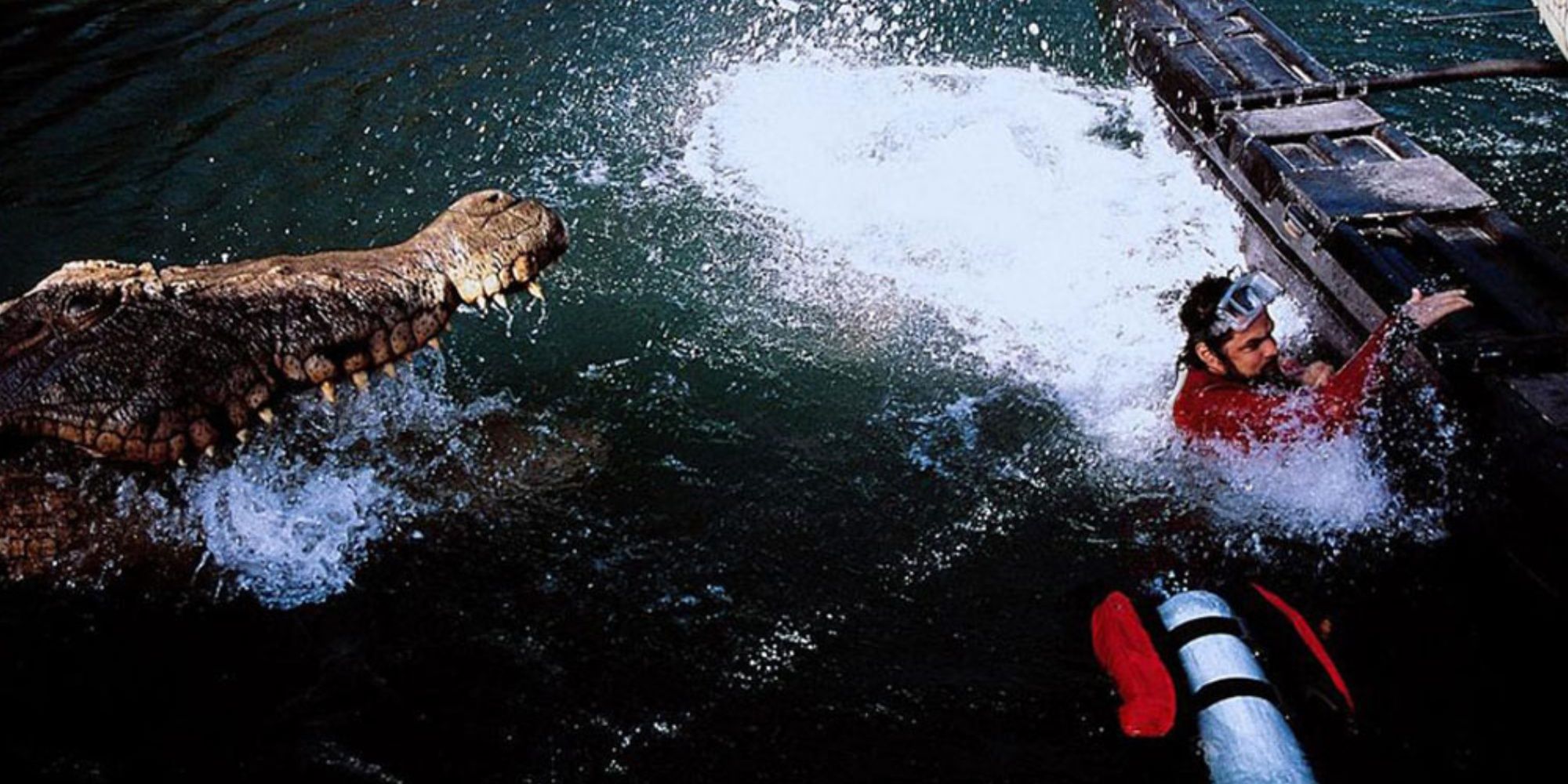
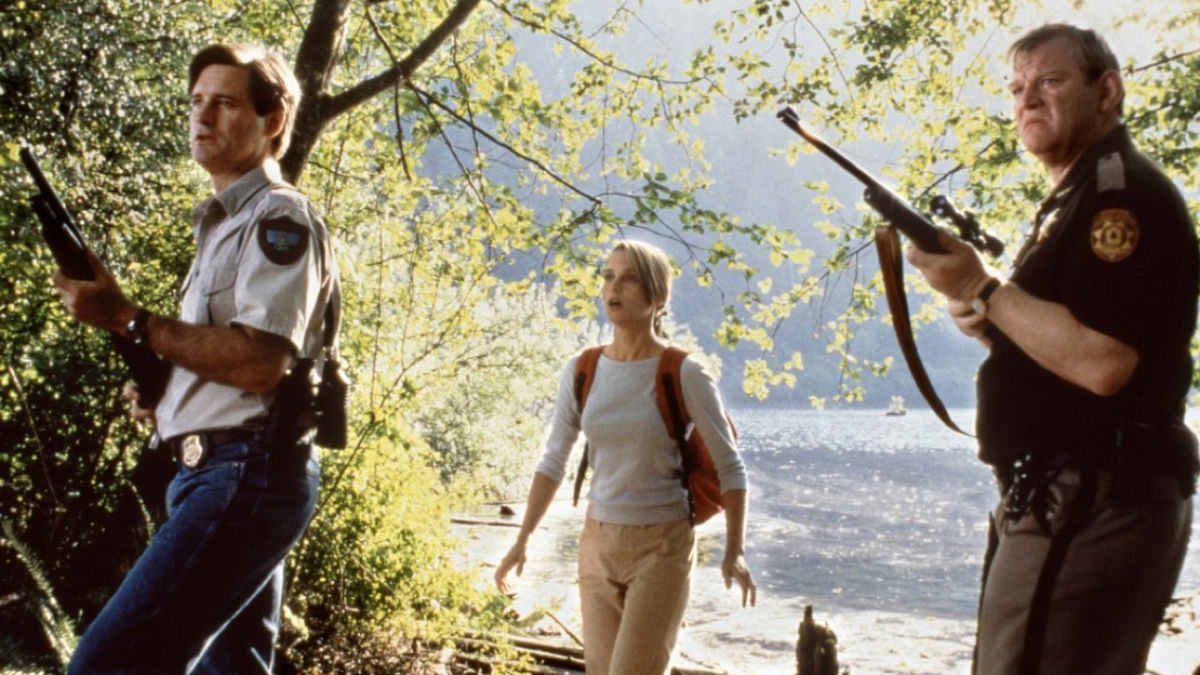
Black Lake, Aroostook County, Maine. During a routine beaver population check, wildlife officer Walt Lawson is literally bitten in half before the eyes of Sheriff Hank Keough (Brendan Gleeson). On the scene arrive an irritating paleontologist from New York, Kelly Scott (Bridget Fonda), the rather bland but, as always, charming Bill Pullman as Officer Jack Wells, and a haunted professor obsessed with reptiles, Hector Cyr (Oliver Platt).
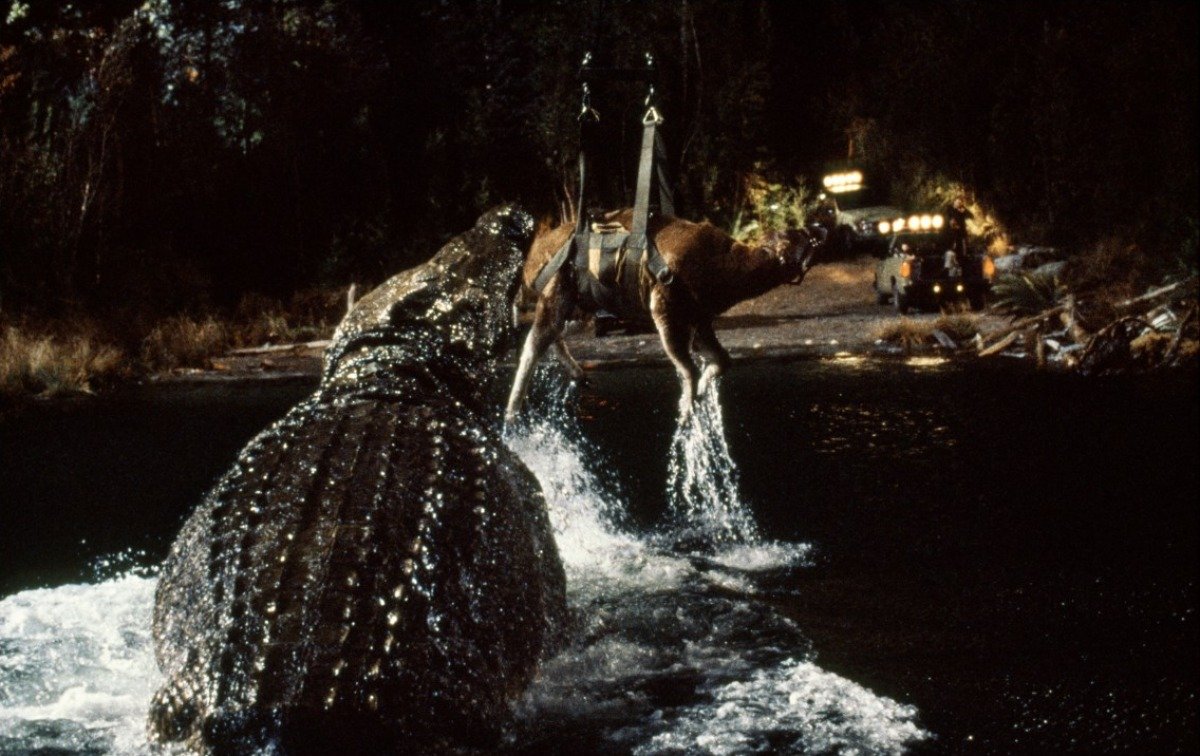
A few days and a couple of victims later, it becomes clear that Hector was not mistaken in his suspicions and that a friendly little creature really is prowling the lake: a massive saltwater crocodile, perpetually hungry and far exceeding the official Guinness record (which stands at 7.1 meters).
Lake Placid is a disarmingly charming mixture of absurdity, slapstick, grotesque stretching of facts, and wonderfully sarcastic dialogue. It is precisely these elements that make the film such an easily digestible guilty pleasure. Shot flat and completely straight-faced—like, for instance, its dreadful sequels—it would be utterly indigestible.
While Fonda mostly trips and falls out of boats, and Pullman mostly just looks the part, Platt and Gleeson steal every scene. In the background, they are valiantly supported by Betty White, wrapped in vapors of absolute pure nonsense that, for reasons unknown, everyone else seems to take at face value. It never occurs to anyone to investigate her for allegedly beating her husband to death with a frying pan and burying him in the garden, but for misleading the police she is immediately placed under house arrest, with the threat of prison looming. Ah yes, higher cinematic logic.
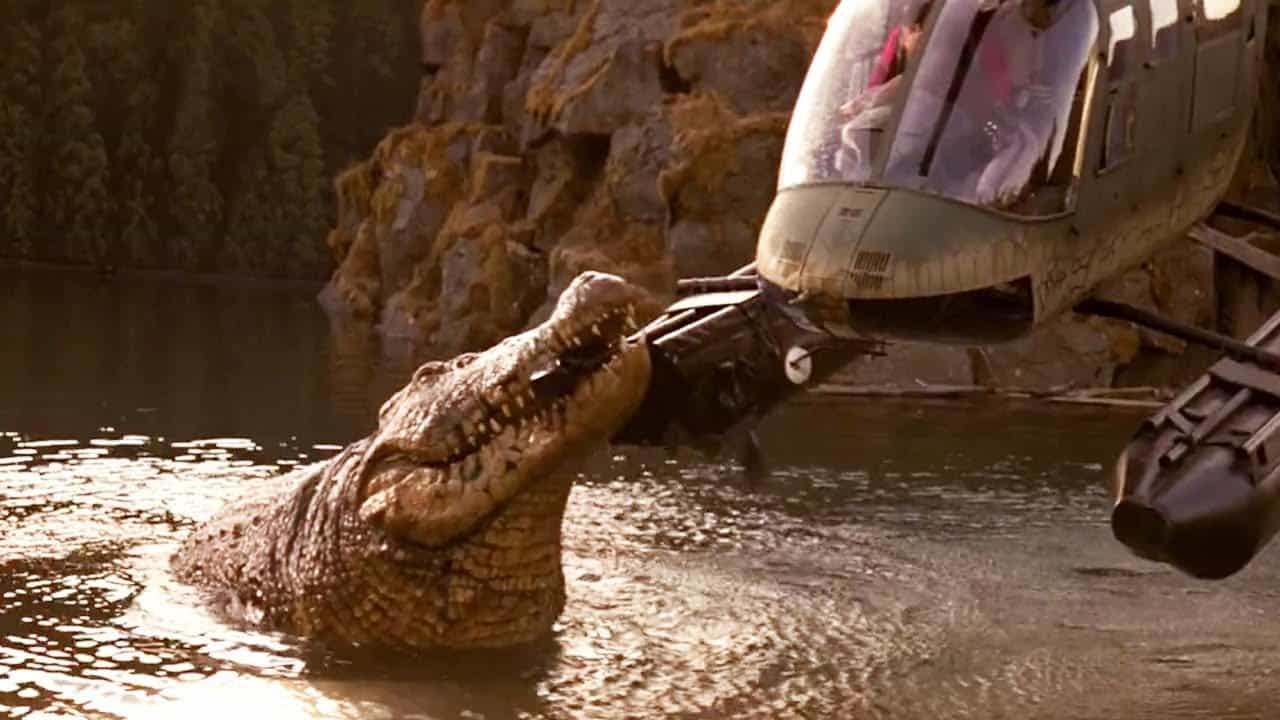
A similar logic (or rather its absence) lies behind Hector’s scientific explanations—there is not a shred of sense in them, but everyone nods respectfully, because, after all, he is a professor, so he must know what he is talking about. Never mind that no one simultaneously questions the wisdom of setting up a noisy camp right on the lakeshore, which from the crocodile’s point of view might look like laying out a free platter with a tasty appetizer.
Of course, there are protective traps: a pit two by two meters and a rope capable of restraining, at best, Sheriff Hank. And the pinnacle of all absurdity is the detailed reasoning as to why the crocodile will certainly not attack divers (underwater), while the entire film actually begins with an attack on a diver (underwater)!
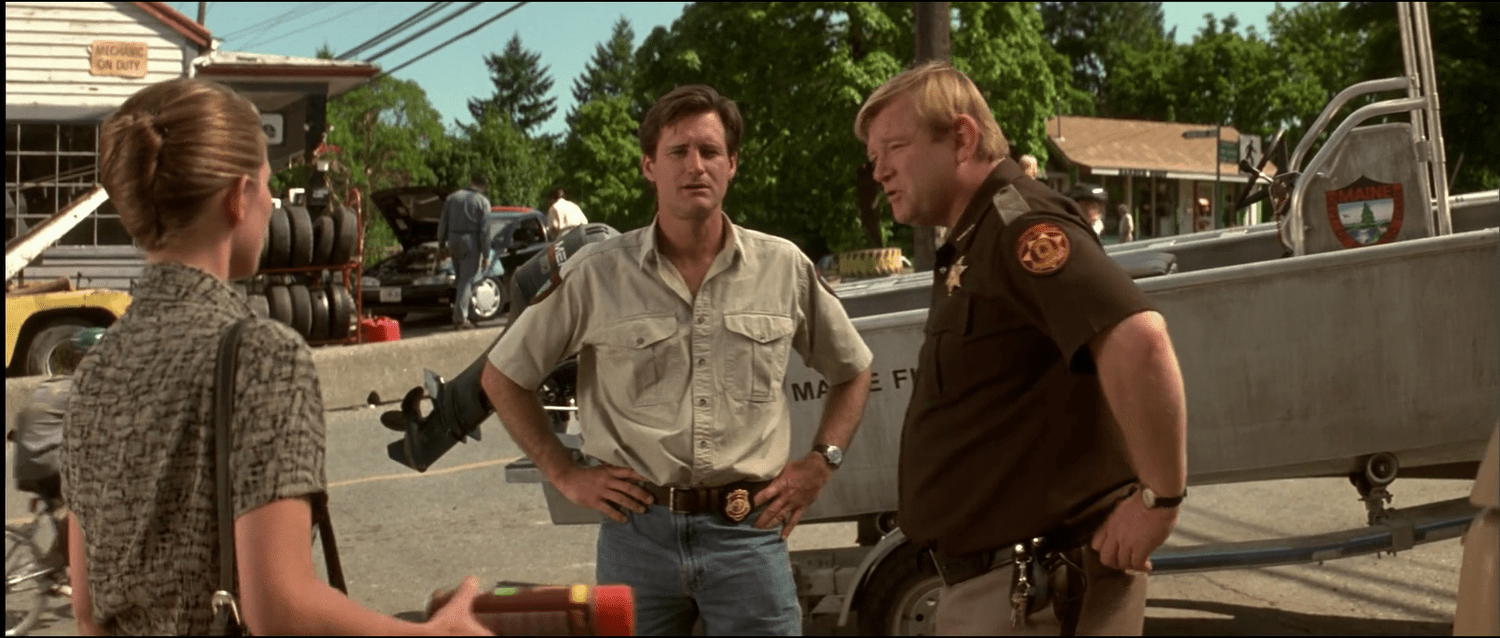
In other words, the only thing that could save this film was a lack of seriousness—and that is exactly what happened. Lake Placid is permeated with a parodic note: at heart, it is above all an unpretentious mockery of monster movie conventions, certainly not a horror film, but rather a competent and genuinely well-written—at least in terms of dialogue—comedy. Even the bloody death of Lawson, deprived of the lower half of his body, provokes laughter rather than dread.
It is also hard not to feel affection for the overgrown crocodile, despite its unrestrained appetite—if you think about it, it does not really hunt anyone in particular. It takes what is offered, when it practically walks into its mouth, but otherwise, when full, it does not attack, and it even honors gentlemanly agreements. Something like Nessie, only from Maine—big, dangerous, but nice. How can you not love it?
And how can you not love Platt scurrying about in an oriental bathrobe, or the prickly Gleeson with his obsession with the omnipresence of sarcasm in everyday life? For the remark about debarking the pole alone, all laurels are deserved. And for the poison ivy. And for chewing on representatives of authority. And for…
Truly, do logical holes even matter when weighed against so much good fun?

