
Review
GREEN ZONE. War’s evil, but politic’s even worse


When you’re not fighting for your God and your homeland, bringing your own ass home in one piece seems not only the ultimate goal but also noble, understandable, and in no way deserving of condemnation. Do your job, don’t ask questions, and don’t get killed—that’s the karma of every soldier caught in any war, especially one that’s not entirely his. In such unfavorable circumstances, speech is silver, silence is golden—a statement Roy Miller from Green Zone would certainly not endorse.
He’s a man who doesn’t keep his tongue behind his teeth. Roy asks and stumbles, then asks again to stumble once more. Because even if he’s getting closer to the truth, he’s moving further from home, making keeping his ass in one piece an increasingly unrealistic option…

Sergeant Major Roy Miller (Matt Damon) is the hero of the film Green Zone, directed by Paul Greengrass. Roy Miller is a good American boy, and a good American soldier, ready for absolutely anything—more than other good American boys and soldiers, for whom, as mentioned, the priority isn’t to know but simply to survive.
We meet Roy in the early days of the American invasion of Iraq in 2003, in the total chaos of bombed Baghdad. His unit, following directives from Washington, searches various locations allegedly hiding weapons of mass destruction— the main pretext for the invasion by the Yankee cowboys (blessed by the Greatest Yankee Cowboy of all time, the good American ex-president, the Texan oaf junior, son of his father, also seasoned in desert battles) into Iraq.
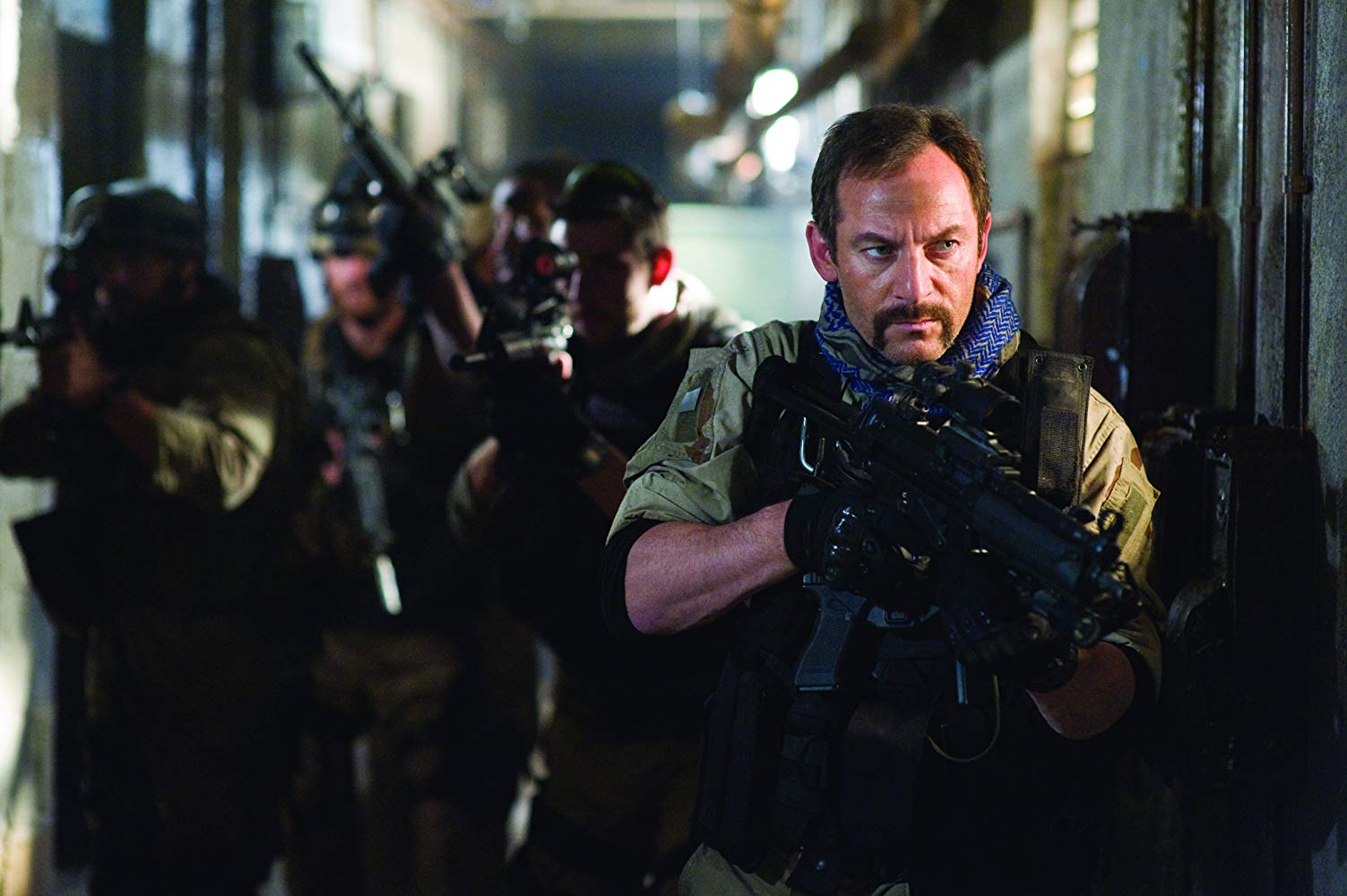
Of course, all shots turn out to be off-target; there’s no sign of chemical or any other arsenal, which isn’t good because a war must be justified somehow. This need breeds desperation, which in turn leads to actions of questionable moral and ethical value. War is dirty and bad, but politics is even worse, something Roy is aware of, or at least begins to realize. Instead of safely heading toward the light, he delves into the darkness to blindly shoot at enemies who aren’t necessarily his enemies. Truth quickly turns into a lie, and a lie into the tricky art of convoluted diplomacy.
It’s supposedly nothing new, supposedly nothing surprising; supposedly for many, it’s nothing—oh horror—outrageous. Someone dies so someone else can live, which is logically and economically justified. Occasionally, one must fire missiles, allowing for the production of new ones that will eventually be fired too. The only question is choosing a target and finding or inventing a pretext. Then hell can be unleashed, while safely protecting oneself in paradise, sipping drinks on a lounge chair by the pool in a luxury hotel located in this or that green zone, a place where truth often has a red light. But only until a certain time. Because sooner or later, someone will appear for whom white is white, black is black, and green is green.
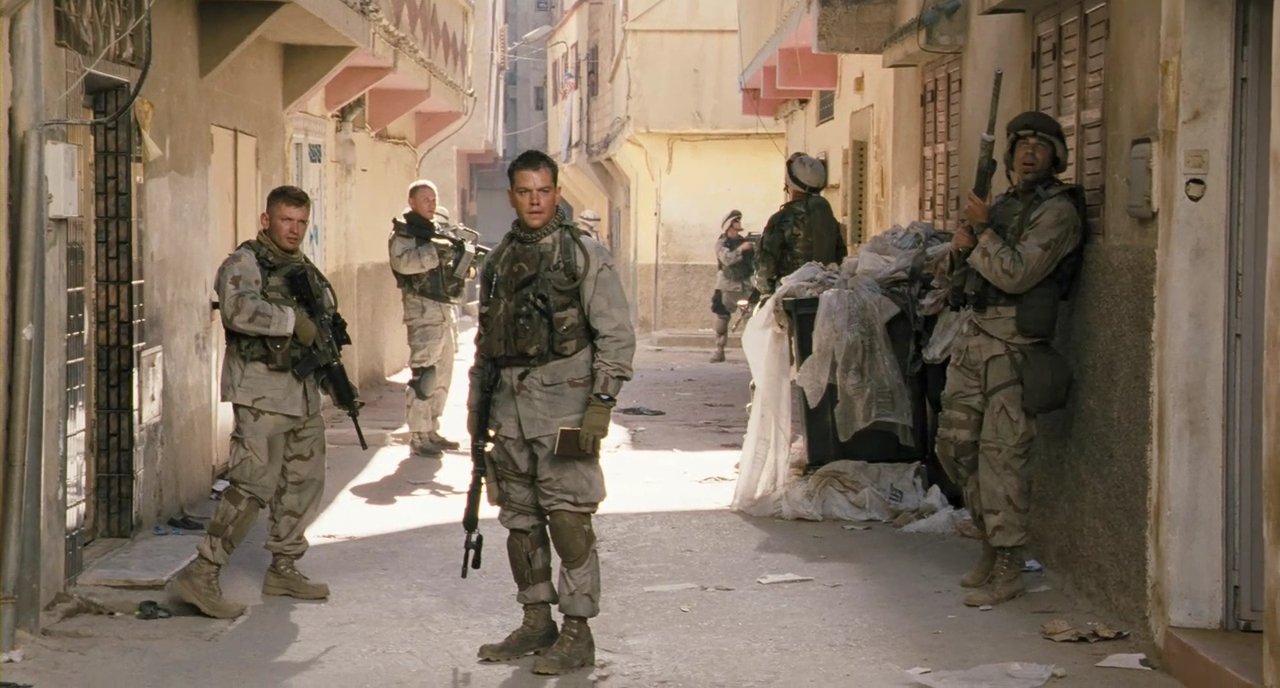
Such a person is certainly Roy Miller, the last just man, ready at all costs to announce the news to the world—for some good, for others bad. The most important thing, however, is that it’s true…
Green Zone is a good American film, and Paul Greengrass is a good “American” director, creator of other good American films such as The Bourne Supremacy and The Bourne Ultimatum. Green Zone isn’t his crowning achievement, but without a doubt, it is a testament to his exceptional craftsmanship and a thorough approach to the director’s craft. Because the film is not only a political intrigue or a record from the battlefield with a decidedly docudrama character. It’s also explosive action cinema, made with nerve and guts, which, in the case of this creator, is not surprising (see: the aforementioned Bourne adventures).
Of course, such juggling of conventions comes at a price, and that price is narrative simplifications lost somewhere in the muddle of spectacular chases and shootouts. This may cause some dissatisfaction among viewers expecting something more than the essentially clichéd solutions initiated at various stages of the film’s intrigue. For garnish, there’s Matt Damon, a good American actor, well-suited to the role of Roy Miller, the last just man. Although the psychology of his character is outlined with a thick and simple line, one cannot deny him interpretive sensitivity.


