
Review
DANGEROUS ANIMALS. For fans of unapologetic ’80s B-movies
Dangerous Animals is a treat for anyone nostalgic for the golden age of VHS and the unapologetic charm of 1980s B-movies.


At the sight of Tucker—a bear of a man with a psychopathic stare—most level-headed people would probably take to their heels. Yet among Australian tourists, there’s no shortage of daredevils eager to try the attraction he offers: cage diving and coming face to face with sharks. As an unsuspecting tourist couple quickly learns in the opening scene of Dangerous Animals, Tucker—obsessed with aquatic predators—is hardly the most trustworthy guide on the market. This prologue already demonstrates the admirable honesty of director Sean Byrne. Not for a second does he pretend he’s making anything more than a solid B-movie—and he throws himself into the task with impressive enthusiasm.
What’s better than a thriller about man vs. merciless nature? Naturally, one that adds a slasher twist to the mix. The uneven battle against ravenous sharks and their deranged feeder is taken up by Zephyr, a young surfer. A loner by nature, she embodies every myth about “wave tamers” as romantic outcasts—asked what draws her to surfing, she simply quotes Point Break by Kathryn Bigelow. Of course, given the natural setting, her antisocial tendencies prove to be a burden—when Zephyr is kidnapped by a serial killer, only Moses, who has fallen for her, dares attempt a rescue.
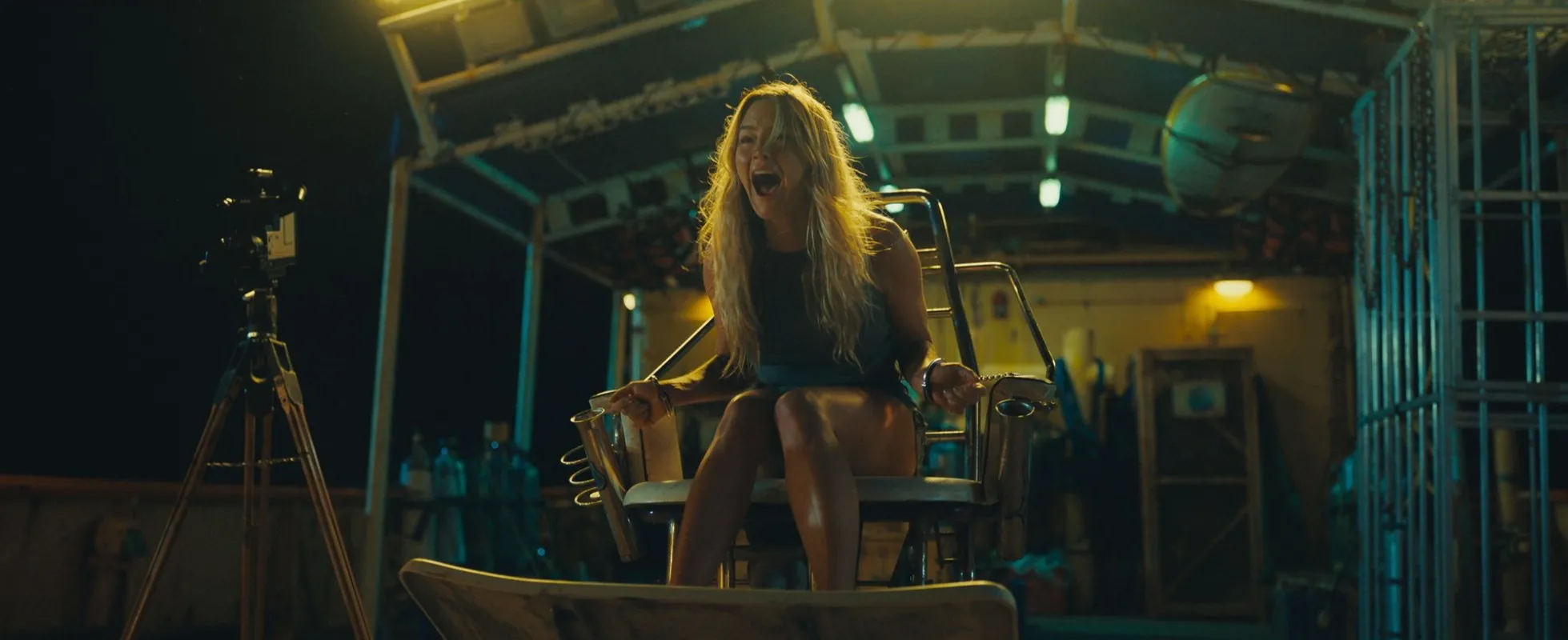 Most of the action takes place aboard Tucker’s boat, whose grimy interiors the director captures with reverent attention. This is the stage for a psychological standoff between two loners. Tucker is a misanthrope, convinced of humanity’s weakness when faced with nature, channeling his views into a quasi-artistic form—amateur snuff films documenting the gruesome deaths of his victims in shark jaws. Meanwhile, Zephyr painfully learns she’ll have to fight him on his own brutal terms. And though Byrne’s film doesn’t shy away from lines like “You’re just like me, we’re both predators” (quoted from memory), it’s clear that any psychological nuance serves purely functional purposes.
What truly matters is how the heroine manages to escape the trap. Sean Byrne eagerly draws from the ready-made elements of so-called “low-brow” cinema—blood flows freely, scenes of violence are filmed with loving attention to the goriest details, and everyday objects become sudden instruments of death. Though the whole thing is wrapped in a light ironic tone, the film never feels condescending toward its genre. Byrne doesn’t treat the material with smug detachment—he presents each narrative absurdity with disarming sincerity. If this kind of cinematic fun doesn’t appeal to you, you’re probably better off skipping it.
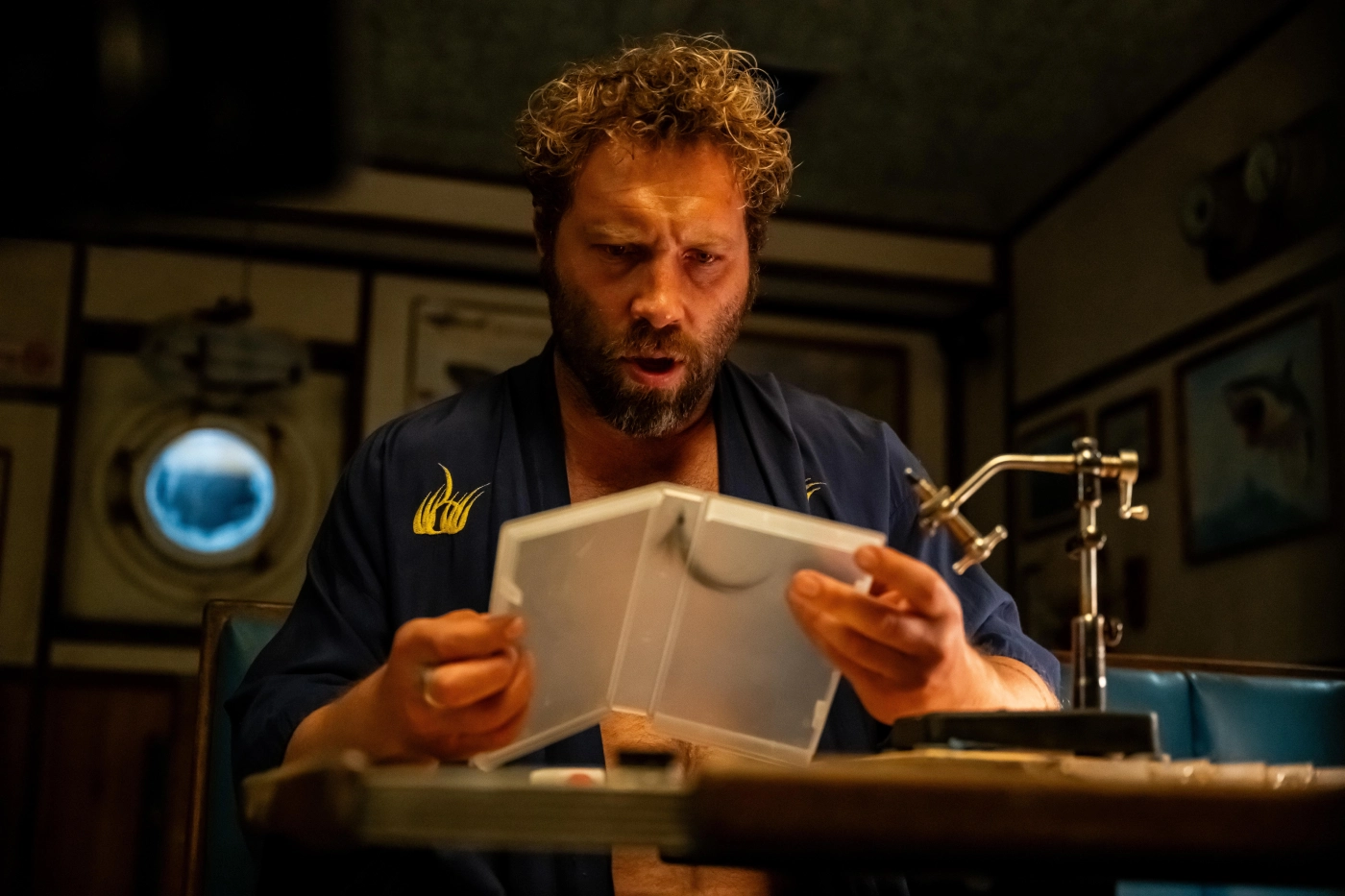 Personally, I had a blast. Byrne shows real skill in spatial storytelling and depicting brutality, squeezing every drop of suspense from each bloody confrontation. He also gives his actors room to shine—Hassie Harrison builds a fully fleshed-out character from minimal script material as Zephyr, while the gleefully over-the-top Jai Courtney as Tucker makes it easy to forget the days when everyone doubted his talent. Of course, one could nitpick the plausibility of certain plot points.
The final act, which consists of several overlapping climaxes, could also be seen as overdone. But for that kind of socially engaged cinema, check out the screening room next door—Dangerous Animals is a treat for anyone nostalgic for the golden age of VHS and the unapologetic charm of 1980s B-movies. Written by Jędrzej Paczkowski


Looking back at DEAD SNOW: A Blizzard of Nazi Gore Fun

DEAD SUSHI: Exotic, Spicy, and Wildly Entertaining

Revisiting ALICE, SWEET ALICE: Dread and Religious Symbolism

PUPPET MASTER: LITTLEST REICH – Achtung! It’s Good!
