
Review
CURFEW. Simple But Beautifully Told Story
Curfew opens with a shot of an old rotary telephone with a handset attached to a coiled cord. It’s a nearly forgotten sight, a relic of the past.


Few filmmakers ever get the chance to expand an idea from a short film into a feature-length project. Shawn Christensen was given that opportunity. In 2012, the world was charmed by Curfew, which he wrote, directed, and starred in himself. The short, funny, and thoughtful story won over audiences and critics alike, as well as the Academy, which awarded the film an Oscar for Best Live Action Short Film. Two years later, Christensen made Before I Disappear, which failed to replicate any of the original’s successes.
Curfew opens with a shot of an old rotary telephone with a handset attached to a coiled cord. It’s a nearly forgotten sight, a relic of the past—much like the main character, Richie. The phone emits its distinctive ring; a bloodied hand with a slashed vein enters the frame to pick up the receiver, and Richie is placed in a situation he could never have anticipated: his sister asks him to help take care of her nine-year-old daughter. There would be nothing strange about that—except that the man is a drug addict who, many years earlier, nearly killed Sophie, his niece, by accidentally dropping her on the floor. As one might easily guess, this is a chance for him to make amends for past mistakes. But is it only for him?

Christensen demonstrates a superb command of the filmmaking craft and tells his story not only through words but—above all—through images. He even expresses his love for moving pictures within the narrative itself: as a young man, the protagonist used to draw little cartoons in the corners of notebook pages which, when flipped quickly enough, created the illusion of motion. These “animations” become the foundation of communication between Richie and Sophie. Movement, in fact, symbolizes life and the joy of living—when the girl gives herself over to a joyful dance in the middle of a bowling alley, we see posters in the background prominently featuring the word “alive.”
In arranging and staging individual scenes, Christensen consistently strives to convey as much as possible through kinesis. Even in moments when none of the characters move—the camera does. In a key scene, when both Richie and Sophie sit motionless on a train, the camera films them from a fixed position; a sense of understanding arises between the characters, while what remains in constant motion is… the background, seen through the train window.
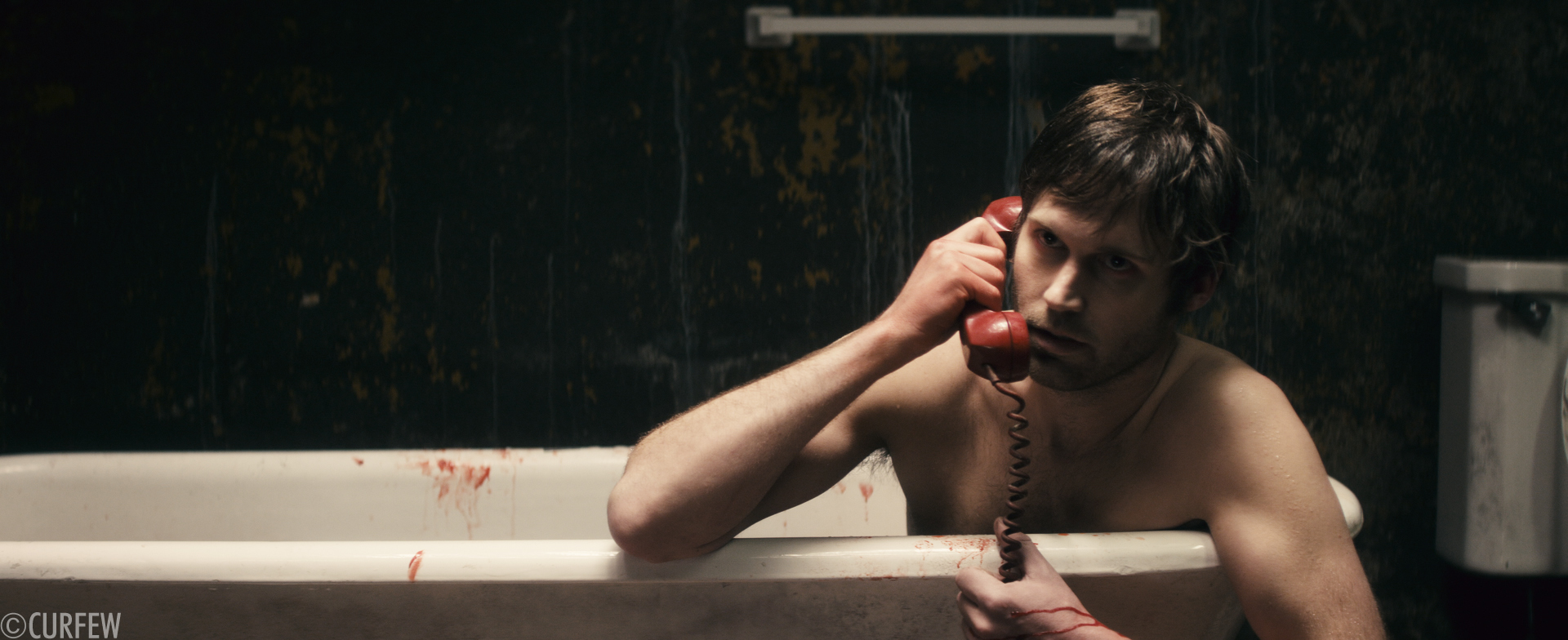
A simple but beautifully told story and committed, natural performances (the young Fatima Ptacek is truly masterful here!) are more than enough to consider the short film a thoroughly good piece of cinema. Unfortunately, the greater freedom and creative liberty the director gained with the feature-length version did not translate into either the quality or the reception of the story. So if you have a choice between the two versions—watch the shorter one. It has everything it needs.

