
Review
THEY SHALL NOT GROW OLD. Truly Unique

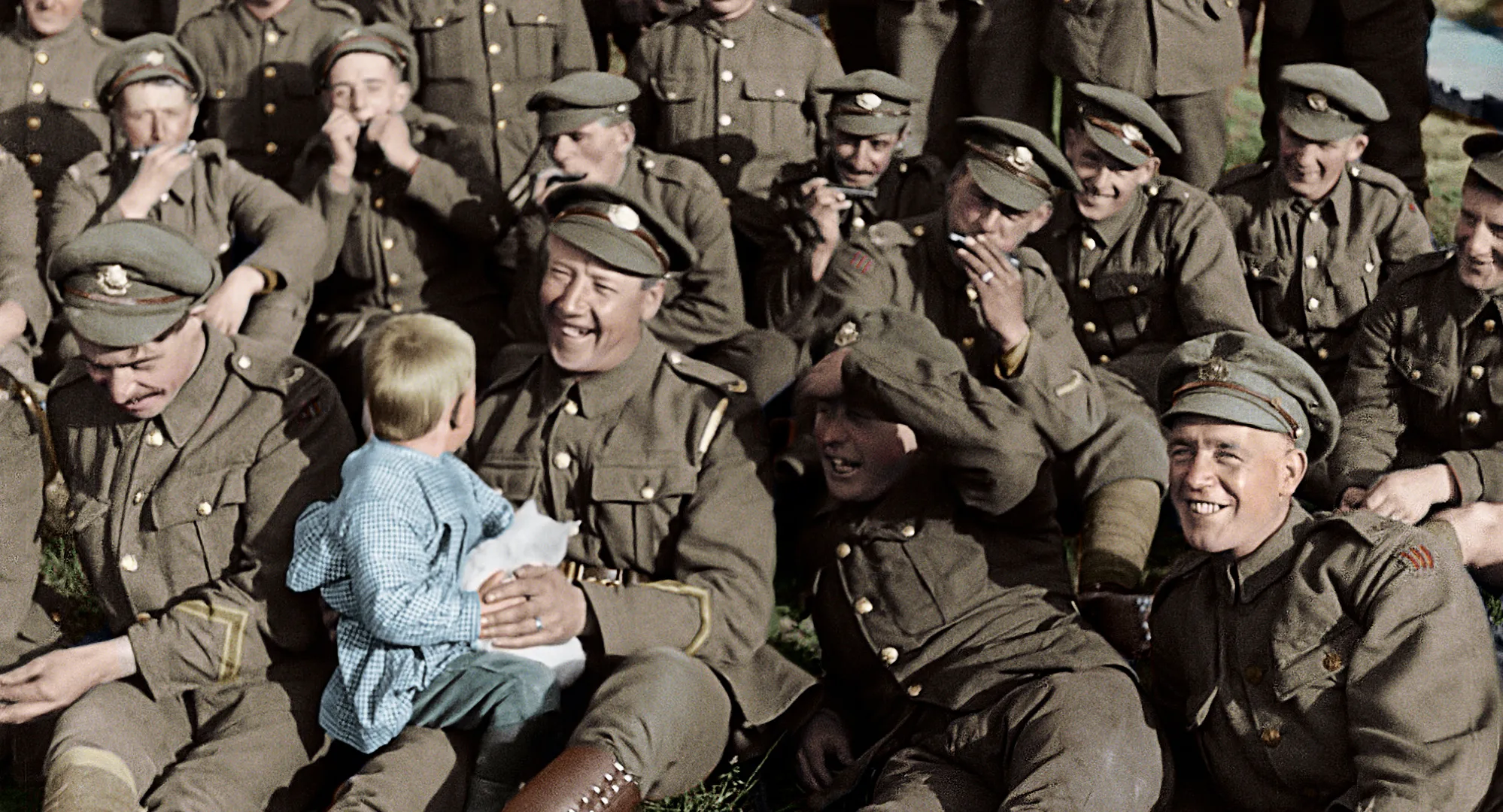
“They will not live to a ripe old age as we will; they will not grow old, nor will they grow weary of life. But we will always remember them.” A passage from For the Fallen by English poet Robert Laurence Binyon became the motto of Remembrance Day, the annual British commemoration of the victims of the First World War. The passage of the original quote (“They shall not grow old”) provided Peter Jackson with the title for his latest film—remarkable in many ways.
They Shall Not Grow Old was the first documentary in the long career of the director of The Lord of the Rings and The Hobbit. Preparations for the project took Jackson an enormous amount of time. Under the New Zealander’s direction, the team listened to over 600 hours of interviews and watched more than 100 hours of film footage from the First World War preserved in British archives.
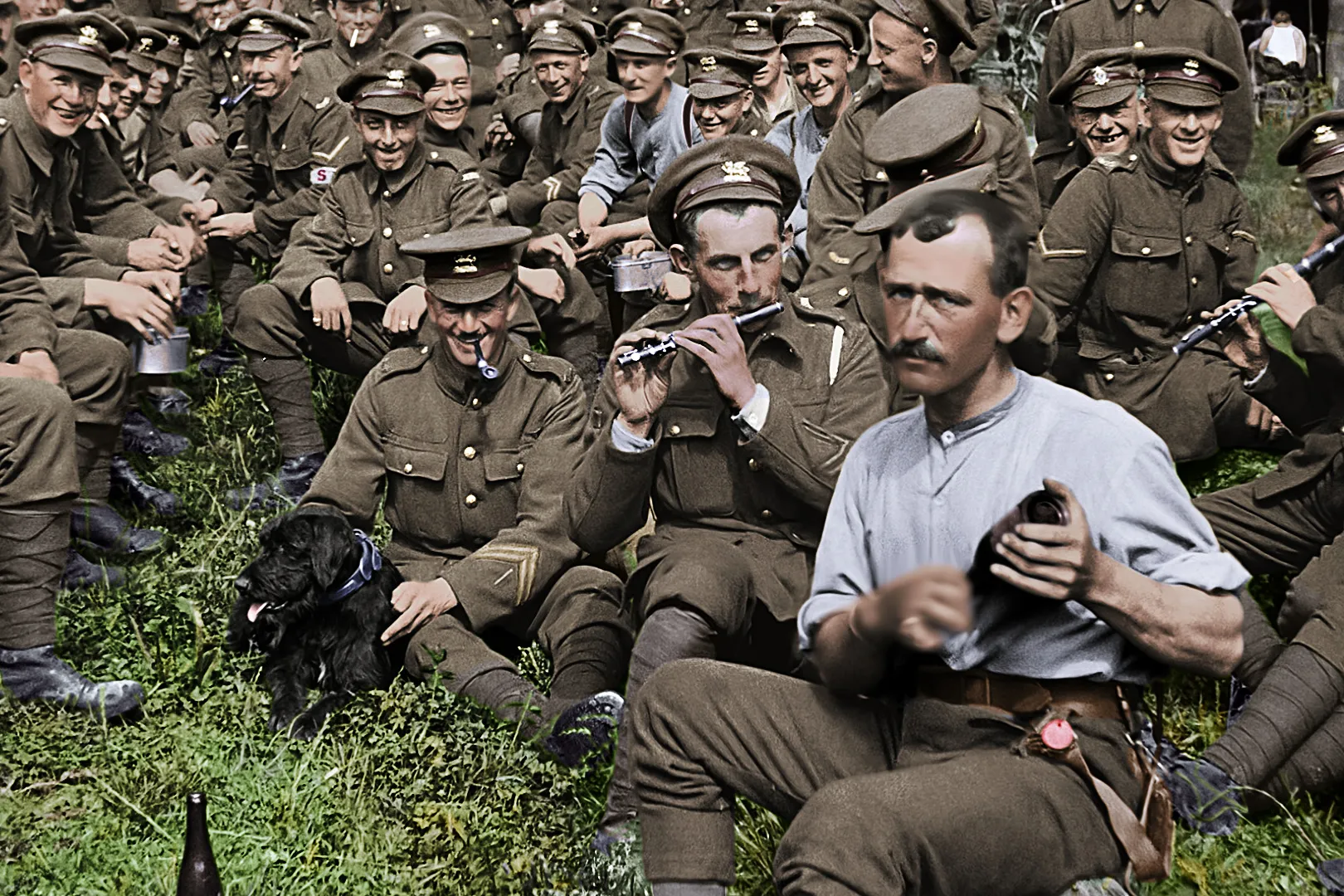
From all this, they shaped a 99-minute documentary featuring the voices of as many as 120 British war veterans. Notably, Jackson’s team restored (sharpened and colorized) not only the hour and a half of footage that ended up in the film, but all 100 hours sent to them by the Imperial War Museum—completely free of charge.
The film opens, however, with black-and-white shots in a 4:3 format. We see soldiers marching to the front, most likely unaware of what awaits them. Many of them glance at the camera with smiles—the boys are excited to be captured on film. Moments later, Jackson takes us further back, to the day the war broke out. From the very beginning, we hear the voices of anonymous (until the end credits) veterans describing their emotions on the eve of setting out for what was almost certain death. After the screening, only some of their stories truly remain with the viewer.
The story that stayed with me most deeply was that of a rugby player whose team happened to be playing a German side on the day the war began. That evening, during a shared dinner, players from both teams learned about the armed conflict. “So what was I supposed to do then? Run up to the German guy and stab him in the back?” the Briton recalls. Eventually, after a brief discussion, the men decided to finish their interrupted meal and then part ways peacefully. For them, the war began only the next day.
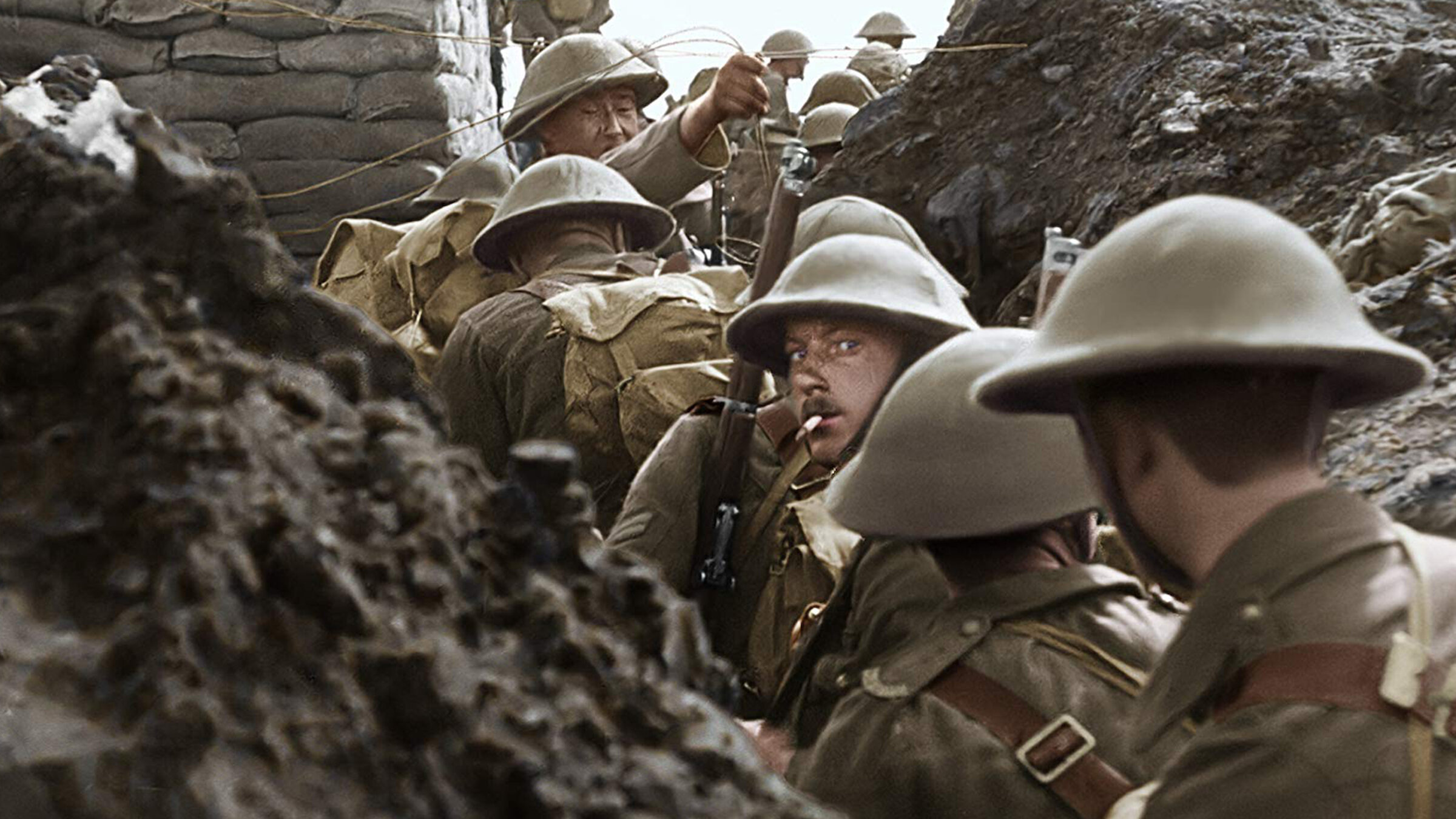
The image gains color and shifts format when the young recruits (many of whom were not yet eighteen) reach the front. The audio evolves too: we no longer hear only the veterans’ voices and the steady clatter of the camera—our ears are now filled with ambient sounds brilliantly recreated in post-production by Jackson’s team. At first, these are mostly footsteps and the idle chatter of bored soldiers (painstakingly recreated by a whole team of lip-readers whose task was to reconstruct as accurately as possible what the men in the footage might have been saying). Over time, the audio grows much harsher: artillery shells exploding, gunfire, the frightened whinnies of terrified horses…

Life at the front was anything but easy. The veterans describe its realities—details you would struggle to find in modern war films. The complete lack of privacy when relieving oneself (“the toilet” amounted to a long plank where about five soldiers sat side by side), incessant sleeping on the ground in trenches, water delivered in poorly washed gasoline cans—that was their daily routine. Yet despite all these hardships, the men managed to keep their spirits up. New friendships formed, a sense of camaraderie flourished: “the man standing next to you instantly became your best friend,” one veteran recalls.
After spending several days on the front line—where at any moment a stray sniper’s bullet could end a life—the recruits returned to a base located a few kilometers from no man’s land. There, they were meant to rest before returning to combat. Unfortunately, these supposed days of respite often turned into hard physical labor unloading supplies. Soldiers sometimes marched back to the front even more exhausted than before.
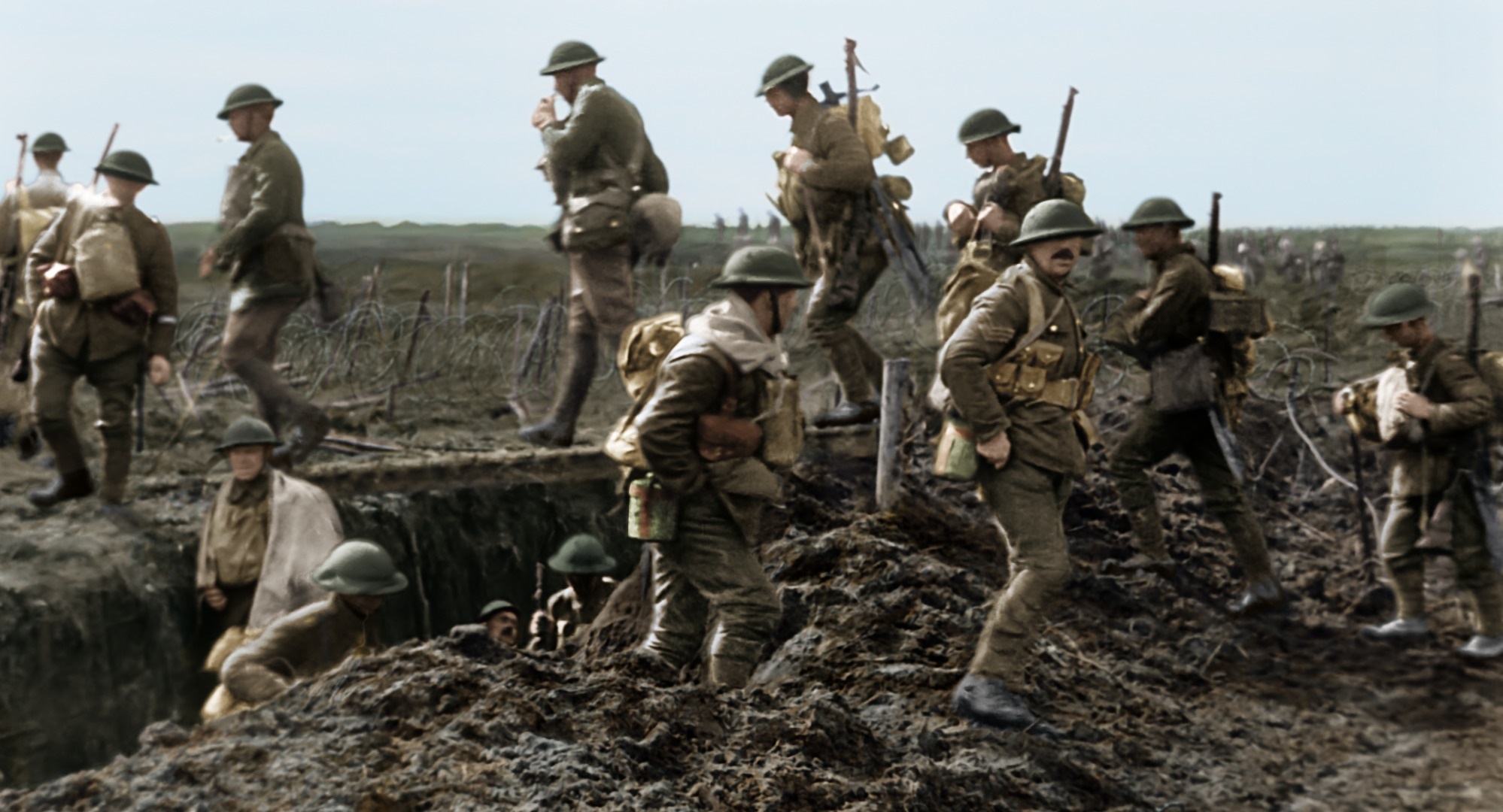
The real hell began only when so-called zero hour approached. It was preceded by long, excruciating anticipation. “The hour before the attack was both the longest and the shortest of my life,” one voice explains. Eventually, the deafening shriek of dozens of whistles signaled the start of the offensive. What happened next defies large-scale description. The veterans therefore focus on small, individual stories. One was forced to shoot a dying comrade who, with his eye hanging lifelessly down his cheek, kept crying out the name of a loved one.
Another watched a fellow soldier quite literally sink into a sea of mud—“there was nothing you could do for someone like that.” A third somehow managed to reach the German wire. There, however, he and a few others received an unpleasant surprise—British artillery had not ceased firing, and was now decimating its own troops who had advanced dangerously close to the enemy trenches.
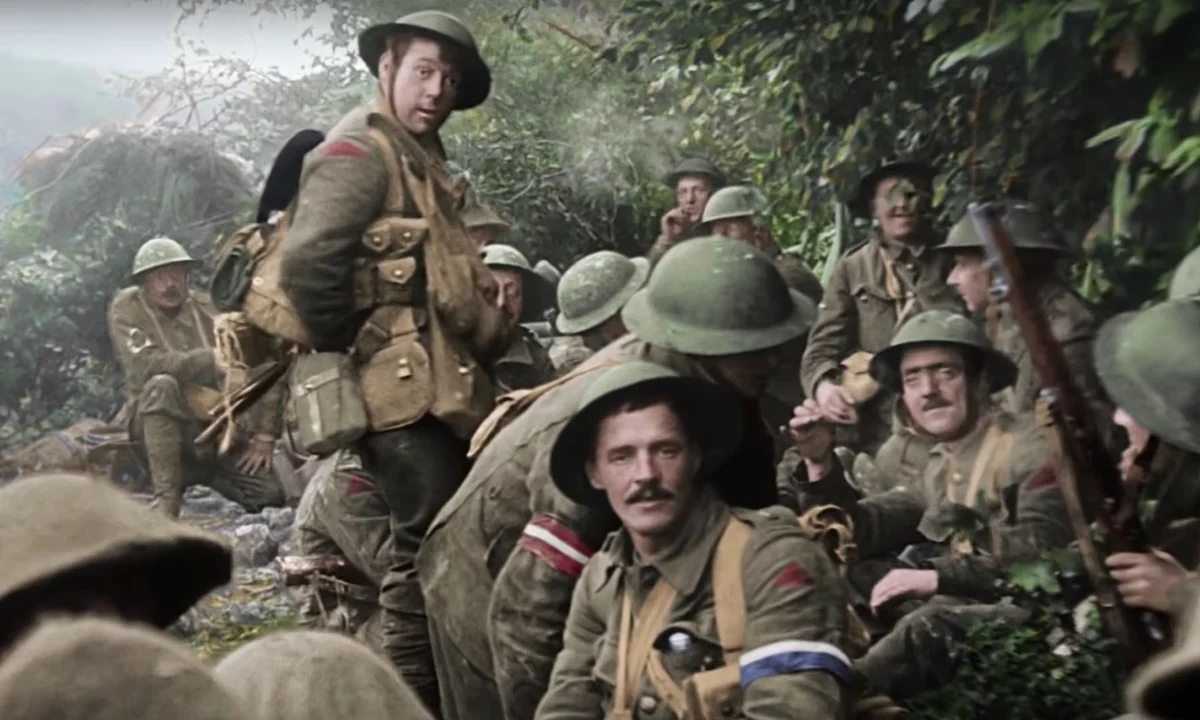
Of course, none of these gruesome scenes is shown onscreen. Jackson lets the viewer’s imagination do the work, presenting instead dynamically edited photographs taken after the battles or drawings of soldiers in combat. These serve only as a backdrop, because in the viewer’s mind unfold scenes worthy of Saving Private Ryan. It’s astonishing how powerful an effect Jackson achieves with such minimal cinematic means.
He could easily have turned to animation—so fashionable in contemporary documentaries—which would have allowed him to recreate the veterans’ accounts in graphic detail. Thankfully, he chose not to, trusting the audience’s powers of perception. In doing so, the New Zealander created something truly unique—not another lifeless historical record, but a vibrant, universal story about the harsh, death-marked fate of the soldier.
On 11 November 1918, the peace agreement was signed and British soldiers began boarding ships in France to return home. With the end of the conflict, the colors in Jackson’s film fade away, and the frame returns to 4:3. The war was over, yet life soon wrote a bitter epilogue. Veterans recall that finding work after returning to Britain was next to impossible. Some shops even displayed telling signs: “No veterans employed.” No civilian wanted to talk about the war. People erased it from memory—along with the heroes who returned from it, and the ones who did not live to a ripe old age, remaining forever young.

