
Review
JOHN CANDY: I LIKE ME. Emotional and Moving Story


For us, John Candy belongs to the pantheon of American comedians of the late 1980s and early 1990s. We meet him every year around Christmas, when as Gus Polinski, along with his band, he helps Kevin’s mother get to Chicago. He appears on screen only briefly, yet delivers the full range of his acting charm. His lines were improvised, the character was invented, the band was invented. Candy spent just one day on set, earning a symbolic sum — less than five hundred dollars. Home Alone screenwriter John Hughes was one of his closest friends.
From this brief episode emerges the foundation for a certain kind of documentary we occasionally need — heartfelt, warm, showing its subject from multiple perspectives, yet careful not to distort any of them. Colin Hanks, son of Tom Hanks, strives to show us the king of comedy from every possible angle — as an artist who wanted, above all, to give himself to others, and only then to himself.

We watch a boy from the Toronto suburbs whose comedic talent blossomed early. At the same time, Candy lost his father when he was just a few years old — a tragedy that cast a shadow over his entire life. He was genuine and never wore masks. He touched so many lives that now, thirty years after his death, people have decided to tell his story. Hearing recollections from legends like Steve Martin or Mel Brooks is moving and deeply respectful.
Hanks’s film fulfills an important mission today — reminding us of an artist guided by values that always need refreshing: hard work, family, and caring for loved ones. Candy’s daughter Jennifer, his near double, speaks about that. Touching memories are interwoven with VHS clips of shared moments. We are witnessing a Hollywood version of work-life balance — the story of someone who managed to make time for everyone despite being a workaholic. On the other hand, Candy wanted to be everywhere, to take part in every available production. The filmmakers show how his natural altruism became an obstacle. People gravitated toward him, even exploited him; and he never turned anyone away — to the point that, as Macaulay Culkin recalls, he sometimes stepped into a fatherly role.
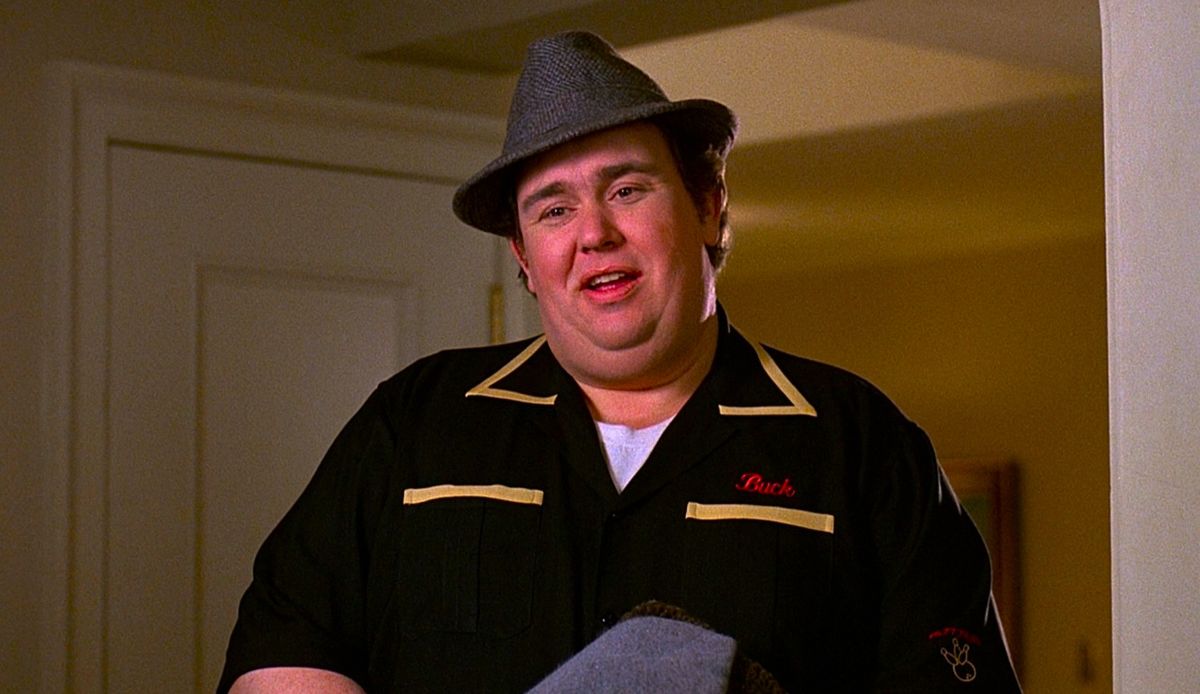
The theme of family — both biological and chosen — is crucial for Hanks. Here we have a small circle of people who felt best in Candy’s company. Stars no less famous than he — Dan Aykroyd, Catherine O’Hara — speak of him as of a brother.
The film’s subtitle, I Like Me — a line from Candy’s famous monologue in Planes, Trains and Automobiles — forms part of his portrait. He likes himself, and people like him. He accepts his imperfections — physical ones, but also those that haunted his personality: the fear left by losing his father, his tendency toward addiction, his excessive trust in others.
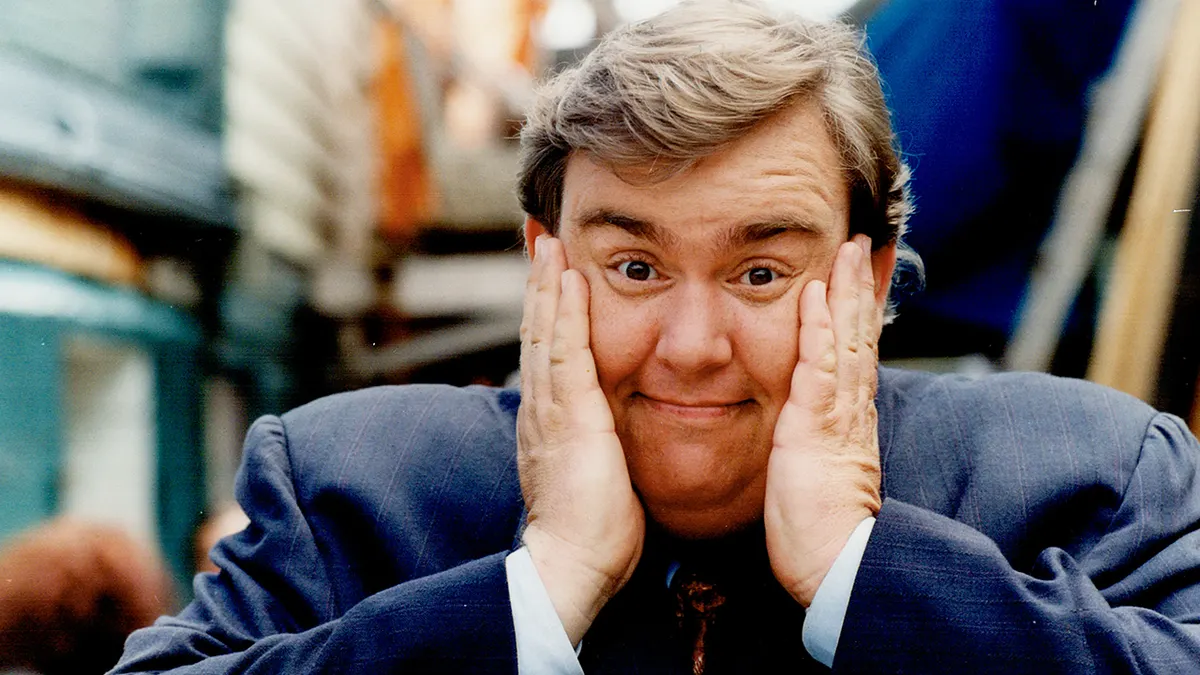
And yet, for all this richness, the documentary isn’t particularly probing. The anecdotes it recounts have a similar tone — for everyone, Candy was someone special. That premise sometimes pushes the man himself into the background of his own film — ironically, much like in the movies he starred in. As a result, the film occasionally lacks momentum, since both its creators and his friends play for the same team — no one has anything bad to say about Candy. The hagiographic tone is understandable, especially after thirty years, but a deeper look — into his addictions or his final years — might have lent the documentary more honesty.
John Candy: I Like Me aims to be the missing piece of John Candy’s cultural and human legacy. Its well-intentioned reverence dominates over the tougher themes that Colin Hanks touches on but doesn’t develop — like being a prisoner in one’s own skin. At times, one gets the uncomfortable sense that no one ever truly spoke to Candy about himself while he was alive, and all reflection came too late. On the other hand, simply knowing that things weren’t always good doesn’t give us the right to expose every detail. What we are given should be enough — and it is: an emotional and moving story about, as is repeated many times on screen, “a good man.” And that’s what this highly recommended Prime documentary is about.

